Software
Houzz Logo Print
seniorballoon

Identify Actea Bugbane

3 years ago

I do not have a good photo of this plant. It's foliage is greyish purple, blooms are cream colored, and fragrant. The bloom stalks are over 6 feet tall. Are there many that are that tall?


Thanks,

SB

Comments (21)

  • 3 years ago

    Could be one of the cultivars of the A. simplex Atropurpurea Group. They all tend to have that dusky, purplish foliage and tall spikes of creamy white fragrant flowers in late summer or early fall. In our climate they can easily reach 6' in time, especially in shade, and the foliage will have less defined color as well. Shorter and more colorful in more sun but will need more attention to watering in that position.

    SeniorBalloon thanked gardengal48 (PNW Z8/9)
  • 3 years ago
    last modified: 3 years ago

    It's been growing for over ten years in this spot and it's fairly shady. It does look like images that came up googling, " A. simplex Atropurpurea Group ". Is there any way to be certain which one it is? I'll have to get a good pic next year.

    Thanks GG.

  • 3 years ago

    LOL!! It would take someone much more skilled than I to nail down a cultivar! They all look rather interchangeable to me :-) If not just a random, unnamed seedling of that group, then I would lean towards 'Brunette'.....it's been around perhaps the longest of the popular purple leafed cultivars.

  • 3 years ago

    Ha! I was afraid that was the answer. I was hoping that the height and the fragrant would nail it down. This is the only one I've grown and so have limited knowledge. Some day genetic testing will be cheap and fools like me that lose tags (and their memory) will have recourse. :o)


    Thanks GG.

  • 3 years ago

    Why does it matter which cultivar it is? Are you trying to buy a sister plant?


    I have one that I bought years ago, can't remember what cultivar it is but I asked the nursery guy what that fragrance was on the breeze, and he pointed me to it. It kinda sat in one of my beds for a couple years not looking bad but not really doing much of anything, then I moved it to a moister location this past spring and it flourished. And that fragrance!

    SeniorBalloon thanked porkchop_z5b_MI
  • 3 years ago

    is it misty blue?


    https://www.monrovia.com/misty-blue-bugbane.html


    did you get it from a collectors nursery.. whihc may have carried ultra rare varieties.. or from some place that would use a wholesaler like monrovia or walters/proven winners.. etc ...


    ken

    SeniorBalloon thanked ken_adrian Adrian MI cold Z5
  • 3 years ago

    Not that species at all! A. pachypoda never gets that tall, has no purple tint to the foliage and does not produce tall, fragrant flower spikes in late summer or early fall (an early spring bloomer with minimal fragrance).

    And as a common US woodland native, I'd hardly consider A. pachypoda "ultra rare"!! Even selected named forms :-)

  • 3 years ago

    It's not Misty Blue. I've begun cataloging all the plants in my garden. I have a biz license for a small nursery and would like to be able to tell a customer what they're buying. At one point I'd saved very tag from each plant we bought, but I had some health issues and didn't think I'd ever get to this point and tossed the box while cleaning out some junk. Am doing much better and am trying to identify as much as I can.

  • 3 years ago
    last modified: 3 years ago

    Rather than have us make suggestions without seeing any photos, wouldn't it make more sense for you to look up photos of every dark foliaged Actaea cultivar now offered, and compare them with your plant? I think they will all be Actaea simplex cultivars, except for the cultivars "Cimicifuga Ramosa" and 'Brunette' which are Actaea. racemosa var. atropurpurea. Actaea blooms earlier in summer, and the flowers are not fragrant. Cimicifuga is the former genus of Actaea. 'Ramosa' is obviously a typo of racemosa that was never corrected and has stuck til this day Lol.. Actaea racemosa was formerly Cimicifuga 'racemosa'. It makes things more confusing that the old, and incorrectly spelled scientific name makes up one or more current cultivar names. Regardless if there are one or two species of Actaea with dark foliage, the cultivars can be compared with your plant to find a match, and we can figure out the exact species once you find a match. I can name a few cultivars, 'Hillside Black Beauty', 'Brunette','Chocoholic', 'Pink Spike', 'Black Negligee', 'Cimicifuga Ramosa', 'Fairy Candles Purple', and 'James Compton'. These are the only cultivars I can find, but there may be more.[ [ edit. There is a darkleaved variety of Actaea racemosa, Actaea racemosa var. atropurpurea, and 'Brunette' is a cultivar of Actaea recemosa

    SeniorBalloon thanked Jay 6a Chicago
  • 3 years ago

    @Jay 6a Chicago It would make more sense. I searched my photo archive for a photo, but didn't find one. Since I won't be able to get a photo till next year I posted in hopes the height and fragrance would narrow it down. When we bought it the tag did say "Cimicifuga" something or other. I'll do some search and comparison and see if I can find a good look alike.

  • 3 years ago

    SB, as stated previously, the most popular and commonly sold forms of purple-leafed snakeroot are virtually indistinguishable from each other afa size, fragrance, bloom time and leaf or flower color are concerned. They ALL look alike!! Identifying your plant as a specific cultivar may not be successfully accomplished without something like a DNA analysis :-)

    And I am not really sure you need to. Most hobby gardeners do not require a specific cultivar ID unless that cultivar offers some desirable but unique features. Not anything unique about any of these......in fact, they are described in publications almost identically. You would be completely accurate in labeling and selling these as Actaea simplex Atropurpurea Group, omitting any particular (and potentially inaccurate) cultivar name.

    btw, these types of actaea are slow to respond well from division. Do not divide until the clump is well established, keep the divisions generously sized (no tiny little plugs or a shoot with a root attached) and allow them to grow on for a season before marketing.

    Taxonomy is always changing but older plant names typically remain as synonyms and many places still refer to and market this plant as Cimicifuga.

  • 3 years ago
    last modified: 3 years ago

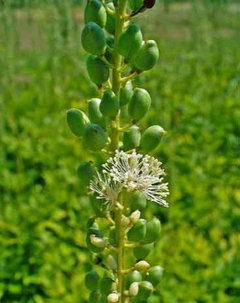
    Actaea racemosa doesn't have attractive berries, but instead hard, green fruits. What kind of fruits/seeds does A. simplex have gardengal? I searched, but could'nt find info. Even different Actaea species have identical leaves often. My A. rubra and A. racemosa plants have identical leaves. Many nurseries sell them as simply (simplex atropurpurea group), which is fine, like gg said.


    This is what A. racemosa fruits look like. Does A. simplex have fruits/seeds similar to this, or berries? I'm rather doubtful that a DNA test would be able to distinguish the differences between cultivars LOL.

  • 3 years ago

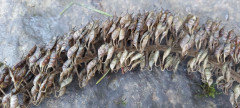
    These are turning brown, but this is what the seed heads look like today. Can't really recall if they are as bright green as your pic,


    I collected seed last year, but nothing has sprouted yet. I've read it can sometimes take a few years. They apparently require a warm period, a cold period and then another warm period. After collecting around this time last year, I sowed them in the house. Then in January I put them in the unheated greenhouse. All summer they've been in the shade house and I've been keeping them moist. Maybe next spring assuming they are even fertile at all. If they're not self fertile they are likely not, as there are no others in the area.


    @gardengal48 (PNW Z8/9) I'm not overly concerned about getting the cultivar exactly right, If I could great, but if not that's ok too. I also greatly appreciate your thoughts on the cultivar and the ethics of selling it as a generically named " Actaea simplex Atropurpurea Group". It won't be the only plant that I won't know the specific cultivar.

  • 3 years ago

    I would add that places like Far Reaches uses DNA tests to identify different varieties. I have no idea about the cost, and would imagine it is dependent on having samples to compare.

  • 3 years ago
    last modified: 3 years ago

    There's a lot of misinformation about these cultivars. One source says Brunette is a cultivar of racemosa, another source says simplex. Some sources list Actaea racemosa as a synonym of Actaea simplex. What is the atropurpurea group exactly? Is it a population of Actaea simplex that were dark colored sports and selectively bred, or is it a specific taxonomic variety? I can't find any info explaining what the atropurpurea group really is. I can't see getting DNA testing when it's not clear what the cultivars actually are anyway? With DNA analysis corn looks almost identical to the grass it was originally, before humans selectively bred it. I doubt an expensive DNA test would be able to sort out all the differences between the long list of black bugbane cultivars. These are cultivated varieties, not taxonomic varieties. It seems like the venders selling these cultivars enjoy all the misinformation, because it's been happening for a long time. They probably figure they can just slap a new name on something and say it's the coolest new thing, and people will buy them and not be too concerned about their true genetics, background, taxonomy and origin. This makes me want to learn more about DNA testing.

    SeniorBalloon thanked Jay 6a Chicago
  • 3 years ago

    The seed heads of A. simplex 'Brunette' & 'Hillside Black Beauty' (I have both and cannot tell them apart) are as SB just showed them. They are dark reddish/burgundy prior to that stage. They are never green.

    SeniorBalloon thanked peren.all Zone 5a Ontario Canada
  • 3 years ago

    @peren.all Now that you mention it, they are reddish/burgundy prior to this stage.


    @Jay 6a Chicago I am sure DNA tests are not warranted and too expensive for this situation. I was at a talk given by Kelly Dodson one of the owners of Far Reaches Nursery, and he mentioned the genetic tests they had performed on some plant material they'd collected on one of their trips. He didn't mention cost, but I imagine for the work they do in the https://farreachesbotanicalconservancy.org/ that they try to get the most accurate data they can.


    I'm sure it's not cheap. Someday, if the cost comes down to put it in the reach of most gardeners, I can see having one in your home. Grab a leaf, sequence it and upload it to a database on the internet...Someday, but not likely in my lifetime.


  • 3 years ago
    last modified: 3 years ago

    Sorry in advance @SeniorBalloon as this is somewhat OT..


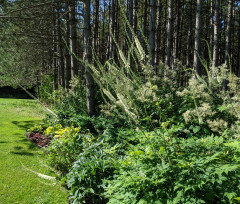
    In July 2021 I visited an independent nursery that has gorgeous display gardens. And I was so impressed with her Actaea Racemosa...the flowers were so long, so big.


    SeniorBalloon thanked rouge21_gw (CDN Z5b/6a)
  • 3 years ago

    No apologies necessary. It's clear from that photo that my plant is not a Racemosa, as the leaves of mine are purplish and those are very green. Same beautiful, arcing flower stalks though.

  • 3 years ago

    That is an impressive clump rouge. I just may need some. I ignored them because I adore the dark foliage of Brunette & Hillside Black Beauty. I am noticing the flower flower wands are extremely long & pointed whereas the simplex Atropurpurea group have more rounded tips. Really lovely!