Software
Houzz Logo Print
ramon_vdklooster

Is this normal for a Monstera plant?

Hello,


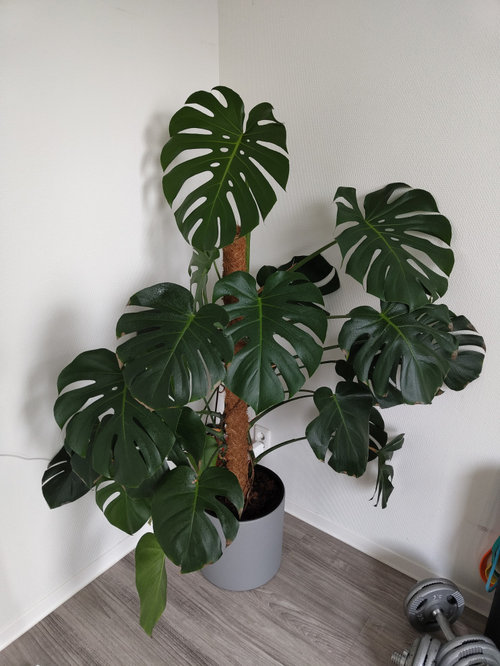
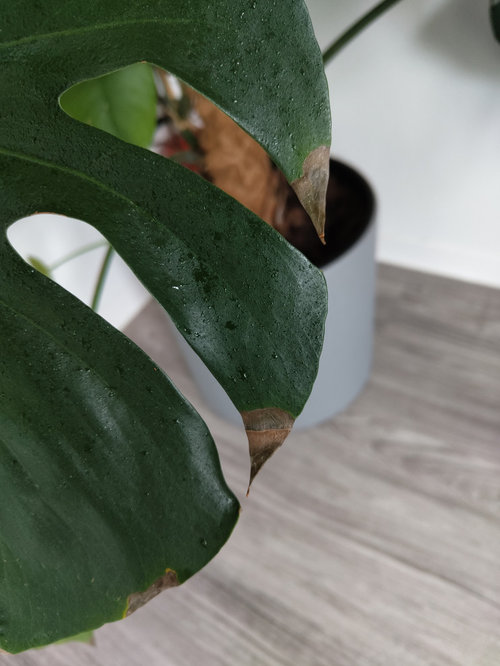
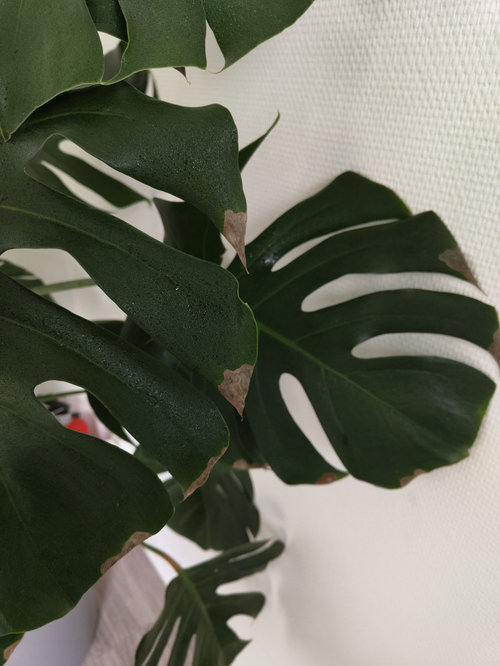
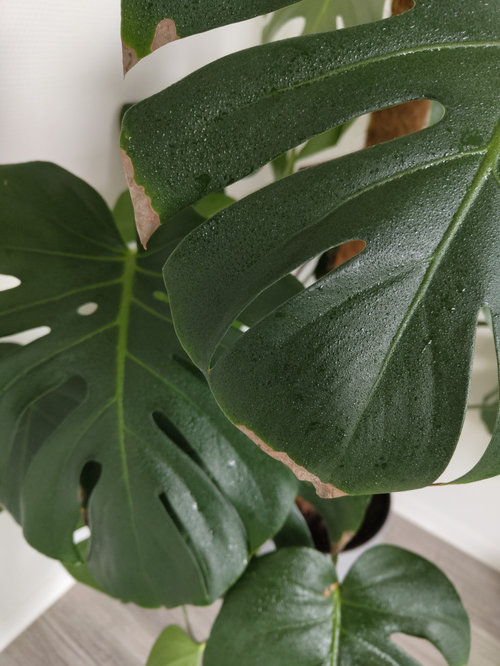
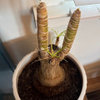
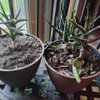
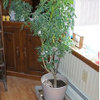
I bought this Monstera over 4 years ago when it was still a little plant and now it's grown quite big. The past few weeks/months however I have noticed that the most of the leaves have their tips turning brown at quite a fast rate (it doesn't happen with the newest leaves).


I try to keep the soil pretty moist and as you can see I spray water over the plant once in a while. My thought was the plant might be too dry but if I give it more water I have a feeling it will be too much.


My question is if it's normal that most of the leaves are turning brown or if this is a sign that the plant is unhappy.


Some pictures for reference:


Comments (5)

  • 3 years ago

    has it been in the same pot the entire 4 years ..???


    media wears out.. and when it does.. it leads to watering issues .. of which a common result is brown tips ...


    more info please ..


    ken


    ps: most of us dont think misting does anything for the plant.. but if it makes you happy.. it doesnt really hurt the plant.. if the humidity in your house is so low that the plant is affected.. a little misting isnt going to solve that issue ...

    Ramon vd Klooster thanked ken_adrian Adrian MI cold Z5
  • 3 years ago

    No, I repotted it to this larger pot last year, since it became way to big for the previous pot. There's also clay balls at the bottom of the the container and the container is seperate in the pot, so there's holes in the bottom. I also had a feeling misting doesn't do anything, normally I don't do it but I read online it could help so I thought why not.


    Back to the watering issue, I read that crispy brown could mean too dry, and more moist brown would mean to wet. Do you know if there's a truth to that? Since these brown tips and edges are very crispy. Thank you for your reply

  • 3 years ago

    I read that crispy brown could mean too dry, and more moist brown would mean to wet. Do you know if there's a truth to that? No truth to it. Even though it might seem counterintuitive, under-watering and over-watering produce the same drought response and the same symptoms in plants. Under-watering caused the necrotic leaf tips and margins because the limited moisture supply prevents the plant from moving water to its most distal parts, leaf tips and margins. Over-watering limits root's ability to function normally/ efficiently, which also limits the plant's ability to keep its most distal parts hydrated. In either case, under or over-watering, necrotic leaf tips and margins are usually the first indications there is a problem with the root system, but sometimes wilting can be the first indication. It should be no surprise, given what I said so far, that wilting can also be caused by over or under-watering.

    I don't understand what you're relating insofar as the pot situation is concerned. There should be drainage holes in the pot that actually contains the plant, and the plant should never be allowed to sit in the water that exits the drain hole. The plant should be watered at the sink and allowed to drain there; or, the pot the plant is in should be set up on some type of blocks so the bottom of the actual pot is well above any water that collects in the cache pot. This prevents the salts that get flushed from the soil from having a pathway by which they can make way back into the plant's pot. A high level of salts in the soil/ soil solution makes it difficult for the plant to take up water, which causes the same symptoms as over/ under-watering.

    Misting helps for about 10 minutes, but does nothing for the remaining 1,430 minute in each day, so it's pretty much an exercise in futility.

    Let me know if you'd like to figure out a plan that should help you regain control over the plant's vitality. Right now, you are battling against cultural conditions the plant is not (genetically) capable of dealing with.

    Al

    Ramon vd Klooster thanked tapla (mid-Michigan, USDA z5b-6a)
  • 3 years ago
    last modified: 3 years ago

    Thank you for the reply! The container is indeed elevated in the pot with drainage holes so no the plant never sits in water. When lifting the container, there is condensation at the bottom however. I recently bought a moisture meter for the soil (a cheap one so not sure how reliable that is) and that shows low moisture and even dry in some parts of the pot. So that would seem to indicate not enough water. I'm just very hesitant to water right now since I know overwatering is pretty much impossible to fix once it happens vs underwatering.

  • 3 years ago

    A few repotting tools below. On the right is a root pick made from a wood dowel. It can also serve as a "tell", to "tell" you when it's time to water.

    A "tell" is far more accurate than moisture meters, which actually measure electrical conductivity, not moisture levels, which is why if you insert a clean probe into distilled water it will read "DRY" - no ions to conduct electricity.

    Using a 'tell'

    Over-watering saps vitality and is one of the most common plant assassins, so learning to avoid it is worth the small effort. Plants make and store their own energy source – photosynthate - (sugar/glucose). Functioning roots need energy to drive their metabolic processes, and in order to get it, they use oxygen to burn (oxidize) their food. From this, we can see that terrestrial plants need plenty of air (oxygen) in the soil to drive root function. Many off-the-shelf soils hold too much water and not enough air to support the kind of root health most growers would like to see; and, a healthy root system is a prerequisite to a healthy plant.

    Watering in small sips leads to avoid over-watering leads to a residual build-up of dissolved solids (salts) in the soil from tapwater and fertilizer solutions, which limits a plant's ability to absorb water – so watering in sips simply moves us to the other horn of a dilemma. It creates another problem that requires resolution. Better, would be to simply adopt a soil that drains well enough to allow watering to beyond the saturation point, so we're flushing the soil of accumulating dissolved solids whenever we water; this, w/o the plant being forced to pay a tax in the form of reduced vitality, due to prolong periods of soil saturation. Sometimes, though, that's not a course we can immediately steer, which makes controlling how often we water a very important factor.

    In many cases, we can judge whether or not a planting needs watering by hefting the pot. This is especially true if the pot is made from light material, like plastic, but doesn't work (as) well when the pot is made from heavier material, like clay, or when the size/weight of the pot precludes grabbing it with one hand to judge its weight and gauge the need for water.

    Fingers stuck an inch or two into the soil work ok for shallow pots, but not for deep pots. Deep pots might have 3 or more inches of soil that feels totally dry, while the lower several inches of the soil is 100% saturated. Obviously, the lack of oxygen in the root zone situation can wreak havoc with root health and cause the loss of a very notable measure of your plant's potential. Inexpensive watering meters don't even measure moisture levels, they measure electrical conductivity. Clean the tip and insert it into a cup of distilled water and witness the fact it reads 'DRY'.

    One of the most reliable methods of checking a planting's need for water is using a 'tell'. You can use a bamboo skewer in a pinch, but a wooden dowel rod of about 5/16” (75-85mm) would work better. They usually come 48” (120cm) long and can usually be cut in half and serve as a pair. Sharpen all 4 ends in a pencil sharpener and slightly blunt the tip so it's about the diameter of the head on a straight pin. Push the wooden tell deep into the soil. Don't worry, it won't harm the root system. If the plant is quite root-bound, you might need to try several places until you find one where you can push it all the way to the pot's bottom. Leave it a few seconds, then withdraw it and inspect the tip for moisture. For most plantings, withhold water until the tell comes out dry or nearly so. If you see signs of wilting, adjust the interval between waterings so drought stress isn't a recurring issue.

    Al

Sponsored
Whisler Home Improvement
Average rating: 5 out of 5 stars9 Reviews
Franklin County's Committed Home Improvement Professionals