Software
Houzz Logo Print
jerijensunsetz24

"Schmidt's Smooth Yellow"

3 years ago
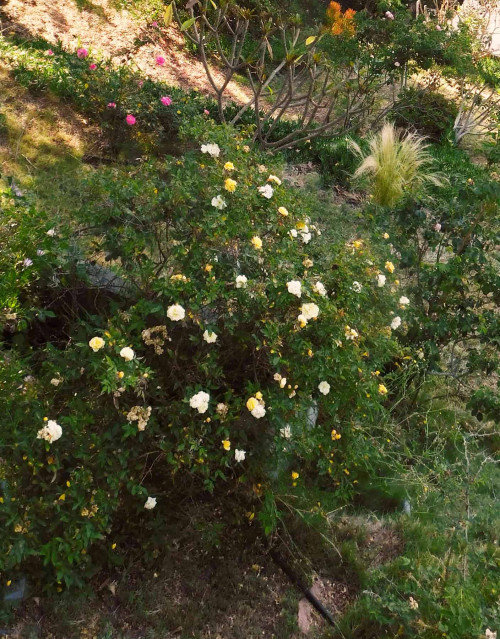
"Schmidt's Smooth Yellow"


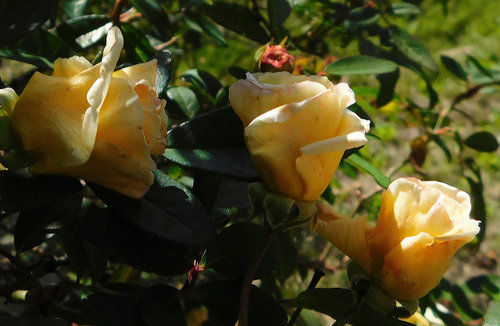
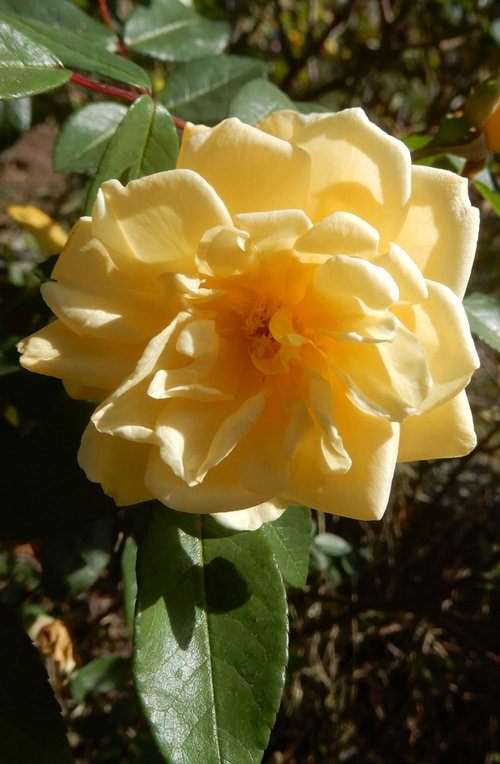
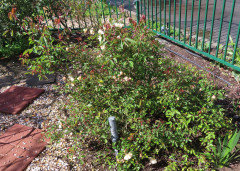
I know Jackie Schmidt can weigh in here with more details, but I wanted to share some images of this beauty that has bloomed right through the year here, and never suffers from any disease issues.

"Schmidt's Smooth Yellow" Rose (helpmefind.com)

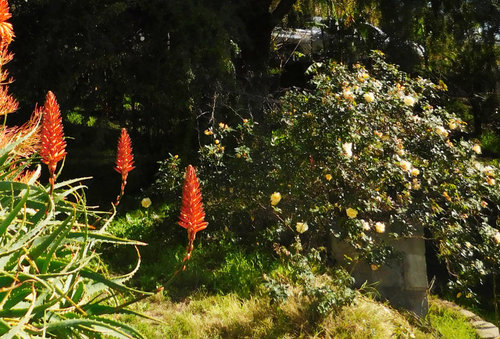
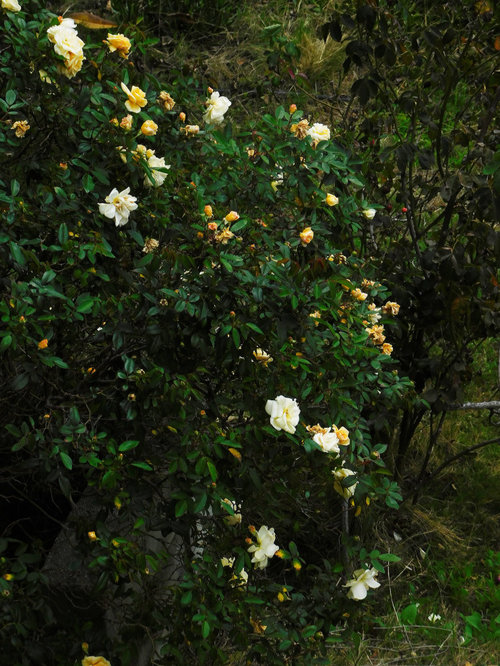
A handsome bush that drapes over a retaining wall, but stands a good 4-ft. tall.


On a dark winter morning:


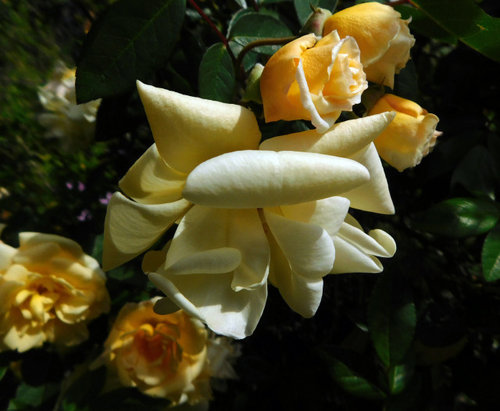
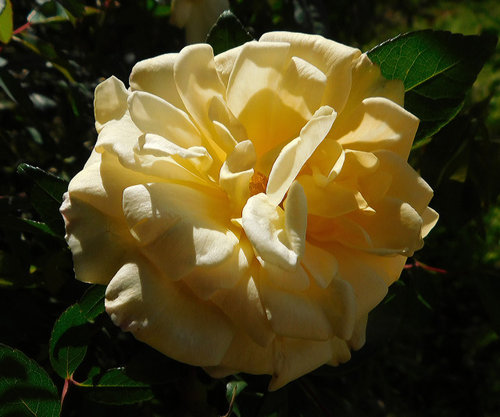
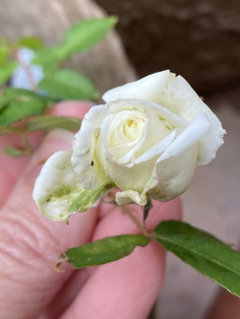
Red-tipped buds open to deep yellow blooms.

The foliage, always, is to die for.


Comments (25)

  • 3 years ago

    It's so beautiful and happy and healthy looking!

  • 3 years ago

    That's a stunning yellow

  • 3 years ago

    Jeri, your plant of SSY is gorgeous! I have three now, and they are thriving, although all of them are in partial shade at this time of year, so although they all have blooms, they will bloom more as the Spring progresses. It is still raining hard here, so I will take some pics later or tomorrow when the sun will hopefully come out for a while. Still no diseases, and NO THORNS whatsoever.


    Jackie

  • 3 years ago

    Now that's a rose to die for: what a beauty! Thanks for the photos!

  • 3 years ago

    Two of the three SSY's I have are in huge pots, but I did root one a couple of years ago, and it got planted in my new deer fence protected garden. It is about 3 ft tall now, and still getting bigger. All three of mine have gloried in the 33 inches of rain (!) we have gotten in the past about 2 months, and are bright green with new red foliage tipping each cane, and buds forming (there are some be-draggled looking open blooms - the rain has been hard and almost violent).


    It has been very cold for here (nights in the 30s) for weeks, so my bushes are behind yours, Jeri, but they are looking great, and at close range you can see dozens of clusters of teenie, tiny, buds. I love the buds on this rose - they are yellow tipped with red, and then the blooms open butter yellow. The hips continue the red theme - when mature, they are fire engine red, and one of my bushes has a LOT of them.


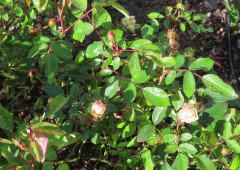
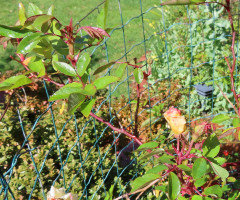
    Here are some pics I just took - the sun came out for what I know will only be a few minutes, so I ran out and took them, trying to step over the puddles - the rain gutter in front of our house is still running completely full. The first two pics are of buds, and the third is our one bush which is planted in the ground.


    Jackie


  • 3 years ago

    Yep. I love everything about this beauty, and I am so glad you rescued it, Jackie.


    Just FYI . . . When it was planted at the Sacramento City Cemetery, Anita found minimal evidence that the plant is virused. REALLY minimal. It just tells you something about the cultivar's history. I guess it would be nice if it could be virus indexed. For me, of course, it's not important. It will likely never show it here.

  • 3 years ago
    last modified: 3 years ago

    It will likely never show it here.

    Except that large numbers of different specific viruses may be accumulated and retained by clonally propagated plants over time.

  • 3 years ago

    A lovely rose, both in its growth habit and the buds and blooms. The color is a very nice shade of yellow and no thorns is such a bonus.

  • 3 years ago

    Embothrium . . . It's very, very uncommon for virus to show up here, unless the plant is really really loaded with a bunch of strains. They don't get the stresses here that they get eksewhere.

  • 3 years ago

    @jerijen IIRC Malcolm tested it and stated it carries PNRSV (Prunus Necrotic Ring Spot Virus) which is common.

  • 3 years ago

    I love the color too. It reminds me of Danae and Yellow Sweetheart, Climbing.

  • 3 years ago

    Oh, by the way,

    I love your red hot pokers!

    jerijen thanked Melissa Northern Italy zone 8
  • 3 years ago

    Melissa -- There's an old orchard remnant not far from here. Those aloes appear to have been growing there for close on 100 years. You see them at a number of houses here, too, and before they were all bulldozed out, I went down and, with the assistance of my neighbor Jennie, climbed over the old barbed-wire fencing and "liberated" a number of them. She took some, I took some, and we gave one to another neighbor.

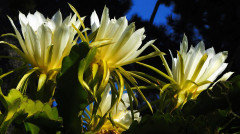
    I love them. They're one of a number of really old plants we've found up here and collected, including the dragon fruit vine that now climbs an old seedling avocado tree.


  • 3 years ago

    I looked up PNRSV, and I can say that during the 15+ years I have had SSY, I have never seen anything like that on any of the leaves on any of my plants of it, so my roses must not be stressed at all! Also, I took the original cutting from a rose which, accd to the DIL of the lady who planted and grew it, was a very old cultivar (planted in the 1930s or 40s). When they tried to dig up the original plant and move it, it died in the process, and I figured out later that was about 3 weeks after I had taken a cutting of it!


    I do have 2-3 roses which have visible signs of RMV on some of their leaves sometimes, but all of those are mid 20th century very popular HTs which we inherited from my DH's ancestors. So, they had undoubtedly been cloned zillions of times.


    SSY had not as far as I know, and given that it has been tentatively iD'd as either a rose (polyantha from the 1890s) which is extinct in commerce, or another (polyantha from the 1890s) which we have only been able to find in one (1) public garden in Australia, it seems unlikely that it has been cloned zillions of times.


    Jackie

  • 3 years ago
    last modified: 3 years ago

    Rose viruses are common in garden roses and are easily transmitted by propagation. Several viruses are found worldwide, including Prunus necrotic ringspot virus (PNRSV), apple mosaic virus (ApMV), and rose spring dwarf-associated virus (RSDaV). For the rose hobbyist, the problems caused by common rose viruses can include unsightly foliage, decreased vigor, and smaller and/or fewer flowers.

    Rose Viruses | NCPN (nationalcleanplantnetwork.org)

  • 3 years ago
    last modified: 3 years ago

    They're one of a number of really old plants we've found up here and collected, including the dragon fruit vine

    Selenicereus undatus - Wikipedia

  • 3 years ago

    Yeah Virus goes back that far, and farther. But I've never seen a sign of it here, and even in the cemetery, it was very minimal.

  • 3 years ago

    Jeri, thank you for preserving those old plants. You're doing a favor for all of us--I say that writing from Italy.

  • 3 years ago
    last modified: 3 years ago

    From the Wikipedia page on Selenicereus undatus I linked to above:

    This species is closely related to S. ocamponis and S. escuintlensis. Selenicereus undatus was described by (Haw.) Britton & Rose and published in Flora of Bermuda 256. 1918. In 2017, D. R. Hunt groups the genus Hylocereus within the genus Selenicereus. This has been supported by a phylogenetic analysis of the Hylocereeae tribe (Korotkova, et al., 2017), therefore this species is consigned under the name Selenicereus undatus[4]

  • 3 years ago

    thanks for the pictures Jeri and Jackie! So charming!

    I just received a band of SSY this winter from the Vintage sale. It's been in a cold pot and soaked with rain but it persevered and has started opening its first bloom!


    Jackie, so happy you rescued this beauty. What a cool thing.


  • 3 years ago

    This is such a beautiful plant, Jeri. It is a shame that it isn't widely available. I can imagine how lovely it would be in a bouquet.

  • 3 years ago

    Oh KS -- It drives me NUTS that this rose is not more widely available. It has so much to offer.