Software
Houzz Logo Print
wh431

Decompacting clay soil

3 years ago
last modified: 3 years ago

I am in Chicago (zone 5) and ve clay soil in my back backyard, which is severely compacted. As a result i ve standing water at places and weeds like creeping charlie all over the lawn.


What will be the best approach to rejuvinate the lawn?


I thought abt aeration & dethatching but that alone wont decompact the soil structure. Any other ideas?


Thanks

Comments (29)

  • 3 years ago

    You need to aerate and add organic material. Perhaps rototilling in a ton of compost will help. In my town, we tend to have sandy soil with standing water where the bedrock is close to the surface. If your problem is clay, then it can be ameliorated with lots of organic matter (ie compost). If it's bedrock, there's not much you can do.

  • 3 years ago

    can’t appreciably amend the existing soil, so your only hope is the build up the existing soil by top dressing with good soil little by little year after year for a long time

    wh431 thanked L Clark (zone 4 WY)
  • 3 years ago

    Plant white clover.

    In other words, hire trained professionals to do the job.

  • 3 years ago

    Most of the gardeners in my neck of the woods who have clay soil, only put OM on their vegetable gardens, as Embo explained earlier. Some will use animal manure, that has a mix of bedding straw, if it's available.

    I am unaware of what they do if anything to the rest of their yards.


    And don't fall for the myth that gypsum will break up hard clay soil. That only works to some extent if the clay soil is sodic. Only a soil test will tell you if it is.

    Here's the link to that information:

    https://s3.wp.wsu.edu/uploads/sites/403/2015/03/gypsum.pdf


    I'm not a lawn expert and in my sandy loam soil, grasses thrive.

    Sod is another option, which would require a rework of the topsoil.

    Here's one link:

    https://www.hgtv.com/outdoors/landscaping-and-hardscaping/prepare-clay-soil-sod

    wh431 thanked BillMN-z4a
  • 3 years ago

    Are you sure the soil is compacted? Or is it just poorly/slowly draining as is the case with many clay soils? It makes a difference as to how to address.

    Speaking only to lawn care - go ahead and dethatch if you feel you need to but it will do nothing to alleviate compaction nor will it have any measurable impact on drainage. But core (or plug) aeration will help with decompaction. Leave the plugs to break down in place and a thin topdressing of screened compost will help as well. Any sort of medium grade organic matter (not big chunks) that work its way down into the cores left by the aerator will help to loosen things up.

    My next suggestion is to spray down the lawn monthly with baby shampoo (2-4 ounces for 1000sf). It is the sodium lauryl sulfate these types of shampoo contain that will actually react with soil particles to flocculate or form clumps that allow better water penetrations. It sounds bizarre but it really works and can be verified on various professional lawn care forums. This practice will not really relieve compaction but will aid in water penetration and limit any pooling or ponding after heavy rains.

    This is not a one time or fast fix and you will most likely need to repeat the aeration in fall and again next spring. And keep up with the monthly baby shampoo application during the growing season.

    Once again, this advice applies only to lawns.

  • 3 years ago

    @mad_gallica (z5 Eastern NY) if that was to be your solution, than no point in having a forum like this.


    I like working on my garden by myself.

  • 3 years ago

    @gardengal48 (PNW Z8/9) i have a lot of creeping Charlie weed in the lawn, so am going to spray it with glysophate and then dethatch the lawn to pick up dead weeds and expose the bare soil before the core aeration.


    My plan is then to add 2 inches of topdressing (1 part sand, 1 part top soil and 1 part compost) and then level & over seed the lawn.


    I will then gradually build up by topdressing each year. I tried a similar routine in my last lawn in South of England (but the weather and soil there was different). Here i am having to deal with acidic clay soil (thanks to several oak trees), that are surrounding the lawn.

  • 3 years ago

    Charlie weed in the lawn, so am going to spray it with glysophate and then dethatch the lawn


    ==>> round up is non specific... it will kill the grass.. AND the weeds.. so there wont be any use to dethatch after using glycol ...


    pick your killers carefully ...


    ken


  • PRO
    3 years ago
    last modified: 3 years ago

    Glyphosate will kill most of your lawn right along with the weeds. It's a fairly broad spectrum killer. What all weeds do you have growing on? You might get suggestions for better weed killer action. And also, what weeds you have can tell a lot about what is going on or lacking in your soil. Some weeds can be clay breakers, others can be green compost makers.

    Why is your soil severely compacted? Heavy foot traffic, animal containment, vehicle parking, pool used to be there, something else? Amending can help clay and tilth, elbow grease can help with compacting. But if there was a pool there for years you might need mechicanical help to break it up. If there was a vehicle parking spot, it might need more soil help because of vehicle chemicals and road salts.

  • 3 years ago

    I had damp clay when I lived in Russia. We had a very thick, healthy lawn. You want a local grass mixture, not a national one. Something formulated for your circumstances. With a healthy stand of grass, you won't have a problem with creeping charlie, if you mow. In your garden beds, that's another story.


    Another thing that can cause pooling water in the spring is if the ground is frozen deeper down and the top few inches thaws, then the melting snow and rain can't penetrate well into the deeper soil.

    wh431 thanked Sigrid
  • 3 years ago

    Another thought:

    Are there any established trees in the yard?

    Roto-tilling can become an absolute nightmare if the soil is clogged with larger tree roots.


    So something shallower, along the lines of some weed killer and dethatching, then a compost top dressing and reseeding, might be less taxing.


    Now, I agree there's a difference between water standing on clay soil for several days, before soaking in, which the is the norm for clay soil, and water pooling most of the summer. For the latter, tiling or French drain of some sort will be in order to channel excess water elsewhere.


    And, when it comes to reseeding, using a layer of chopped straw as a finishing touch will protect the seed against the likes of heavy rain washing the seeds downhill and less likely for birds to clean up your seed, without a thank you. :-)

  • 3 years ago
    last modified: 3 years ago

    ken_Adrian,

    the patches, where i ve infestation of creeping charlie weed, there is (almost) no grass left. So killing it all with Glysophate and starting a fresh seems the only plausible solution to me.


    For the other areas, where there is some grass left, i was planing to use a selective weed killer like Triclopyr.

    Dethatching is then to scrape the dead material.

  • 3 years ago

    Just an FYI but the product is glyphosate (not glysophate!!)

  • 3 years ago
    last modified: 3 years ago

    Yep, i realize that. If you ve any better alternative in mind, please do suggest.

    Thanks

  • 3 years ago

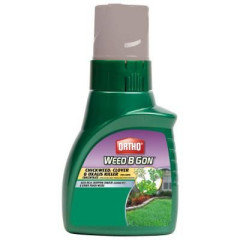
    Any broadleaf lawn weed killer will work. Your local HD, Lowe's or hardware store should be full of them!! Orthro's Weed B Gone is one but Bayer makes another, very similar product. These are safe to use with any cool season lawn type.

  • 3 years ago

    I've used Weed-B-Gone quite a bit. Mostly just spot spraying the dandelions and other broadleaf's that pop up during the summer. It's my 'Go to' exclusively.

  • 3 years ago

    Round up works a lot better than selective herbicides. Selective herbicides can take a long time to work and may require several applications. Roundup kills everything with one dose. If you're putting down seed/sod and have to frequently water the area anyway, might as well start with a blank slate. And the grass will look better since it will all match.


    I was in a similar situation last fall. Killed everything, Dumped down some compost and grass seed. Watered for several weeks and my lawn looks great now. it's better to do this in the fall than in the spring.


    wh431 thanked charles kidder
  • 3 years ago

    @charles kidder i hear what you are saying and tbh i dont ve much faith in these selective herbicides either. Which is why I am using Roundup in the heavily infested areas.


    The problem with fall seeding is that my yard is surrounded by mature Oak trees and i ve a LOT of fallen leaves to clear out in Autumn. Not sure how well this exercise can go with newly sown grass seeds. In any case, i ve a lot of (gradual) ground prep work ahead of me. So by the time I finish with it, its probably going to be Fall anyway (Just hoping that its not next year’s Fall :)

  • 3 years ago

    Well, my only concern about roundup is:

    I was using it, undiluted, to 'dab' the cut ends of European buckthorn, that was in parts of my lilac hedge.

    I can't say exactly what happened, but by fall, I lost a large area of lilac hedge, several feet of it.


    I have heard that RU won't hurt the plant if applied to the roots, but I don't believe that. Roots have some of the thinnest bark anywhere on the plant, and roots actually absorb moisture.

    And the only thing I can think of is that some of the RU dripped from the dauber onto exposed roots, that stick above the ground of the lilacs.


    All I'm saying is, if you have valuable shrubs or trees in the yard, I would be a little squeamish about spraying roundup, in wholesale quantities, on an area the size of my lawn.


  • 3 years ago

    Ah, the lovely Buckthorn. I too have it on the perimeter of my Yard and ve to kill it with Glyphosate. The only saving grace is that in my case Buckthorn is surrounded by more Buckthorn :)

    The only other thing behind that are the mature Oak trees. So i am hopeful the trees will surive the Roundup onslaught.

  • 3 years ago

    Mature trees should be fine, especially using diluted RU.

    Like kidhorn2 said, RU is very effective on weeds. And really, you wouldn't want existing grass, no matter if it's thin, competing with new seeding anyways.

    Sounds like you have a plan wh431 and some experience with these things.

    I myself always like to talk things over before a project, it's how I learn. ;-)

    wh431 thanked BillMN-z4a
  • 3 years ago

    What the heck, It goes from "rejuvenate the lawn" to a roundup debate? Take a shovel and dig out 3" of the clay and then add 3" of top soil, plant grass and water. You'll need to remove and then add back approximately one yard of dirt per 1000 sq. ft. If you have buckthorn along the fence line you simply pull it out using leverage, and a nice weekend workout. It takes work to take a 150 year old Chicago backyard and make it nice and once you get it nice don't drive or park cars in the back yard,

  • 3 years ago

    And why you think Roundup can not be part of the program? where did that info abt ”150” year old backyard come from?

    and How you know if cars were ever parkec on it?


    Rest of what you are suggesting is like stating the obvious.

  • 3 years ago

    Why don't you start by telling me what "ABT" means first. How do I know these things about your yard? I don't and only making an assumption based on what you said. It's compacted ground without grass, with fence lines peppered with buckthorn. Throw in mature oak trees, (a mature oak trees take decades to grow), and my first conclusion suggests this house is located inside the older part of Chicago, and not a newer suburb.

    Clay will grow nearly everything just fine, including grass, but because it's compacted it suggests heavy traffic, or cars. Why Cars? The inner city of Chicago has always had street parking issues, and the way you write indicates you may have an extended family living there with lots of cars, so you park them in the back.

    I maybe wrong, but this is the picture I see, but until you post a picture, (which say a 1000 words) to give any indication what you have i'll stick with my guess.

  • 3 years ago

    No worries Kevin. Here your answes and some explanation.


    Its a suburban backyard backing onto woodland. I recently bought the house but i doubt any vehicles were ever parked on it (due to narrow side access).


    I think its just the nature of the clay soil that its poorly drain and easily compacted just by the foot traffic. Now digging it alone wont solve the issue in long term because the clay will eventually compact again. So i think, following may be a better approach:


    1) Clear out the current weed infestation with hard herbicide like glyphosate.

    2) Dethatch to remove dead weed debris.

    3) Core aeration to make wider air channels in the clay soil.

    4) Level & Top dress it with a mixture of coarse grit sand, Top soil and compost.

    5) Re-Seed.


    Hope you now see why we were discussing Round-up (Glyphosate) in the above context.


  • 3 years ago

    wh431, would you mind posting a picture of the area? I think all are minds are running off in different directions trying to picture your situation.


    Weed-b-Gon Chickweed, Clover, & Oxalis Killer is a stronger version of the normal Weed-b-Gon. It should take out the living creeping Charlie, BUT NOT THE SEEDS. Too many people give up on WBG products because the Charlie seems to have not died. It did, but it comes back quickly from seed. So you have to dose it immediately when you see it returning. Get it before it goes to seed again. It might take as many as 3 or 4 doses in a growing season to kill it all.


    The way to loosen compacted soil is to grow things with deep roots. The more wild fescues, the kind farmers use as forage, will put roots down where you need them. Clovers will, too, as will alfalfa. Clover can be killed (in the future) with WBG-CCO if you decide you want more of a grass lawn, but lots of people have pure clover lawns...unless you are allergic to bees.


    Is the area currently a low spot in the yard? You mentioned that water was pooling. If it is low, then bringing in more mineral soil should help with drainage. Otherwise I always caution people that bringing in topsoil WILL change your drainage. Last year we bought a house from the original owners who subscribed to adding 1/4-inch of topsoil every year. Now the yard is mounded up and there is a moat around the house when it rains. Fortunately we do not have a basement.


    Beesneeds outlined how soil compaction happens ( Heavy foot traffic, animal containment, vehicle parking, pool ). If you haven't had any of that back there, then chances are fair that you simply have hard soil for a different reason. A big reason for hard soil is allowing it to go bone dry for an extended period. What happens is the beneficial soil fungi which normally keep the soil open, die from thirst. The way to fix this is with either compost, which I believe is a huge waste of money, time, and effort; or with organic fertilizer along with hair shampoo as gardengal mentioned. The beneficial microbes are already in the soil, more or less, dormant. By feeding and watering them at all levels, they will respond in a matter of weeks to loosen the soil. Hair shampoo is not what they use on golf courses, but hair shampoo is nearly identical to the expensive stuff after it is diluted. The application rate is 3 ounces of shampoo per 1,000 square feet of area. If you make a mistake and use 30 ounces, no harm done - it's happened and no harm was done. But start with 3 ounces in a hose end sprayer for every 1,000 square feet. Fill the rest of the bottle with water and spray it all out as evenly as you can to get the dosage good enough. Feed with organic fertilizer at 15 pounds per 1,000 square feet before you spray the shampoo. Follow it all up with about 1/2-inch or more of water to wash the shampoo into the soil. if you see water running off or pooling, STOP watering and allow it to soak in for 15 to 30 minutes. Resume watering with stoppages as needed until you get 1/2 to 1 inch of water down. The idea is to get water deeper into the soil where the fungi live. The water keeps the environment cooler and sets up conditions for the fungi to thrive. The organic fertilizer feeds them and they go off to do what fungi do. Picture a bag of bread that has gone moldy. One day you see spots on the bread and the next day the entire bag is packed with fungal strands (called hyphae). That is what happens in the soil. In about 3 weeks you should notice a difference. Before you start any of this, take a screwdriver and poke it into the soil. Note how hard it is to do and how deep you can push it. Three weeks after the shampoo and fertilizer and deep watering, try the screwdriver test again. It should sink in much more easily and deeply. Once you see the effect working for you, you don't really need to continue with monthly treatments. I did my lawn in 2012 and it is still soft when it gets watered deeply. It is almost too soft to walk on, which is a reminder to not walk on wet soil.


    You might try doing a jar test on the soil. Take a straight sided jar and fill it half way with your soil. Use a ruler to measure how much soil is in it and take a picture. Fill the jar with water and a few drops of shampoo or dish soap. Cap it and shake, shake, shake to dissolve any clods of soil. Set the jar down and wait one minute. Set up the ruler and snap another picture. Wait another hour and snap another picture. Then the next day take another picture. The first picture (one minute) will show how much sand and gravel settled out. The one-hour picture will show how much silt settled on top of the sand. The last one (one day) will indicate the amount of clay. Clay tends to remain in suspension much longer than sand or silt. If you have a jar full of muddy water that you cannot see through, then it is mostly clay. If you have a jar full of sand and silt with a layer of clear water on top, then you have very little clay. This is not to say you don't have another problem, but attempting to fix clay is not necessarily the solution to whatever problem you might have causing the feeling of compaction.


    Dethatching and core aeration won't hurt anything, but I see them as wasting time. The shampoo ultimately opens billions (trillions?) of holes in the soil while the aerator opens hundreds.


  • 3 years ago

    Instead of making my previous lengthy post still longer, I'll add this here. You were concerned about seeding in the fall. " The problem with fall seeding is that my yard is surrounded by mature Oak trees and i ve a LOT of fallen leaves to clear out in Autumn " We call it seeding in the fall, but really we should call it seeding in late summer. As soon as the oppressive heat breaks in August or early September, THAT is the time to overseed. This should precede leaf drop by lots and lots of weeks. In fact what it does is give you time to evaluate the effectiveness of the overseed and re-overseed if needed before leaf drop.