

Procuring materials save money?
Hi! Checking to see if anyone has gone through the effort to procure and supply the materials for their build rather than the builder or subs get their own? If so, how much can be saved?
We are hoping to find as much as we can via facebook, craigslist, H4H to supply the build. I just don't know if the future builder and their subs will be open to it. I know they don't have time to shop around and take the time to pick items up but I do. I'm concerned that if I go through the effort, they will just mark up their labor to cover the markup on materials or will refuse to use the materials I provide for "liability" reasons. We have requested bids from 4 builders and 2 flat out haven't reached out after the initial consultation when we stated our intent, one has been receptive but he doesn't build many houses and the other had a clear list of things he wouldn't allow me to purchase. I know I can save tons on 12/2 wire, trim molding light fixtures etc. I know time if critial and I wouldn't hold up the built tryin to save a few hundred dollars.
Has anyone done it and saved enough money to make it worth the effort? How did you get the builder to allow it?
Thank you!!
Comments (48)
 3 years ago
Most won't allow it because they can't vouch for your sources -- if they install something that turns out to be a problem, they won't be responsible for replacing it. Our builder let us supply the decorative lighting, but still charged their cost-plus percentage on it because they were still installing it and standing behind their work with it.
 3 years ago
We were able to buy minimal things. Fixtures like towel holders, mirrors, and hooks were a yes but toilets and light fixtures a no. We also got a custom vanity made and paid for it but then sink etc was installed by them. And we got stand-alone vanities from ikea and another spot that had no mark up
Related Professionals
Macon Architects & Building Designers · Mount Vernon Architects & Building Designers · Peoria Architects & Building Designers · Lebanon Architects & Building Designers · Amherstburg Architects & Building Designers · Sioux City Design-Build Firms · Augusta Design-Build Firms · Lewiston Design-Build Firms · Oneonta Design-Build Firms · Vancouver Design-Build Firms · Terre Haute Home Builders · Cherry Hill Home Builders · Cedar Rapids Home Builders · Toledo Home Builders · Eugene Home Builders- 3 years ago
The best way to do this is to delete the builder and find your own subs where necessary. You supply all the main materials. A sales tax license is useful. You can apply in my state without incorporating.
 PRO3 years ago
Do you have enough experience in home building to know what is acceptable quality? Example, you purchase trim molding and it arrives warped to the point where they cannot install it. Or plumbing fixtures from unknown brands that a plumber wouldn't be able to repair if required. I would imagine a builder would not warranty any material that you provide if they do not have a history or experience with the source or product. Also, they would likely make sure they are not responsible for any delays caused by issues with the material you provide. Is the low cost worth the high risk?
Experienced builders want to work with materials they trust because they know the potential nightmare the build will become if they don't. If a builder tells you they don't care what or where you source, I would question their experience and would want to see multiple homes they finished to make sure their build quality is in line with your expectations.
 PRO3 years ago
" We have requested bids from 4 builders and 2 flat out haven't reached out after the initial consultation when we stated our intent..."
They were experiened with your type and want nothing to do with you. It's like you're taking your order directly to the kitchen and picking up your food so you don't have the expense of tipping the server. 3 years ago
Any saviings would be very minimal for all the reasons stated above.
We sources our own lights, door handles, vanities, bookcases, etc and yes the builder put his cost plus on since he was installing or supervising all of that.
 3 years ago
I live in the Nashville area. It is not uncommon for builders to send their clients to certain stores to make lighting and flooring choices. Of course, the builder purchases the chosen items at contractor prices, which is lower than the 'sold directly to' client price.
- 3 years ago
I live in the Nashville area. It is not uncommon for builders to send their clients to certain stores to make lighting and flooring choices. Of course, the builder purchases the chosen items at contractor prices, which is lower than the 'sold directly to' client price.
- 3 years ago
Can you take your own food to a restaurant and have them cook it for you to save money on the bill? Not many, just a few in fishing resort towns is all I know of.
- 3 years ago
I think lighting is one area that is relatively safe to procure yourself. It will save a bit of money, but a lot. The major benefit to procuring your own lighting is flexibility to shop anywhere to find what you like for each type of interior and exterior light and ceiling fan. The downside is that you may have too many choices. If you prefer someone to guide you through the choices, then stick to the lighting store.
 3 years ago
Also will depend on the build type. Will you own the property? If a tract or developers type home you will not own anything until the closing and they will not allow you to supply your own. Custom or possibly semi-custom you may get away with smaller items.
- 3 years agolast modified: 3 years ago
Facebook, Craigslist & H4H are for DIY'ers.
If you haven't done this before, you are likely to have an expensive, frustrating and painful learning experience.
- 3 years ago
In my experience, the best way to save money in a build is to specify all materials at the beginning. Allowances are a constant source of cost overruns, so the best thing to do is to eliminate all allowances. This helps put needs and wants in perspective and allows you to see the entire picture of your selections while you can still manipulate budgets.
You may be able to create some savings by sourcing your own fixtures and appliances, but on the whole these are small savings.
Good luck
- 3 years ago
My sister did it for a minority of things in her house expansion, and it did save her a little - but she had the time to do it, and I know how much hassle it cost her. She was able to get some local suppliers (usually small local artisans for things like railings and live edge wood shelves, etc) to negotiate on the prices, so she did save a little. She also saved by buying some specified components when she travelled out of town, saving the large shipping bills because they weren't available locally (she lives outside a small city) - these were all things her builder required and specified, but couldn't buy locally, and she just provided the transport.
I understand why most builders wouldn't trust the quality of construction components that you purchased for them from an unreliable source, but I think you should be able to supply some of the cosmetic items like cabinet hardware, etc. If you want to use salvaged materials or those from an unknown source, you'll probably have to do it yourself so that you accept the risk of the unknown safety standards of what you bought.  3 years ago
I’m questioning whether you can even procure enough materials from the stated sources to build an entire house. It’s one thing to pick out your flooring and order a large amount to be delivered by the retailer, it’s another to try to source the same amount all at once from multiple secondary sellers.
- 3 years agolast modified: 3 years ago
I saved thousands off list (not kidding) by letting my designer order my lighting, because she gets a trade discount.
I asked my builder about purchasing appliances and plumbing fixtures myself so that I could get the miles on my credit card (because why not get a flight to the islands?) He was fine with that, but explained that if there are any issues then I would need to deal with those. I decided to go through him for those things so that the responsibility would be his. This turned out to be a good thing: I'm putting 3 Solatubes in my kitchen and liked the 14" squares; those turned out to be too big so we're swapping for the 10" squares. My builder ordered the Solatubes and is taking care of the swap-out.
Your appetite for risk may be stronger than mine, but I wanted to go the safe route so I'm ordering things through my designer and builder. I'm still in the process of my renovation, but it has already saved me headaches and money.
- 3 years ago
Be careful buying used windows. In order to pass inspection, they must bear the NFRC energy performance label and meet meet your state's energy conservation code.
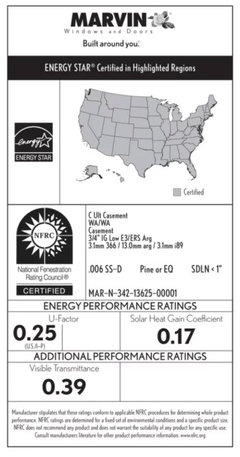
And in some states (like mine) plumbing fixtures must be on the state's approved list.  PRO3 years ago
A builder has field and office overheads to cover on each project and hopes to be able to turn a profit on projects, too. A homeowner supplying the materials for a project doesn't alter the target profit for the job and their "help" is more likely to add cost and complexity than it is to reduce it.
 3 years ago
Most of the affirmative comments are from a consumer's point of view, and pertain to finish selections, some hardware, and some fixtures. That is typical, usually within a set framework known ahead of time, depending on the type of build and contract.
But you are asking about providing electrical cabling, millwork, and I have a hunch you would try sourcing drywall, shingles, and anything else you think you can save a penny with. I don't think there are any G.C.'s or subcontractors, who are in the business of building houses and where materials are part-n-parcel of their trade, that would allow such a scenario.
You may want to try your hand at being the General Contractor yourself. But as an example realize unless you are issuing the electrician a W-2 or 1099 I doubt one of your own subcontractors would even allow you to break out the cabling and provide that while they continue to source all the rest of the supplies.
- 3 years ago
My business partner and I buy and rehab property and do misc small projects for friends. In years past, I have purchased materials from many different sellers and have saved significant amounts. Such sources are best for DIY projects where the buyer will be the installer and responsible for straightening out any product issues.
As I do more projects, I have found that I often prefer the contractor oriented suppliers for quality of products available and knowledgeable staff. When I am doing a project for someone else, I want to get started, do the work and move on.
My local ReStore often has good deals on lights donated by manufacturers and distributors. Flooring and tile can be a deal when a large donation comes in but you have to visit every few days as great deals sell fast. Then you need secure storage space available and labor and equipment for handling the materials. Not everyone can reschedule their day to get to the store to move heavy boxes by hand. As I get older, the great "deals" on secondhand, salvage, and closeout products are less and less enticing.
- PRO3 years ago
"I saved thousands off list (not kidding) by letting my designer order my lighting, because she gets a trade discount."
"Of course, the builder purchases the chosen items at contractor prices, which is lower than the 'sold directly to' client price."
Designers and builders don't get lower prices because our suppliers are a bunch of nice guys. We get lower prices because we buy a lot of stuff. When you purchase $100,000.00 worth of kitchen sinks every year, you'll get a price that the internet can't beat too. No, I'm not sharing or passing on my discounts; I've earned them. I'm running a business to make money. - 3 years ago
@Joseph Corlett, LLC said, "I'm not sharing or passing on my discounts; I've earned them. I'm running a business to make money."
But you do... Let's ignore the fact that you are required by law to share your discount if the contract is a cost plus arrangement and focus on fixed price contracts. Do you pass price increases on to the customer? Of course, you do...
As @Charles Ross Homes alluded to you, and most other contractors, have to find some way to cover costs and make an acceptable living. Money is fungible and therefore there is no real difference between a contractor spending less and a contractor charging more. In the end, if you made your profit by spending less on materials that means that the consumer also spent less in total. On the other hand, if you have to charge more because there were no savings on materials, the customer gets paid more. All costs flow to the consumer, likewise all savings flow to the consumer, even if they do so indirectly.
-----
I don't quite understand why people are suggesting that a consumer couldn't get a price on a lumber package. It really isn't that hard... Most contractor-facing lumber yards will have someone on their staff to do the plan take-offs. They will do the take-offs and put together a bid for the lumber package. I strongly suspect that bid will be pretty close to the contractor price, in my experience lumber yards give "contractor discounts" out to anyone spending a few thousand dollars. You can also likely save some money by shopping the entire bid around or piecing it out and shopping certain parts in different places.
The problem being, it just isn't worth it. Even a 5% - 10% savings on the various packages is only going to end up being a 2% to 4% savings on the entire bid. So the extra risk/cost combined with the extra work just isn't worth it. Which is why I suggested focusing on savings in the planning phase rather than spending time trying to find rather insignificant savings on materials.
JESSI M thanked bry911 - 3 years ago
@3onthetree said, "But as an example realize unless you are issuing the electrician a W-2 or 1099 I doubt one of your own subcontractors would even allow you to break out the cabling and provide that while they continue to source all the rest of the supplies."
I am struggling to believe that any electrician would set that requirement as it is absolutely meaningless, but if they do... just go ahead and 1099 them. Since a homeowner is not a business they are not required to do 1099's, but a 1099 provides ZERO cover or indemnity.I write the guy who mows my yard a check, if I converted my home to a business, then I would be required to submit a 1099 for that payment. The contract, responsibilities, liabilities, etc. don't change a single little bit because of it. So even though you don't have to 1099 them... just go ahead and do it, plenty of people 1099 their babysitter, dog walker, housekeeper, lawn company, that don't have to, and the IRS just deals with them.
JESSI M thanked bry911 - 3 years ago
In addition to volume, trade purchasers don't need the same amount of support as homeowners. Individuals ask those questions which require referring to the footnotes below the table in the appendix while contractors and designers check their own copy. Volume users also have information to exchange about products rather than multiple rounds of questions.
- 3 years ago
@bry911 if you are issuing a W-2 or 1099, that means a person is working for your business. If said person is working for your business as an employee, then the business can provide them the materials that they need, whether building materials, paper clips, or mileage reimbursement. It was said to reinforce that this homeowner is not an entity and will not be providing some Romex (nor panels, breakers, conduit, caps, boxes, staples . . . ) for a contracted electrician, whether under a G.C. contract or subbed directly.
(no need to get into details of a 1099)
JESSI M
Original Author3 years agolast modified: 3 years agoA little more detail... I worked for a builder before I became a stay at home mom... many many years ago. It was practice that you bid double the material cost for the job. For example, if an elec was installing a basic 3 pole rocker that cost $5.00 he would charge $5.00 to install, if it was a 3 pole dimmable rocker that cost $25.00, then guess what , it cost $25 to install.... same wires... why does it cost more to install one vs the other? I have always done cost plus because of this and I'm not sure how many people even heard of cost plus before Covid. As far doing it myself, I would love to but the bank won't let me. Yes, I do have building experience. Last year I build a 3200 sq ft barndominium on the same property to house our equipment and it has a 1000 sq ft 1br/1ba appt. I didn't do it because I wanted to, but because I couldn't find anyone that was less than a year out to start. I hired out the concrete, shell and drywall, did the plumbing, finish carpentry, flooring, some framing and my uncle came to town to help with me with the electrical. Its still standing. When it came to ordering, I got a better price on somethings because I was paying cash and not having to float on credit at the lumber yard. I agree with Lyndee Lee that you don't get help when you order from lumber yards and there isn't anyone to list the differences of one product from another. You call with a materials list and quantity and you get it. There is no time to question the price between species. Their prices change just based on the yard they send it out of and what is in stock at that moment. I was charged $50 more per 6x6x16 because they didn't have any at the closest yard and pulled them from another. If they told me there would be a difference I would have waited a few days and saved $1k.
I probably didn't give a good enough sources for where the materials would come from. I have an acquaintance that does asset liquidation and had an electrical company owner retire or pass, not sure which but all of the materials they warehouse went to auction. GFCI outlets new in box went for $2.00, and entire shelf of 100+ eaton breakers sold for $50.00. Honestly electrical I wouldn't do it with because, I too would want more source info. There is a local person that sells stain grain v-grove and MDF trim for about 1/2 to 3/4 what you can get it for from 84 lumber. He can do so because he has no overhead.... sells it out of his garage/barn, one day a week and doesn't deliver. I know better than to go digging through dumpsters to look for materials and scouring the scrap yard for a deal. But if there is a special order/ no pick-up door at the surplus builder place, then I don't see the problem. The builder only warranties it for a year, I will be paying it off for far longer... I have a much higher interest in making sure there is good quality in the materials used. It wouldn't be all materials either.
One of the estimates I currently have, the contracted fee is $112k, which about 15% of the total contract. I asked them to fee base it simply because of what @bry911 said. There is no benefit for the contractor to find ways for me to save money if his pay is dependant on it. Would it be fair to me if he charged me more for a brick house than a vinyl sided house when he, himself is doing neither the brick or the siding? On the other hand, would he adjust his rate if I chose a shingle roof over the metal roof that he originally quoted? I've had friends tell me their builder just sends them to a showroom to pick everything out... faucets, light fixtures, tile etc. They always say, "you have an allowance, this is group A in your allowance, if you want be "B" there is in upcharge, but don't worry about it now. They are always SHOCKED when they have gone over budget and find out the contractor grade faucet they upgraded cost $300.
I would NEVER ask someone to decrease their labor rate for me to fit into a budget, but I don't see why they should object to using b-grade bricks for 1/2 the cost either.... unless the are only looking out for their own take home pay and not my mortgage.
Before anyone suggest, I am not building a house bigger than I can afford. I just like to save money on things that I can.... I drive a Hyundai but could drive a Mercedes if I felt there was a benefit to the difference in cost. There isn't one that I have found.
- 3 years agolast modified: 3 years ago
IF that is how the builder priced, then he was ignorant of truly calculating overhead costs, or doing cost autopsies on past jobs. No pro prices things like that. Labor is always the much larger share part of doing any job. Sometimes materials are only 5% of the job, and the rest is knowledge, experience, tools, and market scarcity for all of that. There are no young guys in the trades, so as the older ones retire, the existing one's rates keep going up and up. Skill is scarce, and it makes them a good living.
You are going to need to self GC if you want to do liquidation products. Seconds and thirds cost you way more money in contractor labor than buying first quality. It takes longer to make warped or off color products look good. Some never can look good. Time is money, and you are costing the trades time to buy questionable products. And that is the #1 reason most contractors refuse to work with homeowner supplied products. They buy cheap junk that is harder on them to work with. JESSI M
Original Author3 years agoFor those saying they get a discount for quantity, I would double check. I can go to my LLR to get a residential builders licence that limits me to $5k in work but with that and a business licence I can get wholesale trade prices, just like every other contractor. If you think they are giving you a special discount, ask them what the price would be for less or more of what you are ordering and if the price is the same for someone else ordering less or more. I would ask how much your credit line and how much you owe on it has an impact on your price. Usually any industry that gives price discount of quantity, there is a contract that clearly states a minimum for each amount before a discount is given. Those are typically given to distributors and if they fall below then they have to revert back to wholesale cost. It may benefit you to negotiate and shop around rather than taking their word for it.
- 3 years agolast modified: 3 years ago
@3onthetree said, “if you are issuing a W-2 or 1099, that means a person is working for your business. If said person is working for your business as an employee, then the business can provide them the materials that they need […]”
1099’s are for non-employee income greater than $600 paid by your business. They are specifically not employees. Your providing a 1099 has no bearing on employment status.., this is just an FYI.
- 3 years ago
Well, Jessi, you originally said you were sourcing your materials from Craigslist, fb and H4H which is not the same as having contacts and extensive experience in the construction industry as you apparently have. Hence the negative responses.
- 3 years ago
You must be young ... plenty of people have heard of cost plus contracts, long before covid! Most truly custom homes were done with cost plus contracts.
- 3 years agolast modified: 3 years ago
@JESSI M said, “I have always done cost plus because of this and I'm not sure how many people even heard of cost plus before Covid.”
Just to be clear, cost plus has been the most popular contracting method for custom home construction for at least the last thirty years. I find it startling that any area of the country would struggle to find a contractor willing to work on a cost plus basis before the pandemic.
“I've had friends tell me their builder just sends them to a showroom to pick everything out... faucets, light fixtures, tile etc. They always say, "you have an allowance, this is group A in your allowance, if you want be "B" there is in upcharge, but don't worry about it now. They are always SHOCKED when they have gone over budget and find out the contractor grade faucet they upgraded cost $300.”
Your friends were likely not building a custom or semi-custom home, that description matches people buying a completed new construction home. You can’t use the profit models of build on their lot or build their home on your lot builders to discuss contract savings for custom or even semi-custom builds. That has much more in common with buying an existing home or any retail product than it does a custom home.
“Would it be fair to me if he charged me more for a brick house than a vinyl sided house when he, himself is doing neither the brick or the siding?”
Yes, because he is absorbing higher risk. Is it fair for a jeweler to make more profit on a diamond than a grocer does on a pea? That is how markup works. If that bothers you then get a cost plus a fixed fee contract and specify the materials in the fee.
I understand this may seem rude, but your perspective on the above issues suggests to me that you are overvaluing your experience a bit.
Moreover, contractors in most areas aren’t getting rich. It is faulty to look at the way they charge rather than the amount they charge. If a contractor charges too much, the answer isn’t usually to get the bill down by buying your own materials. It is usually to find a contractor who is charging more appropriate fees, adjust your budget if know one is available at your fee, or do it yourself.
- PRO3 years ago
" It was practice that you bid double the material cost for the job."
I would be bankrupt in weeks if I charged that way. Material costs are a component to overall pricing. JESSI M
Original Author3 years agoThank you all for the perspective and info. If you are wondering why I am so sceptical or cynical, please keep in mind, I am giving a complete stranger access to a $1 million dollars based on references he has proved, google reviews and accreditations from organizations he has to pay to be a part of. This person could absolutely ruin me and my family for the rest of our lives if there are any anterior motives or dishonest practices. One last question, should the contractor provide me with receipts so I can verify?
- 3 years ago
Now you sound even more inexperienced ...
Why would the builder have access to your money? You aren't adding them to your accounts and family!
Get a construction lawyer to review any contracts and make sure you are protected.
Take out a construction loan so you have a middle man between your money and the builder. Banks will send out inspectors to verify progress before any checks are cut to the builder. Banks will also know who the well regarded and honest builder are.
- 3 years ago
Cost plus contracts should give you access to the subcontractor bids that the builder received. His markup would then be added to those. Don't assume! These are all things that you need to discuss up front and include in a contract.
- 3 years ago
I think you sound like a typical home owner and it’s scary turning things over and hoping it works out. Even when you do your due diligence it can go sideways and it almost always costs you. Yes you will ultimately be turning the money over to your builder to pay for all the subcontractors, overhead and materials. A million is a lot of money, although cheap here in Vancouver and not remotely close to what is needed to build now. That all said you really need a lawyer. Someone to flag issues in the contract and explain your rights within it and ways out if it fails. Our builder was cost plus and we got a copy of every single invoice for everything ordered. They marked that up and also had an addition project management fee. We were very diligent and responsible and still 20% over.
- 3 years ago
MOre than trying to source your own materials, you need to vet your contract with a good construction lawyer. That in the long run will save you a heck of a lot more. That and picking everything up front so there's no going over "allowances".
- 3 years ago
@3onthetree - I didn't miss the point... The point was nonsensical and yet all too common. You will have to imagine my surprise at someone in the trades trying to beat a homeowner into submission with some fabricated, yet official sounding, mumbo jumbo.
Those type of things happen fairly regularly on this site, from Verbo discussing the "National Residential Health Code," in kitchen design, to mentions of workers comp insurance for people who are clearly not employees, and now to the vague assertion that a 1099 creates some employee/employer relationship. My point in correcting your error wasn't to create a better understanding of 1099's, it was to shine a light on the fiction.
So, with all due respect, your post was wrong... the follow up was wrong. These could absolutely be innocent mistakes but your mistake doesn't suddenly become correct by saying, "let's not get into the details." I assure you, I simply corrected your mistake. I didn't get into anything approaching detailed, which would take about 12 pages of small font.
- 3 years agolast modified: 3 years ago
Discounts on materials are earned based on the past years of business volume. If you think that someone who has done $1500 of business with a company in 2022 gets the same discount as the company that did 150K or 1.5M in 2022, then you do not understand how wholesale businesses operate. That "free hamburger tomorrow" type of lure doesn't work. The promise of more business earns you nothing. They have seen that one before. Suppliers and trades just laugh at that. Some contractors actually pay higher prices than retail at suppliers, but they continue to shop where they do, based on the service and credit terms. Their time is money.
You may get any license you please. But you will earn your discounts based on the actual business that you do with a company. If you end up doing 300K with a company, then perhaps they will rebate you a small % , after the project is through. But as you are a one off, probably not. One offs do not get large discount, or even access to the high quality subcontractors. It is why so many self GC's projects take years beyond what an experienced builder can do as far as schedule. One offs do not get premium anything.
- 3 years ago
@bry911, you often like to pick adjacent things out and argue them, then say it's your last comment, then come back for more. The mentioning of IRS paperwork was to illustrate that she is not an "entity" who would be expected to provide materials/products to an employee. That's it. Simple. No tax accounting needed.
- 3 years ago
In practically every cost plus contract, or cost plus portion of a contract, the homeowner is providing the materials. The builder/contractor is acting as a homeowner's agent and purchasing materials on behalf of the homeowner. There is nothing even remotely unusual about a homeowner providing materials, even if this particular execution of that relationship is.
- 3 years ago
$1 million dollar house and you're looking at Craigslist? When I remodeled my 1988 trailer house I bought last year I used Craigslist and saved 50% the value of the trailer but I got trash. (no really) But a million dollar house you'll save a couple of percent and if you're lucky and isn't worth the effort. YES, nearly most of the stuff is trash or damaged, I've been using for decades to buy and sell and rarely see anything worth buying. Your odds of saving anything is slim through facebook and craigslist.
But there are other options. Building material liquidation centers where manufacturers liquidate manufacturer overruns, excess stock and with windows The manufacturer read the build sheet wrong. (seen a lot with windows.) Nearly all items are new and you could find matching windows for an entire house on the right day. I've used these and because the Anderson Window plant is close they use a liquidation company near me. I've bought many windows and doors cheap to resell on Craigslist. Doors, patio doors, windows, plumbing, trim and other mill work items can be found at these centers not to mention flooring. You know those return policies on this site and others (like Wayfair), they don't pay to ship those vanities and other big items back, they are sent to the nearest liquidation center.
Another source has been Home depot. Yes, in the back where windows and doors are sold is always you can find doors and windows their staff mess up on the build sheet. I've gotten 4 or 5 Anderson french doors over the years at about 75% off retail. Sometimes Menard's, like two cool fiberglass entry doors for $75 each, (retail $450) new, and special order returns. Point is you need to know where to look, and it isn't craigslist. last year one visits to my list local liquidation centers I picked up a new undamaged vanity for 60% off retail sold by wayfair. Most vanities off craigslist sold as new came from trucking companies who damaged the items in transit so beware.
- 3 years agolast modified: 3 years ago
There is often a lot of confusion over the various contract types and exactly how arrangements like cost plus work.
A cost plus contract should be perfectly convertible to a fixed cost contract with a price escalation clause. If a builder is provided a detailed set of plans with all finishes specified prior to the formation of the contract, those things form the basis of the contract. The price/bid provided by the contractor would then be for the complete construction of the specified house at the current price levels. Which is largely a fixed cost contract. The only difference being who absorbs price changes by default, in a fixed price contract the contractor absorbs price escalation risks and benefits from price decreases, while in a cost plus the homeowner has those risks and benefits.
However, underbidding and poor bidding are still the responsibility of the contractor. An example to demonstrate this rather subtle difference: Suppose you specify 1,500 square feet of flooring that costs $8 per square foot ($12,000 total), however, the builder underbids the selection assuming he can get it for $6 per square foot and only use 1,200 square feet ($7,200 total) and includes that amount in the cost plus contract. Suppose once your floor is ordered it has gone up to $10 per square foot. So the actual cost to the builder is $15,000 but your cost plus contract will be limited to his bid plus the $3,000 price increase, which is $10,200.
I suspect rather few builders actually operate this way. Too many look at cost plus as a way to offshore all risk to the client. That is not really the way the contracts operate, on the other hand, most commercial builders understand cost plus contracts pretty well and have all been burned by this very thing. Now this isn't to say that you should die on a $4,800 hill but being informed about the way the contract should work is leverage.
---
It is also why the best thing you can do to limit your risk and your cost is to make all of the selections before the contract is signed and insist that the specification sheet become part of the contract. Then get and keep prices on the specified fixtures and finishes near the date of the contract.
I know that people get so excited about it being time to select fixtures, appliances, cabinets, paint, etc. and people really would miss the joy of making those decisions when they could really see the space, however, that is also how build costs grow significantly. I know that I am a broken record and there are certainly other ways to save money, but I suspect few are as impactful.














res2architect