Software
Houzz Logo Print
seniorballoon

Little Green Worms

3 years ago

I hate these little guys. We have always had a bit of an outbreak around this time of year. They do a bit of damage to the acquilegia and the deciduous azaleas, but nothing they didn't recover from when the storm passes. This year it's worse than ever and they've begun to attack the roses. Never done that before. So now, it's war!


In the past I'd used BT (bacillus thuringiensis), and it works, but you have to keep reapplying it and I was using a one quart spray bottle. Fine for a few plants, but now we have...well more than a few. :o) So I purchased a 1 gallon pump sprayer. It does a great job and is pretty easy to use, which means I'm more likely to do it regularly and keep them under control.


My only question is, are there plants that do not like to be sprayed with BT? Any negative effects?

Comments (21)

  • 3 years ago
    last modified: 3 years ago

    None I know of.

    Moses

    SeniorBalloon thanked Moses, Pitt PA, cold W & hot-humid S, z6
  • 3 years ago

    I second that.

    SeniorBalloon thanked gardengal48 (PNW Z8/9)
  • 3 years ago

    I'm using Monterey's BT formulation, I'll check the label. It recommends 2 tsp/half gallon water, so even if it did contain something it would be a very small amount that is getting to the leaves. I had read that some people add a bit of soap to help it adhere to the leaves, but that seems like a bad idea, and so far unnecessary. I've been spraying in the morning and the roses are almost 100% clear. The Azaleas have a greater infestation and are more difficult to get good coverage due to size, shape and location. Tomorrow I'll definitely do them again, I'll examine the roses and treat as necessary.

  • 3 years ago

    Are you certain that you aren’t dealing with sawfly larvae?

    SeniorBalloon thanked rhizo_1 (North AL) zone 7
  • 3 years ago

    There's certainly more than one wormy-looking thing that eats roses, but sawflies love them. BT is not supposed to work for sawfly larvae as they are not true caterpillars. Insecticidal soap and neem oil should work on sawfly larvae. https://bygl.osu.edu/node/1355

    SeniorBalloon thanked Steve_M in PA
  • 3 years ago
    last modified: 3 years ago

    These are green without any speckling. The Sawfly larvae in the link all appear to be other colors? I would add that the BT does appear to be working.

  • 3 years ago

    There is more than one type of sawfly.. TMine are never speckled and have more than one infestation period hey only feed for a brief period and then drop off into the soil to pupate. Are these under the leaves or on top? How large are they Any pics. It could be that that have all dropped to the ground rhaather than being killed. If not for this year, then for next, it miit might be best to get a true ID>

    SeniorBalloon thanked Vaporvac Z6-OhioRiverValley
  • 3 years ago
    last modified: 3 years ago

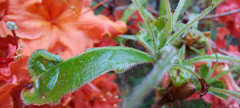
    Here's a pic. this was taken with the Macro function on my phone camera. They are about 1/2 inch long and 1/16th wide. This is from one of the deciduous Azalea's.


    In this mornings search for worms on the roses I only found one. There still readily visible on the Azaleas, but much reduced in number.

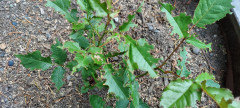
    There is one rose they really seem to love. I don't know it's name. It's growing in my brother's garden and I have several cuttings. It's a yellow rose, I believe a climber, and very fragrant. Here's a pic of the damage on one of them.


    The only pest I've seen are the worms, but the damage on this one looks a bit different than others, more notched, which made me wonder if there is another pest. I have not seen any worms on this plant for a few days, and I don't think there's been any new damage, but with all the previous carnage, it can be difficult to tell.

  • 3 years ago

    Azalea sawfly and rose sawfly appear to be different species and have different feeding habits. On roses, I would expect to see the "window panes" first, where only one face of the leaf has been eaten. Later the holes get larger and go all the way through. So if the rose leaves are getting eaten from the edges, that might be caterpillars, or maybe your azalea sawflies are branching out and trying new foods?

    https://pnwhandbooks.org/insect/hort/landscape/hosts-pests-landscape-plants/azalea-rhododendron-azalea-sawfly

    https://ugaurbanag.com/sawflies-a-common-rose-pest-this-spring/


    Either way, I think you will have to go looking every day or two to catch a critter in the act.

    SeniorBalloon thanked Steve_M in PA
  • 3 years ago

    On both the Roses and the Azaleas, these little buggers are eating from the edges. They look identical, just like the photo above.

  • 3 years ago
    last modified: 3 years ago

    Then I guess you have your culprit - azalea sawfly. If you can't manage them by hand picking or spraying them off, there are a lot of insecticides that work against them, but BT isn't listed as one. (If it works, it works! But I guess it doesn't work quite the same way as it does on caterpillars.) If you want to go organic, you can start with neem oil or insecticidal soap. Table 2 at this link shows a list: https://pnwhandbooks.org/sites/pnwhandbooks/files/insect/horticultural-landscape-ornamental/content/pdf/pdfs/insect23f-9chemicalcontrollandscapemrbawlbnk.pdf

  • 3 years ago
    last modified: 3 years ago

    In my experience, sawflies are reasonably controlled by a properly diluted and applied insecticidal soap. Read and follow all of the directions on the brand that you decide to try.

    By the way, there is a downside to applying Bt products indiscriminately; many people don’t understand this. Butterflies and moths are valuable pollenators in the garden, besides being objects of great beauty. Bt should be used conservatively and only when needed. One of the first rules of IPM is to properly identify your pest.

    Birds are voracious feeders of sawflies and caterpillars, as are predatory insects, many reptiles and amphibians, even spiders and squirrels.

    SeniorBalloon thanked rhizo_1 (North AL) zone 7
  • 3 years ago
    last modified: 3 years ago

    @rhizo_1 (North AL) zone 7 - I agree that one should not spray anything indiscriminately - and if you do spray, choose the treatment carefully to match the actual pest.

    On the front of IPM, it may be more or less effective in different settings. I feel like I have gotten very little help from natural predators in managing rose sawflies. A few lacewings and wasps might carry off a sawfly here and there, but they reproduce so fast, it doesn't seem to make a dent. Birds must have some other food source that is less work, as they don't seem inclined to ferret the sawflies out from underneath the leaves. Once the sawflies get really big, they are probably better targets - but by then, each larva has eaten multiple leaflets, so it's a losing proposition. And I have had squirrels come to my rose plants, but they were here to eat rose buds - never insects!

    Insecticidal soap (Safer's soap, or Safer's 3-in-1) seems to work well against sawflies. The main trick is to keep watching the leaves and spray the actual bugs where and when they show up. You have to repeat every week or even more often, as wave after wave of the pests hatches and begins to feed. If you don't want to spray that much soap (which can burn the leaves), you can alternate with hosing the plants down with plain water to knock the larvae off. They may be unable to crawl back up, and if they do, at least it inconveniences them and slows them down.

    SeniorBalloon thanked Steve_M in PA
  • 3 years ago
    last modified: 3 years ago

    The notched leaves in the last picture look like leafcutter damage made by leafcutter bees for their home. Putting a barierrier underneath to stop pupatingthem pupating for their early cycle helped cut down their numbers. If you apply anything sustemic please pick one thats short lived and apply early so as not to affect pollinators, but really sawfly can be handled organically. Im just mentioning this because many will indiscriminately apply pesticideslong acting that affect things once the roses flower. The barrier suggestion is for sawfly, not leafcutter bees.

    SeniorBalloon thanked Vaporvac Z6-OhioRiverValley
  • 3 years ago

    I wouldn't call what I'm doing "indiscriminate" spraying, and I only use organic methods, safr soap, BT and sluggo. The BT did appear to work on the roses, so it's possible have two different pests, or as @Vaporvac Z6-OhioRiverValley mentioned they fed and dropped off to pupate. Generally I don't worry about the Azaleas as they recover, put out new leaves and seem to be fine. With the roses I have several cuttings that are small and just getting established and they were getting decimated.


    I will look to using a fine mist spray during the day to knock them off and when the sun passes, hit them with some safr soap. That worked well on the aphids I had on my mock oranges.


    Thanks to all of you for teaching me some new tricks.

  • 3 years ago

    @SeniorBalloon - I didn't mean to imply that you are spraying willy-nilly ... just stating a position in general.


    FYI, the sawflies I have in my area seem to generally be the bristly rose slug sawfly, which has multiple generations per year. So my advice above was based on that, because you can't let up this early in the year.


    From what I just read about the Azalea sawfly, it only has one generation per year. So the ones you saw are probably pupating, and you may only see a few stragglers until next spring.


    It used to be that the common rose sawflies in the USA were one generation per year, so they were not much of a worry. But since the bristly kind has been introduced from Europe, it's a bigger concern now.

    SeniorBalloon thanked Steve_M in PA
  • 3 years ago

    Based on a bit of reading Neem Oil does sound like a possible solution.


    https://drecampbell.com/natural-ways-get-rid-sawflies/


    Any thoughts on negative side effects, such as it's potential to harm beneficial bugs?

  • 3 years ago
    last modified: 3 years ago

    I didnt mean you were doing anything indiscriminate, but others reading this may do. The caveat is for other future readers searching the archives.

    Steve, Ive read that once washed off they cant climb back up! I hate the multi times a year rose slugs!!! The only dowside I know for neem oil is that is can burn the leaves.

  • 3 years ago

    I stopped using Neem last year because I found many Syrphidae larvae on my rose bushes and wanted to keep them in my garden.