Software
Houzz Logo Print
getgoing100_7b_nj

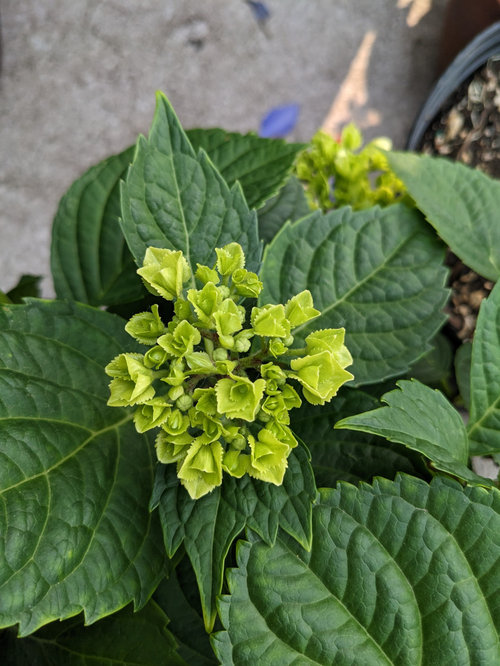
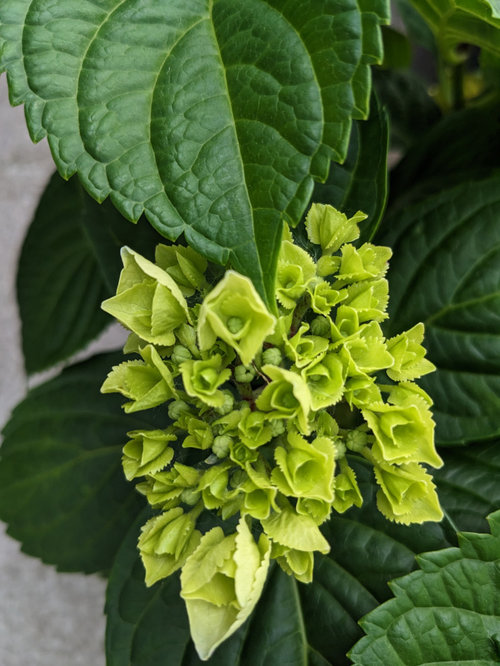
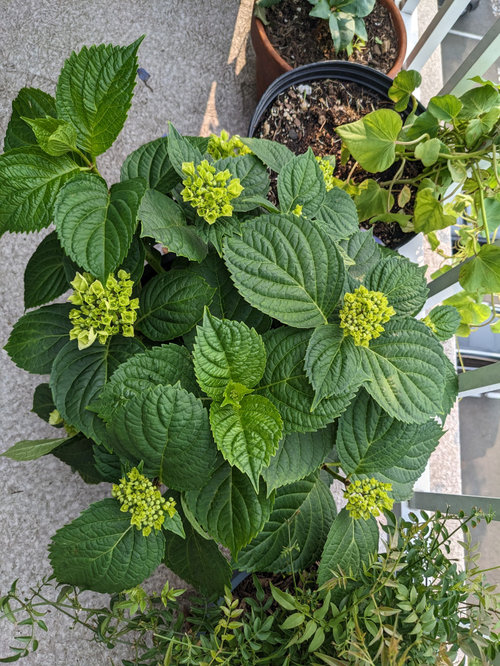
Hydrangea blooming green not blue?

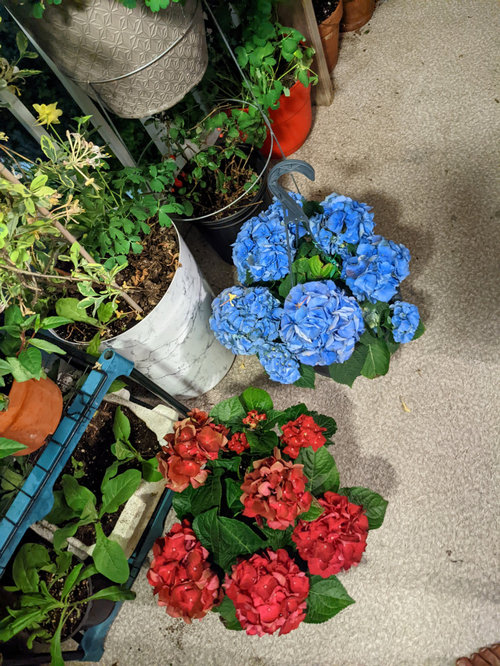
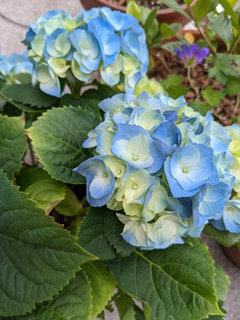
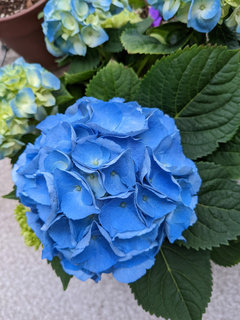
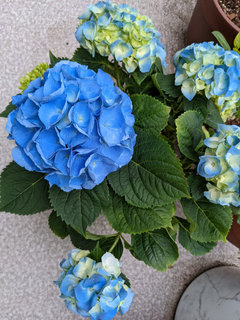
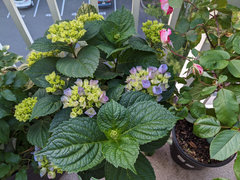
Last year I got this hydrangea macrophylla with blue blooms from trader Joe's. It survived the winter in my little green house on the balcony but I keep waiting for the buds to turn into blue flowers but now I am doubtful that will happen. It is potted in 5:1:1 without any line so it is expected to have acidic potting mix. Last picture is from last year when it was blue.

Comments (23)

  • 3 years ago

    Wait. The ’flowers’ (not actually flowers, but that’s another story) will colour up in due course, although it might not be as garish as it was last year. The blue and red ones appear to have been quite severely chemically manipulated by the grower.

    getgoing100_7b_nj thanked floral_uk z.8/9 SW UK
  • 3 years ago

    Thanks. I think those are sepals and not petals....The red one died over the winter so RIP raspberry colored hydrangea...I will be happy with any sort of blue clusters, just not lime green. Keeping fingers crossed.

  • 3 years ago

    Greenhouse hydrangeas - almost any hydrangea that is purchased in bloom at a grocery store - are often of no specific cultivar name and have been heavily manipulated by the grower to produce lush, colorful flowers out of season. Whether they come true to the initial form in subsequent years is up for grabs.

    Dosing with aluminum sulfate (aka hydrangea bluing) may help. It is the aluminum in the soil that makes the flowers blue. Since potting soil generally contains no nutrients, unless you are fertilizing with a full range fertilizer (with all necessary micros) or supplementing with aluminum, you may never get the blue flowers you wish.

  • 3 years ago

    It is very common for Big Leaf Hydrangeas to start blooming with their immature blooms green. As the blooms get more direct sun, they should turn blue, purple or pink. Enjoy!

  • 3 years ago

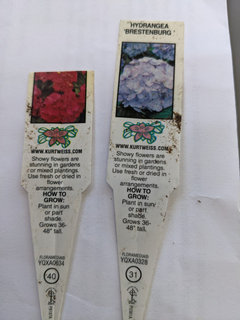
    I think they were in season though surely green house grown. They are a named cultivar "Brestenburg" and looked like this on May 12, 2022.

  • 3 years ago

    So, should I intervene at this stage or wait and watch? Also, is checking pH of the potting mix a good way to predict the color? If I were to intervene to change pH either way, would it affect the color of this lot of "flowers?" I am not sure it will forming new clusters for the rest of the year. It is supposed to be a very old Swiss cultivar from 1972, so likely not.

  • 3 years ago

    pH really has no bearing other than it will affect the ability of aluminum to be available. But if you supplement a containerized hydrangea with the aluminum sulfate, pH is completely irrelevant.

    And any macrophylla hydrangea in full bloom in May in NJ as been forced!!

    getgoing100_7b_nj thanked gardengal48 (PNW Z8/9)
  • 3 years ago

    I will wait to see what color it turns out to be. The pH appears to be 5-6. I used bulk sphagnum peat moss, aged pine bark and perlite. with some slow release fertilizer. I guess it will depend on aluminum content of those ingredients. I might even try to propagate it and make a pink hydrangea by adding a bunch of garden lime.

  • 3 years ago

    @getgoing100_7b_nj And I think green blooms are simply a Hydrangea warming up for the real show. Hydrangea flowers can stay green like that for weeks and then each individual flower starts to show its final color.

    getgoing100_7b_nj thanked westes Zone 9b California SF Bay
  • 3 years ago

    I sat through several lectures of soil science when studying land use policies and assessment thingies,


    what I clearly remeber - back then the discussion about forrest decline in Germany was in full swing - is that in actual, native (?) soil Aluminium ions get more mobile at or below a certain pH-level to a point that they "swarm out" at mass and change (or rather destroy) the actual structure of clay minerals.


    so, at least in mid Europe Al-ions are always present as part of soil minerals,

    and their mobility is influenced by pH-levels


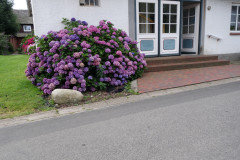
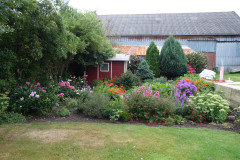
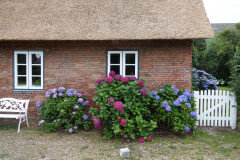
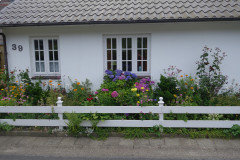
    another thing: we once were on holidays and the North sea, some lovely German island, and I noticed several old houses with very blue Hydrangea bushes.

    I managed to ask one woman who just stepped out of her door, complimenting her on the Hydrangea and asking whether she added anything for the blue flowers.


    She was abviously a farmer, looked at me like this was a very silly idea and answered: of course not.


    native soil on this island was very acidic and mostly sand.


    genetics is one factor it seems, some cultivars "turn blue" better than others


    pH levels matters


    and / or concentration of Al (which is very closly linked to the soil pH in poor soil with little buffer (little lime present)


    ---

    ok, so I found some pics, good thing I did, some were just pink, ahhh, memories and how unreliable they can be


    all should be growing in the same sandy soil, my educated guess is, that the different shades of pink or blue-purple are due to genetics


    at ca. 2 o clock, that pink blotch is a Hydrangea (just to show the variety)


    getgoing100_7b_nj thanked linaria_gw
  • 3 years ago

    I have been unable to focus on most of this thread because I'm still trying to process 1972 being "very old" hahaha!


    Beautiful pics, linaria, especially that first one. Wow!

    :)

    Dee

  • 3 years ago

    Diggerdee, the old comment is in the context of pace of hybridization and a more recent availability of hydrangeas that also bloom on new wood, extending their bloom cycle. A new hybrid or two are introduced every year so a hybrid from 1972 is very old in that sense.

  • 3 years ago

    Westes, those charts are very helpful. Linaria, that is a very interesting story, especially the anti-climax of not so blue hydrangeas. In summary, it appears that lower pH and presence of sufficient Aluminum are both necessary and neither alone would be sufficient for getting blue hydrangeas. Higher pH makes Al immobile and with Al there would be no blue no matter the pH. Additionally, some hybrids are better at producing blue than others.


    One outstanding question - how quickly does changing conditions, lowering pH or adding aluminum sulfate make for blue "flowers?" Would it affect existing buds or flowers or not?

  • 3 years ago

    LOL getgoing, I realize what you were referring to, but I guess when I see roses and other plant varieties that are anywhere from 100 to several hundred years old, that 1972 took me by surprise! You wrote "very old Swiss variety" and I'm picturing Heidi in my mind running around in the alps, lol, and here you meant something from my childhood!


    I know you're not thrilled with the green and I hope you get your blue blooms, but your hydrangea looks beautiful and healthy! Gorgeous foliage!


    :)

    Dee

  • 3 years ago

    I was a toddler in 1972, so it isn't ancient times for me either. Now I need to figure out who's Heidi. 😊 Thanks, it is healthy. It's strawberry twin didn't make it through the winter, so this one is really special. My previous attempts at overwintering hydrangeas indoors were also a dail so it is a keeper.

  • 3 years ago

    Dee, I'm totally with you. Particularly since my magic book of early 20th century plants has a mere two columns of named hydrangeas. Recency bias is a thing.


    The book was published in either '41, or '42.

  • 3 years ago

    Found Heidi on Wikipedia 😊

  • 3 years ago

    " In summary, it appears that lower pH and presence of sufficient Aluminum are both necessary and neither alone would be sufficient for getting blue hydrangeas. "

    For hydrangeas planted in the ground, this is true. For hydrangeas planted in a container, both are NOT necessary and in fact rarely occur in combination.

    Container or potting soils are soil-less mixes so no actual dirt (garden soil) involved. And they are all buffered to be pH neutral or very close to it. At best, they are only mildly acidic. As previously stated, it is the Al in the soil that causes the blue flowers - the low pH only allows the Al to be available or readily accessed by the plants. In a container, supplementing with Al in the form of aluminum sulfate will omit the requirement for a low pH.

    " One outstanding question - how quickly does changing conditions, lowering pH or adding aluminum sulfate make for blue "flowers?" Would it affect existing buds or flowers or not? "

    Probably not enough to make a difference this season. It takes about 6 weeks......


    getgoing100_7b_nj thanked gardengal48 (PNW Z8/9)
  • 3 years ago

    Oh geez, getgoing, now you're really making me feel old lol! I thought everyone knew who Heidi was. I guess at least I can say I did NOT read it when it was originally published hahaha!


    :)

    Dee

  • 3 years ago

    Well, it's going to be purple this year

  • 3 years ago

    @getgoing100_7b_nj I am going to guess if we had a precise measurement of your soil pH it would be just around 6. Based on the purple color, I am also going to guess that your aluminum levels in the soil are somewhat lower.

  • 3 years ago

    Yes, the potting mix was just sphagnum peat moss, perlite and pine bark fines, 1:1:5 or therabouts. I guess there's not enough Al in peat and pine bark. I checked the pH, it was about 6. I will be watering with a bit of vinegar in the water and see how that goes. As for AlSO4, it is a bag of 4 lb for $10 or so. I just don't know what I will do with that much. My gardening equipment and supplies are occupying an ever increasing part of my apartment and the madness has to stop somewhere. :)

Sponsored
Peabody Landscape Group
Average rating: 3.5 out of 5 stars8 Reviews
Columbus' Reliable Landscape Design & Contracting