Software
Houzz Logo Print
webuser_587923026

Bedroom Still Hot (Even With Vornado)

3 years ago

Bought a Vornado 660 Large Room Air Circulator for a 26 x 13 bedroom because my bedroom is consistently 2-4 degrees warmer than the rest of the house. It also faces the west so it receives a lot of day sun. I have moved the Vornado to three different spots around the bedroom and the temperature in the room doesn't change and it stays at 72-74 while the rest of the house is at 69-72.


Day or night, but night is much worse. It's as if the temperature never goes below 72 no matter what! and we have a 4 year old central AC system with two vents in the room!


Am I doing something wrong with the Vornado positioning? Should I buy something else instead? I figured an air circulator was a better option than a fan since I have poor air circulation in that room (one small window and sliding Anderson patio doors), but still no change!


This is maddening! What can I do to lower the temperature in my bedroom at night???

Comments (22)

  • 3 years ago
    last modified: 3 years ago

    Are you blocking the sun from the window and door from coming in during the day with shades? We had a west facing bedroom and every morning in the summer i would pull down the shades before going downstairs to be sure to avoid heating the room from the sun. it made a huge difference.. Also try running a fan on low drawing in air from outside the room (hallway) for a few hours to see if it helps but not too long as you don’t want to throw the system off balance.

  • 3 years ago
    last modified: 3 years ago

    I currently block the sun using vinyl vertical blinds. I know not the best, but I am going to use blackout curtains soon. So you are suggesting running the Vornado and also a fan on low blowing air from outside the bedroom and blowing it into the bedroom for a bit, correct?


    Daytime its manageable, but when we wake up at 1am it's 73-75 degrees and very uncomfortable. AC is on and off throughout the night.

  • 3 years ago
    last modified: 3 years ago

    Just curious in the winter is the room a few degrees colder? If your system is out of balance you may need to call in a professional.

  • 3 years ago

    Running the fan in the room will circulate the air already in the room, it won’t move in the cooler air that’s outside if it. Doing that requires placing the fan in the cooler area, aimed to blow into the bedroom.

  • 3 years ago

    Anna,


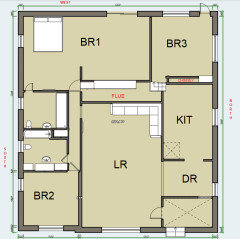
    In the winter the house is cooler in general. Let me show you what I mean and providing photos of my home layout for better visualization.


    By the way... Relative humidity for the house is always between 50-65% during the summer.

    Summer Temperature (w/ AC set to 70)
    BR1 - 72-74 degrees
    BR2 - 70-71 degrees
    BR3 - 73-74 degrees
    Kitchen - 71-72 degrees
    Dining Room - 70-71 degrees
    Both bathrooms - 70 degrees
    Living Room - 70 degrees

    Winter Temperature (w/ heat set to 70)
    BR1 - 71-73 degrees
    BR2 - 69-70 degrees
    BR3 - 66-68 degrees (on a cold night when heat off it can drop to 62-65)
    Kitchen - 69-70 degrees
    Dining Room - 69-70 degrees
    Both bathrooms - 70 degrees
    Living Room - 70 degrees

    HVAC is in the attic. New 3.5 ton system with new ducts installed 3-4 years ago.

    Gas furnace in basement. New furnace installed 3-4 years ago. Ductwork is old, but I am getting average to excellent heat from all my vents.

    AC Thermostat is on the hallway outside of Bedroom 2. Heat thermostat is not locked to any wall so we move it around and usually we place in the dining room since it is the middle of the two temperature differences between the house.

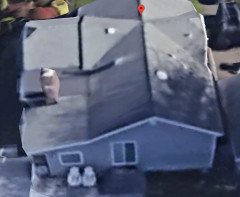
    I think only Bedroom 3 was an addition from over 30 years ago.

    Providing visuals of home to visualize how it is positioned in relation to the direction of sun.


    Main Bedroom and Bedroom 3 both face the west. Bedroom 3 has a flat roof and built on a slab. Kitchen has half a flat roof and next to Bedroom 3.

  • PRO
    3 years ago

    I don't think this post adds much additional information to your other post.

    Dados stated the reason why the temperature is no lower with the room fan operating. It's simply minimizing the air temperature variation within the room.

    To lower the temperature within the room, you need to either reduce the heat load or supply more air conditioned air flow to the room or both. With respect to decreasing the heat load, your blinds are not going to be as effective as applying solar film to your windows (https://www.3m.com/3M/en_US/home-window-solutions-us/solutions/temperature-control/) nor as effective as shading that portion of the home with extended overhangs or trees. With respect to increasing air flow, you can move the thermostat to the bedroom, install multiple temperature sensors and average them or rebalance the air flows in your home to provide more air conditioned air flow to the bedroom. You have such a combination of different roof types and foundation types that trying to get the room-to-room temperature variation below 4F will be chasing a constantly moving target.

  • 3 years ago

    Charles, I am going to look into the 3M film. Any recommendation as to which one is best for my situation?


    I may consider an overhang (extend out the roof a bit) if the 3M Film doesnt work.


    The air flow is adequate. I had my HVAC company take a look and they said its the best they can make it. I am considering a temperature sensor too.


    Thank you for your suggestion by the way.

  • 3 years ago

    What can I do to lower the temperature in my bedroom at night???

    You may not like my solution, but you will be more comfortable. Return the Varnado 600 and put the money towards a 5000 BTU window AC. This will cost you an extra $60 based on Amazon prices.

  • PRO
    3 years ago

    "The air flow is adequate. I had my HVAC company take a look and they said its the best they can make it." By definition, the air flow to the Master BR is inadequate if it can't provide the required amount of cooling. If you can't get more air flow to the Master BR by modifying ductwork or the use of dampers, your system may be less than the capacity need to condition your home.


    3M offers a variety of window films that will reduce solar heat gain. Here's a link to additional information https://www.3m.com/3M/en_US/home-window-solutions-us/solutions/temperature-control/ Remember, the objective is to reduce solar heat gain that the system needs to deal with--not just solar heat gain in the master. I suggest you consider it for all of the windows on the side of the home with the most solar heat gain.

    HU-587923026 thanked Charles Ross Homes
  • 3 years ago

    We have an east and south facing bedroom. The sun pounds on the brick all day long then radiates heat into the bedroom at night along with two bodies. We put solar film on the windows and also honeycomb blinds and black out Roman shades. While it certainly has helped it’s still the hottest room in the house. I wish we could plant a tree or add some sort of awning on the outside, but it’s a condo. We do use a fan and leave the door open.

  • 3 years ago

    We had a similar issue when we first moved into our home 6yrs ago. Our bedroom is on the third floor on the southeast side. Our sons bedroom faces north and we shared an AC unit. His room was freezing while ours was hot. We never need the heat, unless it’s below zero out. We had it zoned and put thermostats in both rooms. Much better now. Last summer the AC broke and was still under warranty, but it took Carrier 6 months to send a new unit. We got room AC units that vent through a window at Walmart for around $300. It did a great job keeping us cool at night. And I got addicted to the sound of the unit while I slept! I still have the unit in a corner of a room and just use the fan function.

  • 3 years ago

    Charles, I am going to do the 3M film and get it profesionally installed. They are recommending NightVision over Prestige. Then I am going to put blackout curtains on top of it. If this doesnt mitigate the problem I will play with the dampers. I do notice a stronger airflow in the vents closest to the return but thats normal since airflow is stronger to the return due to air pressure I was told. I could balance it out and see if the dampers give me more in the bedrooms. If none of this works it may be time for an overhang.

  • 3 years ago

    Katie - were these Amazon solar films? Additionally how many degrees would you say improved on the thermostat?

  • 3 years ago

    Austin Aire.... the thermostat is actually right outside of the living room. in the hallway in front of the bathroom and in the middle of bedroom 1 and 2.


    Good point on the sensor. The good thing is that the google nest sensor is not expensive, but I also noticed your point. Might as well lower the whole system and there is no need for a sensor. Sensor would just guarantee that specific area 100% reaches that temperature.


    I am installing 3M solar film and adding blackout curtains in the next 1-2 weeks to see if this helps. I am told it should. If not time to play with the dampers too. I do notice a stronger airflow in the vents closest to the return but thats normal since airflow is stronger to the return due to air pressure I was told. I could balance it out and see if the dampers give me more in the bedrooms.


    A santa fe whole house dehumidifier was something I thought of before hand since my house never goes below 53% humidity in the summertime.


    One thing I did notice is I left the bedroom door open last night and it did a better job of cooling bedroom 1 (it got it within 2 degrees instead of 3-4 degrees). I also wet the wall of the house where the sun hits it. I was told to try that. Not sure if it was the door open or wetting the wall bfore nighttime that helped. Trial and error. I was wondering if I needed another return in the bedroom or an air transfer grille.

  • 3 years ago

    "I am going to do the 3M film and get it profesionally installed."

    I had window film installed on my skylight and it made a tremendous difference in the comfort of the condo. As shown in the specifications, this film will dramatically reduce the amount of visible light transmitted through the window (but you have a choice of product). Cellular shades (mine are Bali blackout) also provide good sun/heat protection on south-facing windows.

    I once stayed in a room whose west-facing exterior was brick. It never cooled down because the brick absorbed heat during the day and radiated it into the room at night.

  • PRO
    3 years ago

    Good point on the sensor. The good thing is that the google nest sensor is not expensive, but I also noticed your point. Might as well lower the whole system and there is no need for a sensor. Sensor would just guarantee that specific area 100% reaches that temperature.


    That's the whole reason the $billion$ gadget market exists... hey it's cheap what do you have to lose?


    Buy another gadget *it's cheap what do you have to lose* and so on... until you have house filled with gadgets that don't do much if anything. In my book of definitions a solution means to fix the problem without creating new problems. People get a joy from the house of free stuff (or practically free). Look around, LOL. The supreme court recently made a ruling on free college stuff. How dare you, you promised?


    ----- back to the show ----


    Sensor guarantee: One sensor reads 74, system turns on because this sensor is set to 70.


    Bedroom 2 drops to 66F to drop the temp 4 degrees the sensor in the MB suite is trying to reach.


    Living room area drops to 66 where the thermostat is / Kitchen and elsewhere same difference.


    Bedroom 2 occupants claim it's now too cold. Put a sensor in that room to raise temp to 70-71 but to cool the MB suite lower the two sensors that guaranteed the cooling are now in opposition to one another. Which sensor wins? The thermostat? oops no guarantee with that outcome.


    If Bedroom 2 occupants don't care sure the sensor gadget may help... but not any difference from just lowering the temp at the thermostat. The end result isn't much difference other than your HVAC system is much more simple to operate if you just deny the gadget makers another gadget.


    For some the "oh it's so cheap" is too big of a hurdle to over come. It's your money you can burn it any way you want. It's not likely I convince you otherwise. The billion dollar gadget market is in no way shape or form going to collapse from anything I say now or later.


    What I see as your primary issue has more to do with elevated humidity than temp alone. Ignoring that isn't a good idea.


    I service the Katy, Texas area.


  • 3 years ago

    Austin - What makes you say elevated humidity is my main issue? It is an issue though. End of the day I am simply trying to get my bedroom warmer at night!

  • PRO
    3 years ago

    End of the day I am simply trying to get my bedroom warmer at night!


    I thought you were trying to get your bedroom cooler at night?


    Elevated humidity makes you feel less comfortable regardless of the temperature. A temp swing of a few degrees from one room to the next will matter far less with lower humidity in the home.

  • PRO
    3 years ago

    "Elevated humidity makes you feel less comfortable regardless of the temperature. A temp swing of a few degrees from one room to the next will matter far less with lower humidity in the home." I don't believe indoor comfort data support that assertion. First, a qualification: comfortable indoor relative humidity levels vary seasonally. Elevating indoor relative humidity in the winter can make you feel more comfortable. Reducing indoor relative humidity in the summer can make you feel more comfortable.

    The OP's stated range of room-to-room temperatures is 70F to 74F. A change in (dry bulb) temperature from 74F to 70F produces a 3.5F change in the "feels like" temperature at an indoor relative humidity of 40%, 50% or 60% So, the room-to-room temperature variation will be just as perceptible at lower indoor relative humidity.

    ASHRAE advocates controlling indoor relative humidity in the summer to 60% or less for comfort. I like to keep it at 50% +/- to mitigate the potential for mold and mildew growth. But doing so won't alter the OP's room-to-room temperature variation whether measured or perceived.

  • PRO
    3 years ago

    We have a west-facing bedroom in our summer house and installed awnings. They work great to block the sun in the afternoon--you just have to remember to lower them early in the day!

  • 3 years ago

    If this doesnt mitigate the problem I will play with the dampers.

    Do that first.