Software
Houzz Logo Print
webuser_706375986

Staking a Large Plant

3 years ago
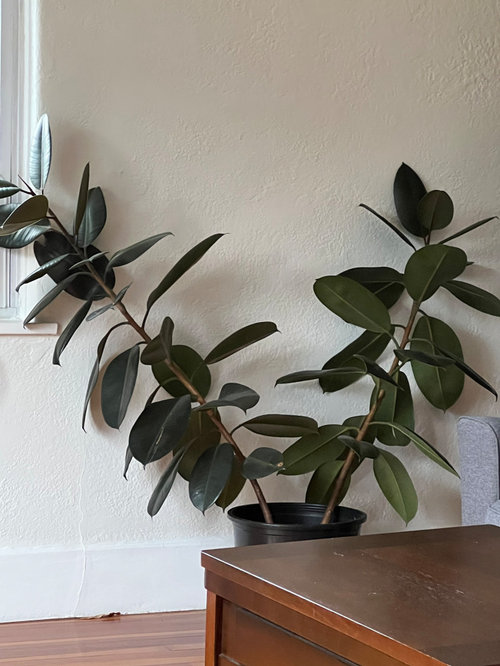
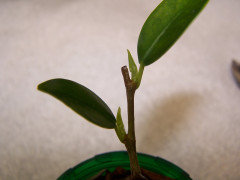
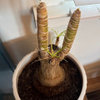
Greetings. I have this rather large houseplant, and the two (stalks?) are growing in opposite directions. I know nothing about houseplants, but it seems to me that perhaps tying them together makes sense. My question is, assuming I should indeed tie them together, do I need a stake? And at what point along the stalks should I situate the ties? Those are my main questions, but if there is anything else I should consider, I would greatly appreciate that advice. Thank you!


Comments (9)

  • 3 years ago

    assuming I should indeed tie them


    ==>>


    lets make this real easy.. there is no plant reason to torture them into a new form ... the plant is happy and apparently well balanced the way it is...


    if you want to.. for some aesthetic reason.. go for it.. its your plant to do whatever you want to ...


    and if you screw it all up.. you can cut off the growth tips..and propagate them.. and build a whole new plant... you really cant lose...


    but again.. there is no reason to create problems for yourself.. unless you are just that bored.. lol


    if someone would be so kind as to name the plant.. then we can google images.. to see the future.. and perhaps that will help you decide what to do.. and we can also take that name.. and google videos of propagating them...


    there is a name that plant forum if no one chimes in here ...


    i dont have one.. so i cant name it... lol


    ken

    HU-706375986 thanked ken_adrian Adrian MI cold Z5
  • 3 years ago

    This is the good old rubber plant or ficus elastica. Al would be commenting soon on how to prune it properly to allow it to live its best life but here is what I, a lazy layperson did for a plant that is now more than a dozen years in my care - stake and tie it in the most pleasing and space saving shape/form for my benefit (pics). I would tie them together so they are as close to each other as I want them to be, and if that also balances them without a stake then great. If it becomes unbalanced due to such tying, I would use a bamboo stake to keep it anchored exactly how I want it.

    HU-706375986 thanked getgoing100_7b_nj
  • 3 years ago
    last modified: 3 years ago

    @HU-706375986 Your plant is Ficus elastica, commonly known as a rubber tree.

    I have about 45 ficus that I tend to, not counting recent rooted cuttings, and I've been manipulating them for about that many years (45) as a bonsai practitioner. If you share your vision for the plant, how you want it to look, I'll tell you how to achieve that end, even if it's a single stem plant that's oriented vertically.

    Many growers consider a plant's growth as the yardstick by which they measure success; yet it makes more sense to judge success by the plant's appearance and level of vitality (health). Your plant is reasonably healthy, though it would like more light. The way the plants grow apart at about 30* from vertical is very jarring and unnatural to the eye because it's not something you'd be likely to see in nature.

    I'll watch for your thoughts.

    Al

    HU-706375986 thanked tapla (mid-Michigan, USDA z5b-6a)
  • 3 years ago

    Thank you all very much for the information. My main concern is aesthetics. It bothers me that the stalks are growing apart, as it looks unnatural to me (as Al said). I want it to look more like the picture getgoing100_7b_nj posted. At the same time though, I wanted to make sure that I wouldn't be doing anything to harm the plant and it's future growth. That said, I will go ahead and tie it first, then potentially add a stake if it becomes balanced (as getgoing100_7b_nj suggested). Thank you all very much!

    -Joe

  • 3 years ago

    I respect your decision, Joe, but there is no remedy in tying your plant up and/or staking it, it's in pruning it and adjusting the planting angle. Even if you're successful in achieving more or less parallel trunks, you'll still have a 2-headed plant with co-dominant leaders that confuse the eye. In addition, what you let go now and don't address will become increasingly difficult to correct, forcing you to either accept a tree entirely out of bounds or to undertake a radical overhaul to bring it back in bounds.

    You really can't hurt your tree by pruning it, and fortunately, now is the best time of year to do it. Here's what I would do, and I've done this many thousands of times w/o any push-back from my trees:


    If you want a single trunk, remove one trunk and change the planting angle so the trunk you keep is vertical. Bam - done. You have a single trunk tree with a (relatively) straight trunk and a form you can build on.

    If you want a twin trunk tree, cut the weaker (thinner) trunk back to just above the soil line. It positively WILL back-bud and produce branches in the same way this little rooted Ficus microcarpa produced new branches (what's growing from the crotch formed by leaf stem and trunk) after I shortened the trunk),

    then change the planting angle.

    In either case, one trunk or two trunks, both stems should be pruned if you want more branching.

    @getgoing100_7b_nj's tree hasn't had enough light. That's why it can't support itself and the tree must be staked. I know (s)he didn't ask for suggestions, but ..... I would shorten (prune) the tree so it IS self-supporting. What I would probably do is shorten the tall trunk so it's as tall as the branch to the left. Then I would shorten the left branch proportionate to how much I shortened the tall trunk. I would do that with every branch. That will make the stake superfluous and will force the tree to back-bud and produce more branches. Since there will be more growing points, it will slow extension growth (lengthening) and the tree will put more energy into filling out. Ficus are VERY reluctant to grow lateral branches unless the grower provides the incentive - pruning.


    Al


  • 3 years ago

    @Al, this sounds sensible to me; thank you. Would I just get a snipping tool and snip the weaker trunk, almost like a scissor?

  • 3 years ago
    last modified: 3 years ago

    1) Snip off the subordinate trunk/branch flush with the trunk you'll be keeping (for a single trunk specimen) or leave a stub 3-6" long (for a multi-trunk specimen). For multi trunk - try to make sure to cut back to a leaf on the top of the trunk/branch or a leaf scar on the top of the trunk/branch. The new branch will produce new branches that can serve as trunks.

    2) Removing most of the foliage mass on the subordinate trunk (by shortening or eliminating it will allow you to remove the soil/root mass and reshape it so it rests in the pot such that the trunk you kept is vertical. Fill in any voids around the soil/root mass with fresh grow medium.

    3) Examine the trunk you allow to remain, looking for a cluster of leaves in the top half of the plant where the leaves are closest together and snip off the trunk just above that cluster. You will get new branches in the axils (crotch) of the leaves below that cut.

    You should see signs of the new branches being activated within a week or two. Once the branches have started to grow, remove the mature leaves below the new branch's attachment point. That would be the equivalent of removing the mature leaves from the cutting I posted in my post immediately above. This will slow growth somewhat, but more importantly it will help ensure that the internodes remain short, which is important to maximizing branch and leaf density. I strongly encourage you to start fertilizing regularly ASAP - it will help with the back-budding. Foliage-Pro 9-3-6 is a COMPLETE nutritional supplementation program and a top choice as the 'go to' fertilizer for almost all potted plants. It's a superb product.


    Once the new branches start growing, it's important to start pinching each branch after it has 2 leaves. Pinching stops branch extension and forces 2 new branches from 1 branch, Pinch the 4 leaves on 2 branches and get 4 branches. Keep pinching and you get 8 branches from 4, 16 from 8, 32 from 16, etc. We can talk more about that later and how to schedule pruning and pinching throughout the growth cycle. Once you start pinching, you won't be wasting any significant amount of growth and you'll forcing the tree to become full instead of long.

    Al

  • 3 years ago

    Thank you so much Al. I appreciate the detailed advice!

    -Joe

Sponsored
Urban Upkeep LLC
Average rating: 5 out of 5 stars6 Reviews
Columbus High Quality Painting Expert