Software
Houzz Logo Print
mtan2023

Blackout drapery problems

2 years ago
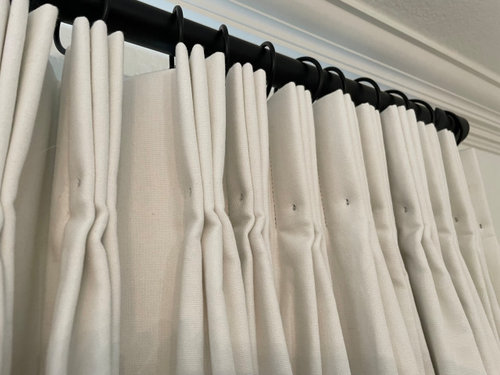
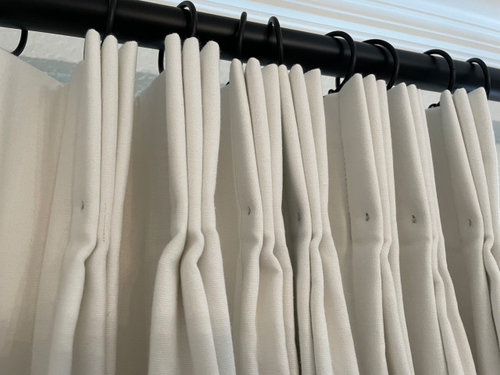
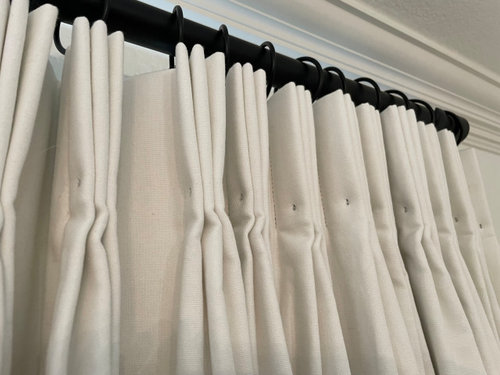
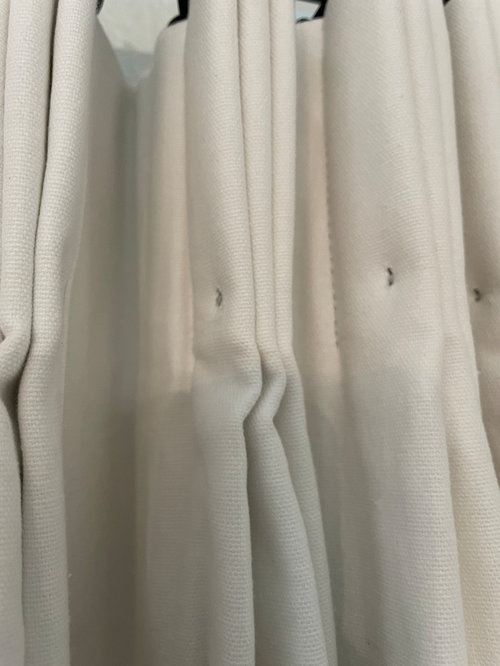
I had ivory blackout drapery made for my home and once the panels were installed I noticed darker thread at some of the vertical seams of the pleats and the pleats appear to be pinched with darker thread. I spoke to the fabric store that I ordered the drapes from and they had the workroom manager call me. He said it is because the blackout lining has dark thread in it and it can appear through the fabric and the installer I used doesn't know the tricks to installing blackout curtains. The workroom manager is scheduled to come by and use whiteout on the seams. I feel I could have purchased nicer blackout drapery from a store. I am not sure what to do or say and would appreciate any feedback.


Comments (21)

  • 2 years ago
    last modified: 2 years ago

    I had the exact same thing happen with expensive custom draperies. I made them re-do them. It was a fight, but they made the mistake. I gave them the choice to make the draperies again or refund my money. They made the drapes again.

    mtan2023 thanked Fun2BHere
  • 2 years ago

    The dark thread is a mistake. They should redo that sewing on the pleats. Whiteout is not a solution.

    mtan2023 thanked apple_pie_order
  • 2 years ago

    I had custom draperies made for our last house. You do not necessarily need blackout lining to completely darken a room. Our panels had white fabric backing (that showed outside when windows were closed) and a lining (also white), which did the black out job and kept the panels nice and pretty.


    Like others have said, the workroom made a mistake. Why no one caught it is the question.

    mtan2023 thanked Allison0704
  • 2 years ago

    I have had this happen when I need to change my needle. The inner layer of the black out lining is black so it will punch thru any holes if not sewn correctly.

    mtan2023 thanked RNmomof2 zone 5
  • 2 years ago

    Just curious, what color is your lining? In any case, the workroom should have tacked the pleats ito match the face fabric. I woulld insist that they fix this —and NOT with White Out! The dark stitches need to be picked out and re-tacked. This is a tedious job, but not impossi/le.

    mtan2023 thanked ratherbesewing
  • PRO
    2 years ago
    last modified: 2 years ago

    The problem with all three pass black out lining is you need no black out at all in the header of a curtain and it's just too bulky. You don't put that in the header/pleats, so wrong construction.

    Blacking out light completely is something I recommend be done beneath any decorative panels via a shade . Nicer pleats too, a lot easier..


    mtan2023 thanked JAN MOYER
  • 2 years ago

    I would want the pleats redone. They should not be puckered.


    mtan2023 thanked Allison0704
  • 2 years ago
    last modified: 2 years ago

    Blackout lining should only be on the part of the curtains that hang straight down, not the full length of the fabric comprising the pleats as well. The pleats are too bulky because the lining was sewn all the way to the top of the fabric. Someone made a mistake measuring and attaching the lining. Those black marks are NOT thread; they are the blackout lining itself showing through because a much larger needle had to be used to sew through all that bulk and consequently made large holes in the fabric. You need completely new curtains made from new fabric. Those enormous holes will still be in the fabric even if they take the curtains apart and cut down the blackout layer so it is below the pleats.

    adding, if the workroom is suggesting whiteout it is not a reputable place of business. As others have noted, it would be a

    different color, it is not a permanent solution and even if you never had the curtains cleaned, the whiteout would flake off over time or would age and color differently from the fabric.

    mtan2023 thanked Kswl
  • 2 years ago

    Agree that maybe you should just request a refund and find another workroom. The puckered/rippled pleats concern me even more than the dark spots.

    mtan2023 thanked Susie .
  • PRO
    2 years ago
    last modified: 2 years ago

    First the header does not need the backout at all and those are a mess and do not let them use whiteout this is a redo

    mtan2023 thanked Patricia Colwell Consulting
  • 2 years ago

    This is poor workmanship. Get a refund and start over. All the pros have agreed these were not made correctly.

    mtan2023 thanked RedRyder
  • 2 years ago

    Are these staples? They don’t look like thread to me.


    mtan2023 thanked maddielee
  • 2 years ago

    I have had custom drapes made with a blackout option added and the blackout fabric was not black. It added more weight and thickness to the drapes, but there were no black threads that showed through anywhere.

    mtan2023 thanked chispa
  • 2 years ago

    Many thanks, your advice has been extremely helpful and I now know what to say when they come look at the drapes. The lining is white and they also used white interfacing. I originally thought the darker spots on the pleats were staples but it is thread and I agree that the pleats are awful.

  • 2 years ago

    Many blackout linings are black in the center with white on both sides. There are different types. Three-pass blackout lining is made by spraying a base fabric with a white acrylic foam, then spraying with a black opaque membrane, and finally spraying it with another layer of white acrylic foam on the outside. So if you look at the lining, you will just see white (or ivory), but there is likely a black membrane inside it. The black membrane may be what you are seeing in your pleats - it was pushed through by the needle. Or it could be an odd type of staple, as someone noted above. Some workrooms use plastic similar to plastic price tags to staple the pleats. Good luck with your discussions. Definitely ask about the strange ripples - you shouldn't have those either.

    mtan2023 thanked Susie .
  • 2 years ago

    That’s what it looks like to me also Susie.

    mtan2023 thanked Kswl
  • 2 years ago

    The black inner layer of the lining has bled into the face fabric because the industrial tacker was used. Those tackers use large needles and tack with a great deal of force.

    Most high end custom workrooms tack pleats by hand.

    That will prevent the black from transfering to face fabric.

    mtan2023 thanked leslieanndaugherty
  • 2 years ago

    I agree with everyone. They should fix the problem by remaking them or whatever is necessary, that is definitely their mistake and you should not even have to ask, they should take responsibility, apologize profusely and offer you some form of compensation for putting you out in the first place.

    Good luck and keep us posted!

    mtan2023 thanked amykath
  • 2 years ago

    The most ridiculous thing is that they are blaming the installer for this! How in the heck would it be the installer's fault?

    mtan2023 thanked terezosa / terriks
  • 2 years ago

    I would not let these folks do these over. Get a refund and find another drapery place.

    I know it will cost you time but why would anyone trust these jokers? They blamed THE INSTALLERS?

    mtan2023 thanked RedRyder