Software
Houzz Logo Print
sudha_reddy46

mid-century modern house; no attic. Ventilation/insulation concerns

2 years ago
last modified: 2 years ago

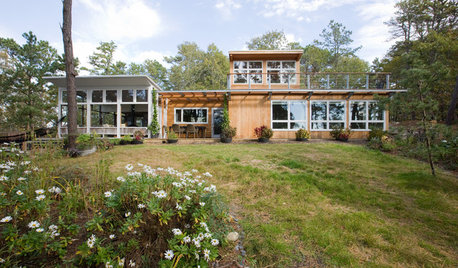
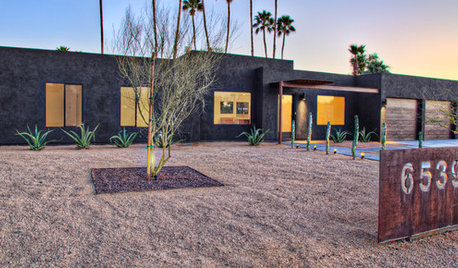
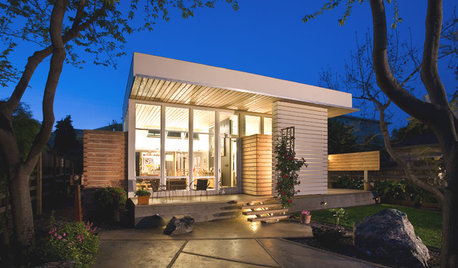
We are about to reroof our dream home: a mid-century modern house (build in 1960) that has a sawtooth roofline, no attic, no soffits, and clerestory windows that meet the roof facia. There is currently 3″ rigid foam insulation.

The manufacturer warranty excludes damage to shingles on an unventilated roof and we aren't eligible for an extended warranty for the same reason. Is this normal? How do other mcm homes with complex roofs protect their roofing and home?

I’m now concerned about not having ventilation and how to protect the new shingles on the roof. Will a permeable underlayment suffice? Are raised ridge vents a no-no? Any other advice or suggestions would be greatly appreciated. Thanks in advance!

Comments (27)

  • PRO
    2 years ago

    That is old verbiage and old science from the roofing manufacturers where they are trying to skirt any responsibility. Plenty of insulated roof decks and the idea that cooling happens to the attic side is complete hogwash. 99% of the cooling happens convection to the exterior.


    If you can't insulate the roof to "code" level for your area, I would show the supplier where "hot" roof decks are covered under code and shouldn't be excluded from warranty coverage.


    ...or...skip asphalt and go with metal.

    Sudha Reddy thanked Windows on Washington Ltd
  • PRO
    2 years ago

    If the 3" insulation is an existing condition, what was the longevity of the existing roof? What is the condition of the roof sheathing?

    Sudha Reddy thanked Charles Ross Homes
  • 2 years ago
    last modified: 2 years ago

    Prior owners "repaired" the roof with subpar materials in 2011. There's some liftiing on shingles and nails coming out. The shingle company rep said that he didn't smell anything off to indicate wood rot or mold. I couldn't tell you what it looked like prior to 2011 but i'm thinking not good.

    Sheathing/insulation condition, no idea. We won't know until the project starts. We considered metal (and may reconsider it again) but it's really expensive!

    Would you know if it'd be better to add permeable underlayment to the top sheath (and skip the raised ridge vent) to protect the insulation or is it better to build roof trusses/deck to allow for air flow on top of the insulation, and add ridge vents? I believe the the second option will be $$$$ but this is our forever home.

  • PRO
    2 years ago

    There are two concerns (well, at least two) with any unvented roof assembly. First, if there is no air space behind the shingles, there is no cooling on that side. That causes an increase in shingle temperature and an attendant decrease in life span. Studies have shown the increase is modest (around 10F +/-) and the projected effect on the life expectancy is also modest (10% or less of normal life expectancy, if my memory serves me correctly.) That's why the shingle manufacturers don't want to warranty the roof. When I built my first conditioned attic in 2001, Elk was the only manufacturer who would warranty their shingles and that's what I used Elk has since been acquired by another company. The second issue is the lack of drying potential. If the roof sheathing gets wet, it's likely to stay that way with some sort of failure as a consequence (e.g., mold, rot, corrosion of metal fasteners.)

    Before you completely redesign the roof, I suggest you find a good roofing contractor and have them do some "investigative surgery" to determine the condition of the existing sheathing and insulation. That information will help determine whether you can replace the roof in kind or if you're looking at a complete reconstruction. If it needs to be completely rebuilt, you should consider venting as well as different cladding materials. I'd look into adhered membranes for your application.

    Sudha Reddy thanked Charles Ross Homes
  • PRO
    2 years ago

    Shingle temperatures between a ventilated and unventilated roof are nearly the same...and that is in Florida. Similar studies in Las Vegas show the same.


    Ventilation is about controlling for moisture and not about shingle temps.


    Where is the home? There are definitely reasons to examine the ventilation and insulation questions, but shingle temps aren't really the driving factor for that necessity.


    https://www.greenbuildingadvisor.com/article/insulated-rooflines-and-shingle-temperatures

    Sudha Reddy thanked Windows on Washington Ltd
  • PRO
    2 years ago

    I can't speak to any concerns shingle manufacturers may have with radiant barrier sheathing, but the ones I spoke to when we first explored conditioned attics were certainly concerned about elevated shingles temperatures-- even a temperature increase of less than 10F. Based on 23 years experience constructing conditioned attics, I wouldn't let the shingle warranty keep me from constructing a conditioned attic in my climate zone, but that's a decision for the individual homeowner to make..

    Sudha Reddy thanked Charles Ross Homes
  • 2 years ago
    last modified: 2 years ago

    We live in Portland, Oregon! That was a missing relevant piece of information

  • 2 years ago

    I've found good info available from the shingle manufacturer's Tech Support people. The Regional Sales rep for your area is a source I've used for a quality roofer.

  • PRO
    2 years ago

    Attic ventilation is about moisture...not shingle temps. Again...several good questions here to sort through, but the purpose of ventilation has never been about shingle temperatures.

  • 2 years ago

    Don't sweat it. The warranty isn't worth the paper its printed on. Just go ahead as planned.

  • PRO
    2 years ago

    While ventilation of attics in hot-humid and mixed-humid climates is helpful for managing moisture, the primary function of attic ventilation is to reduce the heat flux across the ceiling directly below the attic (read: heat transfer to/from the conditioned living area)--not managing attic relative humidity and not reducing shingle temperatures, although it affects both.

    Installation of insulation under the roof deck (as would be the case with a conditioned attic,) elevates both roof sheathing and shingle temperatures because heat is not as easily dissipated from the underside of the roof sheathing. Studies have shown the increase in the surface temperature of shingles installed over conditioned attics (with insulation installed under the roof decking) to be 10F or less. However, the temperature between the roof decking and insulation for such assemblies is typically more than 20F higher. It's reasonable to conclude the average temperature of shingles is somewhere between the two with a negative consequence for shingle life expectancy. The assertion "that cooling happens to the attic side is complete hogwash" is, well, hogwash, if you know anything about heat transfer. Anyone considering an unvented (conditioned) attic should consider the effect on the longevity of a shingle roof vs. other benefits which might be derived.

  • PRO
    2 years ago

    Peak shingle temperature differentials in both Florida and Las Vegas, significantly hotter temperatures that the norm or PNW (Portland) in this case, were a high of 9 degrees differential. I would encourage you to read the study posted previously. The average temperature differential a whopping two (2) degrees. This would indicate that the vast majority happens to the exterior via convection.


    https://energyresearch.ucf.edu/research/buildings-research/roof-assembly/attic-insulation-ventilation/

    • The justification for attic ventilation for moisture control in hot humid climates is not scientifically defensible.

    I would imagine that in a non-Florida or Las Vegas type climate, the average shingle temperature differential is less than a degree and probably zero in somewhere like Portland.


    Probably should have revised my "hogwash" comment. That shingle and substrate cooling does happen to the attic side in a vented attic...sure. Nominally at best. My "hogwash" comment was more intended for the idea that ventilated attics are for shingle cooling. That...is hogwash. It's about moisture management and the shingle manufacturers definitely use the ventilation argument and calculations to deny warranty coverage. As @sktn77a mentioned above...they will find any and all reasons to deny coverage. Attic ventilation and 1:150 or 1:300 is just another anchor point that they can do that from.


    Good read here on the Vegas data:

    • https://buildingscience.com/documents/reports/rr-9701-measurement-of-attic-temperatures-and-cooling-energy-use-in-vented-and-sealed-attics-in-las-vegas-nevada/view
    • Peak summer day simulations for Las Vegas showed that the temperature of black roof shingles did not vary by more than 8 degrees F, whether the attics were sealed or vented. The maximum predicted black roof shingle temperature for the sealed “cathedralized” attic was 204 degrees F.
    • The maximum measured plywood roof sheathing temperature increase of 17 degrees F for the sealed attics is less than the temperature variation experienced by changing from tile to asphalt shingles of any available color. The maximum measured plywood sheathing temperature of
      126 degrees F, for the sealed attics during the test period, is well within an acceptable temperature performance range (less than 180 degrees F) of wood-based roof sheathing.

    Turns out that color, pitch, and facing direction are bigger drivers of shingle temps.


    Ex.: Low pitched, black shingle, ventilated roof will have much higher peak and average temps than a steeper roof (convective cooling) with a lighter shingle in a sealed attic.


    Sudha Reddy thanked Windows on Washington Ltd
  • 2 years ago
    last modified: 2 years ago

    So much information - thank you!

    We don't have an attic (only a hot roof): no intake ventilation, no raised ridge vents. Having no ventilation is a concern b/c the manufacturer warranty clause excludes "shingle damage due to improper ventilation"..in our case, none.

    For moisture protection, i believe that that we have 3 options:

    1. add permeable underlayment and use the highest quality shingles. I'm going out on a limb and thinking that we would not have ridge ventilation on these areas

    2. frame & install new roof trusses, roof decking & roof crickets to add roof-mounted intake vents, and ridge vents to exhaust.

    3. go with metal roofing

    options 2 & 3 are obviously more money but is it worth it? The house has been standing for 24 years. I thnk it was originally a fully TPO'd roof but with all the tree coverage, we worry about falling branches.

  • PRO
    2 years ago
    last modified: 2 years ago

    Let's begin at the beginning. The purpose of venting attics across all climate zones is based on thermal (read: energy transfer and energy conservation) considerations. Moisture control may or may not be a consideration depending on climate zone.

    "The intent of roof venting varies depending on climate, but it is the same if you're venting the entire attic or if you’re venting only the roof deck. In a cold climate, the primary purpose of ventilation is to maintain a cold roof temperature to avoid ice dams created by melting snow and to vent any moisture that moves from the conditioned living space to the attic. (See “Energy Smart Details” in FHB #218 for more on ice dams.) In a hot climate, the primary purpose of ventilation is to expel solar-heated hot air from the attic or roof to reduce the building’s cooling load and to relieve the strain on air-conditioning systems." (Lstiburek, J., "A Crash Course in Roof Venting." Fine Homebuilding Magazine Aug/Sept. 2011)

    While attic venting can reduce moisture levels, it can elevate them as well, especially in hot-humid climate zones and areas subject to wind-driven rain. My experience in two of my personal homes in coastal Virginia (mixed-humid climate zone with potential for wind-driven rain) is that the home with an unvented (conditioned) attic had better moisture control compared with my current home which has a conventional vented attic. Most likely due to decreased stack effect. In my opinion (licensed P.E.,) moisture control is better accomplished by point-source control (e.g., bath vent fans, range vent hoods, etc.) dehumidification (e.g., air conditioning) and whole-house ventilation to meet code requirements. Vented attics should include an air-sealed ceiling below.

    With regard to shingle temperatures, most studies document the surface temperature of roof shingles. However, to the extent the roof sheathing for unvented attics is insulated on the underside, it's reasonable to expect the temperature of the underside of shingles, and thus the average temperatures to be elevated due to the reduced cooling on the underside of the sheathing. This is a particular concern for architectural shingles due to their increased thickness. Elevated shingle temperatures will result in decreased life expectancy due to more rapid volatilization and oxidation.

    "The aging of asphalt shingles is increased by the time the spend at high temperature and exposure to ultraviolet light radiation. Some studies show that shingles over unventilated or poorly ventilated roofs can have a daily maximum temperatures 4.8F to 18F greater than over well-ventilated roofs (Parker and Sherwin 1998) However the focus on peak temperature misses the point that chemical deterioration is both a function of time and temperature." (Roodvoets, D.L. taken from https://web.ornl.gov/sci/buildings/conf-archive/2001%20B8%20papers/019_Roodvoets.pdf

    Back in 2000 when I was designing the first of five conditioned attics we've constructed, I spoke with technical experts at each of the major roof shingle manufacturers. They were all concerned about shingle life expectancy. Elk was the only manufacturer who would warranty their shingles over an unvented attic. I weighed the potential decrease in life expectancy versus the benefits for my home and opted for an unvented attic as did four of my clients. Homeowners will be well served to do the same in 2024.

  • 2 years ago
    last modified: 2 years ago

    All: I am trying to understand - believe me. I'm getting lost with all the studies and temperatures examples!

    We don't have an attic in Portland so I'm trying to read between the lines to find the answer. @Charles Ross: given our home and parameters that i've tried to describe, I think that you are saying that if things look ok beneath the surface once the project starts, leave it as-is and keep the insulated roof as is

    Windows on Washington: I think that you are saying the same?

    My specific question remains: if we were to reroof (i.e. replace damaged sheathing and re-shingle), add permeable underlayment, we should NOT add raised ridge vents..meaning, don't allow air out unless we allow air in (intake) which we can't only do if we build trusses to enable what is currently non-existent ventilation.

  • 2 years ago

    @Charles Ross: thank you


    Please confirm my assmption that we don't need raised ridge vents since there's no intake.


    I'm a little anxious for when the job starts but crossing fingers!

  • PRO
    2 years ago

    If there is nowhere for air to enter for ventilation purposes then there is no need for an exit. That said, it's important to assess the particular construction of your roof. The insulation needs to be air impermeable if the roof sheathing is wood or a wood composite or there is a risk of degradation due to moisture.

  • PRO
    2 years ago
    last modified: 2 years ago

    Shingle manufacturers...looking for a way to avoid warranty coverage over nothing...imagine my surprise.

    If it was about shingle temperature, that would need to mandate color, orientation, and pitch.

    Roof ventilation in winter applications does assist with the prevention of ice dams, but only because the thermal and air barriers are incomplete.

    Correct...that ventilated attics in warm moist climates are poorly indicated. The moisture we are most concerned with is the cold areas where warm moist area = condensation and mold.

    As Charles stated, 3" of foam and a well sealed envelope is just fine. It's worked for a long time and should continue to do so.

    Sudha Reddy thanked Windows on Washington Ltd
  • 2 years ago

    Thank you for each comment and the time you took to help me understand everything - I feel much better about moving forward and have learned a lot!

  • PRO
    2 years ago

    "Correct...that ventilated attics in warm moist climates are poorly indicated. The moisture we are most concerned with is the cold areas where warm moist area = condensation and mold." Control of relative humidity in unvented (conditioned) attics is just as important to prevent mold and mildew growth as it is in vented attics. Mold doesn't need condensation to grow.

  • PRO
    2 years ago

    Agreed. Any conditioned attic/hot roof, should have appropriate conditioned air supply and return sizing to provide for circulation and drying.

  • 2 years ago

    Houzz experts like Charles Ross Homes and Windows on Washington are super helpful, but I also recommend reading up on unvented roofs on GreenBuildingAdvisor.com. Worth a paid subscription. After a lot of research there (and other websites), we converted our cathedral ceiling (no attic) roof to an unvented roof, with rigid foam insulation on top of the sheathing. Insulation on top of sheathing means your rafters are not thermal bridges to your interior space, and you have better options for recessed lighting. We had to go with a PVC roof due to a low pitch--not sure if that's an option with shingles. In any event, you can find A LOT of information on good roofing strategies for cathedral roofs at GreenBuildingAdvisor.com and FineHomebuilding.com

    Sudha Reddy thanked mcarroll16
  • PRO
    2 years ago

    With all due respect to Martin Holladay, Allison Bailes, and others who mostly comment on the research of others, if you're an American taxpayer, you've paid for the research behind the Building America Program-- most of which was performed under contract to DOE by the good folks at Building Science Corp. The product of their research is available, ostensibly, free of charge https://www.energy.gov/eere/buildings/building-america

  • 2 years ago

    That is very good to know, thanks! And to be clear, I did not post that recommendation as any knock on your advice. I found it helpful to get the big overviews at those sites, so I could come to Houzz with more focused questions for the experts here. It was also helpful to have the big-picture understanding when evaluating roofing bids.

  • PRO
    2 years ago

    No offense taken. The Building America program increased the building science knowledge base and published a number of best practices. In my view, they could have done a better job sharing the information with the residential building community and with folks like you and me who funded the effort.

  • PRO
    2 years ago

    Anyone want to hear a lively talk on building science...go watch Joseph Lstiburek speak. You'll be educated and darn sure amused.