Software
Houzz Logo Print
williamnjzone6b

Yet another ground cover question

2 years ago
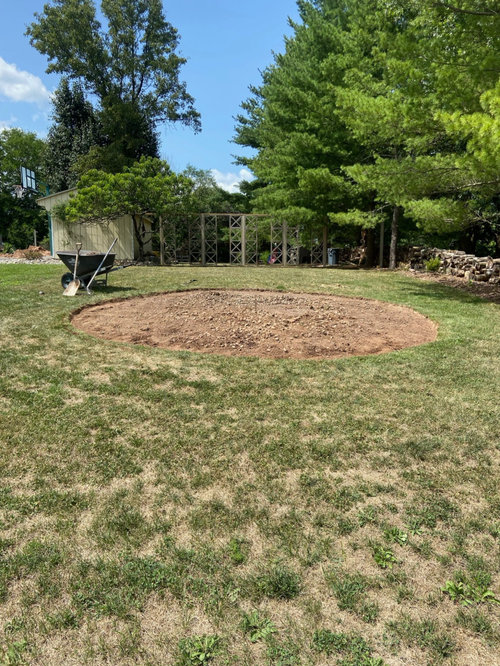
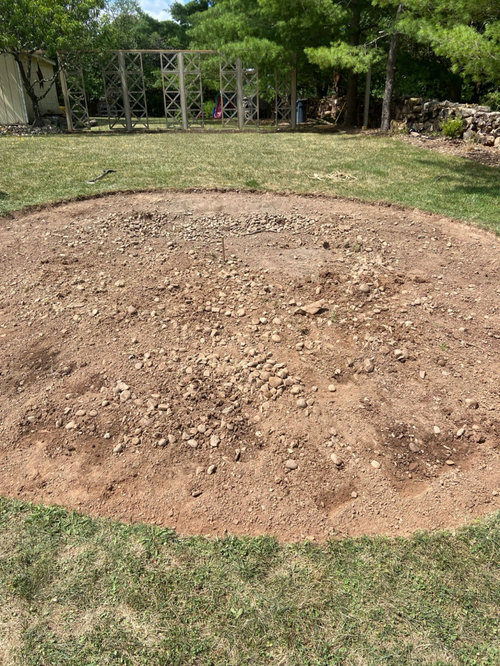
I feel like a beggar asking another ground cover question but I can’t seem to be convinced by anything I find online so asking knowledgeable people here is most helpful. This area (250 square feet) has been a bed of something or other for a long time and I’ve just cleared it out (process still a little ongoing). It’s on a south facing slight slope and you can see by the pitiful grass that the area gets burned. As of now I’m liking the idea of an Exclamation London Plane tree in the center of this circle but I’m much less sure about a ground cover. Some contenders so far are a creeping juniper (kinda slow no?), sedum Angelina (I read here it grows fast, not in love with the idea but maybe with some large rocks placed around and another ground cover with it could be cool), cotoneaster (maybe dammeri idk, I had a couple cranberry cotoneaster here before and thought it had an appeal and spread quickly though not weed smothering), winter heath (i think I see this at nurseries and always looks dead to me but it seems like people have a cult following for it or something, the pictures I google of it do look nice but those are also the most idealistic ones, maybe paired with seedum idk?).

I have maybe a few other ideas but I’m really not attached to any particular idea and open to any suggestions. It’s a large area that will get more shaded in time as the tree grows but should be some time before the light conditions significantly change. This whole side of the driveway just gets browned every year, this year it happened as early as June so I don’t think shrinking the circle to plant grass is the best idea. I like the idea of the whitish bark on the plane tree in the winter being surrounded by something evergreen or with berries and just being something walking neighbors anticipate before coming up on it. Thanks for any help you can offer.

Comments (20)

  • 2 years ago

    Deer ate my Angelina.

  • PRO
    2 years ago

    I love your choice of the London Plane tree- great tree I don’t like ground cover and I never put it in a design unless I need erosion control. Plant something interesting that dies more than hide weeds and look green. Or- just give the tree the center stage and mulch your circle

  • PRO
    2 years ago

    Typo- does- Not dies

  • 2 years ago

    Cecily- ok i guess im crossing that off the list, and ill need to edit the post to mention how important deer resistance is

  • 2 years ago

    Jill, I’m glad the London Plane idea wasn’t shot down immediately because someone in my neighborhood has one and it stands out to me among so many other kinds. I like the idea of the tree one day marking the house, like theres the white tree we are here. I somewhat like the large mulch bed look myself like on a college campus or something, only problem is I want to minimize yearly mulching as much as I can. At the same time I’m not 100% against using interesting things that arent covers if i find the right inspiration picture. thank you

  • 2 years ago

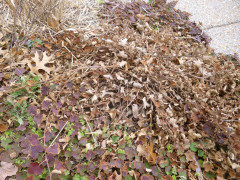
    Creeping raspberry, Rubus rolfei (and several synonyms) would be on my short list. Evergreen, adaptable to a wide range of growing conditions, drought tolerant once established, weed suppressing, prunable and will produce edible berries although the birds will probably beat you to them :-)) The leaves and stems are bristly enough to discourage deer and rabbits and the foliage takes on reddish purple hues in cold weather. A very attractive, well-behaved and textural plant.

  • PRO
    2 years ago

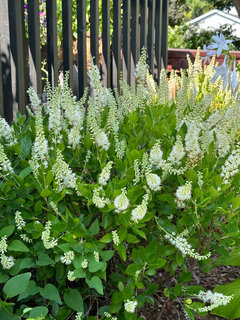
    3 Humming Bird Clethera Great fragrance, fall color, and usually deer resistant and you could fill in the space between the clethera with Carex ‘Ice Dance’ it would look very tailored and beautiful with your new fancy tree.

  • 2 years ago

    Garden Gal you should be billing me for your great advice. I think creeping raspberry is a winner. The reddish purple in the winter will be extra awesome. Now to go find this plant. Thank you so much

  • 2 years ago

    Jill- I just discovered Clethra last year, I must have seen it somewhere and knew I wanted to have it. The deer appear to not stop eating it but I think it’s the young ones who haven’t seemed to learn they don’t like it yet. I think Garden Gal’s creeping raspberry suggestion just satisfies my low maintenance weed/mulch free hopes so much that I have to go that route. However I’ve now seen carex ice dance recommended on Houzz enough I may need to get it. Thank you for your help and the endorsement from a pro on London Plane

  • 2 years ago

    William, I've been doing this a very long time :-) I'm just glad my experience is proving useful to someone.

  • 2 years ago

    You’ll have to change your name to Garden Sage. I was googling Creeping Raspberry and I came across this one guys experience with it in Tennessee. Here is a link (https://aarongardener.blogspot.com/2015/03/what-creep.html) but I’ll quote the gist of it:

    “In October 2013, I was over the moon with anticipation that I'd found the perfect groundcover. I waxed rhapsodic about its merits - the scalloped crinkly leaves, its supposed evergreen foliage, its rapid growth rate and its reported wildlife value (flowers for pollinators, berries for birds and mammals - including people).

    • By April 2014, I was singing a different tune after the creeping raspberry died back to the ground in the winter of 2013-14 and took a long time to emerge in the spring. My dreams of a trouble-free evergreen groundcover disintegrated as I clipped back tough raspberry stems with dried dead leaves.”

    He goes on to say it was a poor weed suppressor. Now I know full well you cant take one persons bad experience to the bank but does anything sound off about this to you? Maybe a non hardy variety, I think I read Emerald Carpet is a good one. I’m apparently zone 7 in NJ and never been to Tennessee but I assume the winters are colder here than any part of Tennessee on average. No big deal if you have no clue, can’t hurt to give it a try this fall with a single plant

  • 2 years ago

    " but does anything sound off about this to you? "

    Other than the winter of 2013-2014 in Tennessee had some exceptionally low temperatures, no. They experienced single digits and below zero for several days, well below the zonal average low winter temperatures for that area. Zone 6a temps compared to the listed zone 7b. I believe that would have a strong bearing on just how well - or poorly - the GC did through winter and into the following spring. Is that likely to happen in your area? Who knows!

    As to weed suppression, I have yet to encounter a groundcover that does a better job at it. Even better than English ivy, which is a ground consuming monster here. It layers on top of itself, forming a dense mat. Why that gardener had such a different experience with it, I have no idea. It rates a 10 out of 10 with me.

    Try it. You'll like it. 😁


  • 2 years ago

    @gardengal48 (PNW Z8/9) Ha I guess I wasnt giving the due respect to his claim of an usually cold winter. I will take your recommendation and wont even bother googling it any more. Thank you again

  • last year

    I noticed that the OP mentioned having white bark on the Plane tree in winter. In my experience, the London plane has brown and tannish bark, I have 1, and it has dark bark. It's the American eastern Sycamore tree that has the lighter bark, some trees have almost white bark. The lightness of the bark on the tree actually varies from tree to tree. The Am Eastern Sycamore is more prone to diseases like Anthractnose, powdery mildew and other diseases. Most are not likely to kill the tree though.

  • last year

    I just wish they had environmentally safe 'Dark Green Wood Mulch'.

  • last year

    Poaky1- I think I may have had them mixed up at the time as far as whiteness but I assume the ones I see planted in yards are planes and their bark is good enough for me. I’d have preferred the native but my understanding is they get way bigger as well as more disease prone as you say. Plus I could get a 20ish footer exclamation London plane at my nursery for like $200 and wouldn’t even be able to find a native. Frankly I’ve wondered if I should have gone with a dawn redwood as they always stand out to me even in winter but I think I read they didn’t do as well in dry conditions which this spot is. Though I see them often in pretty bad spots. I know they get massive too but their limbs dont seem to get too thick at all. Whatever, I’m happy with the plane, less content with how it’s already leaning though. Thanks for the comment

  • last year

    Bill- might look a little too playhousey if they did. I’m in Phoenix AZ right now (passing a lot of people from your state here) and what I’ve noticed is green grass is like mulch here. They have beds of it, edged in like mulch to keep the rocks, which are like our grass, out. Off topic but felt like saying that.

  • last year

    Yep, the London Plane trees are less prone to Anthractnose. But, I must admit that the native Sycamores do have that really nice white bark on many trees. Some trees have mostly all white trunks.

  • last year

    William,

    One point to bring up about using wood mulch around trees, the wood mulch decomposes into both organic matter and soil nutrients as time passes.


    I have poor sandy soil at my place but the top layer, >6" deep, around my trees, has been permeated by the decomposing mulch and has become very fertile and high in OM.

    My trees return the favor by having good annual growth each year. :-)