Software
Houzz Logo Print
amy_l45

What is the strongest screw/anchor for gypsum block?

2 years ago

I am seeking the strongest possible screw / anchor to secure brackets for a floating bookshelf to a gypsum block wall. I was told that anchors are definitely needed for these walls, but I'm not sure which brand is the best for gypsum block. I suspect that the gypsum block in my building might be constructed of a lower density, because nobody seems to use the tapcon screws. I'm guessing that those might pull out of the wall because our gypsum block may not be dense enough to hold them.
I was wondering if anyone who has experience with gypsum block can advise me on a particular brand that they have had great experience with?
I am also seeking L brackets for bookshelves that have the maximum load bearing capacity and would greatly appreciate recommendations.
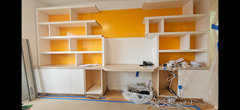
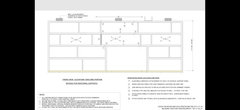
The larger picture is that a 13 ft wide, floor to ceiling wall unit is being constructed, but there are some structural concerns and therefore we are trying to use the wall, as much as possible, to provide support. Thus, I am seeking very strong L brackets and screws/anchors that have a great load-bearing capacity in gypsum block. The weight of the books that we will put on the shelves will total about 2,800lbs, so I want to make sure that we use the most durable, heavy duty screws / anchors and L brackets.
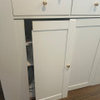
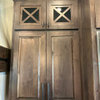
For reference, I am including a photo of what the bookshelf looks like now, as well as our plan for building the shelves above the desk so that they are well supported.
Thank you in advance for any recommendations!

Comments (17)

  • 2 years ago

  • PRO
    2 years ago

    What is a "gypsum block wall" ?

    Amy L thanked Mark Bischak, Architect
  • PRO
    2 years ago

    Consider shelves that can be supported by the floor.

    Amy L thanked Mark Bischak, Architect
  • 2 years ago

    Thank you, Mark! The walls are made of gypsum block, which I'm guessing are similar to cinder block? Using this building material was popular in the 1960s when this building was constructed. I understand that gypsum block comes in different densities. The hanging wall cabinets in our kitchens stay up with just a few screws, even though there's a huge amount of weight on them. So I guess the material must be strong, if you use the right kind of screws.

  • 2 years ago

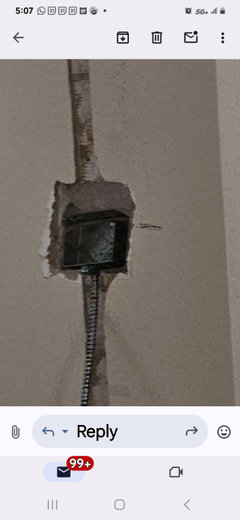
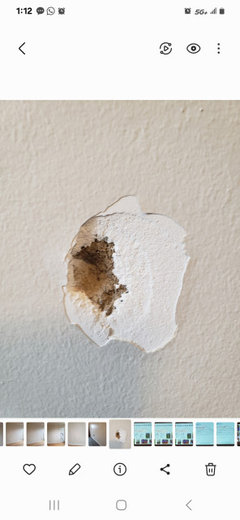
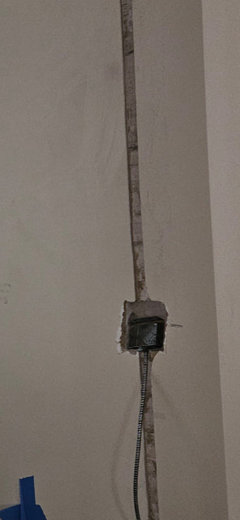
    Here are photos of the gypsum block wall in a different part of the apartment, at an earlier stage of our renovation, when the electric was being installed

  • 2 years ago

    To clarify, gypsum block is similar to concrete, so I think what I'm looking for is a very strong/load-bearing concrete screw with an anchor that works well in gypsum block, that is 3/16 of an inch in diameter and two and a half inches long. Any recommendations would be greatly appreciated.

  • Amy L thanked millworkman
  • 2 years ago

    Wikipedia says:

    Gypsum block is a massive lightweight building material composed of solid gypsum, for building and erecting lightweight, fire-resistant, non-load bearing interior walls, partition walls, cavity walls, skin walls, and pillar casing indoors. Gypsum blocks are composed of gypsum, plaster, water and in some cases additives like vegetable or wood fiber for greater strength. Partition walls, made from gypsum blocks, require no sub-structure for erection and gypsum adhesive is used as bonding agent, not standard mortar. Because of this fundamental difference, gypsum blocks shouldn't be confused with the thinner plasterboard (also known as wallboard or gypsum board) used for paneling stud walls.


    (The walls in my apartment are medium density gypsum block)


    ...

    • the medium gross density of 850 kg/m3 to 1.100 kg/m3 (white coloured blocks, suitable for standard usage)
    • Gypsum blocks combine the advantages of classical masonry with modern drywall construction. Similar to masonry, walls built with gypsum blocks are massive, void-free and of high stability. Because no mortar, sand or plaster are used, the walls are (almost) built without water, like drywalls. To distinguish this kind of construction from conventional drywalls with wall studs and gypsum panels or gypsum fiber boards, the construction with gypsum blocks is often referred to as massive drywall construction.

    Due to the grammage of about 54 kg/m2 to 120 kg/m2, non-bearing partition walls out of gypsum blocks fall into the category of lightweight partition walls. Due to the construction technique they are stable solid walls with a high resistance to mechanical strain, which reduces maintenance and repair.

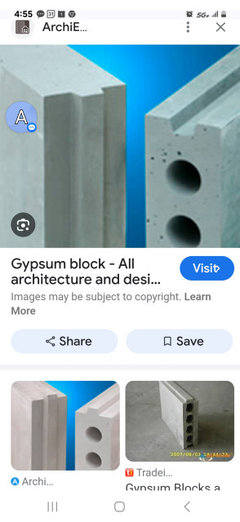
    Here are photos from the internet:


  • 2 years ago

    Yes, I live in the United S

    Yes, I live in the United States.

  • 2 years ago

    Pictures of partly demoed walls you posted and new blocks you posted are not even similar, much less same material. We answer slow questions and fast questions but no half fast questions.

  • 2 years ago

    Never heard of gypsum-block. Got a ref?

  • 2 years ago
    last modified: 2 years ago

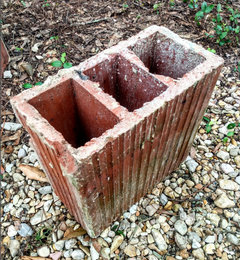
    I've renovated a lot of old buildings but have never seen walls of gypsum block. In the US in the late 19th and early 20th centuries fire resistive interior walls were usually built of ribbed hollow clay tile with a plaster coating.

    From my experience with gypsum wall board, I would not anchor heavy loads to it without the advice of an anchor supplier or engineer. Gypsum block is not as strong as concrete block.

    Here is all I could find from Hilti but you could call them.

    https://files-ask.hilti.com/original/rx/rxlzjm4pe8.pdf?_gl=18aj0p7_gaMTA4MTk3NjAzNi4xNzI4MzMzNTA2_ga_EWPGKCHLCH*MTcyODMzMzUwNS4xLjAuMTcyODMzMzUwNS4wLjAuMA..


  • PRO
    last year
    last modified: last year

    I've worked on two properties built with gypsum block, The Branch House, a 27,000 sqft estate, listed in Wikipedia, and The Prestwould, a nearby residential tower. Both were built in the 1910s, designed by architectural firms based in NYC, where this system was used extensively up to the early 1920s. The design utilizes I-beams and steel z-joists, allowing for long spans, and Gypsum block for most of the interior partitions. I came across this thread researching fasteners for an extensive project in the tower.

    John Swift

    Richmond

  • PRO
    last year
    last modified: last year

    This product was marketed undr the name ’Pyrobar’ (fire barrier?), and was available in 2, 4, 6, and 8 inch thick blocks. While the blocks contain no asbestos, the recommended mortars did.

  • last year

    Yep, I have pyrobar walls as well in my co-op unit in a 7-story apartment/condo, with the gypsum block, built in 1929/1930. I have been looking for the best possible wall anchor for my application, and I came upon this discussion.


    As I reviewed this discussion, checked the links, and so on, I settled on the Toggler Alligator Plastic Expansion Wall Anchor; "The Alligator solid wall anchor is the most advanced masonry anchor in the world." It also works with hollow walls. https://toggler.com/pdfs/ALLIGATOR-All-Purpose-Anchors-2024.pdf


  • last year

    Dual sky-hooks.