Software
Houzz Logo Print
kitasei2

Cutting back carex

last year

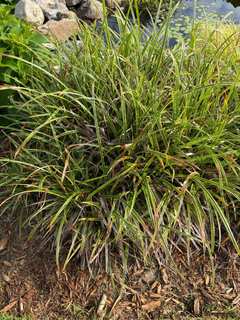
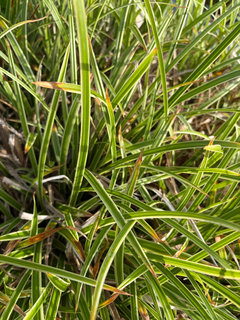
I was never able to ”comb” my variegated carex to remove the dead leaves, and it also looked awful until early summer. So I decided to cut it back. I’m using pruners to cut hunks but it is taking forever. Is there a more efficient tool? And what if I do nothing? I need a better strategy!

Comments (20)

  • last year

    What kind of Carex is it kitasei2? I burn the dead foliage on grasses and sedges. It does the job quickly.

  • last year

    Jay - please do explain your burning process! I’m looking at some of my carex/sedges & seeing an out of control blaze if I tried that.

  • last year

    KW PNW, I have a small garden that's surrounded by a wooden fence. I usually burn only 1 or 2 clumps a time. I spray everything around the clump a good 10 feet or more so that nothing ignites. I also have my hand on the hose, just in case some tinder further out ignites, which has never happened. Ive always been a pyromaniac. Here in midwest we have prairies. Before European colonization there were herds of bison and elk in eastern North America. The native people would burn the prairies which made for better pastures. There were also thousands of wildflower species mixed with grass in the prairies. Around Illinois we have many native wildflower species that depend on fire to clear out the remains of nearby taller competition. After European colonization and the displacement of the native people, Americans never learned about the benefits of burning, and most of the prairies here were destroyed in order to raise crops.

    When the grass/sedge clump is lit, it burns very fast. It saves a lot of time and effort. I hate shearing grass clumps. My dormant Prairie Dropseed grass looks like cousin It on the Adams Family.

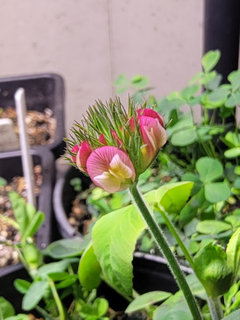
    This is Buffalo Clover. It's rare and endangered. It evolved with the Buffalo, and they respond vigorously after being grazed, and they are heavy feeders, probably because they got their fertilizer from the millions of buffalos that migrated over them.


  • last year

    Jay - thanks for your great explanation! Pyromaniac indeed! I was aware of burning of crop fields - they burn the wheat fields in WA. Your comments reminded me of the time we were visiting the Walla Walla WA area when wheat fields were being burned east of town. We had to cut our visit short. I have asthma. But, I know about the prairies & midwest too - I lived in Omaha for 4 years courtesy of USAF. About the sedge - I have only 5 clumps of the orange carex & they’ve only been in a couple years. They’re small enough that I’m able to give them a pony tail trim & / or use a small hand rake to pull out dead strands. I have tied them up & cut around the outside to remove dead stuff. kitasei2 didn’t say how large hers are or how many she has. My neighbor has a very large grass that looks like a small Pampas - he’s wondering how to trim it. I’m going to suggest he think about the pyromaniac approach. It’s pretty close to the corner of his house so might be iffy. 😁

  • last year

    I don’t know the name of my sedge. It is dense amd spreading, about a foot tall. It doesn’t die enough to be burnable but KW’s mention of a hand rake gives me a thought. I might try a sturdy hoe fork. A rake wouldn't be strong enough.

  • last year

    Jay, it must be very exciting to be your neighbor! I did as you suggested & looked up Carex. It’s a cool season plant. And, Carex / Sedge isn’t even a true grass! I also read that cool season grasses can’t be burned to rejuvenate - it’s only good for warm season grasses. I do also have a lot of Little Bunny / Pennisetum grasses - both the burgandy & green type. They’re really easy to cut down & I already did that. These grasses are just going into their second season. They were planted last summer when we removed our turf grass & had a designed landscape installed. Cottonwood trees & their spring fluff is a sight to behold. There was a line of them on both sides of a small river up in the Seattle WA area near where I worked. I remember in early spring we had pink snow everywhere from the cherry blossom & flowering plum trees & late spring it was the white snow from the Cottonwoods. There aren’t many Cottonwoods here in SW WA / Vancouver where I now live but this area has a heavier conifer cover. Their yellow pollen coats everything!

  • last year

    I cut mine down completely to the ground when I had them. The new growth comes from underground in spring, so just hack it down. A hedge trimmer makes quick, easy work of it.

  • last year

    A friend used to cut grasses with an electric chain saw.

    It is probably illegal because of a state wide outdoor burning ban that goes in effect every spring.

  • last year
    last modified: last year

    Not all Carex are created equal so it is risky to make blanket recommendations about cutting back or not.. They come in both evergreen, semi-evergreen and deciduous forms and with a range of preferences for soils and sun conditions. Evergreen forms generally never need cutting back except in colder, marginally hardy zones where they will experience winter dieback. Even then, it is advised not to cut back to the ground but leave several inches present. And certainly not to burn them........that could very well be the kiss of death.

    The deciduous forms are treated differently and are often cut back hard in late winter but regrow much more slowly than a warm season grass. Most Poaceae and Cyperaceae authorities recommend cutting back any Carex/sedges as a last resort.

    FWIW, I have grown scores of evergreen Carex species over the years and have never, ever cut them back. They have never needed it in my climate and clean up nicely in spring just by raking out any dead blades.

  • last year

    "Evergreen forms generally never need cutting back except in colder, marginally hardy zones where they will experience winter dieback."


    They die back where I live.

  • last year

    I’m in the same climate & state as gardengal. I do think my orangy color Carex is evergreen. There is some natural die back or browning of strands which is what I use the hand rake to comb out of it. The ponytail cut I give it is really a light tidy up trim. The burn ban mad_gallica mentions is usually in place here too. Forest fires are always high risk now throughout every season.

  • last year

    I agree with gardengal. I believe I have carex morowii and one year I cut it back in the Spring. Never doing that again.. it looks ugly as hell with the flowers coming through the cutback plant. I since stopped cutting them back and they do fine.

  • last month

    About to give one that survived years of neglect in my garden a careful trim with scissors to remove the brown leaves because they are tough and cannot just be pulled off. I want the plant to live. There are little baby plants near the base.

  • last month

    Im the original poster and back to report that in shade the carex is fine without doing anything. I tried cutting back some to compare and really no difference. The carex in sun is another story Too labor intensive to be worth it.

  • last month
    last modified: last month

    @kitasei I can’t see that you ever told us where you’re located. My carex is is the orange ”Prairie Fire” not the yellow Evergold. The specific type might make a difference for you. Mine does great even in hot west exposure - in fact is better for it than shade. The yellow type does seem to need shade. My Prairie Fire is blooming now - much longer grass strands with flower heads on it & lays flatter to ground rather than arching like the green & orange strands. I pull it out - comes right off when gathered up in bunches & slight tugs. I do that to control spread & it makes the plant clump much tidier. If the clumps get too large & encroach on nearby desireable plants, I gather up the ends as though making a pony tail & snip off the ends above my hand holding the gathered up bunch.

  • last month

    Im in the Hudson River Valley in NY, now zone 7a. My carex is variegated.

  • last month
    last modified: last month

    Hmm - I do have the yellow/green Carex Evergold & it’s totally different than Prairie Fire! My Evergolds are in part sun only & their blades are so much broader too. Look up the other kind & you’ll see that there’s little resemblance. Ponytail cut would work to control size or clean up but only in very early spring before new growth.

    ETA: I have both kinds. My Evergold is in backyard shady area & Prairie Fire in frontyard full sun.

  • last month

    This is my carex. I took some home from my workplace as we were getting rid of if so never knew what the cultivar was. I assume its a carex morowii but anyone able to tell the cultivar? They are in full sun 10+ hours a day and they seem to love it there.


  • last month

    I planted 3 Carex 'Feather Falls' 4 years ago because they would provide winter interest. After two winters of grazing by deer who apparently also found them interesting in the winter, they are pretty much dead and a large area is empty.

Sponsored
Mary Shipley Interiors
Average rating: 4.8 out of 5 stars34 Reviews
Columbus OH Premier Interior Designer 10x Best of Houzz