Software
Houzz Logo Print
westes

Clematis Doing Poorly

last year
last modified: last year
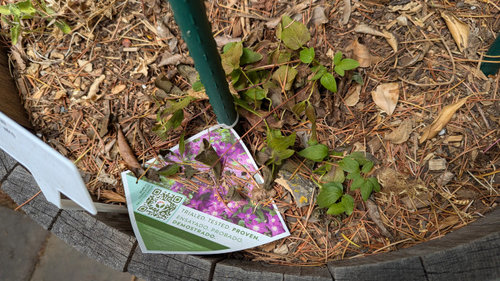
In a wine barrel, I planted a Clematis "Jolly Good" from Proven Winners in a well-drained bark soil with a mulch. It gets dappled sun through a tree and a lot of direct sun during the day, and it is on drip irrigation. The soil below the mulch is lightly damp, not moist or dry. The plant is slowly dying off and is not putting on new growth. What might be going wrong here?


Comments (11)

  • last year

    Is this some kind of Clematis Wilt?

  • last year

    One of my clematis has suddenly developed wilt. I have had it for years. The leaves turned almost black, not like the pic above.

    westes Zone 9b California SF Bay thanked Barrheadlass
  • last year

    The OP's clematis does not have wilt. In fact, I can't see much wrong with it at all except that it is just getting started. Clematis take some time to settle in and start developing bulk and plenty of flowers - somewhere in the 3-5 year range.

    Cut back hard in late winter and fertilize lightly in spring with alfalfa meal or tomato fertilizer. And make sure the soil stays evenly moist. Any browning or dying leaves can most likely be attributed to the soil drying out.

    westes Zone 9b California SF Bay thanked gardengal48 (PNW Z8/9)
  • last year

    @gardengal48 (PNW Z8/9) This plant was lush with green growth for the first month. What you see in the photo is about 20% of the growth that was there originally.

    In terms of wilt, you are looking for the leaves to die off completely, starting around the edges and then consuming the entire leaf? Would it help you if I took photos of other plants in that container, mostly Thunbergia and other Clematis.

    I took a good look at the other flowering vines in that pot, and many of them are struggling. I had an older bark soil in that pot that I tried to amend with some garden soil, and now I am wondering if that old bark is stealing nitrogen. I might just take all of it out and put in some fresh commercial potting soil.

  • last year
    last modified: last year

    westes, I am extremely familiar with growing clematis of all types. I used to work at one of the largest wholesale clematis nurseries here in the PNW. Your plant does not have clematis wilt,

    There are two forms of wilt. The one that gets the most emphasis has a fungal origin. Upper stems and leaves wilt and eventually turn black and that progresses down the plant. The progress can be very fast....one day you can have what appears to be a healthy vine (typically just starting to bloom) and the next it could be wilted. However, it rarely affects the roots and cutting back and discarding all the diseased material usually results in the plant coming back from the root crown in a season or two.

    The second is not technically a wilt as there is no pathogen associated with it. And the causes can be varied. It can be due to mechanical damage to stems, cultural conditions or even the age of the plant. Very young plants can expend so much energy, they outgrow their ability to support their biological systems and they collapse. This is rarely fatal also and the vines will tend to outgrow this as well in time. This is one of the primary reasons one is encouraged to plant clematis deeply and with a well-enriched, large planting hole.......so the roots can spread and grow sufficiently to support all that topgrowth.

    If anything, your clematis may be suffering some aspect of the second but I really think it is just showing some new/young clematis vine growing pains. It should look much better next season.

    westes Zone 9b California SF Bay thanked gardengal48 (PNW Z8/9)
  • last year

    I often have noticed that new, freshly planted Clematis go into shock after being moved from maximum-feednfertilzer at the nursery to a real garden.

    at 1 o clock there is a new shoot emerging, if I see this right. Or at least new foliage, that is a good sign.

    how did you prune it when planting. The recommendation is to cut back to one foot, regardless of the pruning group, that helps with new growth


    did you ckeck the surrounding soilmix in the barrel how deep it gets watered and how moist? like, dig in with your finger or small shovel, just to make sure

    westes Zone 9b California SF Bay thanked linaria_gw
  • last year
    last modified: last year

    @linaria_gw The plant had about 15 stems that were each less than 1 ft long when I planted it. It looked more bushy than I expect a vine to look. Those individual stems never grew out. I will dig down deep, but there appears to be plenty of moisture there. I am really leaning towards the idea that I have bark from an old soil stealing nitrogen. I need to just replace the soil, but I have no one to do the work and it will take time.

  • last year

    @floral_uk z.8/9 SW UK I guess when you grow 200 plants, 10 are going to have problems? My main problem is that I don't suffer it in silence.

    I have a flowering vine display behind a concrete bench, and I wanted to have the flexibility to move it around. I could eventually try to grow some of these in the ground, but I am still arranging different genera and species and learning the growth habits of each. Many I will switch out, and it could take me a long time to decide on which ones to make permanent plantings.

  • last year

    One thing I'm wondering about-what kind of bark mulch is it? As far as I know, clematis don't like acid soil, so a fairly acidic mulch might not be appreciated by the plant.

    westes Zone 9b California SF Bay thanked User
  • last year

    @User Mulch does not acidify the underlying soil. That mulch is just a partly decomposed bark, but I would never use it to make a soil mix. It has been a superstar mulch in other places.

    I think the problem in the current case is originally I grew Rhododendron in that wine barrel, using a pure bark soil, which Rhodies seem to thrive in (at least for a while). I tried to amend that bark with potting soil, and I don't think it was enough. It may be robbing nitrogen.