

New KitchenAid Refrigerator fluctuating temperatures
This is going to be a question about the normal behavior of a KitchenAid side by side refrigerator and its ability to hold its setpoint temperature. Model is KRSC703HPS. it was installed 5 days ago. Freezer set to 0, fridge set to 36. I placed a good Wi-Fi thermometer in there that sends data to my phone app every 10 minutes. What I am seeing is NOT something I would have expected to happen.
Keep in mind this is with the doors kept shut for 3 days. There is a pattern of temperature fluctuations in the fridge. Every 1.5 to 2 hrs there is a steep drop in temperature to near 30 F. Then immediately the temperature starts to rise over the 1.5-2-hour period until it reaches around 43 F, then the big dip again and the cycle repeats itself. So, a good period of time the fridge is above its setpoint of 36. Honestly, to me setting it to 34/35/36/37 seems to mean nothing.
The behavior I would have expected is for it to be set to 36. When the temp rises above that the fridge kicks on, and cools it to keep it at 36 then cuts off. Isn't that what a thermostat is for....kind of like an A/C system? Btw, my 15 year old Kenmore in the garage does just that. It holds the temp constantly at 36 with doors closed.
Comments (43)
 11 months ago
Cold airflow directly onto the thermometer will give a skewed reading when the compressor is running, actively cooling vs. when there's no airflow during periods when the compressor cycles off. A better method of checking the temp is by placing a thermometer in a glass of water on a mid-level shelf and checking it after day or two, then also waiting a day between setpoint adjustments. The mass of the water will provide a more consistent reading amidst normal compressor cycling.
thundley
Original Author11 months agoOK that makes sense. I will see what the glass of water does. But does the fluctuating behavior I described make sense to you? Especially the 10 degree gradual rise every 1.5-2 hours followed by a sharp dip to 30? I guess I am asking if this is normal behavior with door completely left closed. My expectation was this was going to hold the temp at the setpoint pretty close even if the doors are not open.
Related Professionals
Marietta Kitchen & Bathroom Designers · Lafayette Kitchen & Bathroom Designers · Green Bay Kitchen & Bathroom Designers · Liberal Kitchen & Bathroom Designers · Sarasota Bathroom Remodelers · Anderson Bathroom Remodelers · Wichita Falls Bathroom Remodelers · Clarksburg Bathroom Remodelers · Peoria Bathroom Remodelers · Webster Bathroom Remodelers · Niles Bathroom Remodelers · Montgomery Kitchen Remodelers · Washington Kitchen Remodelers · New York City Kitchen Remodelers · Chico Kitchen Remodelers- 11 months ago
Is this an empty refrigerator or one with significant thermal mass on its shelves?
In general, consumer equipment does not have proportional thermal control, so the heat removal rate (cooling) is either maximum or none. Thermal mass helps mitigate this, but ultimately, some hysteresis in the control is needed to keep compressor motor starts per day reasonable.
- 11 months ago
The full model number isn't cited (there are several engineering revisions per the last digits). The parts listing I checked for one iteration indicates it has an inverter compressor, which presumably is variable-speed, ramping up/down/off to maintain the setpoint within whatever is the programmed variance from the setpoint and per the location(s) of the temp sensor(s). Cooling, of course, turns off during defrost periods (during which the temperature will rise temporarily) but defrost doesn't (shouldn't) occur every 1.5 to 2 hrs. More like 12 to 24 hours depending on data collection from the sensors.
thundley
Original Author11 months agoDecided to post a picture of the readings I got last night. There is a definite pattern here of "spikes" (dip way down followed by a rise; repeating every 1.5-2 hours). However, there seems to be some dips followed by a rising temperature over a 4-hour period! See the attached. Notice what happens at 3:10 am, marked in RED. See there is no cooling again until 7:30am. That seems crazy for the compressor to be off for 4 hours, doesn't it? Also, these dips in temperature are accompanied by a dramatic dip and rise in humidity also shown in the attached. Could this 4-hour period of no cooling be the defrost cycle?

- 11 months ago
I wouldn't guess proportional control from these plots, but we still don't know the thermal mass questions' answers. Air temp can certainly rocket down when the compressor turns on. Also, we don't know if the KA control thermo-sensors have shielding or thermal mass of their own that allows overshoot of the refrigerator air temperature.
thundley
Original Author11 months agoSorry but what are you asking me. The fridge is about 60 to 70% full and has been for 5 days. I don't know anything about KA control thermosensors. What do you mean by proportional control? Basically, as the owner I am just trying to get an answer as to if this is normal, by design behavior with the door kept closed and fridge 70% full of food.
- 11 months ago
OK, good, the refrigerator is 70% full. What does your temperature sensor report when inserted in a container of water as described by @dadoes (leaving the refrigerator full as described)?
I'll interpret "normal" to mean is this behavior likely to be the manufacturer's intended behavior, or not? I think we can make a pronouncement after the dadoes test.
thundley thanked kaseki - 11 months ago
The unit is a one compressor, dual evaporator design per the model/engineering iteration (KRSC703HPS04) I checked for the parts list document. There's a 3-way valve that directs the refrigerant to the two coils depending on the cooling needs of the two sections.
thundley thanked dadoes thundley
Original Author11 months agoRight. I put that cup of water in there a few days ago. It is reading 37.4 currently. So, I guess that is all we need to conclude this thing is working correctly (as designed) even with the wild swings in temp every 1.5 hours???? Man, if that is the case, a simple insert with the new fridge explaining this behavior by the manufacturer might save a lot of time. I can't be the first guy putting a thermometer in his new fridge to check how it is working. Would be nice for them to explain the huge humidity swings as well.
- 11 months ago
The quest is to report the temperature fluctuation reported by the sensor in the water over time, i.e., a temperature graph like the one you provided about 10 hours earlier in this thread that reported air temperature variation.
You aren't the first but your cohort is not large. 🙂
- 11 months ago
@rwiegand. Thank you for posting this level of detail concerning the use of freezers because it now explains to me why, no matter how much money I have ever spent on self-defrosting refrigeration for the home, the most stable freezing device I have ever used and continue to use for longer term storage is my ever so humble chest freezer. It holds around 11 ft.³ and no matter how long I leave something in there, it always comes out just fine with no freezer burn or foul taste. (I have noticed this even when something in the freezer was not sealed as tightly as it should have been, and it was still fine. I know that the chest style of freezer helps keep the cold air where it should be when it is opened because there’s less loss of cold air in the chest style versus the upright styles. I should also share that defrosting this simple but robust appliance is not painful or complicated. Twice a year, I reduce the inventory that the chest holds by going through much of what is stored in it and then I temporarily transfer the small number of items left into my refrigerator’s freezer unit. It only takes a few hours for the frost that has built up in the chest to melt. A few towels to soak up a small amount of water in the bottom, dry the freezer, plug it back in, let it get super cold overnight, and then I simply reload the items that I had removed the next day. The small amount of time this takes me is well worth the trade-off for not having to throw locally grown or special food items away because another freezer type would extract all of the moisture out of the food when trying to defrost itself. Sometimes, “automatic” is not always better.🙄
thundley
Original Author11 months agodadoes, thank you and other for hanging in there for me. You are the only ones that seems to know anything about this. I had a service call on Friday and it was worthless. The guy knew nothing.
So, here I am. I did the probe test in a glass of water and the temp still fluctuated beyond my liking. There were times when it got to 43 degrees and stayed there. I can set the fridge at 34, 35, 35, or 37 and it makes no difference.
Kitchenaid is complete crap. And all this talk about air temperature, thermal mass, is not making sense, and here is why. With the thermostat in the Kitchenaid fridge, the temperature fluctuation has a distinct, and concerning, pattern (every 1.5 hours down to 30 degrees and then goes up to 43/45 degrees, then repeats the cycle). Also, even more concerning is a 4 hour period each day where there is NO cooling at all. The temperature goes to well into the 40's and stay there for over 3 hours and the humidity averages around 60. That sucks.
So, I put the thermostat sensor in my 15 yr old Kenmore fridge in the garage, and as I expected it maintained a temp of 36 degrees and 25% humidity the entire time for 24 hours. See the attached. The dramatic change in the graph at 12:00 is when I moved the sensor to the old fridge. You can see around 12 when I moved the sensor to the old fridge and how the line stabilizes.
So, guys what gives. Is there something wrong with this fridge, or is this just the new crappy cooling strategy? Are all fridges this way now? How would I know? If I send this piece of crap back and get a GE, will the GE do the same thing? Bottom line is that the FDA says food should not be above 40 for more than 2 hours. This piece of junk Kitchenaid keeps the food well above 40 multiple times per day, and once per day it is above 40 for nearly 3 hours.
I am very frustrated that I cannot find anyone that confirms this is by design. I also read that the invertor compressor is suppose to keep temps stable. If this fridge has one of those, it is not working.
See the attached. These two refrigerators have very different cooling strategies. One of them sucks and is dangerous, per the FDA. The other one (the older one), seems to be working like it should. Are all new residential refrigerators cooling now like this new one? There is a def
initive answer to this, but I can't seem to find anyone who will provide it.
thundley
Original Author11 months agoSo, here I am. I did the probe test in a glass of water and the temp still fluctuated significanlty. There were times when it got to 43 degrees and stayed there for a while. I can set the fridge at 34, 35, 36, or 37 and it makes no difference. Setting the temp on the fridge lower you would think makes it colder.
Kitchenaid can't be this horrible. Discussions about air temperature, thermal mass, liquid temperature, is not making sense, and here is why. With the thermostat in the Kitchenaid fridge, the temperature fluctuation has a distinct, and concerning, pattern (every 1.5 hours down to 32 degrees or so and then goes up to 43 degrees, then repeats the cycle). Also, even more concerning is a 4 hour period each day where there is NO cooling at all. The temperature goes to well into the 40's and stay there for over 3 hours and the humidity is over 60. That stinks IMO
So, I put the thermostat sensor in my 15 yr old Kenmore fridge in the garage, and as I expected it maintained a temp of 36 degrees and 25% humidity the entire time for 24 hours. See the attached. The dramatic change in the graph at 12:00 is when I moved the sensor to the old fridge. You can see around 12 when I moved the sensor to the old fridge and how the line stabilizes.
So, guys what gives. Is there something wrong with this fridge, or is this just the new strange cooling strategy? Are all fridges this way now? How would I know? If I send this thing back and get a GE, will the GE do the same thing? Bottom line is that the FDA says food should not be above 40 for more than 2 hours. This Kitchenaid keeps the food well above 40 multiple times per day, and once per day it is above 40 for nearly 3 hours.
I am very frustrated that I cannot find anyone that confirms this is by design. I also read that the invertor compressor is suppose to keep temps stable. If this fridge has one of those, it is not working.
See the attached. These two refrigerators have very different cooling strategies. One of them seems dangerous, per the FDA. The other one (the older one), seems to be working like it should. Are all new residential refrigerators cooling now like this new one? There is a definitive answer to this, but I can't seem to find anyone who will provide it.- 11 months ago
Agreed. Raw meat should not be above 39F. So I support the view that there is something wrong, and it might not be with the refrigerator thermostat itself, but with whatever is posing as a control system. One might think that this 'cooling' scheme is the result of trying to keep power usage down so as to gain some preferred rating, such as EER. Too bad that you save power and die from spoilage.
thundley
Original Author11 months agoyea, good comments. See I think this is a designed cooling strategy....my gut feel. But I could be wrong. I guess some would argue that it is OK for raw meat to go above 40 (say to 43) for a period of time (say 2 hours), and still be OK. Btw, I have been sticking the probe in a jar of mayo from time to time, and it is not unusual for me to get temps above 40, even when the fridge is set to 35. Other times the mayo will read 38/39.
So, for now I have turned the sucker down to 34. But noticing little if any difference.
I just kind of need confirmation of this behavior. If Kitchenaid stands behind this, then surely there is nothing to worry about??? Problem is the service tech knows less than me about it, and calling Kitchenaid is a waste of time if you get them to answer. To me, there is a Kitchenaid "Appliance" Engineer who knows the answer to this. If there is a problem, the data I have on the consistent behavior should help diagnose the problem.thundley
Original Author11 months agoAnother comment is humidity control. This Kitchenaid fridge likes to keep the humidy level around 60% or more. It struggles to get it to any lower even when kept closed. The humidity in the house is less than 50%. When the door is opened to the fridge for just a few seconds, it shoots up to 70 to 80% and takes a couple of hours to get back to 60%. Aren't fridge humidity levels suppose to be 30 to 50 and certainly lower than your home's humidity level?
thundley
Original Author11 months agoKitchenAid is no help and the service tech they sent out is no help. Blindly just starting to replace parts and guessing at the issue doesn't not seem like a good plan to me.
So, let's troubleshoot this a bit with the data I have. Every 1.5 hours the temp dips way down taking about 30 min. to reach 30 degrees. Then immediately it starts a climb to mid 40s over the next hour, then it dips down again starting the cycle over. This is the normal cycle. Side note, if you open the door for about 15 seconds, it really screws up the cycle.
During the rise in temperature, there is also a rise in humidity. This thing averages >65% humidity and often reaches 80% for no reason. That can't be good/safe!
Is that rise in humidity telling us something? Now I am going to get out of my area of expertise here, but humidity is moisture in the air. I was told, and I don't know if this is true, that this KitchenAid fridge has dual evaporators and fans, but they only put a heater on the freezer side.
So, my troubleshooting question is this. Is something freezing up during each one of these cycles, and then the thawing out is putting all this moisture in the air accounting for the dramatic rise in humidity? I don't see any condensation building up, but the fridge spending a lot of its time in 70 to 80% humidity is not right and it should be telling us something, right?- 11 months ago
The fresh food evaporator doesn't (need to) get as cold as the freezer evaporator so reasonably doesn't need active defrosting, thus there's no defrost heating element on it. It's possible whatever bit of frost that *may* develop on the fresh food evaporator melts during the off periods between reaching the target temp and cycling back on. There's a collection trough/drain for the freezer-side defrost condensate. The fresh food side presumably also has a way to drain any dripped defrost condensate, assuming there is any.
One aspect/reason for a separate fresh food evaporator is so the humidity doesn't get as low on that side (freezer burn, anyone?) as it would if the fresh food section is cooled by directing air into it from the very arid freezer side.
Are you continuing to monitor the temperature via a glass of water or is your reference for these wild swings direct air in the compartment, or perhaps directly at the air outflow from the evaporator?
I've had a food thermometer (not digital) in a glass of water on a middle shelf in my WP SxS bought last July as a monitoring test for a few days in reponse to your problem. It's steady. The unit has electronic controls but a simple bar graphs with range of Cold to Colder, not numeric temperatures.
- 11 months ago
Correction: I looked at the parts breakdown again. There are defrost heating elements on both the freezer section evaporator and the fresh food section evaporator.
- 11 months ago
Might be a confluence of bad design choices. If one wants to quickly cool a warm mass to 39F one would expect the refrigerator evaporator to operate below freezing and hence require defrosting if the air dew point is high enough. (Unless, a high enough flow rate evaporator fan were used to keep the coils above freezing until the air temp differential low point was reached.) Alternatively, cooling time can be extended and avoid that issue. The original plots suggest instant cooling was selected. But why the hours long no-cooling mode? I think insight here would require a refrigeration engineer to explain any rationale that escapes us.
Alternatively, a different refrigerator seems called for. Maybe a high-end appliance store would allow the glass of water data acquisition experiment to be run on an alternative brand.
 11 months ago
I have the ecact same fridge and we love it. Temps are usually consistent, but will cycle like yours are too just based on how it works. I dont see anything concerning here. We did have a Samsung where food spoiled easily. It would cycle from 37-52°F regulary. I have not tried the water glass experiment, and might just have to try it!
thundley
Original Author11 months agoThank you doreycrouse. finally someone with the same fridge. So are you saying you have seen/measured a constant up and down cycle even when the doors are closed. I am confused because you said temperatures are also consistent. So what is it? Does your fridge temp cycle up and down like mine or does it keep a stable temp near the setpoint?
thundley
Original Author11 months agoMy fridge cycles from 33 to about 42 or 43 about every two hours. See the graphs I posted above. This is when it is set to 35, 36, or 37. Does not matter
- 11 months ago
I have a WP SxS bought in July 2024 (replacing a 21yo GE Arctica w/variable speed compressor and dual evaporators*). I placed an analog probe-type food thermometer (of the design pictured but not that specific one) in a glass of water a couple weeks ago to monitor the temp. The WP has a single compressor and evaporator coil in the freezer section. Electronic controls but the panel is a simple bar graph design (not a numeric display) with five temp choices from Cold to Colder, separate for each section. The fresh food section is 37°F-38°F at the mid-position setting. I dropped the temp by one "notch" to each of the colder settings. which are each ~1°F lower. The lowest achieved was ~35°F. It takes 24 to 30 hrs for a 1°F temp change (from one "notch" to another) to register and stablize on the thermometer (in the water. I didn't monitor the air temperature directly as that is not the proper way to check it due to the inherent temp swings between compressor cycles.

*I liked the various features of the GE very much. I'd done a few repairs over the years, all DIY. The compressor had quit running, symptoms pointed to the either the main control board (which was one of the previous repairs) or the inverter board which wasn't accessible without bending the already-kinked-from-the-factory process stub on the compressor out of the way ... and I can't do refrigerant leak repairs, which surely would have occurred. - 11 months ago
Sorry. That is confusing. The temperatures will flutcuate, but have never been dramatically outside of specified temp range. The temps vary based on if the compressor is running or not, much like your home HVAC. But note, your HVAC will slightly over cool or over heat from your set temperature to make an ”average” temp close to what you have it set to. This is completely normal.
thundley
Original Author11 months agoWell, now I think this new fridge has actually bit the dust. Yesterday evening, starting at 6pm, the temperature started to rise (from about 35F). Over the next 6 hours is rose steady to about 50F, so I guess no cooling in the fridge at all. Freezer working fine.
The Fridge did eventually start cooling again, but now today there has not been any cooling for 4 hours and it is up to 47F.
This sucks! To me, this has something to do with the refrigerator side dual evap system. Could it be that the evaporator on the fridge side is freezing up and stopping cooling there. On the freezer side there is a defrost heater for the evap coil, right?
I am having an impossible time getting a service technician who knows anything about it, but this seems to me like someone should be able to diagnose and fix this thing.thundley
Original Author11 months agoWell, I am probably the dumbest person in the world for doing this, but I have accepted the appliance store's offer to delivery yet a 3rd unit to me (same exact Fridge). Hard time believing the first two had a problem, and the third one will not. At the same time, it is hard to believe that the Fridge just works this way and it would not have been recalled. Check out the attached for average temps and a line graph. Doors closed whole time.
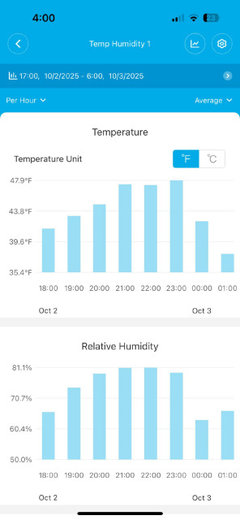

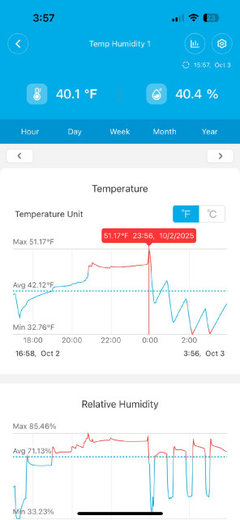
- 11 months ago
Are you monitoring the temperature via a glass of water, or are you directly measuring the airflow temperature? Where exactly is the probe positioned? Photo? Seems unlikely that a glass of water inside the fresh food section would vary 10°F within a two-hour timeframe (11pm to 1am).
There is a defrost heater on the fresh food evaporator coil per the parts diagram, as I clarified/corrected two weeks ago.
thundley
Original Author11 months agoHi Dadoes. Yes, got a probe in the bottle of water. It can still get up to over 40 for several hours when the fridge is not cooling and the air temp rises to high 40’s. The water is not consistently staying under 40. So why do you think the fridge did this yesterday. For 6 hours the temperature rose steadily to 50F. I decided the fridge died so i opened the door to temove the food. Within 5 Min it started to nose dive to low 30’s. Stayed cool for 6 hours and then crept up to high 40’s again. Then cooled off. Regarding the heater on the fridge side for the evap…are you sure there is one? Many people have complained about fridge cooling issues and said KitchenAid screwed up and didnt put a heater on the fridge side????
- 11 months agolast modified: 11 months ago
The two relevant pages from the parts diagram document. You didn't cite the full model number in your OP, it's missing the two-digit engineering revision. I randomly picked the 04 revision. KRSC703HPS04.
Item 16 is the freezer evaporator, 26 is the defrost element for it.
Item 37 is the fresh food evaporator (RC - refrigerator compartment), 38 is the defrost element for it. 31 is the entire RC evaporator assembly.
You can get the parts diagram document (.pdf) at Whirlpool's service portal ServiceMatters.com, select the Guest Access.

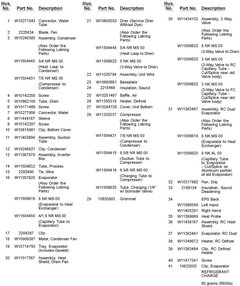
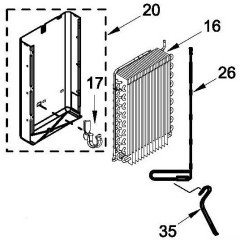

- 11 months ago
As an innocent bystander, my impression is that the refrigeration thermostat is "sticky" resulting in too much hysteresis. This could be possible if it is mechanical. If it is electronic, then that guess could only be true if there is some software or electronics design defect.
Alternatively, perhaps defrost cycles are functionally too long and block cooling.
- 11 months ago
thundley, there you have it. You can find the parts diagrams for your own confirmation research. Hint: the ServiceMatters text in the post above is a link to that site.
kaseki, you also can check the parts diagrams. Hint: there are electronics and thermistors.
thundley
Original Author11 months agoIt feels like we are pointed in the right direction. At this point I feel like this is a design flaw. If so, why does kitchenaid not recall these things because they have to know this. The fridge spends MOST of its time above 40. To me this is dangerous and thus criminal on their part . On a side note, if I force the fridge up to 50 by leaving the door open for a few minutes, then it always kicks on and cools back down to below 40. So is that a programmed thing or a faulty thermistat. Since i have had two of these units with a third one being delivered on Tuesday and all with the same behavior, it must be by design. Why cant they fix the design flaw and make it cut on when it gets over say…41
- 11 months ago
48F is high. That latest graph does show elevation for longer than I expected.
- 11 months ago
"thundley: For 6 hours the temperature rose steadily to 50F. I decided the fridge died so i opened the door to temove the food. Within 5 Min it started to nose dive to low 30’s."
Was the compressor running to maintain the freezer-side temperature during that 6hr refrigerator-side rise period? Nose dive to low 30s ... it seems unlikely that a temperature drop would register on your test-probe-in-water within 5 mins. Something seems off-kilter about your temp monitoring method. Where is your water container positioned in the refrigerator section? It should be on a shelf (interior, not on the door) away from direct exposure to the incoming airflow. Perhaps also obtain a suitable analog-type thermometer in preparation for testing your 3rd KA unit. Wait a minimum of 3 days to allow the temperatures to stabilize (including the test container of water) before actively tracking it.
thundley
Original Author11 months agoIts the air temp that dips way down as soon as the temp in the fridge gets to 50 or so. yes, when the fridge is not cooling i know because the air temp and the probe in the bottle of water both rise. And of course air temp rises much faster. I can tell when the fridge is actively cooling or not by simply listening and feeling the back of the fridge for cool air blowing. Freezer is still getting cold air blowing into it when the fridge is not cooling, so the compressor much be running. Also, the probe temp will vary between 36 and about 41 but went as high as 43 when the fridge decides to not cool for 5 hrs and lets the air temp rise to near 50. Recall again that in the middle of one of these 5 hour periods if I open the door for a few minutes and accelerate the climb to 50, the fridge cooling will cut on immediately.
I dont think there is anything wrong with my method or the thermometers being used. I have 3 in there including one analog. They are all consistent- 10 months ago
Were you doing temperature curve monitoring on your previous refrigerator? Did it exhibit different characteristics?
thundley
Original Author10 months agoI did not monitor my 2014 kitchenaid like this. But I did monitor the first two units I received of this model and observed same results. So, I am not hopeful this third one will be any different.
thundley
Original Author10 months agoI will try the same exact process in my 14 yr old Kenmore, but my bet us that it will be a pretty steady temperature .
thundley
Original Author10 months agoWell an update here I ended up returning this kitchenaid. I got a Frigidaire GRQC2255BF and the refrigerator dies a very good job at keeping the tempeature steady. But there is a however. The freezer does not. It is not able to get close to 0 unless I set it at the lowest setting of -6F. Seems that it us about 8 to 10 degrees off. My question is: Is it ok just to keep it at -6 in order to get as close to 0 as possible? Everything I have read says ideal is 0. I am so over these things not working as advertised!



rwiegand