Software
Houzz Logo Print
laceyvail

Gardening with climate change is a real challenge

6 months ago

In the last 50 years, I've watched my part of SE WV go from zone 5A to nearly 7--with winter dips now and then below zero. Appalachian springs, as I've posted before, have always been up and down, but in the last 5 years winter (not the past winter) has been pretty much nonexistent with early springs, and the highs higher and lows lower. But this year is the worst yet. A hard winter, yes, but now it's only March 7, and we've had day time temps in the mid 70s, nighttime in the high 40s to mid 50s. There are still patches of packed icy snow in the woods on north slopes in places. Bulbs are rocketing out of the ground--and burning up in a day or so. Shrubs are hurrying to leaf out--the three Spirea 'Ogon', always early, yes but not this early, are almost fully leafed out.

Last spring we had summer temps like this for about 10 days in April (over a month from now) everything hurrying to leaf out and bloom. When temps plummeted one night into the mid teens bloom was lost on the Amsonias, the Epimediums, the Hellebores. Several grasses--Hakonechloas-- were frozen to the ground as were the Epimediums (in all the years I've been growing them that was a first for me) and a couple of the weaker plants never recovered. Even daffs were damaged. The very young Halesia, covered in buds and about to bloom was nearly killed--almost all woody growth dead, though it came back from the roots. The tender new leaves on the Geranium maccrorhizum groundcovers and their near kin 'Karmina' were badly burnt even though they remain green throughout the winter.

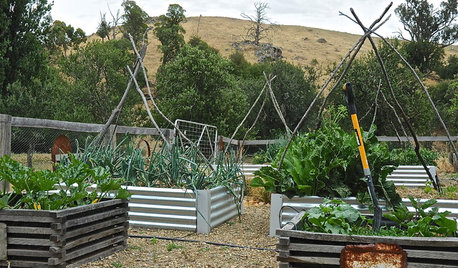
In the vegetable garden the new growth on the garlic was damaged enough that bulbs were undersized--the same two varieties I've been growing for over 20 years, so I know them well.

Plants may be able to handle considerable cold, but they cannot handle summer temps and then a sudden very hard freeze.

There is no conceivable way this will end well--for everyone everywhere of course in the long run, but this year right here and now, it will be a massacre. And I just phoned the place where I get a dump truck load of mulch every year--and they don't even have any yet. Hoping by the end of next week, but not even sure about that.

What changes have you seen in the years you've been a gardener?

Comments (22)

  • 6 months ago

    We live east of Raleigh, With the construction in the area and the resulting number of house, paved roads, and blacktop parking lots, it seems to have effected the weather patterns. Unless a storm comes from the south, or south east south, the rain misses us.


    When we lived in Indianapolis it was interesting to watch the storm cup as the storm line passed of the area. As it got further east the cup would back fill and the front reform about 30 or 40 miles east of the city.


    In the Raleigh area we see something similar, but the pattern is altered the two cities Raleigh and Durham. The urban area extends nearly 100 miles from north west Durham to South west Raleigh, so it form quite a large shield that storms must over come. Indianapolis is one city with the urban area about 40 mile circle around the city.


    So unless we water a lot, and accept the high bills, we have to plan yard work around the possible rain.

  • 6 months ago

    Was just looking at my variegated lace cap which rarely flowers and trying to plan how to protect from the inevitable freezes now that it has buds emerging

  • 6 months ago

    I might add that right now the temperature in the shade on the screened in porch is 84 degrees--March 7.

  • 6 months ago

    There is no conceivable way this will end well--for everyone everywhere of course in the long run, but this year right here and now, it will be a massacre.


    @laceyvail 6A, WV, you are preaching to the converted.


    At the national and international level it will require a dedicated, cooperative, laser focussed and of course expensive effort to slow this down. Yup that aint happening,


  • 6 months ago

    Alas, rouge, you are right. None so blind as those who will not see.

  • 6 months ago
    last modified: 6 months ago

    @laceyvail 6A, WV 84? That’s crazy! Expecting a high of 76 in the coming week, but only for one day. I am only about 2 miles from the Chesapeake and it does have a moderating effect on our temps. The thing that I have noticed the most here is a significant increase in high wind events!

    We’ve had drought conditions for 2 years running and the wind in combination with the lack of rain has been very hard on things!

  • 6 months ago

    We had 'springs' like that during the 2000's. There always seemed to be a couple of days in March or early April when the temperatures were around 90F. I remember having to do a mad dash to Albany to pick up our local rose society's spring orders which were baking in somebody's garage. I don't remember it being particularly hard on established plants, but they were probably not nearly as far along.

  • 6 months ago
    last modified: 6 months ago

    And of course weather is not the same as climate.

    Yes, back in the 70s and 80s we occasionally had a very warm day in March, but we also had real winter--many nights well below zero, days only in the teens. Now as climate has changed, we get polar vortexes in the middle of the new normal winters that have daytime temps in the 40s and night times occasionally in the upper teens. The craziness of the weather in various parts of the country and the world is part of the vast planetary climate change.

    Also, in those years, summer temps here in SE WV very rarely got to the mid 80s, there was no humidity and you never needed an air conditioner. Quite different now, with temps high 80s to low 90s, humidity, and you most certainly need an air conditioner. The last two summers, my Hydrangea 'Quick Fire' never fired up because, as it turned out, night time temps were too high. Really, really disappointing. I wish now I'd gotten the old 'Tardiva'.

  • 6 months ago

    It's weather -- wonderful warm day here IMO finally. March is ALWAYS variable. Joe Bastardi has good (but rather technical) explanations on the right-side of the webpage w/the Saturday summary. Real cold returns after mid-March and onward (exactly as usual).


    http://www.weatherbell.com/premium

  • 6 months ago

    Yes, the weather seems to have gotten crazier lately with larger swings in temperature and rainfall amounts. We're seeing a more frequent incidence of straight-line winds toppling trees or snapping them off high above ground. Currently experiencing a prolonged period with little rain. Had to water the Azaleas in before the super cold snap came in January. Never had to do that before. Lost a 50-year-old Camelia two years ago and the Gardenias froze to the ground.


    New bugs and weeds are invading as well. Lost more than a dozen Ash to the Ash Tree borer. The dry conditions make the Pines more susceptible to the Pine Borer. Never saw Mulberry Weed until three years ago. Where the heck did the Chickweed come from? We are literally pulling bushels baskets of it out of the Daylily bed.


    Lived here since 1984 and these are some of the changes we've noticed.

  • 6 months ago

    Nes insect pests in the vegetable garden here as well. The allium leaf borer means you now have to use row covers over garlic and onions--two months in early spring and again two months Sept/Oct. Carrot maggot is so bad they need row covers too. I grow a lot of cabbage/mustards so I'm already using a lot of row covers--so now even more to deal with. They're great for what they do, but they certainly are more work.

  • 6 months ago

    Sounds like gardening in the rockies since time immemorial

  • 6 months ago

    At least we don't get--or not yet anyhow--the tornadoes, ever more violent hurricanes, and fires that are also the effects of global warming. We are likely to get flooding, but so far no really bad flooding close to me. We dodged a bullet a few weeks back when the ice storm that was supposed to hit us and just south of us where our power comes from never hit though it did hit much of the deep south. We'd have been without power for days--and it was very cold.

  • 6 months ago

    Oh yes, I know. It's really only a matter of time and luck. And parts of WV have had terrible flooding. Global chaos/climate change will get us all in the end. If AI doesn't do it first.

  • 6 months ago

    We're enjoying our saucer magnolias in bloom, at least until anticipated temps early next week down to 20F at night turn flowers and opening buds into mush.


    The Japanese plums are prematurely flowering, so I expect no fruit again this year. It'll be iffy for the Asian pears which are getting ready to open flower buds.


    I don't plan to remove any perennial garden mulch for a couple of weeks yet.

  • 6 months ago

    Yes, 41 North, the global climate is just beginning its wild fluctuations. It will get much worse before it settles down.

    Yesterday it was 83. Tonight it will be in the mid to low 20s. Nothing normal about that.

  • 6 months ago

    I can partially agree.

    Last few days of Oct. 2025 and first week of Nov. 2025, it was upper 80's with one 90 and 3 days later, we had 25d for two nights. I can only remember one other time, circa Feb. 1979, it went into the 80s for a week, that killed a row of hardy fruit trees my dad had planted, the Fall earlier.

    History has shown that ice ages and hot periods have come and gone over the centuries, but I'm still not convinced that Human beings are able to control changing global climates, even though we think we're smart enough to do that.

  • 6 months ago

    Much of the wild weather has to do with the hunga tonga volcano 4 years ago that threw massive amounts of water vapor into the atmosphere and troposphere that has yet to work its way out. It was a very, very unusual event

  • 6 months ago

    I agree L.

    There's much more to climate change than one might imagine.


    On average, approximately 50 to 70 volcanoes erupt worldwide annually. While this is the yearly average, on any given day, about 10 to 20 volcanoes are typically in a state of active eruption.

    • Total Active Volcanoes: There are about 1,350 potentially active volcanoes, mostly located along the Pacific "Ring of Fire".
    • Annual Data: According to the Smithsonian Institution's Global Volcanism Program, usually between 60 to 80 individual eruptions occur, as some volcanoes erupt more than once.
    • Recent Trends: Between 1991 and 2023, data indicates a consistent range of 56 to 88 volcanoes erupting annually.

    NOAA:

    https://research.noaa.gov/hunga-tonga-2022-eruption/


    I'm not saying pollution control is bad, it's good but let's not say it's necessarily going to be our salvation, climate wise. There's much of this that's completely out of our hands.


    Now let's hope an asteroid doesn't hit the planet!


  • 6 months ago

    Laceyvail,

    I thought this was a discussion?

    If we all get mad and walk away, just because someone disagrees with us, what's the point of discussing anything?


    You'll have to reread my post.

    I said pollution control was good.

    And that there's more than pollution control affecting the climate.


    If you want to start discussions, you have to remember there will be different views on the subject.


    I'm sorry you disagree but saying 'we could have prevented it all' is a pretty bold statement.