Software
Houzz Logo Print
artinnaturez8b

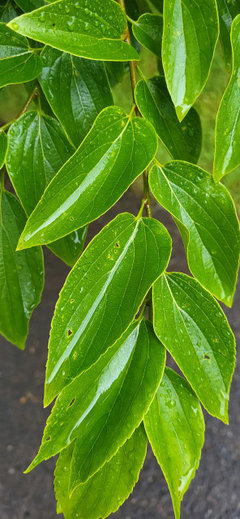
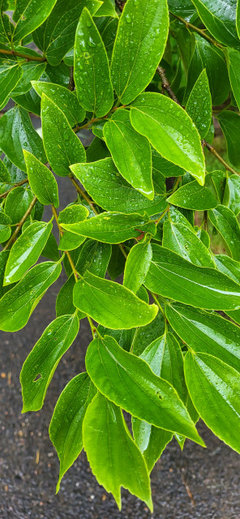
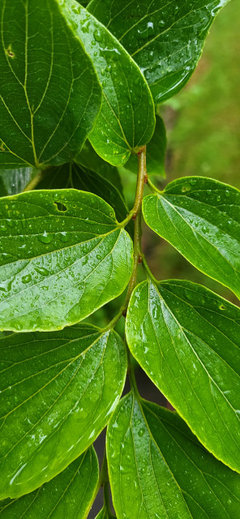
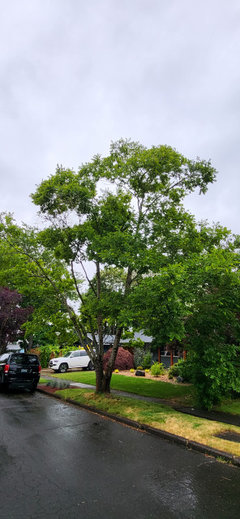
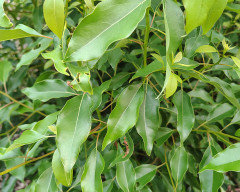
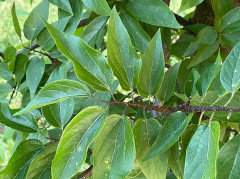
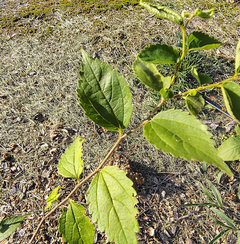
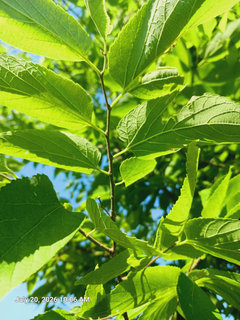
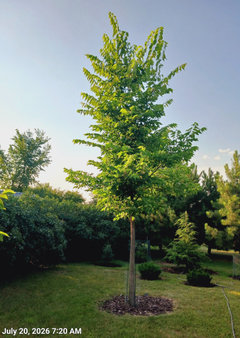
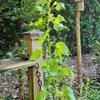
Tree on my block in Portland Oregon

2 months ago

Photos to follow, taken June 8.

Comments (26)

  • 2 months ago


  • 2 months ago

    Maybe Celtis sinensis?

  • 2 months ago
    last modified: 2 months ago

    It's a Cinnamomum. I'm not sure which. Sean @ Cistus has been selling them for years.


  • 2 months ago
    last modified: 2 months ago

    It does resemble both Celtis sinensis and Cinnamomum species. Cinnamomum was my first guess as well but I didn't think this tree was evergreen....not certain though. Are there deciduous Cinnamomum?

    Cinnamomum has been on my wish-list for several years but I've yet to acquire one. I was just at Cistus for their annual Extravaganza. Sean led a tour and pointed out at least one tree, mentioning that there are a bunch of species and almost all of them appear to be hardy in Portland.

    I'll go look at the tree again to see what the bark looks like and if there are any fruit present.

  • 2 months ago

    Looks consistent with this link from Oregon State: Celtis sinensis

  • 2 months ago
    last modified: 2 months ago

    It's surprisingly glossy for a deciduous tree, if that's what it is. But, honestly the venation doesn't look quite right for Cinnamomum. I admit I cheated and tried Claude - it thought it was a Cornus at first! Then agreed it could be Cinnamomum or the related Neolitsia.

    Art all you have to do is smell a broken leaf and that will quickly rule Lauraceae in or out.

  • 2 months ago

    I was wrong.

    All I had to was go photograph one of my own Cinnamons!


    for me it's actually the leaf edges that is most diagnostic. They are completely smooth in both of mine, and I'm pretty sure any Cinnamom I've seen.


  • 2 months ago

    It appears that the picture of the leaves was taken when they were wet (rain).

    So that threw me to if they were as shiny as they appeared.

    I agree, the veining didn't look right for cinnamon.

    But I'm still learning so I digress. ;-)

  • 2 months ago

    Celtis africana? It mostly lacks the typical serrated edge of celtis sp. But I'm not sure of its hardiness.

  • 2 months ago
    last modified: 2 months ago

    Celtis africana, along with a couple species of Rhus, was one of the few southern African trees that Silverhill rated as zone 7 hardy. RIP to Rod and Rachel, but they had a tendency to overestimate zone 7 hardiness for all but a cohort of certain high altitude geophytes or herbaceous perennials like Wahlenbergia krebsii or Gladiolus sp. I don't think it was malicious, I think different climactic and biotic factors just meant even if those plants might sometimes experience temps between 0 and 10 F, they weren't hardy in typical continental climate versions of zone 7. (Or as is evidenced by the fact Seattle gardens aren't full of Protea dracomontana shrubs, maritime PNW Zone 8 ones, either.) With that said, I've lost a couple, and not in very cold winters. I'm trying 2 more seedlings, one this year, one next, before I give up on them. The leaves are honestly even less exciting looking that the ones at the link arbordave posted above of the Chinese species. Pictures seem to show super glossy leaves for the ZA species, but on mine they were all pretty dull so far. But the two prior seedlings died pretty unambiguously in zone 8 or even zone 9 temperatures, so they obvious were not some type of northern hemisphere Celtis. (and yes, you can pretty easily spot a deciduous shrub that has died by a month or so later, when the stems look ashen. Thin, delicate looking stems, looking more like those of a big Campanula or Salvia LOL, might actually be what differentiates it from Northern Hemisphere hackberries, but I'm far from an expert on them. I consider the North American one a bit of a weed tree and get rid of them when I spot one in my garden.) So after these two do what they do I will give up on the cachet of a 'winter hardy South African tree'. (I could never get the Rhus she sent me to germinate, which is fine, because if they had been hardy, they might have become a weed. As with the Celtis there was nothing about their appearance that made you say "oh wow".)

    Anyhoo, the general absence of C. africana from collections in milder gardens than mine makes me wonder if the Zone 7 rating might be off by not one, but two zones. Even though seedlings, grown from Silverhill seed, were sold in the early 2000s by Arborvillage in Missouri (know this for a fact cause I talked to Lanny on the phone about it - only time I ever talked to him. He closed and retired right after I received my first order!) and I'm pretty sure Forestfarm, too.

    https://jcra.ncsu.edu/horticulture/our-plants/results.php?search=celtis

    https://hoytarboretum.gardenexplorer.org/ 

    etc

    That being said it would be funny if this types out to be one. We'd finally have a mature one in North America, outside of CA. I have no idea how you'd tell it from the far more common C. sinensis.

  • 2 months ago

    If the tree belongs to the local authority I'd contact them and ask.

  • 2 months ago
    last modified: 2 months ago

    Floral, your dropping in from across the pond made me wonder about these people...

    https://www.treesandshrubsonline.org/search/search-results/?q=celtis

    C. africana not even on the list!

    Fig if you don't mind me asking, how did Celtis africana even get on your radar? Were you a former customer of the late, great Arborvillage too? As is so often the case (Ellen Hornig's nursery stocking eastern US hardy South African plants...) nothing ever really filled the niche of that nursery when it closed...rare tree and shrub species and cultivars, 'midwestern climate tested'. (Except in the case of the Celtis africana. He said he really didn't know if they would be hardy.) I'm not going to go look through my piles of Forestfarm catalogs, but I am pretty sure they were selling them for a while too.


  • 2 months ago

    I'm pretty sure it's C sinensis. See also the leaves pictured on this Kew link: https://powo.science.kew.org/taxon/urn:lsid:ipni.org:names:851171-1/general-information

    Our native Sugarberry (C. laevigata) can also sometimes have somewhat glossy, entire margined leaves - this is one that I planted a number of years ago:


  • 2 months ago

    I would think there would be 'berries' in abundance this time of year, either in the tree or on the ground....

  • 2 months ago
    last modified: 2 months ago

    @UpperBayGardener (zone 7) I actually had one in my garden...for one growing season. Yeah, it was never surviving Z7, although I'll admit back then I was 6b/7a. Now I'm at least Z7b, most winters are even warmer (it's that one-in-five that does you in). I don't remember where I bought it. It was years ago. But I'm sure it was from one of the West Coast/Oregon specialty nurseries. I used to buy tons of "hardy" plants from Forest Farm, Far Reaches, Arborvillage, Heronswood (the original!), ...those were the days! Of course I lost most of those marginally hardy plants over the years, but a few have hung on and on and I still enjoy them.

    EDIT: it could have come from Woodlander's, over here on the east coast. They used to have a phenomenal selection. They're under new ownership and I have high hopes. I still have their Callistemon 'Woodlander's Hardy' and Erythrina bidwillii from my more adventurous days. Love them both, but when I get beyond the ability to winter protect them, I'm sure I'll eventually lose them to that one-in-five winter.

  • 2 months ago

    I still have my Forestfarm and Heronswood catalogs (years and years of them). If I can dig them out of the closet I'm going to peruse them just for old time's sake, and lament the many garden jewels that are no longer in commerce.

  • 2 months ago
    last modified: 2 months ago

    Trunk bark might tell, celtis often (but not always) have corky bumps on their trunk bark. In some cases it can be very pronounced.

  • 2 months ago

    When I look again today, the veining and serrated leaf margins, still look Celtis to me.

    The be honest, I used my handy dandy on-line plant identifier. 🤐

    Generally I have so many possibilites, I have to cross check each plant returned but this one said it was an 84% that it was Celtis sinensis.

  • 2 months ago

    Well I walked by the tree again yesterday. I did not take any additional photos. I think you got it right off the bat, Bill....Celtis sinensis.


    The bark is smooth, which is correct for C. sinensis. I found no fruit on the ground, but there are fruit on the tree, very sparse, and too high to see them up close, but they are about 1/3" and dark bluish. Crushed foliage is not aromatic in the least.


    Fascinating that Celtis is in Cannabaceae, along with Cannabis and Humulus (hops).

  • 2 months ago

    "dark bluish" - the mystery deepens?

    here is my C. africana. This pic doesn't really capture how thin the stems seem for a hardy tree or shrub; this macro setting makes the leaves look bigger than they are, they are only about 4cm/1 1/4". Anyhoo, not sure whether that counts as a clue to its lack of hardiness or not, but it seems like it could. By the middle of winter a few years ago they just seemed like dead salvia stems or whatnot. I think this is the 3rd one I've tried outside. The only way I might luck out is if Rod and Rachel collected some seed that had hybridized with a northern hemisphere Celtis.


  • 2 months ago
    last modified: 2 months ago

    Common hackberry (Celtis occidentalis) can have warty bark, but arbordave mentions sugarberry, and I've seen a couple of those that had the opposite -- quite smooth bark. So alot of variance amongst the different species.

    And if you have good teeth, you can scrape the thin flesh off a ripe hackberry/sugarberry berry, and it has a raisin-like taste.

  • 2 months ago

    I've noticed mostly blue berries (seed pods) on Northern Hackberry when I was collecting seeds circa 2019 from trees in the city park a few blocks away.


    Also, the thinness of new branch stems. In fact, this tree is the very last tree to break the almost invisible winter buds in the spring, and the tree always looks dead when the other trees are already leafing out. But it always leaves out fine as last place finisher.


    Started this one from seed, winter of 2019 and doing well, growing on a sandy hill.

    Originally, the bark intrigued me on older trees in my neighborhood and honestly, other than the fact they grow well here, the look of some of the more mature trees around town, is why I like them. Corky bark and generally wider trunk at the base, I just thought they were unique in appearance.


  • last month

    Art did you ever got more pictures? I'd be curious to see the berries. Thanks.


  • last month

    UpperBay - I probably wont be able to get good photos of the fruit. There are hardly any and they're up there pretty far.


    I'm satisfied with Celtis sinensis ID, are you still on the fence?

  • last month

    Oh definitely, I was just curious to see what the berries looked like. I didn't realize they were hard to reach.