Software
Houzz Logo Print
jay6a

August Highlights

25 days ago

Many annuals and perennials are coming into full swing. Many damn yellow composites and asters are about to explode.

Comments (48)

  • 25 days ago

    Im not able to post photos currently.

  • 25 days ago


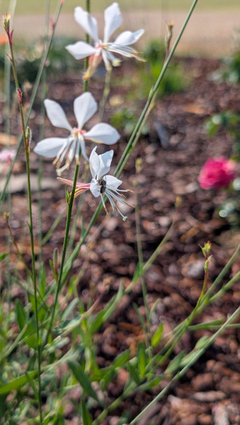
    Gaura whirling butterflies, and pollinator


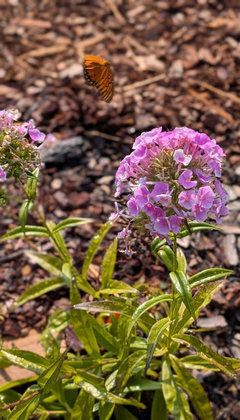
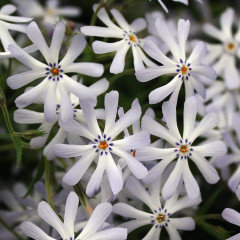
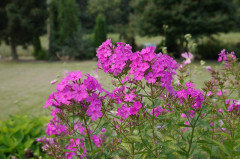
    Butterfly doing a backflip off Phlox Fashionably Early Flamingo on a windy day


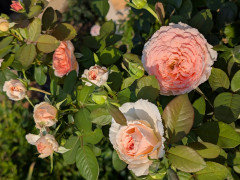
    Bliss Parfuma rose


    Jay 6a Chicago thanked claudia_dm_8a7b
  • 24 days ago

    Claudia, I like that your Phlox is rhyzomatous. I believe it's a hybrid of Phloc maculata x Phlox carolina, but in roundabout way it's also a hybrid of Alpha, Amythest Pearl and Minnie Pearl. Your rose sounds very fragrant.

  • 24 days ago
    last modified: 24 days ago

    Artinnature, I love pomegranates and Concord grapes. I had to look up Durban to see if it was really that dazzling orange. It is. Still not able to post photos.

  • 23 days ago

    @Jay 6a Chicago The Bliss rose is moderately fragrant, and super easy to care for (requiring basically nothing of me to look good)


    That's very interesting about the Phlox. You've inspired me to do some more research. After growing a few subulata cultivars for a few years, I'm new to tall phlox this season and didn't really know much about them or how they'd do in my yard, so I bought a couple of the Flamingo, which are both establishing well and blooming, and two that were supposedly Flame Light Pink but didn't resemble the photos I saw. Whatever they were, in my yard they were not a shade of pink I cared for and at any rate they gave up after a month. I admit I was not sad to see them go. I then discovered John Fanick which are supposed to be very well adapted for my part of the country. I planted a few of them 2-3 weeks ago and hope I can keep them alive through this heat.

    Jay 6a Chicago thanked claudia_dm_8a7b
  • 22 days ago

    I still can't post photos. Im wondering if it's a ploy to get me to download the Houzz app?

    claudia_dm_8a7b, I need some perennial Plox species badly. Haven't had success growing Plox glaberrima and Phlox pilosa from seed. I haven't grown Phlox paniculata in years. The last Phlox paniculata that I grew was a cultivar that was supposed to have orange flowers and excellent disease resistance. It had purple flowers and it died from terminal powdery mildew. I'm leaning heavily towards adding Jeanna and another paniculata with darker purple flowers would be nice. John Fanick has an interesting story. It was discovered growing with St. Augustine grass in San Antonio Texas. What's interesting is that Phlox paniculata is not native to Texas. John Fanick is a triploid that was introduced to Texas. It's Anybody's guess, when it became a triploid? It's triploidism? is what gives it better resistance to heat and drought. John Fanick was a nurseryman. It was another botanist who discovered it.


  • 22 days ago

    @Jay 6a Chicago I'm using a laptop with Firefox, but I have seen a lot of complaints about photos not posting randomly. I have a serious aversion to downloading apps onto my phone so I won't be taking that step if photos stop working for me.


    Phlox Jeana is definitely on my list for next year, I have read many good things about it, and I'm probably going to get "Texas Pink" which is another that is popular in the south. I think it's another kind of mysterious selection from what I gather. DFW has a popular gardening writer/radio host, Neil Sperry, who I think a few years back was trying to figure out the origin or alternate names of Texas Pink. I bought 4 of the John Fanick and 3 are doing well, I fear I have lost the fourth one. I don't blame the plant though, I bought and planted it in the absolute worst heat of the summer because I was impatient and didn't want to wait and possibly miss out on getting my hands on some this year. I also want some solid white ones but haven't made any decisions yet. I also preordered some Blue Paradise, which may not do well here but I like the promise of blueish purple flowers, and I saw a description of it being "mood ring" like in the way it changes apparent color in different lighting conditions. That is probably just marketing talk but it worked on me. There's another variety called Katherine that I am looking at as well.


    That orange phlox sounds amazing. Was it more a true orange or red leaning? I really had no idea they could come in a color like that. That's really fascinating about the John Fanick becoming triploid. I knew the basics of the story of its discovery, but not in that much detail.

    Jay 6a Chicago thanked claudia_dm_8a7b
  • 22 days ago
    last modified: 22 days ago

    Claudia, when I was ordering my mixed colored Drummond Phlox seed, I saw an add for a true blue Drummond Phlox. I ordered 1 packet of seeds of them and there was no germination whatsoever. I was suspicios about them. Have you ever heard of a true blue Phlox? I do some sand gardening and there's a local species of Phlox that grows in sand. I think it's called Phlox bifida and it has white flowers with interesting pinked petals. Posting photos here has always been hit or miss, but usually more hits than misses, except all of a sudden it's more misses than hits. I imagine the houzz app continuously tries to sell things. Sand Phlo

    Phlox bifida, Sand Phlox

    Phlox bifida

  • 22 days ago

    This is a test. I can sometimes piggyback my photos via previous comments. (?)

  • 22 days ago

    Jay, I haven't tried growing phlox from seed yet. I have a packet of annual Dutch Tapestry from Renee's Garden that I'm planning on trying next year. I don't know about a true blue phlox. I have Phlox subulata Emerald Blue which I really like and reads light blue to me but not what I'd call true blue. I want to try Phlox divaricata Blue Moon, but it looks like is has some violet in the mix. It would be nice if there were more true blue flowers out there. Last year I grew Evolvulus Blue My Mind that was true blue. That Phlox bifida looks really interesting and I will have to read up more on it.

    Jay 6a Chicago thanked claudia_dm_8a7b
  • 22 days ago

    I can see your photos! I started writing my comment then had to step away a couple hours. That's a neat trick I will have to keep in mind in case I need it sometime.

    Jay 6a Chicago thanked claudia_dm_8a7b
  • 22 days ago
    last modified: 22 days ago

    I can only comment if I turn off my autocorrect. I think I can't post photos when my autocorrect is turned off. All the hoops we have to go through, but it's free agrivation.


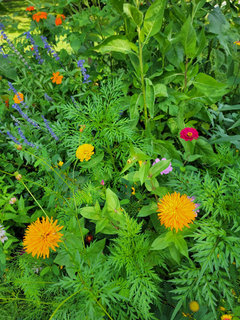
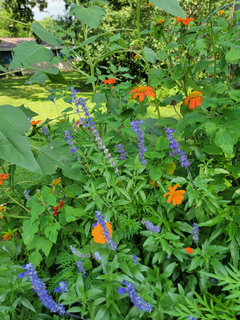
    Zinnia, Cosmos and Mealy Cup Sage.

    Asteraceae and Lamiaceae


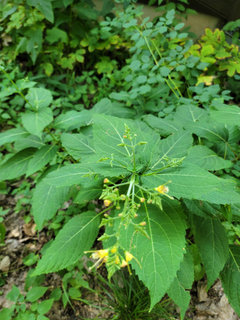
    Stoneroot, Collinsonia canadensis.

    Lamiaceae


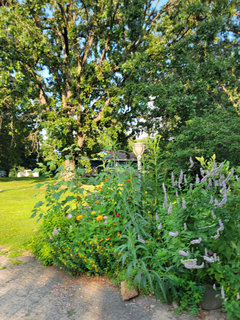
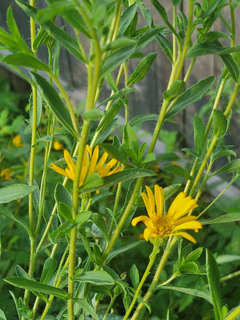
    The Lavender Hyssop is a pollinator heaven. I have tied it up to a chokeberry. They have brittle stems that break easily. The Wingstem,Verbesina alternifolia is about 10 feet tall. The 4 tallest species, Wingstem, Annual Sunflower, Saw Tooth Sunflower and Camphorweed are getting ready to bloom for a big grand finale.

    Asteraceae, Lamiaceae, Fabaceae, Rubiaceae, Commelinaceae, Hypericaceae, Ranunculaceae, Rosaceae, Glossulariaceae, Polemoniaceae, Plantaginaceae. 11 families. I can provide a list.


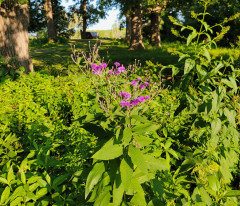
    Missouri Ironweed, Vernonia missurica

    Asteraceae

    Ironweed does fine after being sheared back. I sheared back my New York Ironweed 5 times and it still bloomed.


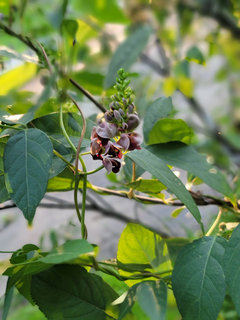
    Hopness, Apios americana. This is the sterile, triploid form. It produces up to 20 new edible tubers annually. I never see pollinators on it, so I'm guessing it doesn't produce pollin and nectar and I'm now growing the fertile diploid form in order to test my theory.

    Fabaceae


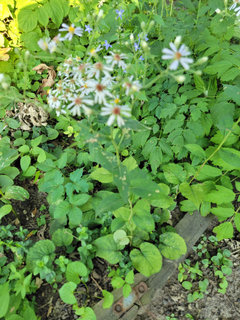
    Large-leaf Aster, Eurybia macrophylla

    The basal leaves are beautiful and it's habit is more attracive in deep shade. Great and easy perennial for shade.

    Asteraceae


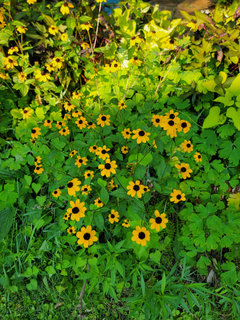
    All the Susans are at their peek.

    Brown Eyed Suzy, Rudbeckia triloba

    Asteraceae


    It's been a few years since I've had nice and tall Tithonia, Mexican Sunflower. They are so bright and cheerful.

    Asteraceae, Lamiaceae


    Hackellia is quite good at remaining hidden until it's too late. The seed pods are architectural. Just keep your distance.

    Boraginaceae

  • 22 days ago

    Phlox Robert Poore is another triploid thst was discovered at an old deserted homestead in Mississipi.

    Phlox Robert Poore has better resistance to heat and drought, just like John Fanick.

  • 22 days ago
    last modified: 22 days ago


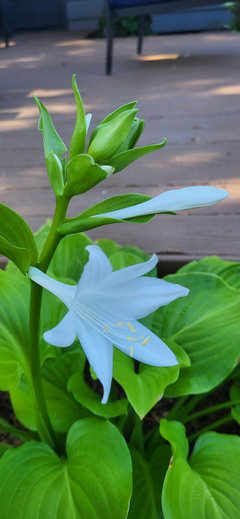
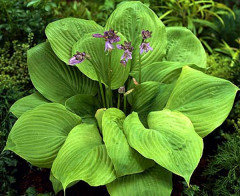
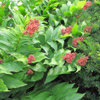
    The venerable August Lily is blooming!

    The reasons I'm so excited:

    I haven't seen this plant since 2006 when I moved from Minnesota to Washington state. I used it heavily as a designer back there, but only for discerning clients ("why would I want a plain green Hosta?"). It's a species Hosta, and is quite unique from all others for various reasons I won't go into here. It has exquisite fragrance! It's flowers are very large for a Hosta, perhaps the largest of all? It blooms in August (I know there are others that do) and everything that blooms in August should be celebrated. I love that apple green foliage color (deeper green in heavy shade) quite tolerant of sun without scorching, even this, their first summer in my garden. Finally, I got them from my next door neighbor, who didn't care for them(!)

    Anyway, they're a trip down memory lane for me, I'm thrilled to be having them blooming again in my Portland garden after so many years.

    Hosta plantaginea - the August Lily.

    Jay 6a Chicago thanked artinnaturez8b
  • 21 days ago

    Jay, I believe I read that the Robert Poore can get to almost 6 feet tall. I think I had dismissed them based on the height, but now I'm reconsidering. Enjoyed all your photos and info, particularly the Lavender Hyssop and Apios americana.


    @artinnaturez8b Wow, do I love that hosta! What a beauty. I enjoy hostas and wish I had more shade to grow them. I have some pass along no id hostas that rebloom some years but they have small purplish flowers.

    Jay 6a Chicago thanked claudia_dm_8a7b
  • 21 days ago
    last modified: 21 days ago

    That is a beautiful Hosta @artinnaturez8b. You got me interested in learning about the 45 natural Hosta species, but it requires using botanical libraries, because so much emphasis is put on the 7000 Hosta cultivars. The hybrids are the big money makers. I have 3 Hosta that look like Sum and Substance and they are in moderate to heavy shade. They don't bloom in that spot. I just discovered Sum and Substance flowers are a magenta, cranberry color. The plants

    look healthy to me, but if they were in a sunnier spot they'd probably be 6 feet wide by now.


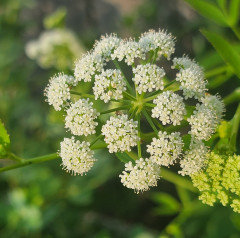
    Water Parsnip, Sium sauve

    The roots are edible. It's cousin Sium sisarum is the medieval root vegetable skirret.

    Skirrets fell out of favor when industrial potatoes became available.


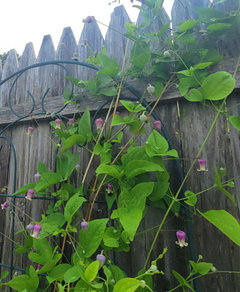
    Clematis pitcheri.

    It's fun watching the bumblebees sqeeze into the flowers.


  • 21 days ago
    last modified: 21 days ago

    Where did you find Sum and Substance has magenta or cranberry flowers, Jay? Ive grown it for 25 yesrs and see it all the time at nurseries, and thats not how i describe the flowers.

    perhaps the discrepancy is in naming the color not the actual color.

    I just looked at google images and some buds appear to be reddish purple. But actual blooms are all in varying shades of lavender. Have I missed some moment in hosta breeding?

    Jay 6a Chicago thanked Marie Tulin Boston burbs z 6a
  • 21 days ago

    @Marie Tulin Boston burbs z 6a.

    I think I described the color wrong. More like burgundy or lavender. I think the flower color varies.


  • 21 days ago

    Your image is what I see on google. i think the flower colors are all in shades of lavendar or some might say purple. For laypeople describing and naming colors is very subjective

  • 21 days ago

    I still can't post photos.


    @Jay 6a Chicago, are you referring to trying to post pics via your phone (w/o the app)? The Photo option has never been available for me when on the houzz site with my Android phone. I refuse to download their app.

    Jay 6a Chicago thanked rouge21_gw (CDN Z5b/6a)
  • 21 days ago

    I will post a native plant (I want to make @Jay 6a Chicago proud of me ;))


    Here is "Baby Joe" today:


    Jay 6a Chicago thanked rouge21_gw (CDN Z5b/6a)
  • 21 days ago
    last modified: 21 days ago

    Rouge you don't show up when I try to tag you. It's hit or miss with photos. Even if I compress the photos and have my history cleaned, it's still hit or miss. I have to turn off my autocorrect in order to comment. I go back and forth because sometimes I don't know a correct spelling. I'd guess that having the houzz app might make the experience more like facebook where the AI wants to know all your business, while trying to sell you everything and anything. Oh and yes I use my Galaxy s21 android phone. My macbook broke down and I don't want to spend a lot of money fixing it and I'm fine using just the phone. BTW Nice Baby Joe!👍

  • 21 days ago
    last modified: 21 days ago


    Maryland Goldenaster, Chrysopsis mariana


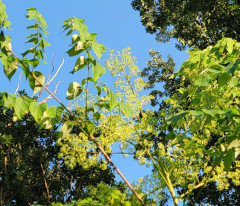
    Flowering racimes of Aralia spinosa, Devil's Walkingstick.

  • 21 days ago

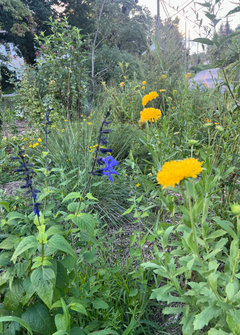
    Gaillardia Independence with Salvia guaranituca


    Jay 6a Chicago thanked Markay MD-Zone 7B
  • 19 days ago


    Jay 6a Chicago thanked lat62
  • 19 days ago

    Lat62, Fascination veronicastrum and Bartzella Itoh Peony? I wish I had as much seclusion as you do. Beautiful!

    Markay, nice combination! Independance probaby wouldn't do well in my zone 6a. I base this on previous experiences with Gaillardia hybrids. Ive grown Gaillardia pulchella, Gaillardia aristata and Gaillardia suavis. I also would like to try growing Gaillardia aestivalis. The annual pulchella only grew west of the Mississippi River before European colonization. I love those big Mexican Salvia. It's been too long since I've grown any of them.

  • 19 days ago

    @Jay 6a Chicago the gaillardia is an annual variety. I grew it from seed from Burpees. That particular Salvia is probably 5 years old. Although it is hardy here, it takes awhile to get going each summer and it never quite reaches its full size but I still enjoy it.

    Jay 6a Chicago thanked Markay MD-Zone 7B
  • 19 days ago

    @lat62, I love how the moose have taken over the heart that your DH created. (IIRC, he did that for you?)

    Jay 6a Chicago thanked indianagardengirl
  • 19 days ago

    indianagardengirl, yes, he mows the patterns for me - he did a peace sign last year :)


    Those silly moose, haha the young one has eaten my sanguisorba offiinalis which would have been a highlight (and here I thought that burnet was not on their list, haha) . Alas, that's my price for living in the 'woods'


    They also ate my veronicastrum virginicum :( the flower tips are mostly nipped


    Yes, Jay you've got it - sorry I didn't take the time to label:) I am spending way too much time on sudoku (I've mastered the NYT medium now but it takes me over an hour)


    One more, my thalictrum (don't know variety, it self seeds madly - this area is my 'meadow' where I'd like to add more to see if they can hold their own: Goatsbeard, lupin and blue poppy - I have lots of seedlings of those 3 this year


    Jay 6a Chicago thanked lat62
  • 19 days ago
    last modified: 19 days ago

    Markay, Independence is a hybrid of G. aristata x zG. pulchella. Do you get self sown seedlings with different traits, colors? Burpee had some "easier" knockoffs of the winter annuals Texas Bluebonnets and Standing Cypress. They came up with seeds that would germinate and flower all in 1 season. The plants that grew from those seeds were sickly with bad genetics. Also the Ipomopsis rubra flowers were pastel colors, and what I loved about the straight species of Ipomopsis rubra was it's stunning hot red flowers. At the time I thought growing the straight species of Ipomopsis rubra was impossible. It isn't impossible. I decided the native Wild Blue Lupin, Lupinus perennis was just as nice looking as the Bluebonnets, plus Lupinus perennis is the sole hostplant for the critically endangered Karner Blue Butterfly.


    Aralia spinosa galaxy cluster. I'll snap it again in full flower. Devil's Walkingstick has the largest compound leaves out of all the plants in North America. It's worth putting up with the suckers.


    These are Sum and Substance I think.

    I feel compelled to move them into more sun so they can bloom. This is a friend's yard. I would never grow Hosta on my own property. Been there, done that.


    Obediant plant. Physostegia

    A great hummingbird plant for late summer. They require annual thinning out and they pull out easily.


    Maryland Goldenaster, Chrysopsis mariana


    Lavender Hyssop, Agastache foeniculum

    Spikenard, Aralia racemosa, American Ginseng


    Rocky Mountain Bee Plant. It was originally Cleome serrulata, then Peritoma serrulata and now Cleomella serrulata.


    Bush's Poppy Mallow, Callirhoe bushii


    White Rattlesnake Root, Nabalus/Prenanthes albus

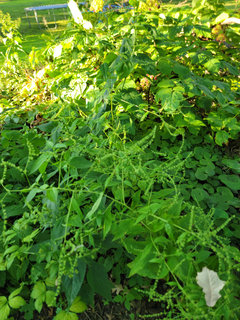
    Also Wingstem, Verbesina alternifolia and maybe Heliopsis helianthoides, Geranium and Columbine foliage

  • 19 days ago

    Beautiful plants all!


    Lobelia cardinalis


    Leucanthemum Becky


    Phlox p.


    Crocosmia after heavy rain - we needed it.


    Iris s. Painted Woman. It has had flowers every month. One now.


    Veronicastrum virginicum


    Helenium Moerheim Beauty. I redid this section quite recently and it has established quickly cosidering I had to take them apart, rotten crown vetch.


    Alliun senescens & Sedum Vera Jameson planted late last fall.


    Iris domestica & Kalimeris Blue Star

    Jay 6a Chicago thanked peren.all Zone 5a Ontario Canada
  • 19 days ago

    @Jay 6a Chicago time will tell. It was a new variety for me this year.

    Jay 6a Chicago thanked Markay MD-Zone 7B
  • 19 days ago

    rouge21 - Baby Joe is looking good, I wonder how tall it will get(?). Little Joe in my backyard is thriving this year thanks to adequate rainfall, its tallest stems are 6':

    The tallest perennial in my yard is (not surprisingly) Helianthus giganteus, at 10' high:

    Jay - My groundnut vine (or as you called it "hopniss") is sprouting readily from the roots, and is starting to ascend a nearby senna plant:

    New this year (for me) is Meadow Blazing Star, a monarch magnet (there were two monarchs fighting for a prime spot on it when I took this photo):

    Also new for me (planted last year) is Kankakee Mallow. Unfortunately, Japanese beetles like the flowers, but there were a few they left untouched:


    Jay 6a Chicago thanked arbordave (SE MI)
  • 18 days ago

    Hey @Jay 6a Chicago, I thought of you when I spied my Woodland Sunflower the other day. It is past its prime but it still makes me happy showing yellow in low light:


    Baby Joe is looking good, I wonder how tall it will get(?).


    @arbordave (SE MI), good question. I am confident that it is fully mature now at less than 5 feet in height.


    Jay 6a Chicago thanked rouge21_gw (CDN Z5b/6a)
  • 17 days ago
    last modified: 17 days ago

    Great photos everyone! Thanks for sharing. The past week has been very wet. A lot of plants flopped over. The weeds are crazy.

    Rouge, the Woodland Sunflowers here are just beginning to bloom. I like your Helianthus giganteum Dave. I'm growing a new sunflower this year it's Helianthus petiolaris. I thinned out my Kankakee Mallow too much and lost it. I still haven't been to Langham Island where it comes from. There's a group that's restoring the island. I l8ke that Kankakee Mallow doesn't need constantly moist soil. My Hibiscus laevis does need constantly moist soil.

    The Helenium and Iris domestica are beautiful. I love Sanguisorbia but I've never grown it. I tried it from seed once long ago.


    Eastern Swamp Milkweed, Asclepias incarnata var pulchra


    Horsetail Milkweed, Asclepias subverticillata


    Virginia Snakeroot, Endodeca/Aristolochia serpentaria var convolvulacea


    Monnier's Snow Parsley, Cnidium monnieri


    The Climbing Prairie Rose is putting on a lot of growth. They can grow into huge beasts.


    My future shade tree.


    Blue Mistflower, Conoclinium coelistinum


    2 bumblebees diving into Clematis pitcheri


    Hog Peanut, Amphicarpaea bracteata


    This is a Clematis offset and it's geometric form is incredible.

    This is Price's Potato Bean, Apios Priceana

    It is federally endangered and extremely rare. This Apios forms 1 large tuber.

    This is Groundnut, Hopness, Potato Vine, Apios americana. This is the fertile diploid race. A lot of the Apios americana in the midwest is the sterile triploid race. Apios americana makes about 20 tubers anually, so the sterile race can still spread into new areas.

  • 15 days ago

    Not my gardens, but a hike through the woods and wetlands.

    Lobelia sifilitica or kalmii. I need to go back and confirm.

    One of the prettier Bidens with ray petals.

    Rudbeckia submentosa with unusually shaped, narrower ray petals. There's already another mutation on the market called Henry Eiler's Rudbeckia. Henry discovered those growing along an old railroad track. Since those genetics are already out there, it's possible some of the mutated genetics were included in the sowing. Rudbeckia submentosa and Helianthus divaricatus grow right next to each other, and other than having yellow flowers in common, their leaves are very different and they have different leaf arrangements. I usually identify Rudbeckia submentosa by it's dintinctively shaped, 3 lobed, lower leaves.


    Nelubo lutea

  • 15 days ago
    last modified: 15 days ago


    Rubus odoratus is one of my favorite natives


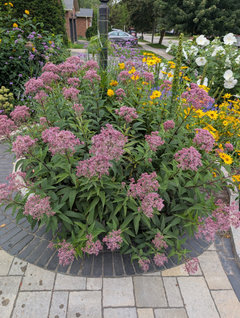
    Native Eutrochium needs to be deadheaded before I have them reseeding like mad.


    Sanguisorba Pink Spike


    Rudbeckia n. Herbstonne in a veil of Molinia c. ssp. a. Karl Foerster


    Sanguisorba tenuifolia Alba


    Hosta Guacamole - another very fragrant bloomer for you artinnature. Sorry about the splash up from rain on the lower leaves.

    Jay 6a Chicago thanked peren.all Zone 5a Ontario Canada
  • 14 days ago
    last modified: 14 days ago

    I love how airy the flowers on the Herbstonne look. Ive only grown R. laciniata once about 30 years ago. It was the double Flora Plena/Golden Glow. The flowers were stunning, but it's agressive habit scared me and I got rid of it. If I grew it now I would just control it's spread. I wish I had enough space to grow the Purple Flowering Raspberry. I've decided to grow Canada Burnet. It seems to like the same moist soil as my Queen of the Prairie, Water Parsnip, Buttonbush, Swamp Milkweed, Halberd-leaved Rose Mallow, and White Meadowsweet. It's native only to my county of Illinois and it's around the area, but I don't recall ever seeing it.

    More prairie walk.


    Ashy Sunflower and Wild Grape


    Whorled Milkweed


    Cream Gentian


    Monarch on Rattlesnake Master


    Indian Grass, Sorghastrum nutans


    Big Bluestem, Andropogon gerardii and Arnoglossum atriplicifolium, Pale Indian Plantain

  • 4 days ago

    Likely of the very hardiest blackberries there is, has survived and thrived down to -45 F with only snow covering, tops of the canes were much above the snowline. 'Blasors Hardy Black' ... delicious melon flavors, though mean as can be thorny canes!

    Self sown morning glory that begins flowering when only inches high.

    And again, passiflora 'Fata Confetto' just becase it's blooming its head off!


    Jay 6a Chicago thanked FrozeBudd_z3/4
  • yesterday

    And just like that… August is at it’s end.


    Jay 6a Chicago thanked Markay MD-Zone 7B
  • yesterday
    last modified: yesterday

    Frozebud, Nice combination of the morning glory and whatever cultivar of white Clematis that is. I wish I had room for blackberries. Your Passionflower doesn't get any fritillqry butterfly caterpillars does it?

    Markay, what Allium is that? I'd love it if my native Allium cernuum and stellatum had purple colors that deep. I can't believe August is over either.


    The natural form of annual sunflower before breeders turned it into a top heavy monstrosity. Helianthus anuus


    Devil's Walking Stick

    Aralia spinosa


    All umbellifers are Apiaceae, but not all Apiaceae are umbellifers.

    Flannel Flower, Actinotus helianthi, Apiaceae

    Maybe this is the Apiaceae version of the cudweed tribe Gnaphallieae of Asteracea? It likes sharp drainage like it's fellow Ausie Rodanthe. It also looks similar to Edelweiss, which is in tribe Gnaphalieae. Dule purpose with Edelweiss. Grow it on the graves in Gondor and use it as a host plant for American Lady Butterflies.

  • yesterday

    Markay is that a salvia? Which one? Mine never get that tall! Love your color combos.


    FB, agree with Jay - love the combination of the morning glory and clematis. Very eye-catching!


    Sheesh, can't believe it's September!


    :)

    Dee


    Jay 6a Chicago thanked diggerdee zone 6 CT
  • yesterday

    @Jay 6a Chicago, The allium is Lavender Bubbles. I keep trying to grow native allium without luck. I think I inadvertantly weed it out each time thinking it is onion grass. I absolutely live the summer blooming varieties though! I planted a bee variety this year called Bobnldhead. It is taller (30” I believe) with white blooms, but I dob’t think it is goingbto bloom for me this year.


    @diggerdee zone 6 CT, there was much head scratching on my end to ID the salvia since I started from seed 3 or 4 springs ago. It is reliably hardy for me here even through the polar vortexes (vortices?). I just remembered it had blue in the name which is not at all helpful. Anyway, I finally remembered thatbit is Salvia farinacea ’Blue Bedder’ which was super confusing because that same year I tried Echium ”Bedder Blue.”


    In any case, it is easy to start indoor from seed, but needs an early start (10-12 weeks before last frost). It gets 30-36” tall but several years in, I think mine have passed that mark. If you do try it, leave the plants, don’t cut them back, and bury them under a blanket of fall leaves. They are hardier than you might imagine and a bit late to wake up in the spring.

    Jay 6a Chicago thanked Markay MD-Zone 7B
  • 21 hours ago

    Hmm, I'm willing to bet the farm that I did try Blue Bedder, and it never got that tall. My favorite annual salvia is Victoria Blue, but it never got very tall, and always bloomed JUST after the roses I planted it with (or was it JUST before...???)


    Anyway, that's why I tried Blue Bedder, since it was supposed to be taller. Not in my garden.


    I do now (for the last two years) grow Big Blue, which I also like. It's much darker, and quite late-blooming in my garden, and I don't grow it with my roses, but I do like it - and so do the bees, especially when Big Blue is one of the last things standing!


    :)

    Dee

    Jay 6a Chicago thanked diggerdee zone 6 CT
  • 17 hours ago

    All the Allium I've grown were heavy self seeders. I usually deadhead them now. I haven't been able to germinate ramps and rampions. Maybe I should allow some seedlings to grow out and maybe some will have a deeper purple color?

    False Dragonheads and Pink Turtleheads. Physostegia virginiana, Chelone obliqua

    I've never seen a real Pluchea odorata in bloom. It's taking an eternity. Saltmarsh Fleabane, Camphorweed.

  • 11 hours ago

    Where did you get your sunflower seed? I am always trying to find more natural looking annual varieties. I grew Beach Sunflower (Helianthus debilis) and it did well in my pretty well in my sandy soil all things considered, but I would have preferred a more golden yellow.


  • 7 hours ago
    last modified: 7 hours ago

    I have some sun flowers which reseed that started as giant sunflowers like 6 years ago and now they look like the natural ones pictured. Guess they revert over time