Software
Houzz Logo Print
artinnaturez8b

Machilus thunbergii

last month

Photos to follow.
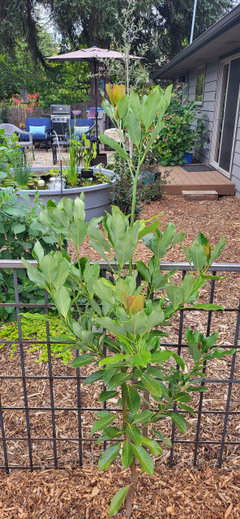
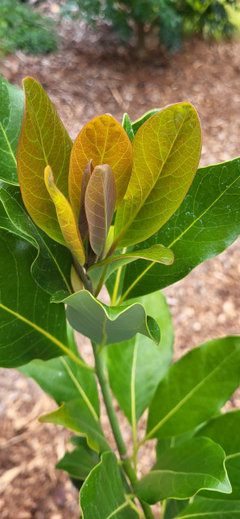
Pickedup this BLE avocado relative at Cistus a couple months ago, after spring growth had come to an end. It is now growing again. New foliage is slightly colored, but apparently it can be a very striking red, perhaps in spring, not so much in late summer?
I've never seen the tree in gardens, anyone else growing Machilus thunbergii?

Comments (11)

  • last month
    last modified: last month


    Machilus thunbergii (Persea thunbergii)

  • last month

    Sorry artinnature, this is totally unrelated to your questions - but do you have a water feature?? Ooooh! Ahhhh! I'd love to see it if you want to post about it (maybe another thread). I tried to do a small galvanized tub one a few years back but I didn't have much luck.


    Okay sorry, continue with machilus thunbergii....


    :)

    Dee

  • last month

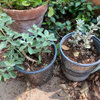
    diggerdee - yes, that is my new water feature. It's a 350 gallon HDPE above ground tank....because two Aussies! (I also failed miserably with my galvanized tank!) I have a lot of experience designing and selling very beautiful water features but this is only my second go round with the actual chemistry of keeping a healthy pond, including fish or frogs - it can be, um - complicated.


    Since you're interested, I'll post a separate thread, probably in Northwestern Gardening.

  • last month
    last modified: last month

    I've seen some in southern gardens. They are perfectly nice, but compared to a bunch of other available zone 8 BLEs, don't have much of a 'wow' factor. No fragrant (Pittosporum) or showy (Magnolia) flowers. Other than the red new growth, which a lot of them feature to some degree. https://www.treesandshrubsonline.org/articles/persea/persea-thunbergii/

    artinnaturez8b thanked UpperBayGardener (zone 7)
  • last month

    UpperBay - thanks. Love Pittosporums & Magnolias (and fragrance) - six varieties of each and counting. But you see, I must try growing everything;-) and if that everything has handsome, trouble-free foliage 365 days, that's half of what I'm after. And of course for hopeless plant nerds like me, rarity is highly valued. In the PNW, rare BLEs stand out simply because they aren't Rhododendrons or Cherry Laurels!

  • last month

    " simply because they aren't Rhododendrons or Cherry Laurels! " Oh, I know the feeling. I had to imagine I was a dog chained to the ground to stop myself from purchasing a very expensive and rare BLE from the RSF fall catalog offering, that probably isn't even hardy here.


  • last month

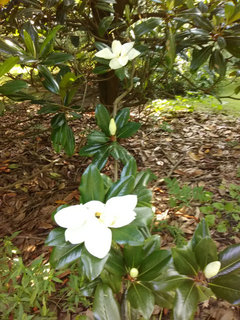
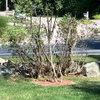
    Not to hijack, but here's my BLE two months ago.


  • last month
    last modified: last month

    maackia - I've never seen the tree in Portland or discussed it with local gardeners. Cistus says it should be no problem here, but of course they would. Since my tree is growing for the second time now in September, I would say its probably a pretty quick grower. Probably 25' in gardens, 80 plus feet in native range.

    While giving a tour of "Rancho Cistus" earlier this year, Sean Hogan said "we're very lucky to live in a place where anything will grow, whether it likes water or not. For those types that need regular water, just add it and stand back!".

  • last month

    I researched Machilus thunbergii in the past, since I was interested in broadleaf evergreen trees that could grow in the Pacific Northwest (climate zone 8 ).

    It is actually native to Japan. But in Japan, it is sort of seen as an "inferior" version of camphor tree. However, Machilus thunbergii is more cold tolerant than camphor tree, and can grow in colder parts of Japan; although the majority of the population in Japan (such as in Tokyo) lives in areas where camphor trees can grow.

    The foliage of Machilus thunbergii reminds one a little bit of some Chinese evergreen magnolia trees (which are rare in cultivation, but not completely unheard of in the U.S.)

    There is also "Japanese cinnamon" tree (Cinnamomum tenuifolium) for anyone who is interested (though it is a smaller tree, and evergreen leaves not as pretty).

  • last month
    last modified: last month

    I don't know why the Japanese would complain - they have plenty of BLEs and a summer wet climate that supports them. The hardiest Cinnamomums are surely as hardy as any Machilus, but they might not be commonly cultivated in Japan. It's actually a little surprising that Japanese gardeners (vs. forest managers or whatever) like camphor trees, because they get so gigantic! I think of gardens there as being smallish.

    Honestly, on showiness alone, the flowering Castanopsis of Japan might be prettier than any Cinnamon or Avocado family member! I ONCE AGAIN failed with the Castanopsis seeds Sheffield was offering...not sure what I'm doing wrong, and feel like an idiot at this point. At least I got some other rarities to germinate, like Pinus gerardiana, and Nomocharis aperta. 3 out of 15 seedlings survived in trays this summer, so hopefully I've selected a 'heat tolerant' clone of that Himalayan beauty! (the lily seed was from Jelitto, not Sheffields)

    "we're very lucky to live in a place where anything will grow, whether it likes water or not. For those types that need regular water, just add it and stand back!".

    Yeah, now, I'm 'used to' a summer wet (usually) climate, which isn't to say I'm not jealous of what people can grow in the PNW. But the problem with a summer wet climate is you can't turn it off! The reason one saw rhododendrons growing near the bottom of swales at Greer Gardens, (or Sonoma Hort for that matter) where they would never be able to survive around here, isn't JUST the cooler nights in summer...it's that because any summer water is water you're turning on, yourself, there's no way to drown them as can happen around here after a hurricane. As I've said before, around Hurricane Irene in 2011, I got close to 30 inches of rain in 40 days. It did kill a few rhododendrons (including a big gorgeous R. rex I'd driven across the country from RSF) but fortunately, most of mine are planted on a gentle slope and it prevented an absolute carnage. They get just enough drainage help from that. This was really a happy accident, when I bought this lot in 2006, I had no idea I'd get 'smitten' by rhodies by driving to Rarefind in NJ that spring. I never knew you could have an 'english looking' rhodie garden in the eastern US. (FWIW Rarefind was on pine barren sand, and had a very sophisticated irrigation system with a deep well and large pump house, so actually closer in that respect to the PNW, than my garden.)

    OH well, sorry to take over the thread, but it's interesting to compare gardening practices PNW vs. East coast. I love the summers I can coast by without having to water a damn thing even once, even newly planted stuff. But we pay the price when the spigot won't shut off! (And of course, have to water in dry summers like 2024 and 2025.)

0