
Search results for "Keratin" in Home Design Ideas

 The Room Co.
Large trendy l-shaped dark wood floor open concept kitchen photo in Salt Lake City with a drop-in sink, recessed-panel cabinets, granite countertops, beige backsplash, cement tile backsplash, stainless steel appliances, an island and white cabinets
 The Room Co.
Example of a large trendy l-shaped dark wood floor open concept kitchen design in Salt Lake City with a drop-in sink, recessed-panel cabinets, beige backsplash, cement tile backsplash, stainless steel appliances, an island, white cabinets and quartzite countertops

Find the right local pro for your project
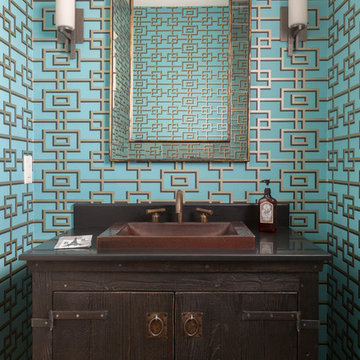
 Highland Builders LLC
Powder room with glam geometric wallpaper complimented with a vessel sink rustic vanity with riveted hardware. Counter top is quartz Viatera - Truffle. Mirror framed wall mirror.
Ryan Hainey
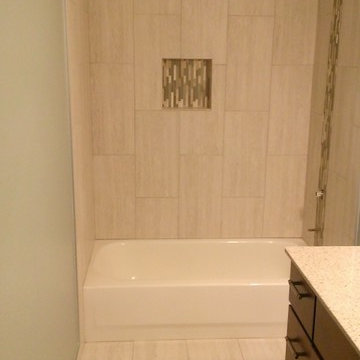
 Custom Surface Solutions
Custom Surface Solutions (www.css-tile.com) - Owner Craig Thompson (512) 430-1215. This project shows new 12 x 24 tile installed vertically with offset layout pattern on wall and floor. Includes shower box with linear glass accent tile back and vertical glass accent band. Tile edges are finished with Schluter Jolly satin aluminum profile edge trim.
 The Room Co.
Example of a large transitional l-shaped dark wood floor open concept kitchen design in Salt Lake City with a drop-in sink, recessed-panel cabinets, granite countertops, beige backsplash, cement tile backsplash, stainless steel appliances and an island
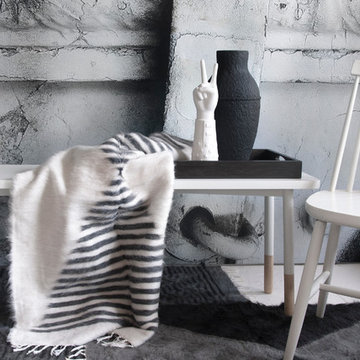
 Muna Home
These luxury authentic flat-weave collection represent an ancient method of creating a faux animal hair pile which was widespread amongst nomads from Central Asia to Turkey. Woven with cotton warps and Angora goat hair wefts. The goat hair creates the long haired fur-like look. Angora goats are named after the Turkish province of their origin, Ankara and these goats produce the fibre known as mohair. The lustrous hair of the angora goat occurs in every natural shade ranging from black through browns to white, thus making possible a wide variety of colour-schemes with no dyes.
More about Mohair…
Mohair is one of the oldest textile fibres in use. The Angora goat is thought to originate from the mountains of Tibet, reaching Turkey in the 16th century. Mohair is warm in winter as it has great insulating properties, while remaining cool in summer due to its moisture wicking properties. It’s possible to use double-side, hairy side for winter, woven side for summer. It is durable, naturally elastic, flame resistant, crease resistant, and does not felt.
It is a luxury fiber, like cashmere, angora and silk, and is more expensive than most wools that comes from sheep. Mohair is composed mostly of keratin, a protein found in the hair, wool, horns and skin of all mammals.
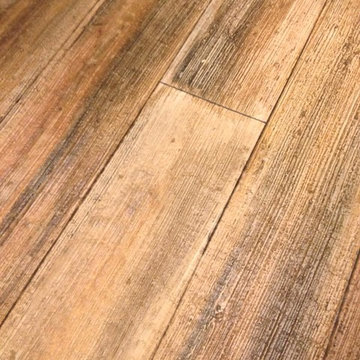
 Ky-Kan Coatings
Concrete can be made to look like any substance. Tile, stone, wood, brick, etc. With unlimited color options, Ky-Kan Coatings can transform any room in your home or business using lightweight, beautiful concrete.
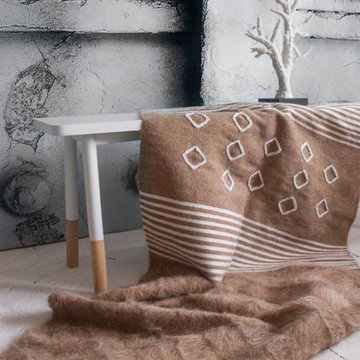 Muna Home
These luxury authentic flat-weave collection represent an ancient method of creating a faux animal hair pile which was widespread amongst nomads from Central Asia to Turkey. Woven with cotton warps and Angora goat hair wefts. The goat hair creates the long haired fur-like look. Angora goats are named after the Turkish province of their origin, Ankara and these goats produce the fibre known as mohair. The lustrous hair of the angora goat occurs in every natural shade ranging from black through browns to white, thus making possible a wide variety of colour-schemes with no dyes.
More about Mohair…
Mohair is one of the oldest textile fibres in use. The Angora goat is thought to originate from the mountains of Tibet, reaching Turkey in the 16th century. Mohair is warm in winter as it has great insulating properties, while remaining cool in summer due to its moisture wicking properties. It’s possible to use double-side, hairy side for winter, woven side for summer. It is durable, naturally elastic, flame resistant, crease resistant, and does not felt.
It is a luxury fiber, like cashmere, angora and silk, and is more expensive than most wools that comes from sheep. Mohair is composed mostly of keratin, a protein found in the hair, wool, horns and skin of all mammals.

 Zelaya Properties LLC
We used: Custom cherry cabinetry in Arts & Crafts Shaker style by Kabinart in Boulder and Espresso stains. Liberty Hardware Venetian bronze 1-1/2" cabinet knobs. KitchenAid Architect II Series 22 CF counter-depth French door refrigerator. KitchenAid Architect Series II 27" convection single wall oven. KitchenAid 36" 6-burner dual fuel freestanding commercial-style range. KitchenAid Architect II Series 24" dishwasher. Sharp Insight Pro Series 24" built-in microwave drawer (Model #KB6524PS). Crystorama Solaris 12" wide pendant lights in English bronze. Granite countertops in Brown Fantasy. 3"x6" polished marble backsplash.
Paint colors:
Walls: Glidden Silver Cloud 30YY 63/024
Ceilings/Trims/Doors: Glidden Swan White GLC23
Robert B. Narod Photography
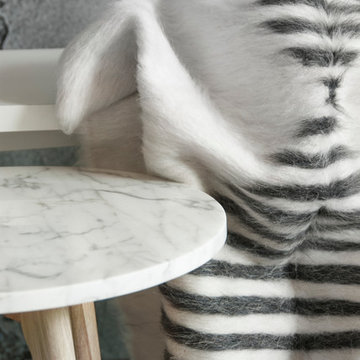 Muna Home
These luxury authentic flat-weave collection represent an ancient method of creating a faux animal hair pile which was widespread amongst nomads from Central Asia to Turkey. Woven with cotton warps and Angora goat hair wefts. The goat hair creates the long haired fur-like look. Angora goats are named after the Turkish province of their origin, Ankara and these goats produce the fibre known as mohair. The lustrous hair of the angora goat occurs in every natural shade ranging from black through browns to white, thus making possible a wide variety of colour-schemes with no dyes.
More about Mohair…
Mohair is one of the oldest textile fibres in use. The Angora goat is thought to originate from the mountains of Tibet, reaching Turkey in the 16th century. Mohair is warm in winter as it has great insulating properties, while remaining cool in summer due to its moisture wicking properties. It’s possible to use double-side, hairy side for winter, woven side for summer. It is durable, naturally elastic, flame resistant, crease resistant, and does not felt.
It is a luxury fiber, like cashmere, angora and silk, and is more expensive than most wools that comes from sheep. Mohair is composed mostly of keratin, a protein found in the hair, wool, horns and skin of all mammals.
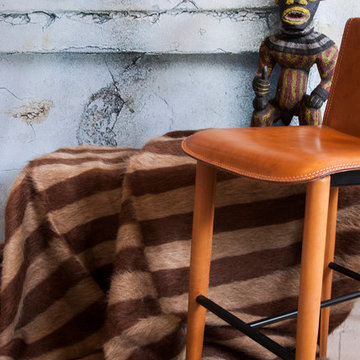 Muna Home
These luxury authentic flat-weave collection represent an ancient method of creating a faux animal hair pile which was widespread amongst nomads from Central Asia to Turkey. Woven with cotton warps and Angora goat hair wefts. The goat hair creates the long haired fur-like look. Angora goats are named after the Turkish province of their origin, Ankara and these goats produce the fibre known as mohair. The lustrous hair of the angora goat occurs in every natural shade ranging from black through browns to white, thus making possible a wide variety of colour-schemes with no dyes.
More about Mohair…
Mohair is one of the oldest textile fibres in use. The Angora goat is thought to originate from the mountains of Tibet, reaching Turkey in the 16th century. Mohair is warm in winter as it has great insulating properties, while remaining cool in summer due to its moisture wicking properties. It’s possible to use double-side, hairy side for winter, woven side for summer. It is durable, naturally elastic, flame resistant, crease resistant, and does not felt.
It is a luxury fiber, like cashmere, angora and silk, and is more expensive than most wools that comes from sheep. Mohair is composed mostly of keratin, a protein found in the hair, wool, horns and skin of all mammals.
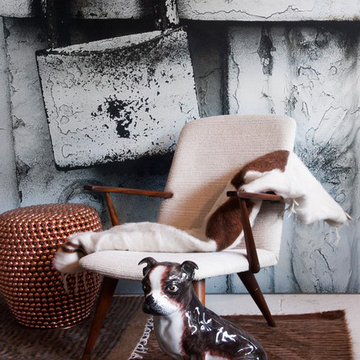 Muna Home
These luxury authentic flat-weave collection represent an ancient method of creating a faux animal hair pile which was widespread amongst nomads from Central Asia to Turkey. Woven with cotton warps and Angora goat hair wefts. The goat hair creates the long haired fur-like look. Angora goats are named after the Turkish province of their origin, Ankara and these goats produce the fibre known as mohair. The lustrous hair of the angora goat occurs in every natural shade ranging from black through browns to white, thus making possible a wide variety of colour-schemes with no dyes.
More about Mohair…
Mohair is one of the oldest textile fibres in use. The Angora goat is thought to originate from the mountains of Tibet, reaching Turkey in the 16th century. Mohair is warm in winter as it has great insulating properties, while remaining cool in summer due to its moisture wicking properties. It’s possible to use double-side, hairy side for winter, woven side for summer. It is durable, naturally elastic, flame resistant, crease resistant, and does not felt.
It is a luxury fiber, like cashmere, angora and silk, and is more expensive than most wools that comes from sheep. Mohair is composed mostly of keratin, a protein found in the hair, wool, horns and skin of all mammals.
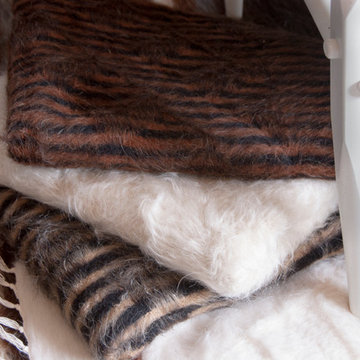 Muna Home
These luxury authentic flat-weave collection represent an ancient method of creating a faux animal hair pile which was widespread amongst nomads from Central Asia to Turkey. Woven with cotton warps and Angora goat hair wefts. The goat hair creates the long haired fur-like look. Angora goats are named after the Turkish province of their origin, Ankara and these goats produce the fibre known as mohair. The lustrous hair of the angora goat occurs in every natural shade ranging from black through browns to white, thus making possible a wide variety of colour-schemes with no dyes.
More about Mohair…
Mohair is one of the oldest textile fibres in use. The Angora goat is thought to originate from the mountains of Tibet, reaching Turkey in the 16th century. Mohair is warm in winter as it has great insulating properties, while remaining cool in summer due to its moisture wicking properties. It’s possible to use double-side, hairy side for winter, woven side for summer. It is durable, naturally elastic, flame resistant, crease resistant, and does not felt.
It is a luxury fiber, like cashmere, angora and silk, and is more expensive than most wools that comes from sheep. Mohair is composed mostly of keratin, a protein found in the hair, wool, horns and skin of all mammals.
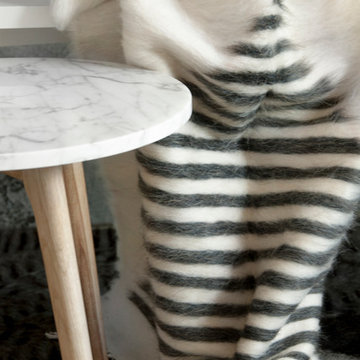 Muna Home
These luxury authentic flat-weave collection represent an ancient method of creating a faux animal hair pile which was widespread amongst nomads from Central Asia to Turkey. Woven with cotton warps and Angora goat hair wefts. The goat hair creates the long haired fur-like look. Angora goats are named after the Turkish province of their origin, Ankara and these goats produce the fibre known as mohair. The lustrous hair of the angora goat occurs in every natural shade ranging from black through browns to white, thus making possible a wide variety of colour-schemes with no dyes.
More about Mohair…
Mohair is one of the oldest textile fibres in use. The Angora goat is thought to originate from the mountains of Tibet, reaching Turkey in the 16th century. Mohair is warm in winter as it has great insulating properties, while remaining cool in summer due to its moisture wicking properties. It’s possible to use double-side, hairy side for winter, woven side for summer. It is durable, naturally elastic, flame resistant, crease resistant, and does not felt.
It is a luxury fiber, like cashmere, angora and silk, and is more expensive than most wools that comes from sheep. Mohair is composed mostly of keratin, a protein found in the hair, wool, horns and skin of all mammals.
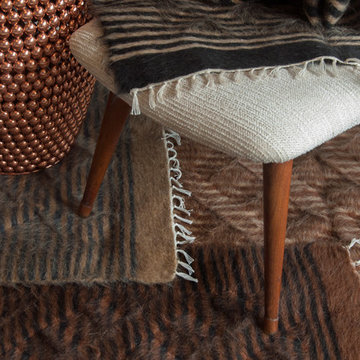 Muna Home
These luxury authentic flat-weave collection represent an ancient method of creating a faux animal hair pile which was widespread amongst nomads from Central Asia to Turkey. Woven with cotton warps and Angora goat hair wefts. The goat hair creates the long haired fur-like look. Angora goats are named after the Turkish province of their origin, Ankara and these goats produce the fibre known as mohair. The lustrous hair of the angora goat occurs in every natural shade ranging from black through browns to white, thus making possible a wide variety of colour-schemes with no dyes.
More about Mohair…
Mohair is one of the oldest textile fibres in use. The Angora goat is thought to originate from the mountains of Tibet, reaching Turkey in the 16th century. Mohair is warm in winter as it has great insulating properties, while remaining cool in summer due to its moisture wicking properties. It’s possible to use double-side, hairy side for winter, woven side for summer. It is durable, naturally elastic, flame resistant, crease resistant, and does not felt.
It is a luxury fiber, like cashmere, angora and silk, and is more expensive than most wools that comes from sheep. Mohair is composed mostly of keratin, a protein found in the hair, wool, horns and skin of all mammals.
 Muna Home
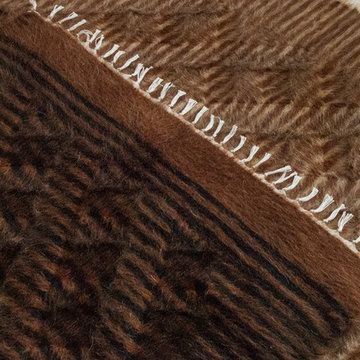
These luxury authentic flat-weave collection represent an ancient method of creating a faux animal hair pile which was widespread amongst nomads from Central Asia to Turkey. Woven with cotton warps and Angora goat hair wefts. The goat hair creates the long haired fur-like look. Angora goats are named after the Turkish province of their origin, Ankara and these goats produce the fibre known as mohair. The lustrous hair of the angora goat occurs in every natural shade ranging from black through browns to white, thus making possible a wide variety of colour-schemes with no dyes.
More about Mohair…
Mohair is one of the oldest textile fibres in use. The Angora goat is thought to originate from the mountains of Tibet, reaching Turkey in the 16th century. Mohair is warm in winter as it has great insulating properties, while remaining cool in summer due to its moisture wicking properties. It’s possible to use double-side, hairy side for winter, woven side for summer. It is durable, naturally elastic, flame resistant, crease resistant, and does not felt.
It is a luxury fiber, like cashmere, angora and silk, and is more expensive than most wools that comes from sheep. Mohair is composed mostly of keratin, a protein found in the hair, wool, horns and skin of all mammals.
 Muna Home
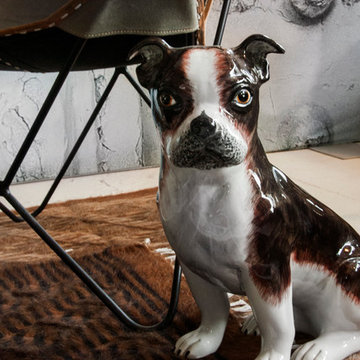
These luxury authentic flat-weave collection represent an ancient method of creating a faux animal hair pile which was widespread amongst nomads from Central Asia to Turkey. Woven with cotton warps and Angora goat hair wefts. The goat hair creates the long haired fur-like look. Angora goats are named after the Turkish province of their origin, Ankara and these goats produce the fibre known as mohair. The lustrous hair of the angora goat occurs in every natural shade ranging from black through browns to white, thus making possible a wide variety of colour-schemes with no dyes.
More about Mohair…
Mohair is one of the oldest textile fibres in use. The Angora goat is thought to originate from the mountains of Tibet, reaching Turkey in the 16th century. Mohair is warm in winter as it has great insulating properties, while remaining cool in summer due to its moisture wicking properties. It’s possible to use double-side, hairy side for winter, woven side for summer. It is durable, naturally elastic, flame resistant, crease resistant, and does not felt.
It is a luxury fiber, like cashmere, angora and silk, and is more expensive than most wools that comes from sheep. Mohair is composed mostly of keratin, a protein found in the hair, wool, horns and skin of all mammals.
 Muna Home
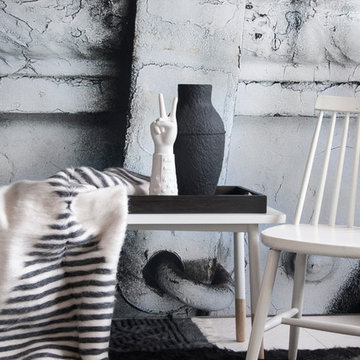
These luxury authentic flat-weave collection represent an ancient method of creating a faux animal hair pile which was widespread amongst nomads from Central Asia to Turkey. Woven with cotton warps and Angora goat hair wefts. The goat hair creates the long haired fur-like look. Angora goats are named after the Turkish province of their origin, Ankara and these goats produce the fibre known as mohair. The lustrous hair of the angora goat occurs in every natural shade ranging from black through browns to white, thus making possible a wide variety of colour-schemes with no dyes.
More about Mohair…
Mohair is one of the oldest textile fibres in use. The Angora goat is thought to originate from the mountains of Tibet, reaching Turkey in the 16th century. Mohair is warm in winter as it has great insulating properties, while remaining cool in summer due to its moisture wicking properties. It’s possible to use double-side, hairy side for winter, woven side for summer. It is durable, naturally elastic, flame resistant, crease resistant, and does not felt.
It is a luxury fiber, like cashmere, angora and silk, and is more expensive than most wools that comes from sheep. Mohair is composed mostly of keratin, a protein found in the hair, wool, horns and skin of all mammals.
 Muna Home
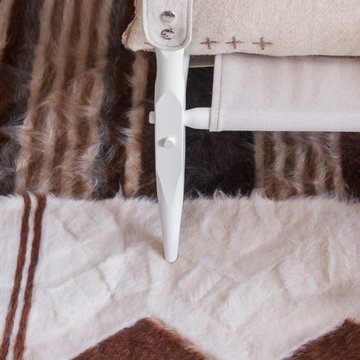
These luxury authentic flat-weave collection represent an ancient method of creating a faux animal hair pile which was widespread amongst nomads from Central Asia to Turkey. Woven with cotton warps and Angora goat hair wefts. The goat hair creates the long haired fur-like look. Angora goats are named after the Turkish province of their origin, Ankara and these goats produce the fibre known as mohair. The lustrous hair of the angora goat occurs in every natural shade ranging from black through browns to white, thus making possible a wide variety of colour-schemes with no dyes.
More about Mohair…
Mohair is one of the oldest textile fibres in use. The Angora goat is thought to originate from the mountains of Tibet, reaching Turkey in the 16th century. Mohair is warm in winter as it has great insulating properties, while remaining cool in summer due to its moisture wicking properties. It’s possible to use double-side, hairy side for winter, woven side for summer. It is durable, naturally elastic, flame resistant, crease resistant, and does not felt.
It is a luxury fiber, like cashmere, angora and silk, and is more expensive than most wools that comes from sheep. Mohair is composed mostly of keratin, a protein found in the hair, wool, horns and skin of all mammals.
1