
Search results for "Attracting countless" in Home Design Ideas

 Envision Web
Stuart Wade, Envision Virtual Tours
Envision Virtual Tours and High Resolution Photography is your best choice to find just what you are looking for in the Ellijay, Ga. area .Ellijay, Georgia, known as the “Apple Capital” of Georgia, is located between the Ellijay and Cartecay Rivers where they join to make the Coosawattee River and is the county seat of Gilmer County, Georgia. The origin of the city’s name is not certain but thought to be the English derivative of an Indian word(s) meaning “many waters”, “place of green things” or “new ground”. Some histories say it may have been named for an Indian chief.
Inhabited for countless years by the Cherokee people indigenous to the North Georgia, the area was first mentioned as a village and trade center before the onslaught of white settlers inhabited the region. During the 1830’s both white settlers and Indians occupied Ellijay. During the original land lottery in 1832, Martin Scalf acquired the 160 acre lot where the town now stands. In 1833, Clemonds Quinland bought 10 acres from Scalf, retained one acre for himself and donated the rest of the purchase to the County. A plan for twenty town lots, streets and a public square was created and the streets were oriented to allow maximum sunlight exposure to the buildings.
Proceeds from lot sales were used to build a jail and courthouse and pay other city expenses. During this same year, Gilmer County was appropriated $800.00 from the State to build a school, and a three-acre lot was donated for the city cemetery. On December 29, l834, Ellijay was incorporated and designated as the County seat of Gilmer County. By 1837, the town had twenty dwellings, three stores and one attorney. Most of these early buildings were of log construction.
Many roads led to Ellijay by 1849. The population had grown to 150 by 1850 and the town at five stores. Some wood-frame buildings were being constructed at this time and in 1854, a new courthouse was built in the center of the square, replacing the earlier building. The County’s first newspaper was the Ellijay Courier, started in 1875, and during this time period, Ellijay was a stop on the stagecoach line. The railroad bridge over the Cartecay River was completed in 1884 and the town now had rail service.
With the arrival of the railroad and subsequent tracks to White Path, Ellijay began to grow much faster. Many hotels were constructed and land was donated for a depot east of town. More industries, such as a cheese factory and the Shippen Brothers Lumber Mill, located in Ellijay. By 1898, the city had expanded its limits in every direction and now included the depot.
By 1900, all the buildings on the town square were brick. This included the recently completed Hyatt Hotel. Most of the other buildings in town were still of log construction, but new wood-frame buildings were being built. The Shippen Brothers Lumber Company production was expanding and exporting their lumber to Europe. Within the next few decades, this company grew to be one of the largest employers in Ellijay, often with five to six million feet of lumber in the yard at one time.
The population of Ellijay grew to 659 by 1910, and began to acquire many new modern conveniences such as electric lights and power, a telephone company and many new businesses.
Then in 1912, a fire ravaged the city, destroying 23 buildings. As a result, many new buildings were constructed under new and stricter fire and safety guidelines. The population, however, decreased slightly at this time to 632 in 1920.
During the 1920’s the town’s population began to grow again and, by this time, apples were being shipped out of the county and new storage facilities were built. Chickens were also shipped to markets outside of Ellijay and Gilmer County.
From the mid 1930’s to 1950, Ellijay received much assistance from the Federal WPA Programs. The old courthouse was removed from the center of town square and the Hyatt Hotel was remodeled to be the new courthouse. A park was created on the site of the old courthouse and the streets around the square were paved. A new street was built at this time entering town from the northeast. Other new roads, bridges, sidewalks and gutters were constructed to improve the city. A school and gymnasium were also built and other structures improved.
This growth began to impact the city’s infrastructure and in the l950’s and l960’s, a period of upgrading water systems, roads, and power supplies began. New low-rent housing appeared in l960 and a new hospital was built in l957. Georgia Highway 5 was widened in l962, new buildings around the square replaced old ones and some were remodeled. In 1974, the hospital was enlarged.
Currently, Ellijay attracts tourists who love the small-town feel and friendly atmosphere. Hotels and restaurants, unique shops, antiques and art galleries lend their charms to those who visit. A new courthouse constructed to resemble the old one, new streetscaping, family-oriented downtown events and the beautification of the square have stepped up the social and economic activity and have made Ellijay a popular destination.


Find the right local pro for your project

 Put's Ponds & Gardens
This pond is just part of a large backyard project envisioned by the homeowner. He wanted to dedicate the backyard, 3+ acres, to the memory of his deceased wife after her battle with cancer. The 25'x30' pond with a soothing 75' meandering stream was installed in the spring of 2013. The dedication 'Park' will host walking paths, sitting areas as well as native plants for visitors old and young.
Photos by; Dan Put

 Ellie Visconti
Inspiration for a transitional ceramic tile and black floor powder room remodel in Dallas with shaker cabinets, orange cabinets, a one-piece toilet, black walls, an undermount sink and marble countertops

 Liquid Evolution Pools
Sapphire Galaxy Pebble Fina
Mid-sized trendy backyard stone and rectangular pool photo in Phoenix
Mid-sized trendy backyard stone and rectangular pool photo in Phoenix

 Blue Island Lighting and Irrigation
Tamara Alvarez
Design ideas for a mid-sized tropical backyard landscaping in Miami.
Design ideas for a mid-sized tropical backyard landscaping in Miami.

 Regenesis Ecological Design
Crocosmia 'Lucifer' (Montbretia) has elegant tubular red blossoms that attract hummingbirds.
This is an example of a mid-sized modern drought-tolerant and partial sun front yard mulch landscaping for summer.
This is an example of a mid-sized modern drought-tolerant and partial sun front yard mulch landscaping for summer.
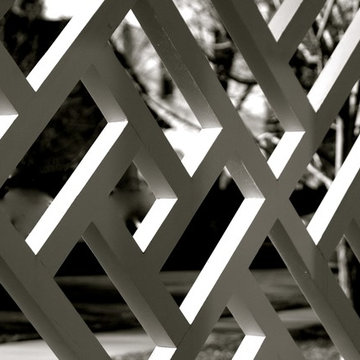
 Chelsea & Meade Chippendale Railings
D. Johnson
Inspiration for a timeless home design remodel in Denver
Inspiration for a timeless home design remodel in Denver
 Envision Web
Stuart Wade, Envision Virtual Tours
Envision Virtual Tours and High Resolution Photography is your best choice to find just what you are looking for in the Ellijay, Ga. area .Ellijay, Georgia, known as the “Apple Capital” of Georgia, is located between the Ellijay and Cartecay Rivers where they join to make the Coosawattee River and is the county seat of Gilmer County, Georgia. The origin of the city’s name is not certain but thought to be the English derivative of an Indian word(s) meaning “many waters”, “place of green things” or “new ground”. Some histories say it may have been named for an Indian chief.
Inhabited for countless years by the Cherokee people indigenous to the North Georgia, the area was first mentioned as a village and trade center before the onslaught of white settlers inhabited the region. During the 1830’s both white settlers and Indians occupied Ellijay. During the original land lottery in 1832, Martin Scalf acquired the 160 acre lot where the town now stands. In 1833, Clemonds Quinland bought 10 acres from Scalf, retained one acre for himself and donated the rest of the purchase to the County. A plan for twenty town lots, streets and a public square was created and the streets were oriented to allow maximum sunlight exposure to the buildings.
Proceeds from lot sales were used to build a jail and courthouse and pay other city expenses. During this same year, Gilmer County was appropriated $800.00 from the State to build a school, and a three-acre lot was donated for the city cemetery. On December 29, l834, Ellijay was incorporated and designated as the County seat of Gilmer County. By 1837, the town had twenty dwellings, three stores and one attorney. Most of these early buildings were of log construction.
Many roads led to Ellijay by 1849. The population had grown to 150 by 1850 and the town at five stores. Some wood-frame buildings were being constructed at this time and in 1854, a new courthouse was built in the center of the square, replacing the earlier building. The County’s first newspaper was the Ellijay Courier, started in 1875, and during this time period, Ellijay was a stop on the stagecoach line. The railroad bridge over the Cartecay River was completed in 1884 and the town now had rail service.
With the arrival of the railroad and subsequent tracks to White Path, Ellijay began to grow much faster. Many hotels were constructed and land was donated for a depot east of town. More industries, such as a cheese factory and the Shippen Brothers Lumber Mill, located in Ellijay. By 1898, the city had expanded its limits in every direction and now included the depot.
By 1900, all the buildings on the town square were brick. This included the recently completed Hyatt Hotel. Most of the other buildings in town were still of log construction, but new wood-frame buildings were being built. The Shippen Brothers Lumber Company production was expanding and exporting their lumber to Europe. Within the next few decades, this company grew to be one of the largest employers in Ellijay, often with five to six million feet of lumber in the yard at one time.
The population of Ellijay grew to 659 by 1910, and began to acquire many new modern conveniences such as electric lights and power, a telephone company and many new businesses.
Then in 1912, a fire ravaged the city, destroying 23 buildings. As a result, many new buildings were constructed under new and stricter fire and safety guidelines. The population, however, decreased slightly at this time to 632 in 1920.
During the 1920’s the town’s population began to grow again and, by this time, apples were being shipped out of the county and new storage facilities were built. Chickens were also shipped to markets outside of Ellijay and Gilmer County.
From the mid 1930’s to 1950, Ellijay received much assistance from the Federal WPA Programs. The old courthouse was removed from the center of town square and the Hyatt Hotel was remodeled to be the new courthouse. A park was created on the site of the old courthouse and the streets around the square were paved. A new street was built at this time entering town from the northeast. Other new roads, bridges, sidewalks and gutters were constructed to improve the city. A school and gymnasium were also built and other structures improved.
This growth began to impact the city’s infrastructure and in the l950’s and l960’s, a period of upgrading water systems, roads, and power supplies began. New low-rent housing appeared in l960 and a new hospital was built in l957. Georgia Highway 5 was widened in l962, new buildings around the square replaced old ones and some were remodeled. In 1974, the hospital was enlarged.
Currently, Ellijay attracts tourists who love the small-town feel and friendly atmosphere. Hotels and restaurants, unique shops, antiques and art galleries lend their charms to those who visit. A new courthouse constructed to resemble the old one, new streetscaping, family-oriented downtown events and the beautification of the square have stepped up the social and economic activity and have made Ellijay a popular destination.

 Precision Stone Design
Suitable for any vertical or horizontal surfaces for residential and commercial application.
Natural counter tops made of selected semi precious gem stones and hand crafted by our experienced craftsmen.
Call us at 312-427-8663 or email us at sales@precisionstonedesigns.com for pricing on your next custom project.

 Backyard Paradise Landscaping LLC
Waterfalls bring the hypnotic grace people long to relax to. Add one to your backyard paradise.
Design ideas for a small rustic full sun backyard water fountain landscape in Minneapolis for summer.
Design ideas for a small rustic full sun backyard water fountain landscape in Minneapolis for summer.

 Outdoors and Beyond, Inc
Complete backyard remodel, new pool and sap, with grotto, new balcony, waterfall, sheer decent, bbq, fireplace, and much more. The balcony has a water feature that spills in to the pool, along with a waterfall from the grotto, and sheer decent water features from the columns, lit up by color fiber optic lighting. the entire area is finished of with 2 outdoor T.V.'s one mounted under the balcony and one mounted under the counter top next to the spa, the T.V. is controlled via remote and is recessed in to the counter, and then rises out of the counter until it is above the counter surface, for viewing from anywhere within the garden.


 OVKO Art & Design
Graffiti Style Abstract Art makes a presence in the home of a hip urban dweller. Fluid lines of bold blue run throughout the piece. A stormy grey combines to give feelings of urban chaos. The result is an edgy, modern and gritty focal point that is sure to intrigue viewers. The print is mounted under a trendy acrylic glass which gives depth and vibrant color.

 Big Picture Landscapes
The challenge for this garden was the side entrance to the house. We needed to make it clear which way to go and make the journey to the front door interesting and welcoming. This meant there had to be something happening in the garden year round. Foliage plays a big role in this garden!
The pathways were designed to provide a gracious entrance and be wide enough in some spaces to allow for neighbors to gather outside the home office balcony.
The backyard needed to accommodate the trampoline, food gardening, outdoor dining and entertaining. Who knew a trampoline could function as a room divider?! The raised beds are at a comfortable height and depth for easy tending and keeping pets out. The result is the whole family can share the yard yet every function has a zone of it's own. And, you always know what season it is!


 Ressource USA
Stretched brushed lime paint should be applied in vertical movements using a brush. Slight variations with subtle striated nuances appear, reminiscent of antique walls. This vertical effect gives a matte and delicate grain to the wall.
This lime wash coating gives a sober yet highly decorative style with a traditional natural finish and subtle striated nuances.
The stretched effect is perfectly suited for medium shades.
OR
Cloudy brushed lime paint should be applied in regular movements at different angles, using a brush. This technique creates nuances reminiscent of the marks on antique walls.
Cloudy brushed lime paint gives a dense and textured decorative look with its matte grained finish.
The cloudy effect embellishes light, medium and dark shades.
Burnished lime paint should be applied using a stainless steel trowel and in rounded, supple layers. This visual effect is that of the lustrous lime wash in Ancient Rome which has been perpetuated by various cultures including Tadelakt in Morocco.
Burnished lime paint renders a spectacular mineral look with matte and shiny variations which you can accentuate by using our water-based finishing wax.
Ideal for light and medium shades.
7