
Search results for "Beauty tips" in Home Design Ideas

 InnovationLand
This Houston bathroom features polished chrome and a black-and-white palette, lending plenty of glamour and visual drama.
"We incorporated many of the latest bathroom design trends - like the metallic finish on the claw feet of the tub; crisp, bright whites and the oversized tiles on the shower wall," says Outdoor Homescapes' interior project designer, Lisha Maxey. "But the overall look is classic and elegant and will hold up well for years to come."
As you can see from the "before" pictures, this 300-square foot, long, narrow space has come a long way from its outdated, wallpaper-bordered beginnings.
"The client - a Houston woman who works as a physician's assistant - had absolutely no idea what to do with her bathroom - she just knew she wanted it updated," says Outdoor Homescapes of Houston owner Wayne Franks. "Lisha did a tremendous job helping this woman find her own personal style while keeping the project enjoyable and organized."
Let's start the tour with the new, updated floors. Black-and-white Carrara marble mosaic tile has replaced the old 8-inch tiles. (All the tile, by the way, came from Floor & Décor. So did the granite countertop.)
The walls, meanwhile, have gone from ho-hum beige to Agreeable Gray by Sherwin Williams. (The trim is Reflective White, also by Sherwin Williams.)
Polished "Absolute Black" granite now gleams where the pink-and-gray marble countertops used to be; white vessel bowls have replaced the black undermount black sinks and the cabinets got an update with glass-and-chrome knobs and pulls (note the matching towel bars):
The outdated black tub also had to go. In its place we put a doorless shower.
Across from the shower sits a claw foot tub - a 66' inch Sanford cast iron model in black, with polished chrome Imperial feet. "The waincoting behind it and chandelier above it," notes Maxey, "adds an upscale, finished look and defines the tub area as a separate space."
The shower wall features 6 x 18-inch tiles in a brick pattern - "White Ice" porcelain tile on top, "Absolute Black" granite on the bottom. A beautiful tile mosaic border - Bianco Carrara basketweave marble - serves as an accent ribbon between the two. Covering the shower floor - a classic white porcelain hexagon tile. Mounted above - a polished chrome European rainshower head.
"As always, the client was able to look at - and make changes to - 3D renderings showing how the bathroom would look from every angle when done," says Franks. "Having that kind of control over the details has been crucial to our client satisfaction," says Franks. "And it's definitely paid off for us, in all our great reviews on Houzz and in our Best of Houzz awards for customer service."
And now on to final details!
Accents and décor from Restoration Hardware definitely put Maxey's designer touch on the space - the iron-and-wood French chandelier, polished chrome vanity lights and swivel mirrors definitely knocked this bathroom remodel out of the park!

 Custom Surface Solutions
 (www.css-tile.com) - Owner Craig Thompson (512) 430-1215. This project shows the remodel of a master bathroom with before and after pictures of the project. 32" x 16" tile was used on the walls and 32 x 8" tile on the floor. The accent and shower pan tile is flat pebble stones. The faucets are Delta.


Find the right local pro for your project

 Envision Web
Stuart Wade, Envision Virtual Tours
The second-largest and most developed of Georgia's barrier islands, St. Simons is approximately twelve miles long and nearly three miles wide at its widest stretch (roughly the size of Manhattan Island in New York). The island is located in Glynn County on Georgia's coast and lies east of Brunswick (the seat of Glynn County), south of Little St. Simons Island and the Hampton River, and north of Jekyll Island. The resort community of Sea Island is separated from St. Simons on the east by the Black Banks River. Known for its oak tree canopies and historic landmarks, St. Simons is both a tourist destination and, according to the 2010 U.S. census, home to 12,743 residents.
Early History
The earliest
St. Simons Island Village
record of human habitation on the island dates to the Late Archaic Period, about 5,000 to 3,000 years ago. Remnants of shell rings left behind by Native Americans from this era survive on many of the barrier islands, including St. Simons. Centuries later, during the period known by historians as the chiefdom era, the Guale Indians established a chiefdom centered on St. Catherines Island and used St. Simons as their hunting and fishing grounds. By 1500 the Guale had established a permanent village of about 200 people on St. Simons, which they called Guadalquini.
Beginning in 1568, the Spanish attempted to create missions along the Georgia coast. Catholic missions were the primary means by which Georgia's indigenous Native American chiefdoms were assimilated into the Spanish colonial system along the northern frontier of greater Spanish Florida. In the 1600s St. Simons became home to two Spanish missions: San Buenaventura de Guadalquini, on the southern tip of the island, and Santo Domingo de Asao (or Asajo), on the northern tip. Located on the inland side of the island were the pagan refugee villages of San Simón, the island's namesake, and Ocotonico. In 1684 pirate raids left the missions and villages largely abandoned.
Colonial History
As
Fort Frederica
early as 1670, with Great Britain's establishment of the colony of Carolina and its expansion into Georgia territory, Spanish rule was threatened by the English. The Georgia coast was considered "debatable land" by England and Spain, even though Spain had fully retreated from St. Simons by 1702. Thirty-one years later General James Edward Oglethorpe founded the English settlement of Savannah. In 1736 he established Fort Frederica, named after the heir to the British throne, Frederick Louis, prince of Wales, on the west side of St. Simons Island to protect Savannah and the Carolinas from the Spanish threat.
Between 1736 and 1749 Fort Frederica was the hub of British military operations along the Georgia frontier. A town of the same name grew up around the fort and was of great importance to the new colony. By 1740 Frederica's population was 1,000. In 1736 the congregation of what would become Christ Church was organized within Fort Frederica as a mission of the Church of England. Charles Wesley led the first services. In 1742 Britain's decisive victory over Spain in the Battle of Bloody Marsh, during the War of Jenkins' Ear, ended the Spanish threat to the Georgia coast. When the British regimen disbanded in 1749, most of the townspeople relocated to the mainland. Fort Frederica went into decline and, except for a short time of prosperity during the 1760s and 1770s under the leadership of merchant James Spalding, never fully recovered. Today the historic citadel's tabby ruins are maintained by the National Park Service.
Plantation Era
By the start of the American Revolution (1775-83), Fort Frederica was obsolete, and St. Simons was left largely uninhabited as most of its residents joined the patriot army. Besides hosting a small Georgia naval victory on the Fort Frederica River, providing guns from its famous fort for use at Fort Morris in Sunbury, and serving as an arena for pillaging by privateers and British soldiers, the island played almost no role in the war.
Following the war, many of the townspeople, their businesses destroyed, turned to agriculture. The island was transformed into fourteen cotton plantations after acres of live oak trees were cleared for farm land and used for building American warships, including the famous USS Constitution, or "Old Ironsides." Although rice was the predominant crop along the neighboring Altamaha River, St. Simons was known for its production of long-staple cotton, which soon came to be known as Sea Island cotton.
Between
Ebos Landing
the 1780s and the outbreak of the Civil War (1861-65), St. Simons's plantation culture flourished. The saline atmosphere and the availability of cheap slave labor proved an ideal combination for the cultivation of Sea Island cotton. In 1803 a group of Ebo slaves who survived the Middle Passage and arrived on the west side of St. Simons staged a rebellion and drowned themselves. The sacred site is known today as Ebos Landing.
One of the largest owners of land and slaves on St. Simons was Pierce Butler, master of Hampton Point Plantation, located on the northern end of the island. By 1793 Butler owned more than 500 slaves, who cultivated 800 acres of cotton on St. Simons and 300 acres of rice on Butler's Island in the Altamaha River delta. Butler's grandson, Pierce Mease Butler, who at the age of sixteen inherited a share of his grandfather's estate in 1826, was responsible for the largest sale of human beings in the history of the United States: in 1859, to restore his squandered fortune, he sold 429 slaves in Savannah for more than $300,000. The British actress and writer Fanny Kemble, whose tumultuous marriage to Pierce ended in divorce in 1849, published an eyewitness account of the evils of slavery on St. Simons in her book Journal of a Residence on a Georgian Plantation in 1838-1839 (1863).
Another
Retreat Plantation
large owner of land and slaves on St. Simons was Major William Page, a friend and employee of Pierce Butler Sr. Before purchasing Retreat Plantation on the southwestern tip of the island in 1804, Page managed the Hampton plantation and Butler's Island. Upon Page's death in 1827, Thomas Butler King inherited the land together with his wife, Page's daughter, Anna Matilda Page King. King expanded his father-in-law's planting empire on St. Simons as well as on the mainland, and by 1835 Retreat Plantation alone was home to as many as 355 slaves.
The center of life during the island's plantation era was Christ Church, Frederica. Organized in 1807 by a group of island planters, the Episcopal church is the second oldest in the Diocese of Georgia. Embargoes imposed by the War of 1812 (1812-15) prevented the parishioners from building a church structure, so they worshiped in the home of John Beck, which stood on the site of Oglethorpe's only St. Simons residence, Orange Hall.
The first Christ Church building, finished on the present site in 1820, was ruined by occupying Union troops during the Civil War. In 1884 the Reverend Anson Dodge Jr. rebuilt the church as a memorial to his first wife, Ellen. The cruciform building with a trussed gothic roof and stained-glass windows remains active today as Christ Church.
Civil War and Beyond
The
St. Simons Island Lighthouse
outbreak of the Civil War in 1861 put a sudden end to St. Simons's lucrative plantation era. In January of that year, Confederate troops were stationed at the south end of the island to guard the entrance to Brunswick Harbor. Slaves from Retreat Plantation, owned by Thomas Butler King, built earthworks and batteries. Plantation residents were scattered—the men joined the Confederate army and their families moved to the mainland. Cannon fire was heard on the island in December 1861, and Confederate troops retreated in February 1862, after dynamiting the lighthouse to keep its beacon from aiding Union troops. Soon thereafter, Union troops occupied the island, which was used as a camp for freed slaves. By August 1862 more than 500 former slaves lived on St. Simons, including Susie King Taylor, who organized a school for freed slave children. But in November the ex-slaves were taken to Hilton Head, South Carolina, and Fernandina, Florida, leaving the island abandoned.
After the Civil War the island never returned to its status as an agricultural community. The plantations lay dormant because there were no slaves to work the fields. After Union general William T. Sherman's January 1865 Special Field Order No. 15 —a demand that former plantations be divided and distributed to former slaves—was overturned by U.S. president Andrew Johnson less than a year later, freedmen and women were forced to work as sharecroppers on the small farms that dotted the land previously occupied by the sprawling plantations.
By
St. Simons Lumber Mills
1870 real economic recovery began with the reestablishment of the timber industry. Norman Dodge and Titus G. Meigs of New York set up lumber mill operations at Gascoigne Bluff, formerly Hamilton Plantation. The lumber mills provided welcome employment for both blacks and whites and also provided mail and passenger boats to the mainland. Such water traffic, together with the construction of a new lighthouse in 1872, designed by architect Charles B. Cluskey, marked the beginning of St. Simons's tourism industry. The keeper of the lighthouse created a small amusement park, which drew many visitors, as did the seemingly miraculous light that traveled from the top of the lighthouse tower to the bottom. The island became a summer retreat for families from the mainland, particularly from Baxley, Brunswick, and Waycross.
The island's resort industry was thriving by the 1880s. Beachfront structures, such as a new pier and grand hotel, were built on the southeastern end of the island and could be accessed by ferry. Around this time wealthy northerners began vacationing on the island.
Twentieth Century
The
St. Simons Island Pier and Village
opening in 1924 of the Brunswick–St. Simons Highway, today known as the Torras Causeway, was a milestone in the development of resorts in the area. St. Simons's beaches were now easily accessible to locals and tourists alike. More than 5,000 automobiles took the short drive from Brunswick to St. Simons via the causeway on its opening day, paving the way for convenient residential and resort development.
In 1926 automotive pioneer Howard Coffin of Detroit, Michigan, bought large tracts of land on St. Simons, including the former Retreat Plantation, and constructed a golf course, yacht club, paved roads, and a residential subdivision. Although the causeway had brought large numbers of summer people to the island, St. Simons remained a small community with only a few hundred permanent residents until the 1940s.
The
St. Simons Island
outbreak of World War II (1941-45) brought more visitors and residents to St. Simons. Troops stationed at Jacksonville, Florida; Savannah; and nearby Camp Stewart took weekend vacations on the island, and a new naval air base and radar school became home to even more officers and soldiers. The increased wartime population brought the island its first public school. With a major shipyard for the production of Liberty ships in nearby Brunswick, the waters of St. Simons became active with German U-boats. In April 1942, just off the coast, the Texas Company oil tanker S. S. Oklahoma and the S. S. Esso Baton Rouge were torpedoed by the Germans, bringing the war very close to home for island residents.
Due in large part to the military's improvement of the island's infrastructure during the war, development on the island boomed in the 1950s and 1960s. More permanent homes and subdivisions were built, and the island was no longer just a summer resort but also a thriving community. In 1950 the Methodist conference and retreat center Epworth by the Sea opened on Gascoigne Bluff. In 1961 novelist Eugenia Price visited St. Simons and began work on her first works of fiction, known as the St. Simons Trilogy. Inspired by real events on the island, Price's trilogy renewed interest in the history of Georgia's coast, and the novelist herself relocated to the island in 1965 and lived there for thirty-one years. St. Simons is also home to contemporary Georgia writer Tina McElroy Ansa.
Since
Epworth by the Sea
1980 St. Simons's population has doubled. The island's continued status as a vacation destination and its ongoing development boom have put historic landmarks and natural areas at risk. While such landmarks as the Fort Frederica ruins and the Battle of Bloody Marsh site are preserved and maintained by the National Park Service, and while the historic lighthouse is maintained by the Coastal Georgia Historical Society, historic Ebos Landing has been taken over by a sewage treatment plant.
Several coastal organizations have formed in recent years to save natural areas on the island. The St. Simons Land Trust, for example, has received donations of large tracts of land and plans to protect property in the island's three traditional African American neighborhoods. Despite its rapid growth and development, St. Simons remains one of the most beautiful and important islands on the Georgia coast.
 Bedrose
The Space
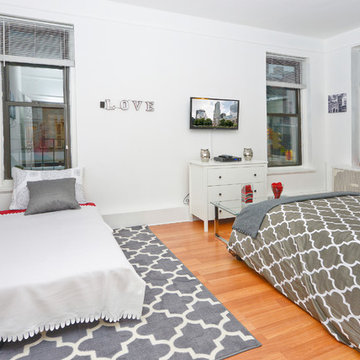
Stay in our 3 bedroom designer minimalist appartment! Beautiful Oasis home with fine furnishings in the center of manhattan. A rare find with this amount of space. Comfort, space, & convenience.
Nice, Cozy and Quiet 3 Bedrooms FURNISHED apartment located in Upper East Side with great lighting and comfortable space, Our home is located in the Upper East side. SUNNY and minimally decorated with HIGH-END FURNISHINGS! Brand new custom Designed top to bottom from the floors to the lighting.
3 SEPARATE SLEEPING AREAS with 3 bedrooms with a key lock for maximum privacy. Three Queen Beds, 1 in each bedroom & the West Elm Custom Tillary Couch turns into an awesome Twin Bed.
The apartment includes
- Brand new, modern furniture, including a Large custom Tillary Sectional 1 piece couch.
- There are Three Queen Beds, 1 in each bedroom
- Bedrooms include brand new TempurPedic queen-sized mattresses and personal closet and dresser space
-3 Brand new flat-screen LED TVs in the living room 32 inches each. One in eachr Bedroom. Our home is equipped with hundreds of channel and high-speed WiFi internet access.
- Unlimited calling with home phone (located in the kitchen)
- Air Conditioning in each room
- Extras included such as hair dryer, and iron and ironing board
- Professional cleaning service before every stay
- Plenty of clean linens, towels, pillows, etc provided!
- The master bedroom has been converted to Living room and bedroom with the couch
- Fully Equipped Kitchen, Bright bathroom, High ceiling, Lot of closet space, Table with 4 Chairs, Private parking available near the building (hourly rates), 9 Foot Ceilings, Parquet wood flooring throughout
Very Safe neighborhood
Every room is tastefully designed to satisfy each of your needs. The accommodation includes fine comfortable bedding, plenty of thick towels, and a fully- stocked kitchen for your cooking pleasures, with new Dishwasher, Stove, & GE Refrigerator. Access to Internet wifi, cable TV, phone and more. A true delight!
Just 2 blocks from an Express Subway stop (4,5,6 line) and Express and Local Bus on the same block. The subway will take you to Times Square in 5 minutes, and all the way to the Southern tip of the city (Freedom Towers - 9/11 Memorial) within 30 minutes. 59th street transit stop is close by (N,R,Q,W and the 4-5-6 lines all servicing up and downtown).
Guest Access
Guests will have access to the entire home and everything inside. We have all of the basics. Pots, Pans, Tea Maker, Cups, Utensils, Plates & basic Toiletries. You will have many fresh towels and linens for your stay. - Brand new kitchen including stainless steel Fridge & dish washer, New oven/stove, microwave and electric hot water boiler. Kitchen is ready for all your cooking needs with pots, pans, utensils, cutting board, Knife Block. *This is not a hotel and we do not provide the services of a hotel*
Interaction with Guests
I am always available day or night just in case you need anything or something comes up. Always checking my phone and getting back as swiftly as possible.
We require a 30 night min stay on this apartment.
The Neighborhood
This Luxurious appartment through 3 Bedroom is situated in the much sought after Upper East side area of Manhattan. a short walk to Central Park and some of New York's finest shopping districts. An abundance of eateries & nightlife surrounding this entire District. The Center of Manhattan perfect situated in the lower part of the Island. Enjoy the Vibrant atmosphere of East side Manhattan.
The area is host to some of the most famous museums in the world. The string of museums along Fifth Avenue fronting Central Park has been dubbed "Museum Mile", running between 82nd and 105th Streets.
 Bedrose
The Space
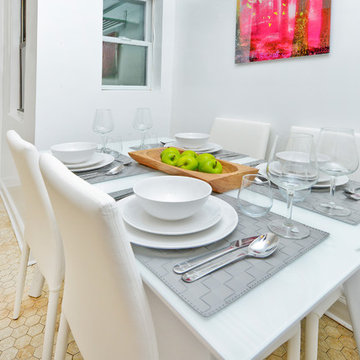
Stay in our 3 bedroom designer minimalist appartment! Beautiful Oasis home with fine furnishings in the center of manhattan. A rare find with this amount of space. Comfort, space, & convenience.
Nice, Cozy and Quiet 3 Bedrooms FURNISHED apartment located in Upper East Side with great lighting and comfortable space, Our home is located in the Upper East side. SUNNY and minimally decorated with HIGH-END FURNISHINGS! Brand new custom Designed top to bottom from the floors to the lighting.
3 SEPARATE SLEEPING AREAS with 3 bedrooms with a key lock for maximum privacy. Three Queen Beds, 1 in each bedroom & the West Elm Custom Tillary Couch turns into an awesome Twin Bed.
The apartment includes
- Brand new, modern furniture, including a Large custom Tillary Sectional 1 piece couch.
- There are Three Queen Beds, 1 in each bedroom
- Bedrooms include brand new TempurPedic queen-sized mattresses and personal closet and dresser space
-3 Brand new flat-screen LED TVs in the living room 32 inches each. One in eachr Bedroom. Our home is equipped with hundreds of channel and high-speed WiFi internet access.
- Unlimited calling with home phone (located in the kitchen)
- Air Conditioning in each room
- Extras included such as hair dryer, and iron and ironing board
- Professional cleaning service before every stay
- Plenty of clean linens, towels, pillows, etc provided!
- The master bedroom has been converted to Living room and bedroom with the couch
- Fully Equipped Kitchen, Bright bathroom, High ceiling, Lot of closet space, Table with 4 Chairs, Private parking available near the building (hourly rates), 9 Foot Ceilings, Parquet wood flooring throughout
Very Safe neighborhood
Every room is tastefully designed to satisfy each of your needs. The accommodation includes fine comfortable bedding, plenty of thick towels, and a fully- stocked kitchen for your cooking pleasures, with new Dishwasher, Stove, & GE Refrigerator. Access to Internet wifi, cable TV, phone and more. A true delight!
Just 2 blocks from an Express Subway stop (4,5,6 line) and Express and Local Bus on the same block. The subway will take you to Times Square in 5 minutes, and all the way to the Southern tip of the city (Freedom Towers - 9/11 Memorial) within 30 minutes. 59th street transit stop is close by (N,R,Q,W and the 4-5-6 lines all servicing up and downtown).
Guest Access
Guests will have access to the entire home and everything inside. We have all of the basics. Pots, Pans, Tea Maker, Cups, Utensils, Plates & basic Toiletries. You will have many fresh towels and linens for your stay. - Brand new kitchen including stainless steel Fridge & dish washer, New oven/stove, microwave and electric hot water boiler. Kitchen is ready for all your cooking needs with pots, pans, utensils, cutting board, Knife Block. *This is not a hotel and we do not provide the services of a hotel*
Interaction with Guests
I am always available day or night just in case you need anything or something comes up. Always checking my phone and getting back as swiftly as possible.
We require a 30 night min stay on this apartment.
The Neighborhood
This Luxurious appartment through 3 Bedroom is situated in the much sought after Upper East side area of Manhattan. a short walk to Central Park and some of New York's finest shopping districts. An abundance of eateries & nightlife surrounding this entire District. The Center of Manhattan perfect situated in the lower part of the Island. Enjoy the Vibrant atmosphere of East side Manhattan.
The area is host to some of the most famous museums in the world. The string of museums along Fifth Avenue fronting Central Park has been dubbed "Museum Mile", running between 82nd and 105th Streets.
 Simply Perfect
Many homeowners have their own ideas about how light or dark their home interiors should be. Some folks love nothing more than sunny, light-filled rooms. Other people adore their comforting, softly-lit spaces.
While light levels can be a matter of personal preference, lighting can also be a powerful tool for shaping the mood, emotional tone and usage of every room. In fact, lighting is just as important as furnishings.
Lighting Tips
1. Stay Warm
Cool light looks brighter to the eye and can seem more like daylight. It can also make your home feel like a hospital or grocery store, which is not what we’re going for. Warm light is softer and creates a more relaxed mood. That’s what you want in your home.
2. Yes, You Can
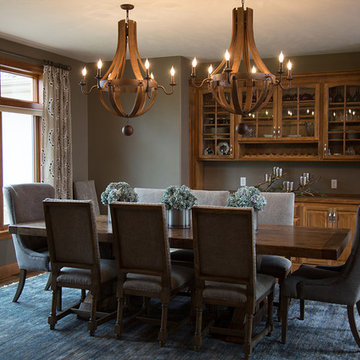
We’re big fans of can lighting. These in-ceiling lights draw zero attention to themselves while creating a foundation for excellent interior lighting. We add lamps for emphasis and mood in particular areas and put everything on a dimmer switch (see #3). This formula gives you maximum flexibility.
3. The Great Dimmer
What did people do before the dimmer switch was invented? We suspect they shielded their eyes or huddled together in the dark because there was nothing inbetween. We use dimmer switches everywhere except the bathroom. Controlling the level of every light in your home allows you to create the right mood for the moment every time.
4. Beam Me Up
We’re head over heels in love with this stunning raw wood beam wrapped with light bulbs on cords. Flip one dimmer switch and all the lights go on, at the exact intensity level you choose. The can lights in the ceiling gently illuminate the room, so this fabulous fixture can serve its true purpose—which is to create an irresistibly inviting space and a found-object, vintage vibe.
5. Open Bulb Policy
Many of our light fixtures feature exposed bulbs. Once upon a time, light bulbs might have been ugly, but clear Edison bulbs, showing the filaments within, are themselves works of art. In a chandelier with an open, orb structure, candelabra bulbs are reminiscent of candle flames. A small lamp with a square metal base and a single bulb takes the open concept one step further.
6. Double Up
Above a long dining table or bar, consider using multiple light fixtures. Especially with hanging light fixtures, we tend to think of putting just one in the middle. But lighting only the center of a long table would leave some of your dinner guests in the dark while others take the spotlight.
7. Reflections
Reflections off mirrors, glass and tile bring a secondary light source into play and add a soft, beautiful touch. Candles create particularly compelling reflections.
8. Looking Up
In high, open spaces, a light fixture can help balance the space, bringing the eye downward and helping make the area less cavernous and more inviting.
9. Looking Out
Lighting is also a safety issue. Make sure you can turn on the stair lights at the top and the bottom of the stairs. Incorporate the flexibility to light up the room you’re entering before you get there, so you aren’t stumbling around in the dark, trying to find the switch.
10. How Low Can You Go?
While low light may be flattering, people tend to err on the side of too little light, rather than too much. Turn up that dimmer a notch more than you would normally and you may like what you see. Having sufficient light is particularly important in areas such as basements, where there may be little to no natural light.
Sponsored
Columbus, OH

Structural Remodeling
Franklin County's Heavy Timber Specialists | Best of Houzz 2020!


 JM Carpets
Example of a mid-sized transitional 3/4 mosaic tile floor bathroom design in Milwaukee with shaker cabinets, white cabinets and yellow walls

 J&S by STARK
Mid-sized eclectic carpeted straight wood railing staircase photo in New York with carpeted risers

 BAUFORMAT
concrete looking luxury tile which looks like wallpapers. Perfect for urban style condo or loft or luxury house.
Bathroom - modern bathroom idea in Los Angeles
Bathroom - modern bathroom idea in Los Angeles

 Five Star Tree Care
There are a few reasons why it is critical that your trees have a regular schedule for pruning and maintenance. Pruning helps trees to maintain a tree’s health as well as form it to a pleasing aesthetic shape. Furthermore, pests and diseases are also controlled by regular pruning and care. When pruning is properly performed, your trees will be healthy and attractive all year long. Five Star Tree Services has put together a list of seven things you should keep in mind regarding your tree pruning.
Tree Inspection
Before any tree pruning job, the tree should be properly inspected. This will allow you or our tree care service team to determine which branches should be cut. It will also allow any diseases or pests to be identified and dealt with.
Remove Dead, Weak & Crossed Branches
Dead and weak branches are a hazard to your property and those who happen to walk or lounge under the tree. They also suck vital nutrients away from healthy branches and the tree trunk. Removing them will prevent accidents and allow your tree to thrive. Crossed branches can also cause problems later down the line. They affect the airflow to the crown and can also prevent sunlight from passing through the tree.
Pay Attention to Spacing
It’s important to pay attention to branch spacing when pruning your tree. Lateral branches should be spaced evenly, especially when pruning trees that have yet to mature.
Follow the Basic Pruning Rules
It’s important that the 1/4th and 1/3rd rules of pruning are followed. This means that you should never cut more than a third of the total height of the tree. This length is measured from the bottom up. You should also only cut 1/4th or less of a tree’s crown when you prune at any one time.
Get Your Tools Ready
The tools you use to prune should be ready well before you make the first cut. You should start your project equipped with a pole pruner, pruning saws, hedge shears, loppers, and pruning shears. They also need to be properly sharpened before you start your pruning project. Each of these tools will allow you to reach different parts of the tree and prune them in a safe manner. If your tools are dull, they can damage the tree or even cause accidents when you attempt to cut.
Prune on Schedule
There are schedules for pruning that should be followed according to the type of tree you are caring for. Summer blooming trees should be pruned in early spring while evergreens and hedges should be taken care of in the early part of summer. Fruit-bearing trees should be pruned late in winter ahead of the frost. If there is damage to your tree, it doesn’t matter what time of year it may be, correct the problem as soon as possible.
Avoid Protecting Post-Pruning
Pruning leaves behind wounds, but they will heal. Though they may be unsightly for a while, the marks will heal and return back to its natural beauty. Don’t paint the pruning wounds to protect the tree, it actually has no effect on decay prevention. Painting may even trigger diseases or encourage pests to take up residence.
How We Can Help
Tree pruning is a complication job, but with our tips, you can do it right. It is always a good idea to leave the job to the professionals here at Five Star Tree Services instead. Our Toronto tree care experts have the tools, experience, and skills to get the job done right the first time. Get in touch with us at (416) 990-3355 today for more information.
 Five Star Tree Care
Effectively maintaining your landscape and trees take a good amount of time and effort. Often, homeowners will delay trimming or pruning their trees out of laziness or simply because they don’t know how to correctly care of their trees. But, you should know that tree trimming should be at the top of your to-do list for many reasons. Pruning, proper maintenance, and fertilization are all critical if you want the trees in your yard to thrive to grow strong. For homeowners that are unable to handle the tasks on their own, our professional tree trimming service can help. Five Star Tree Services has put together a list of the top three reasons why you need to trim your trees on a regular basis.
Healthier Trees
Regular tree trimming will keep your trees in their best health while also promoting growth. Sometimes trees may have dead or broken branches, removing them prevents decay and can even prevent an infection from spreading. If you leave damaged or rotting branches on your tree, it can spread the condition to other parts of the tree or even to other trees in the area.
When you prune your tree on a regular basis, it also promotes the growth of new leaves and branches. Reducing the thickness of the leaves and branches also opens up the inner part of the tree to the sun. Furthermore, air circulation is critical for a healthy tree and regular trimming ensures that your tree always has access to the fresh oxygen it needs to thrive. The healthier your tree is the better quality oxygen it will produce for the surrounding area.
Improve Property Value
Well-kept trees greatly improve the aesthetics of your home. Decaying branches or trees that are overgrown are not only unsightly and dangerous, but they can also have a negative impact on the curb appeal of your house. If your house is on the market, seeing an unkempt yard with untrimmed trees can leave potential buyers with a negative perception of your property. Keeping your trees trimmed and neat show that you care about your home and how it looks. Work hard for your property and it will turn the best profit when you finally sell.
Prevent Environmental Damage
Tree branches that are rotting or weak pose a safety hazard to your home and your family. Dead limbs or even overburdened are more likely to fall off of the tree and strike your home. There have been plenty of reports of dead or overly heavy branches suddenly falling on people as well. Trees that grow close to power lines also pose a threat if they are not trimmed on a regular basis. Limbs can grow too high or too long causing them to brush against the power lines. This may trigger a fire or even a power outage. Sick trees with limbs that are diseased are more likely to cause the entire tree to tip over. This can cause damage to your home, vehicles, or even a person if they are unlucky.
How Five Star Tree Services Can Help
If you are not sure about how or when to trim your trees, Five Star Tree Services is here to help. We offer a wide range of Toronto Tree Trim Services and pruning services for both commercial and residential locations. Our passionate team of tree care experts will keep your property safe and ensure that your trees are beautiful and can continue to grow in a healthy state. Give us a call at (416) 990-3355 to find out more information about the services we offer.
Sponsored
Plain City, OH

The Creative Kitchen Company
Columbus Area Kitchen Remodeling and Refacing Professional

 Austin Sales Associates
TOTO Guinevere 1.28 gpf One-Piece Toilet brings a modern touch to a vintage bathroom.
Example of a mid-sized classic 3/4 white tile bathroom design in Oklahoma City with a one-piece toilet and white walls
Example of a mid-sized classic 3/4 white tile bathroom design in Oklahoma City with a one-piece toilet and white walls
 HU-404741986
A Heartfelt Kitchen
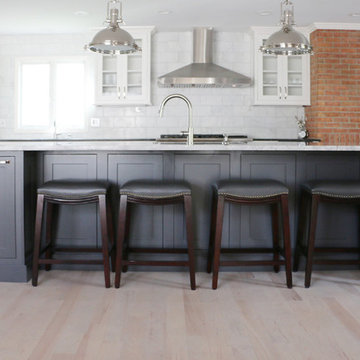
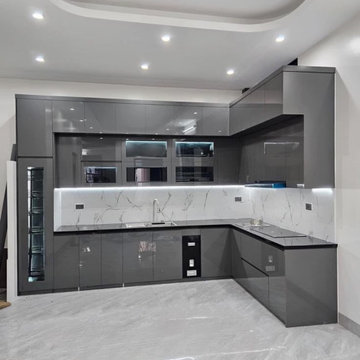
A modern kitchen is more than a cooking space—it’s the welcoming core of your home. In 2025, kitchen designs marry functionality with warmth, natural beauty, and personal expression.
1. Warm Natural Materials
- Earthy woods like walnut, oak, and bamboo enrich the visual texture and add warmth to cabinetry, islands, and shelving.
- Stone surfaces—marble, quartz, soapstone—deliver durability and timeless appeal in counters and backsplashes.
- Eco-conscious finishes and reclaimed elements bring character and long-lasting quality.
- Move beyond white and gray: contemporary kitchens favor deep greens, navy blues, terracottas, and soft taupes.
- Two-tone cabinet schemes—mixing moodier lower cabinets with light upper ones—add drama and balance.
- Consider bold cabinetry or painted islands paired with neutral walls to anchor the palette.
- Expect built-in cabinetry solutions: pull-out pantries, toe-kick drawers, corner organizers, integrated sinks, and appliance garages.
- Conceal dishwashers and refrigerators behind matching panels for a clean, polished look.
- These smart features make kitchens more functional and visually serene.
- Luxury homes increasingly include a secondary “dirty” kitchen, or scullery, to handle prep and mess out of sight.
- This keeps the main space pristine for entertaining while blending function and elegance seamlessly.
- Islands serve multiple roles: prep stations, dining surfaces, coffee bars, or beverage centers.
- Floating or furniture-inspired cook’s tables fit lighter spaces while still offering storage and usability.
- Material mixes—wood, terrazzo, stone—make islands focal and functional.
- Cabinets and islands with rounded corners or fluted panels soften visual lines and add sculptural interest.
- Curved work islands and edges elevate a kitchen from purely practical to artful and inviting.
- Combine textures—ribbed wood panels, carved stone counters, matte cabinetry—to build visual richness and tactility.
- Full‑height stone backsplashes (sometimes called “countersplash”) create a unified, clean aesthetic.
- Layered materials support a timeless yet expressive design.
- Oversized pendants, sleek LED strips, metallic chandeliers, or sculptural fixtures double as decor.
- Layer light sources—ambient overhead lighting, focused under-cabinet lamps, and accent fixtures—to set mood and function.
- Natural light through windows and skylights remains key to ambiance and energy efficiency.
- Eco‑friendly materials—reclaimed wood, recycled stone, or bamboo—support conscious living.
- Smart appliances conserve water and energy while offering connectivity (voice control, smart fridges, app‑enabled cooktops).
- Low‑VOC paints, compost zones, and recycling solutions support both style and wellness.
- Kitchens built around the classic work triangle (sink, stove, fridge) optimize workflow and reduce unnecessary movement.
- Open or zoned layouts support multitasking and social cooking.
- Universal design features—adjustable counters, soft-close drawers—ensure comfort and long-lasting usability.
- Material harmony: balance tactile woods, stone surfaces, and subtle metals.
- Color with intention: jewel tones or soft earth hues create focal interest.
- Opt for hidden storage: it keeps spaces uncluttered without sacrificing accessibility.
- Design islands for dual roles: they are both workspaces and social centers.
- Light with layers and style: combine task, ambient, and accent lighting.
- Incorporate greenery: herb racks or plants deliver freshness and natural life.

 Super Bright LEDs
Need some ideas to brighten up your decor? LED lights add a chic, eye catching appeal that will last! Color changing capabilities allow you to change the look and feel of decorations at the touch of a button. Accentuate pieces in the dining area and kitchen, entryway, bedroom, and anywhere else you choose!

 Emerson Grey Designs
Nursery - mid-sized traditional girl medium tone wood floor nursery idea in Orange County with pink walls

Sponsored
Plain City, OH
The Creative Kitchen Company
Columbus Area Kitchen Remodeling and Refacing Professional

 Oakford Home Furnishings
This tower style linen cabinet, was commissioned by a customer looking to finish off their bathroom renovation with a custom made-to-fit linen cabinet that would match with their vanity.
We designed and built this nearly 7 foot tall cabinet for the customer using traditional joinery methods, using rabbets and dados to hold the shelves in place for a very solid finished piece. Decorative molding and trim was added to the bottom of the cabinet and the legs provide a pleasing negative space under the tall cabinet.
Prefabricated molding, that matched the customer's vanity, was added to the top of the piece for added effect.
The piece was sealed and then finished with a white cabinet enamel. Decorative knobs were added to also match the vanity in the bathroom.

 The Jones Company of TN, LLC
Brick: Natchez Trace
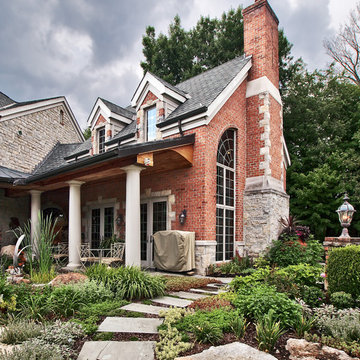
Example of a classic exterior home design in Nashville
Example of a classic exterior home design in Nashville

 cityhomeCOLLECTIVE
Kerri Fukui
Example of a mid-sized danish light wood floor and beige floor hallway design in Salt Lake City with white walls
Example of a mid-sized danish light wood floor and beige floor hallway design in Salt Lake City with white walls
113