
Search results for "Explains" in Home Design Ideas

 Elite Landscaping Omaha
Elite Landscaping removed an old vinyl liner pool from this home in a premier Omaha neighborhood. The goal was to install a new, concrete infinity-edge pool and spa with accessible pool deck. And we accomplished so much more!
During the backyard remodel, the yard was elevated by 7.5 feet to improve access from the house to the pool deck with just three steps and a wheelchair-accessible ramp. More than 3,000 sq. feet of natural Travertine were installed for the pool deck, with stone veneer accents around the seating areas and firepit. An outdoor kitchen was installed, featuring polished granite countertops, a Fire Magic grill, Black Diamond appliances, and ample storage drawers.
The pool structure boasts a 16-foot wide infinity edge, which is adorned with Black Galaxy iridescent glass tile. The pool wall is topped with fire/water bowls that cascade into the pool. A raised, double spa with 11-foot black granite ‘sheerfall’ edge also cascades into the pool.
The custom concrete pool and raised spa each have their own variable speed pumps and heating systems for separate water flow and temperature control. Both can be fully automated through a smartphone or other smart device with the Pentair IntelliTouch system. An app allows homeowners to program LED lights, adjust temperature and water flow speeds, and test pool chemistry.
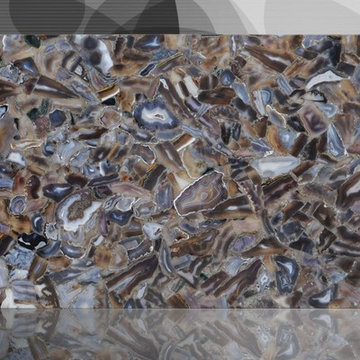
 MAER Charme
Part of the nature’s repertoire, these stones are exceptional raw masterpieces, admired and appreciated since ancient times, been classified by their gems under the renowned name of semiprecious stones. Created in nature’s mysterious laboratories, over many thousands of years, these stones are just one of the sources forms where the absolute beauty originated. Their structure is a perfect architecture of small crystals coming in an infinite array of colors and depths. These semiprecious stones expressing the essence of elegance, class and beauty, are the ultimate touch of perfection for any interior, from classic to modern, from romantic to contemporary... Touches of gold and silver, a large choice of textures and colors expand and enhance their ability to fit any interior or design. # luxury stones # style # stones # elegant stone # home decor # luxury home # beauty # home design # luxury design # semiprecious stone # luxury stone # maercharme # gold #silver # elegant #interior decor
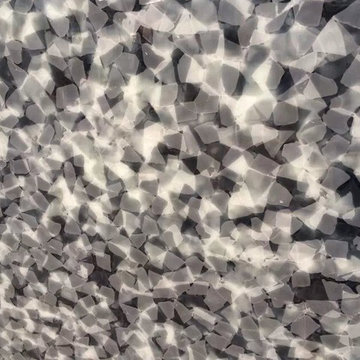
 China Marmoglass Co.,Limited
Solid Marmoglass Glass2 Slab
Glass2 is an environmentally friendly product constructed from 99% recycled glass, containing no chemicals or glue. The flexibility of glass2 allows for its application in kitchen and bathroom countertops, bartops, tables, and fireplace surroundings. Glass2 is stain-resistant, bacteria-free, and requires virtually no maintenance. Glass2 is both easy to sustain and elegant in its appearance, meeting the needs of many customers and fabricators.
Here you can find detail of Solid Marmoglass Glass2, we are the factory for Solid Marmoglass Glass2, we have Solid Marmoglass Glass2 Slabs 3000 x 1400 x 20mm.
Crystallized Glass2,Crystallized stone2,Crystallized glass panel Glass2
Application:
1). Interior & external wall cladding
2). Flooring Tile, Stair, Column cladding
3). Basin, Countertop, Table, Bar
4). bath, Kitchen, any tops, round pillar and furniture decoration etc.
You can get best 3D Glassos Panels Glass2 here, You can get the Glass 2 Panel here,we are 3D Glassos Panels slabs,tiles,countertops manufacturer
glass2 is a high grade, inorganic material produced by high temperature forging; it is an environmentally friendly material for countertops, bar tops, vanities, shower doors, flooring, interior and exterior wall cladding and paneling. It can be used for both indoor and outdoor applications. glass2 is resistant to weathering from wind, rain, and sunlight. glass2 is produced from 99% fused recycled glass and is resin free. This material is easy to clean and 100% non-porous. glass2 is available three (3) slab thickness: 16mm, 20mm, and 30mm. glass2 is now produced with an epoxy/nylon mesh backing to improve its ability to withstand abuse during transportation and to give extra strength for cut-outs (sinks, stove tops etc.).
Slab Model: 2400 x 1200 , 3000 x 1400
Thickness: 16mm, 20mm, 30mm
What is glass2?
Glass2is 99% recycled glass. Glass2 contains no resin or epoxy; it is pure glass.
What thickness range is available for glass2 ?
Glass2 standard thicknesses are 20mm yet 16mm is available upon request ... changed is for customize.
Can glass2 be used for countertops?
Yes. Glass2 can be used for countertops, as well as for wall cladding, flooring, and fascia of buildings.
Will glass2 stain?
Glass2 will not stain. Glass2 will not absorb anything, including acid and wine.
How easy can glass2 be fabricated?
Glass2 can be fabricated by both stone and glass fabricators using industry standard tools and equipment. Glass2 can be cut in most shapes by following simple guidelines.
Can glass2 be used for columns?
Yes, glass2 can be bent to shape in production and can be used for columns. (Custom orders only)
Can glass2 be repaired if scratched?
Glass2 can be repaired if scratched, using standard glass industry tools, supplies, and principles to achieve a repolished surface very close to the factory finish.
Is glass2tempered?
No, glass2 is not a tempered product.
China Marmoglass Co.,Limited offer all kinds of Glassos, 3D Marmoglass, Glass2 exporter, supplier, factory. You can buy Glassos, 3D Marmoglass, Glass2 exporter, supplier, factory from China Marmoglass Co.,Limited at Chinamarmoglass.com
You can get best 3D Glassos Panels here, we are 3D Glassos Glass2 Panels slabs,tiles,countertops manufacturer.
Find the right local pro for your project
 User
©ThompsonPhotographic.com 2016
Ashely P. Design
Camelback Esplande
Example of a classic home design design in Phoenix
Example of a classic home design design in Phoenix

 Citizen Design Co.
This very tiny + outdated kitchen was begging for a fix me up. So we gave it just what it was asking for and we gutted it down to the bare bones and started fresh. A new functional open concept layout, much larger working triangle and massive amount of work space gave this kitchen the love it needed. We opted for no uppers on half of the kitchen to get a slight Scandinavian vibe and a nice neutral slate to keep it timeless and ready to flow with the rest of the home.


 Mouery's Flooring
These Floors showcase the beauty of natural hickory. The natural contrast of light and dark mixed with the clean wire brushed matte finish is perfect for this modern rustic retreat. nestled in the woods.
Sponsored
Fredericksburg, OH

High Point Cabinets
Columbus' Experienced Custom Cabinet Builder | 4x Best of Houzz Winner




 TK Building & Design
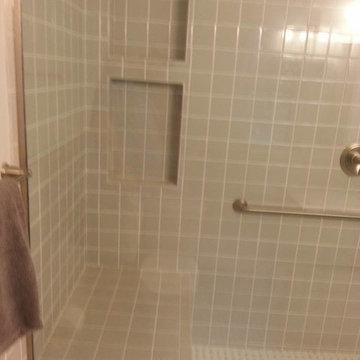
Mid-sized cottage master mosaic tile floor and white floor alcove bathtub photo with raised-panel cabinets, dark wood cabinets, a two-piece toilet, beige walls, an undermount sink and granite countertops

 ING Construction
Quartz Vanity Countertop
This close-up shows the quartz countertop on the vanity. It has a bright white background with soft, wispy gray veining that gives the look of marble without the upkeep. We chose quartz because it holds up so well in a bathroom. It's non-porous, so it resists stains from cosmetics and toiletries, never needs sealing, and cleans with just soap and water. The subtle veining adds interest without competing with the bold patterned tile in the shower.
The fabricator templated the top to fit the vanity exactly, with a smooth polished finish and a clean eased edge that's comfortable to lean against. The sink cutout was precision-cut and the edge polished for a seamless undermount install. We finished it with a matching quartz backsplash so the whole vanity area reads as one clean surface. It's a simple material choice, but it lifts the whole room and will look just as good years from now.

 AGM Home Store, LLC
Sleek in design, and highly functional shower heads, these shower heads were meant for people who want one thing: an amazing and relaxing shower experience without unnecessary frills. Luxury, quality, and beautiful design, all come together with our Rain Therapy Collection.



 safe ZOnea
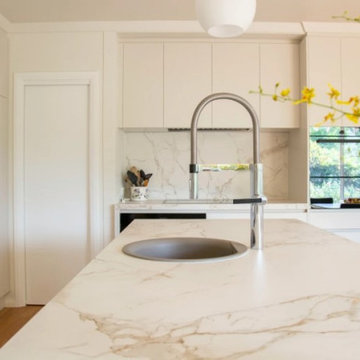
Ask a kitchen designer in Chicago which countertop question comes up most and you will hear the same answer: white or off-white quartz, and which shade. Homeowners walk into showrooms with a photo saved on their phone, usually a bright, veined slab from a magazine spread, and leave an hour later realizing there are a dozen versions of that same look. The confusion is not about taste. It is about the fact that "white quartz" covers a huge range of patterns, undertones, and price points, and nobody explains the differences before the sale.
Older bungalows and newer builds alike are getting stripped of their dated laminate and butcher block in favor of quartz, and the reasons are practical rather than trendy. Quartz does not need sealing, resists the kind of staining that granite can suffer over decades, and holds up to the freeze-thaw humidity swings that Chicago basements and kitchens go through every year. Once a homeowner commits to quartz, though, the real decision starts: which white, and does the pattern justify the difference in cost.
This piece walks through three specific slabs that keep showing up in Chicago renovation projects, why designers reach for them in different rooms, and what actually separates a flat white surface from one with real depth. None of this requires a design background to follow. It is mostly about paying attention to how a slab behaves under kitchen lighting, how busy the vending gets, and how it photographs versus how it looks in person.
Why White Quartz Took Over Chicago Kitchens
Ten years ago, granite dominated Chicago kitchen remodels almost by default. It was durable, it looked expensive, and every fabricator in the metro area carried a wide range of colors. Quartz has since taken over that position, and the shift happened faster than most contractors expected. Engineered stone gave homeowners a more predictable surface, since natural granite varies slab to slab while quartz is manufactured to a consistent pattern batch after batch.
The other driver is light. Chicago winters are long and gray, and a lot of kitchens, especially in older two-flats and courtyard buildings, do not get much direct sun. A dark granite countertop in a dim kitchen can make the whole room feel smaller. White and light-toned quartz reflects what little natural light comes through the windows, and it makes a galley kitchen or a north-facing space feel noticeably brighter without touching the cabinetry or the layout.
There is also a resale argument that local real estate agents bring up constantly. White quartz photographs well for listings, reads as updated and low-maintenance to buyers touring in person, and does not compete visually with whatever cabinet color the next owner might prefer. It is a safer bet than a bold veined marble look or a colored quartz that might feel dated in five years.
Arctic White and the Cost Question
Among the flatter, more uniform whites, arctic white quartz price comes up constantly in budget conversations because the slab sits at a more approachable point than the heavily veined Italian-marble-inspired patterns. It reads as clean and bright without the busy movement that some homeowners find overwhelming in a small kitchen. Fabricators in the Chicago area tend to keep it in stock precisely because demand stays steady across both new construction and remodel projects.
Part of what keeps this slab affordable relative to its heavily patterned cousins comes down to manufacturing complexity. A quartz surface with minimal veining and a consistent white base is simpler to produce at scale than one that mimics the irregular, high-contrast movement of natural Calacatta marble. That production difference shows up directly in what a homeowner pays per square foot, and it is worth asking a fabricator to walk through that pricing before assuming every white quartz costs the same.
Homeowners planning a full kitchen, including an island, backsplash, and perimeter counters, often use a flatter white like this specifically because it lets other elements carry the visual interest. A patterned tile backsplash or a bold cabinet color reads more clearly against a calm countertop than against one already fighting for attention with heavy veining. Designers frequently pair simpler whites with statement lighting fixtures for exactly this reason.
What Makes Calacatta Patterns Different
Calacatta refers to a family of marble originally quarried in Italy, known for a bright white background broken up by bold, often gold-toned veining that moves in thick, dramatic streaks rather than thin gray lines. Natural Calacatta marble is soft, porous, and expensive to maintain, which is exactly why quartz manufacturers spent years developing engineered versions that replicate the look without the upkeep headaches.
The challenge with any Calacatta-style quartz is getting the veining to look organic instead of printed. Early generations of engineered stone struggled with repetitive patterns that gave away the fact the slab was manufactured rather than cut from actual marble. Modern digital printing and layering techniques have closed that gap considerably, and the better Calacatta-inspired quartz lines now vary the veining across each slab batch so two counters in the same kitchen do not look identical.
Chicago designers gravitate toward Calacatta patterns for kitchens that function as the visual centerpiece of an open floor plan, which describes a large share of the gut renovations happening in neighborhoods like Lincoln Park, Roscoe Village, and the North Shore suburbs. When the kitchen island is visible from the living room and dining area, a dramatic veined surface becomes part of the home's overall design language rather than a purely functional work surface.
Calacatta Arno Under Kitchen Lighting
One of the more popular options in this category, calacatta arno quartz, balances a warm white base with soft gray and gold veining that avoids looking too stark under the cooler LED lighting common in newer Chicago builds. Homeowners touring showrooms sometimes make the mistake of judging a slab entirely under warm incandescent lighting, then get surprised when the same surface looks slightly different once installed under their kitchen's actual fixtures.
What separates this particular pattern from flatter competitors is how the veining clusters rather than spreading evenly across the slab. That clustering mimics the way real quarried marble forms, with denser mineral deposits in some sections and cleaner stretches in others. Fabricators cutting a large island slab from a single piece will often orient the pattern intentionally so the busiest veining lands somewhere visually interesting rather than getting cut off at an edge.
Because the background reads warmer than a stark white, this pattern tends to pair well with brass or matte gold hardware, a combination that has been showing up repeatedly in Chicago kitchen remodels over the past few renovation seasons. Cabinet painters report a similar trend, with more clients requesting warm white or greige cabinet colors specifically because they complement this kind of veined quartz better than a cooler, blue-toned white would.
Silestone's Version of the Calacatta Look
Manufacturers compete directly in this Calacatta-inspired category, and silestone eternal calacatta gold represents one brand's specific take on the pattern, distinguished by richer gold veining set against a brighter white base than some competing slabs in the same family. Silestone has built a reputation around anti-bacterial surface treatments in addition to the standard quartz durability, a detail some homeowners specifically ask about for kitchens used heavily by families with young children.
The veining in this particular slab tends to run in longer, more continuous lines compared to the clustered pattern found in some other Calacatta-style options, which gives large island surfaces a sense of visual flow from one end to the other. Fabricators working with bigger islands, the kind increasingly common in open-concept Chicago remodels, often favor patterns like this because there is less need to worry about seams interrupting a busy, disconnected pattern.
Price positioning for this slab tends to sit toward the upper end of the engineered quartz category, reflecting both the brand's manufacturing process and the complexity of replicating that continuous gold veining consistently across production batches. Homeowners weighing this option against other Calacatta-style quartz should ask their fabricator directly about batch availability, since premium patterns sometimes have longer lead times than standard stock colors.
Living With Quartz Day to Day
Beyond how a slab looks in a showroom or a listing photo, the daily experience of owning quartz countertops matters more once the renovation dust settles. Quartz resists scratching far better than laminate and holds up to the acidic spills, hot pans, and general abuse of an active kitchen without the sealing maintenance that natural stone requires every year or two. That low-maintenance reputation is a large part of why quartz overtook granite in the first place.
Heat resistance is a detail that gets less attention than it should. While quartz handles moderate heat well, manufacturers generally recommend using a trivet or pad for very hot pots straight off the stove, since sudden temperature shock can occasionally cause stress marks in the resin binder that holds the engineered stone together. This is a minor precaution rather than a major limitation, but it is worth mentioning to anyone assuming quartz is entirely indestructible.
Cleaning routines stay simple across almost every pattern in this category. A damp cloth and mild soap handle daily messes, and the nonporous surface means wine, coffee, and tomato-based sauces do not soak in the way they can with unsealed granite or marble. Homeowners moving from an older stone counter often mention how much less they worry about everyday spills once quartz is installed, which is a quality-of-life change that rarely makes it into the initial design conversation.
Choosing Between the Three
There is no single correct answer among these three slabs, and that is exactly why they keep coming up together in the same design conversations across Chicago renovation projects. A flatter white with minimal veining suits kitchens where other elements need to carry the visual interest, while a bolder Calacatta-inspired pattern makes sense when the countertop itself is meant to be the centerpiece of an open floor plan.
Budget matters too, and it is worth having a direct conversation with a fabricator about where each option lands before falling in love with a specific slab in a showroom. Lighting, cabinet color, and how the kitchen connects to the rest of the home all play into which pattern will actually look right once installation is finished rather than just in a photo.
Whatever direction a homeowner leans, seeing a full slab in person under actual kitchen lighting remains the single most useful step before signing off. Photos only go so far once the countertop is sitting in the room it will live in for years.



184