
Search results for "Extract" in Home Design Ideas
 Land Design | Swimming Pools & Landscape Designs
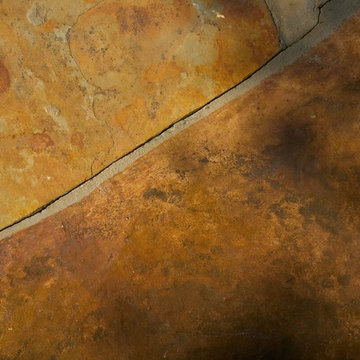
Mid-sized mountain style backyard stamped concrete and custom-shaped natural pool fountain photo in Austin
 da Vinci by Design, Inc.
Arnaldo dal Bosco
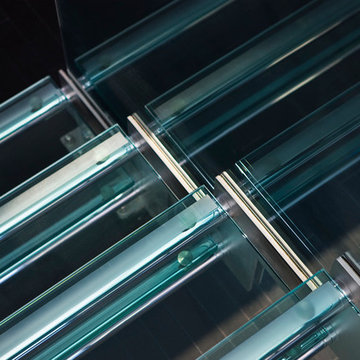
Mid-sized trendy glass straight staircase photo in New York
Mid-sized trendy glass straight staircase photo in New York


Find the right local pro for your project

 Jon Allen Fine Metal Art
This modern, abstract painted vase on metal is a perfect piece to accentuate any nook in your house! There is a beautiful fusion of navy and green in the background while the vase itself stands out front- postured coyly though it knows its the center of attention. The colorful array of pinks, purples, and blues with a hint of beautiful yellow.
Number of Pieces: 1
Dimensions: 48" long x 912 wide x 2" off the wall
Care & Cleaning: Clean gently with a soft cloth and plain soap & water
Other Features: Hardware is pre-installed for simple hanging and art will “float” 2” off the wall

 Creative Concepts Kitchen & Bath
Michele Fambrough
Example of a small arts and crafts u-shaped kitchen design in Atlanta with a drop-in sink, shaker cabinets, light wood cabinets, quartz countertops, stainless steel appliances and no island
Example of a small arts and crafts u-shaped kitchen design in Atlanta with a drop-in sink, shaker cabinets, light wood cabinets, quartz countertops, stainless steel appliances and no island
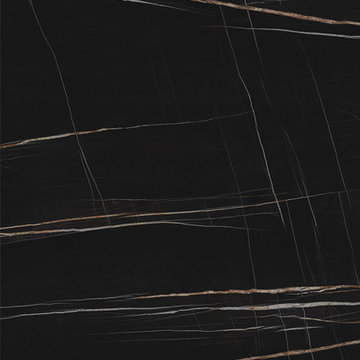
 Ollin Stone
The appeal of one of the most striking marbles evokes the chromatic depth of the desert night sky, elevated to a surface of exquisite design. Available in size 1200×3000 mm and Laminam 5 + and Laminam 5 thicknesses, this slab offers 3 pattern designs, created with the cutting-edge technology of the Laminam technique, which elevates the value of marble, one of the most widely used naturally available materials for sophisticated architectural designs.


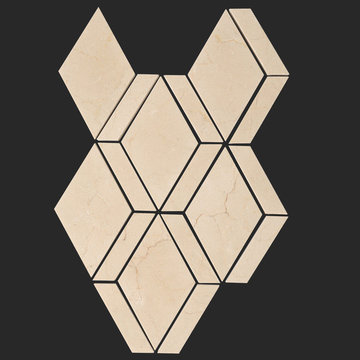
 All Marble Tiles
Crema Marfil Marble Diamond Waterjet Tile Mosaic from AllMarbleTiles.com
Home design - modern home design idea in New York
Home design - modern home design idea in New York
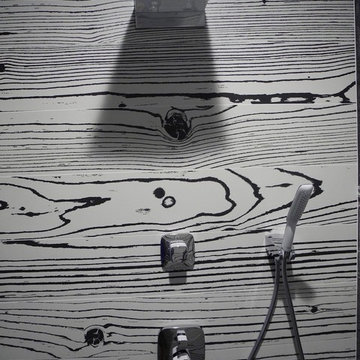
 Catalfamo Flooring
Uon Uon Bianco -Black Negative (black with white grain)
Uon Uon Bianco -Black Positive(white with black grain)
Counter: Silestone magenta energy
Thank you to our wonderful customer for these great shots. Bathroom is AWESOME!
 A Plus Gutter Systems
A Plus Gutter Systems Inc.
Example of a minimalist home design design in Los Angeles
Example of a minimalist home design design in Los Angeles



 John
JohnCoco coir is a versatile and sustainable growing medium that is gaining popularity among gardeners. Made from the fibrous husk of coconuts, it’s an eco-friendly alternative to peat moss and can greatly enhance the quality of your soil. In gardening, it is often utilized in systems like Coco Coir Hydroponic, where it helps create an efficient water and nutrient delivery system.
What is Coco Coir?
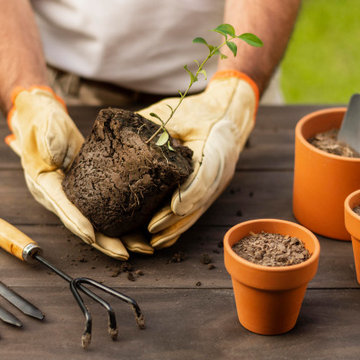
Coco coir is a natural fiber extracted from coconut husks. It has a neutral pH, excellent water retention, and is reusable, making it a favorite among gardeners who prefer organic and sustainable practices. It is available in different forms such as blocks, bricks, or loose coir, each requiring some preparation before use in gardening.
Benefits of Using Coco Coir in Gardening
Coco coir offers several advantages for gardening. Here are the benefits of using coco coir in gardening:
Holds up to 10 times its weight in water, ensuring plants have consistent moisture.
Promotes oxygen flow to plant roots, leading to healthier root systems.
Coco coir is a renewable and eco-friendly alternative to peat moss.
It can be washed, rehydrated, and reused, reducing waste.
Naturally pH neutral, making it suitable for various plants without major adjustments.
Enhances the texture and moisture retention of garden soil.
How to Prepare Coco Coir for Planting
Preparing coco coir for planting involves a few essential steps. First, you need to hydrate the coir block, as it typically comes in a compressed form. Place the block in a large container and add warm water, allowing the block to expand and absorb the water. Once fully expanded, the coir should be fluffed up by breaking it apart with your hands or a tool to ensure it becomes loose and airy. After the coir has been fluffed, it is important to drain any excess water, as overly wet coir can lead to root suffocation. Finally, since coco coir is inert and does not contain nutrients, it’s a good idea to add organic compost or liquid fertilizer to enrich the coir before planting.
Do You Need to Soak Coco Coir Before Planting?
Yes, soaking coco coir before planting is necessary. Since it comes in a compressed form, it needs to be broken down and hydrated for proper use. The soaking process allows the coir to expand and release the fibers, making it usable as a growing medium. After soaking, the coir should be fluffed to ensure the water is evenly distributed. Draining any excess water is crucial because overly wet coir may impede plant root health.
How to Prepare Coco Peat for Planting
Coco peat, a fine, powdery form of coco coir, is highly beneficial for seed starting and improving water retention in soil. To prepare coco peat, it first needs to be hydrated, similar to how you prepare coir blocks. Slowly add water to the peat in a container and allow it to absorb and fluff up. Once hydrated, coco peat can be used on its own or mixed with other growing media such as perlite or vermiculite for added aeration and drainage. It is advisable to check the pH level of your final mix, as coco peat generally has a neutral pH, but adjustments may be necessary depending on the plants being grown.
Can You Use Just Coco Coir for Plants?
Yes, coco coir can be used by itself to grow plants, especially in hydroponic systems or as a seed-starting medium. However, because coco coir does not naturally contain nutrients, you will need to provide regular fertilizer to support plant growth. This makes it particularly suitable for plants grown in controlled environments, such as hydroponics, where nutrient solutions can be carefully managed. In traditional soil-based gardening, mixing coco coir with other organic materials like compost is recommended to provide essential nutrients and improve the overall soil structure.
How to Use Coco Coir in Hydroponics
Coco coir is widely used in hydroponic systems due to its water retention and aeration properties. To use coco coir in hydroponics, it first needs to be soaked and hydrated, as discussed earlier. Once the coir is fully prepared, it can be placed in the hydroponic system. Since coco coir does not contain natural nutrients, you will need to supply a balanced nutrient solution tailored for hydroponic plants. Regular monitoring of water and nutrient levels is essential to prevent nutrient imbalances or root rot. One of the benefits of coco coir in hydroponics is its reusability. After completing a growing cycle, the coir can be washed, rehydrated, and used again in future plantings.
Using Coco Coir as a Soil Amendment
Coco coir is also an excellent soil amendment, as it improves the texture and moisture retention of garden soil. To use coco coir in this way, mix loose coir with your existing garden soil at a ratio of one part coco coir to two parts soil. This will help retain moisture without compacting the soil, improving both water drainage and root growth. For optimal results, you can also add organic compost to the mix, ensuring that the nutrient levels are sufficient for plant growth. Coco coir works particularly well in raised beds, where it helps maintain proper soil structure over time.
Advantages of Using Coco Coir Over Peat Moss
While peat moss has been traditionally used as a growing medium, coco coir offers several advantages over it. Coco coir is a renewable resource, as it is a byproduct of coconut processing, while peat moss is harvested from peat bogs that take centuries to regenerate. Coco coir is also more durable, as it can be reused multiple times without breaking down, while peat moss disintegrates after a single use. Another key benefit is its neutral pH, whereas peat moss is more acidic and may require balancing to meet the needs of specific plants.
Conclusion
Coco coir is a highly versatile and sustainable growing medium that benefits both novice and experienced gardeners alike. Whether you are using it for hydroponics, as a soil amendment, or as a standalone medium for growing plants, knowing how to properly prepare and use it is key to maximizing its benefits. By following the steps detailed above, you can improve water retention, aeration, and overall plant health in your garden, all while contributing to eco-friendly gardening practices.
 Wise Pool & Spa Service, Inc.
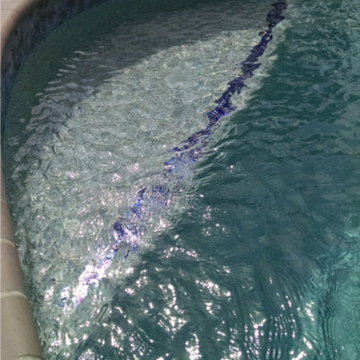
This bench, located in the deep end of the swimming pool, has glass trim tile in Arctic Ocean. Pool location is Avenue, MD.
Wise Pool & Spa Service, Inc.


 Karo Studios
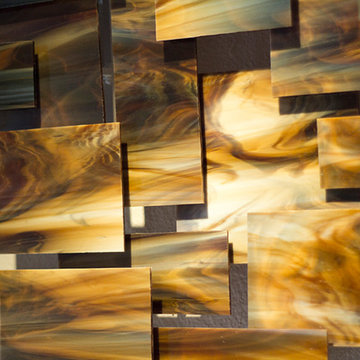
"Cosmos" is an all glass and steel wall sculpture that is made out of 68 pieces of individually hand cut art glass. The steel is prepared and welded with each joint forming the foundation for the precise placement of the glass above it, creating a dynamic yet harmonious composition.

 Gretchen Lyons
Elizabeth Bettis
Eat-in kitchen - mid-sized contemporary l-shaped light wood floor eat-in kitchen idea with an undermount sink, flat-panel cabinets, dark wood cabinets, quartz countertops, white backsplash, ceramic backsplash, stainless steel appliances and an island
Eat-in kitchen - mid-sized contemporary l-shaped light wood floor eat-in kitchen idea with an undermount sink, flat-panel cabinets, dark wood cabinets, quartz countertops, white backsplash, ceramic backsplash, stainless steel appliances and an island
 Backyard X-Scapes Inc.
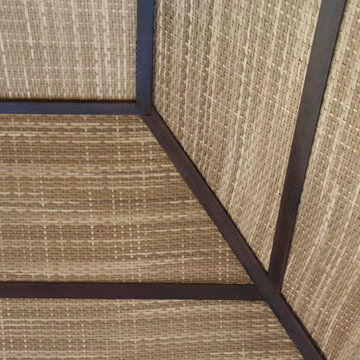
Virosurface™ is the age-defying, high-performance indoor or outdoor wall coverings that are non-toxic and UV tested. These fibers are fully water-resistant and insensitive to sun, chlorine and harsh weathering. Available in four distinctive weaves; Basket weave, Trifecta, Herringbone and Bandeau. Viro Surface from Viro Build is produced from artificial fiber matting extrusions woven from polyethylene bases plastic to mimic natural fibers. These synthetic matting’s are eco-friendly and 100% biodegradable. Uses for residential and commercial applications include surfacing and paneling projects, wall coverings, wainscoting, Palapa underpayments ceilings, and cabana mats.
53