
Search results for "Practices helps" in Home Design Ideas


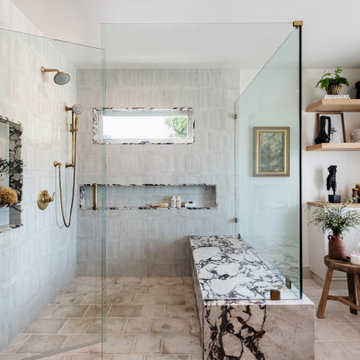
 Tiffany Lauer Interiors
Example of a transitional master gray tile gray floor bathroom design in Los Angeles with white walls and a hinged shower door
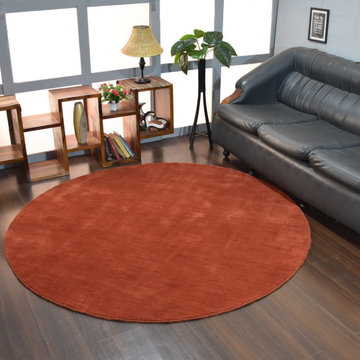
 Get My Rugs LLC
Improve your living room or bedroom begins with the perfect area rug—an essential element that enhances both style and functionality. A well-chosen rug not only anchors the room but also adds warmth, texture, and a touch of personality to your space. Whether you’re decorating a cozy bedroom or a spacious living room, selecting the right rug is crucial to achieving a harmonious and inviting atmosphere.
Design and Style: The design of your area rug can dramatically influence the overall look of your space. For a luxurious touch, consider hand-tufted or hand-knotted rugs, which offer intricate patterns and rich textures. These rugs are often crafted with attention to detail, making them ideal for adding an elegant statement to any room. If you prefer a more modern approach, machine-woven rugs are a great choice. They come in a variety of vibrant patterns and colors and are built to withstand heavy foot traffic thanks to their heat-set fibers. For a versatile option, flat-woven rugs, such as kilims, provide a reversible design that fits seamlessly into both contemporary and traditional decor.
Materials and Comfort: When selecting a rug, the material plays a significant role in both its appearance and comfort. Shag and flokati rugs are perfect for creating a plush, cozy environment. Their long, soft fibers add a layer of comfort underfoot, making your living room or bedroom feel more inviting. Hand-loomed rugs offer unique textures and artisanal quality, while braided and hand-hooked rugs add a charming, handcrafted touch. For practical maintenance, machine washable rugs are a smart choice. They allow for easy cleaning and help maintain a fresh look with minimal effort.
Functionality and Practical Features: Beyond aesthetics, consider the functionality of your rug. Stain-resistant and water-resistant rugs are ideal for managing spills and stains, ensuring that your rug remains in good condition over time. Non-slip and adhesive backings are essential for safety, particularly on hardwood floors. These features prevent the rug from shifting and reduce the risk of slips and falls. Additionally, cushioned rugs enhance comfort, making your space not only stylish but also more enjoyable to relax in.
Customization and Personalization: Add a unique touch to your space with custom or personalized rug options. An 8x10 area rug is a popular choice for covering large areas and can be tailored to fit specific dimensions or design preferences. Personalized features, such as fringe details or organic textures, allow you to create a rug that reflects your individual style and complements your existing decor.
Versatility and Maintenance: The top 15 area rugs available today offer a diverse range of styles and features to suit various needs. From distressed designs that add character to contemporary patterns that offer a modern edge, there is a rug to match every aesthetic. Large rugs for living rooms and bedrooms can help define the space and create a cohesive look, while huge carpets can make a bold statement. Consider the practicality of each rug, ensuring that it not only enhances your decor but also withstands everyday use.
In Summary: Selecting the ideal area rug involves finding a balance between style and practicality. Whether you opt for a luxurious hand-tufted design, a durable machine-woven option, or a versatile flat-woven style, the right rug will elevate your living room, bedroom, or any other space. By exploring various options and considering both design and functionality, you can find the perfect rug that transforms your space into a stylish, comfortable haven.
Find the right local pro for your project

 Five Star Tree Care
One frustrating thing about tree infections and diseases is that they are virtually completely unpredictable. It is essential to understand all the different types of risks and causes that can contribute to these issues in an attempt to understand how you can try and prevent and manage these things when they happen. Five Star Tree Services is going to go over the reasons as to how and why your trees can develop these certain issues.
Since there are so many different causes behind why a tree’s development might be interrupted, first think of them as two different categories you can split them into; non-living factors or abiotic, and living factors or biotic. We also want to note that it is possible for more than one factor to affect a tree’s health and development at any given time.
You can also make a distinction between primary pests and secondary pests. The primary pests exert a serious influence on the tree’s immediate survival. Whereas secondary pests have a less significant influence on the survival of the tree. The only time they will jeopardize a tree’s survival is if the tree has a previous debilitating issue from another risk factor.
For an individual tree’s circumstances, this will distinct the chances of an infestation, especially if it has any past debilitating issues. Which can be seen from any compromising management practices or pre-existing issues which affect the tree’s development as well as lower its resistance to infections.
Poor management in planting is a very common predisposed factor that compromises a tree’s infection defense. For instance, any saplings that are pot-bound will not get to develop solid root systems which doesn’t allow them to develop properly when they eventually get planted. Another example is when a tree gets stressed, along with other outer factors, will have significant effects on the overall wellbeing of the tree and its condition. Other factors to consider are bad soil quality as well as bad drainage.
Abiotic Non-Living Influences
The overall health of a tree can be linked to impacts such as bad growing conditions and bad soil quality. These things will put trees at a higher risk for catching a number of different biotic issues. Sickness, infections, and infestation can all be linked to ineffective nutrient absorption when a tree has insufficiently developed its natural resistances and defenses. One of the worst factors for this is fire damage. It is so debilitating that it makes trees hopeless at defending themselves against biotic attacks.
To uncover what circumstantial predispositions your tree might have due to poor developmental conditions, arborists can use the growth rings as a means of assessment for the long-term effects, wellbeing, and growth of a tree.
There are many outer and non-living variables that will influence the health of a tree and if it will be predisposed to biotic infestations. Such variables can include things like extensive cold winters and long dry spells.
Abiotic Common Influences Include:
-Water
-Chemicals
-Soil Conditions
-Weather
-Mechanical Agents
Biotic Living Influences
Sometimes, you are able to notice certain infestations easily, while others can be hard to tell. For instance, seeing an insect on a tree is no cause for alarm. A lot of them are harmless to the tree and do not cause harm while they regularly feed. However, some insects are actually harmful to a tree’s survival and knowing the difference between harmless and harmful ones is what you need to notice.
You might also see fungi on rotting matter or a dead tree. Fungi are not usually the immediate influence of a negative manifestation found in a tree’s development. There are other growths that can be seen living on trees. These include saprobic and pathogenic organisms. Saprobic growths are mostly found on rotting or dead tissues and pathogenic growths are less common. Some other living infestations include lichens, epiphytes, and mosses. But these don’t usually have any effect on a tree’s wellbeing. They live symbiotically together.
Biotic Common Influences Include:
-Mites
-Deer and Rodents
-Fungi
-Weeds
-Viruses
-Parasitic Plants
-Bacteria
-Phytoplasmas
-Insects
How Five Star Tree Service Can Help
It is important to know the basics to look out for when trying to prevent developmental issues or help a tree that is developing. There are a lot of factors to take into consideration when helping a tree grow, flourish, and live a healthy long life. If you have any questions or concerns about your trees, contact us at Five Star Tree Services today at (416) 990-3355. We will be able to help you with all your tree related needs. Check out our website for a full list of our Tree Services in Toronto!
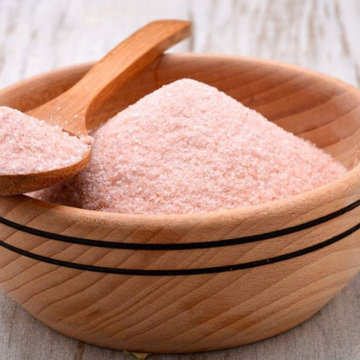
 safe ZOnea
Every year, the same thing happens. The first real snowfall arrives, demand for de-icing materials spikes overnight, and the businesses that waited too long find themselves scrambling for supply at the worst possible moment. Facility managers, property owners, contractors, and municipalities all depend on a steady supply of salt and ice melt to keep their properties safe and operational through winter. The ones who plan ahead sail through. The ones who don't pay more, wait longer, and take on real risk.
Sourcing de-icing materials well is not complicated, but it does require thinking ahead and understanding the options. The choices you make about what to buy, how to buy it, and who to buy it from have a direct effect on your costs, your reliability, and your ability to keep people safe when conditions turn dangerous. This article lays out what matters.
Why Your Choice of Supplier Matters More Than You Think
It is easy to treat de-icing material as a commodity, something you grab whenever you need it without much thought about where it comes from. That works fine until the moment it doesn't, usually in the middle of a storm when everyone needs supply at once and the casual sources have run dry. At that point, the relationships you built before the season become the difference between staying stocked and being stuck.
Reliable supply is the whole game in winter operations. A property that runs out of ice melt during a storm faces safety hazards, liability exposure, and disruption, none of which can wait for a back-ordered shipment. This is why establishing relationships with dependable rock salt suppliers before the season starts is one of the smartest moves a facility manager or contractor can make. It locks in supply, often locks in better pricing, and removes a major source of mid-winter stress.
The lesson here is to treat sourcing as a planning decision rather than a last-minute errand. The businesses that come through winter smoothly are almost always the ones that secured their supply chain early, chose suppliers who could actually deliver when it counted, and never had to gamble on finding material during a shortage. Reliability bought in advance is far cheaper than scarcity paid for in a crisis.
Bagged or Bulk: Matching the Material to the Job
One of the first practical decisions is whether to buy de-icing material in bags or in bulk, and the right answer depends entirely on the operation. Each format has clear advantages, and many operations end up using both for different purposes.
Bagged material offers convenience, control, and easy storage. It is simple to handle, easy to distribute to different locations or crews, straightforward to store without special equipment, and convenient for spot application by hand. It suits smaller properties, businesses without bulk storage, and situations where portion control and tidiness matter. Bulk material, on the other hand, tends to make sense for large operations that go through high volumes, where buying in quantity lowers the per-unit cost and the operation has the equipment and space to store and handle it. The tradeoff is between the convenience and flexibility of bags and the volume economics of bulk.
For many operations, the right approach is a mix: bulk for the high-volume core of the work and bags for flexibility, spot treatment, and locations where bulk handling is impractical. The key is to match the format to how the material will actually be stored, moved, and applied, rather than defaulting to one or the other out of habit. Thinking this through in advance avoids both the waste of over-buying bulk you can't handle and the expense of relying entirely on bags for a large operation.
Rock Salt Is Not Your Only Option
Rock salt, or sodium chloride, is the workhorse of winter de-icing for good reason. It is effective, widely available, and cost-efficient, which makes it the default choice for most operations most of the time. But it has limits, and understanding the alternatives helps you choose the right material for the conditions you actually face.
The most important limitation is temperature. Rock salt becomes less effective as temperatures drop, and in genuinely cold conditions it can struggle to do the job at all. This is where alternatives come in. Calcium chloride, for instance, works at much lower temperatures than rock salt and acts quickly, which makes it valuable when conditions are severe or when fast melting matters. Operations that face hard freezes or need dependable performance in extreme cold often keep calcium chloride for sale on hand for exactly those situations, using it alongside rock salt rather than instead of it.
The practical approach is to understand the conditions your property faces and stock accordingly. For many operations, rock salt handles the bulk of the work while a faster, colder-rated material like calcium chloride covers the extreme days when ordinary salt falls short. Matching the material to the temperature and the urgency of the situation is what separates an operation that stays ahead of winter from one that is constantly reacting to it.
Securing Your Supply Before the Season
Knowing what to buy is only half the equation. The other half is making sure you can actually get it when you need it, which means securing your supply before winter arrives rather than after it has already started. Timing is one of the most underrated factors in winter operations.
The logic is simple. Demand for de-icing materials is highly seasonal and spikes sharply during storms, when everyone needs supply simultaneously. Prices and availability both move against the buyer at exactly those moments. By contrast, planning ahead, estimating your needs and arranging supply before the season, puts you in a far stronger position. Working with established rock salt suppliers ahead of time means your material is accounted for before the rush, often at better pricing and with the confidence that it will be there when the first storm hits.
This kind of planning also lets you think clearly rather than react under pressure. You can estimate your seasonal needs based on your property and past winters, decide on the right mix of materials and formats, and arrange storage in advance. Operations that do this consistently spend less, worry less, and never find themselves making frantic calls during a storm. The effort of planning ahead is modest, and the payoff in reliability and cost savings is substantial.
Storing and Handling What You Buy
Securing supply is not much use if the material degrades before you can use it, which makes proper storage and handling an important and often overlooked part of the equation. De-icing materials are sensitive to moisture, and poor storage can turn a good supply into a clumped, hardened mess that is difficult to apply.
The fundamentals are straightforward. Keep material dry and protected from moisture, since salt and ice melt readily absorb water and can harden if exposed. Store it in a way that suits the format, whether that means a proper bulk storage area or a dry space for stacked bags. Keep it accessible, so crews can get to it quickly when a storm hits and time is short. And handle it with the right equipment for the format and volume, which protects both the material and the people working with it. None of this is complicated, but neglecting it can undermine even a well-planned supply.
Good storage practices protect the investment you made in securing supply early. There is little point in arranging your materials ahead of the season only to have them degrade before use. Treating storage and handling as part of the overall plan, rather than an afterthought, ensures that the material you secured is actually usable when the moment comes. It is the final link in a supply chain built to perform under winter conditions.
Estimating How Much You Actually Need
One question trips up operations of every size: how much de-icing material to buy. Order too little and you risk running short during a storm. Order too much and you tie up money and storage space in material you may not use. Getting the estimate reasonably right is a meaningful part of sourcing well.
Several factors shape the answer. The size and type of the areas you treat, sidewalks, lots, entrances, and drive lanes, set the baseline for how much material each application consumes. The local climate matters too, since colder regions and those with frequent snowfall go through far more material than milder ones. Application frequency depends on how often storms hit and how quickly surfaces need to be cleared, which varies with the kind of property and the expectations of the people who use it. And the type of material plays a role, since different products are applied at different rates.
Past experience is often the best guide. Operations that track what they used in previous winters, adjusted for the size of the property and the severity of the season, can estimate their needs with reasonable confidence. For newer operations without that history, it helps to plan conservatively and to work with a supplier who can replenish stock reliably, so that a low estimate does not turn into a mid-storm shortage.
The goal is not perfect precision but a sound, slightly cautious estimate paired with a dependable supply relationship. That combination lets an operation keep enough material on hand to handle the season without over-committing to volume it cannot store or use. Thinking this through before winter, rather than guessing during it, is one more way that planning ahead pays off when the snow starts to fall.
The Bottom Line
Sourcing de-icing materials well comes down to a few straightforward principles: plan ahead, choose reliable suppliers before the season, match your materials and formats to your actual needs and conditions, and store what you buy properly. The operations that follow these principles move through winter with confidence, while those that improvise pay more and take on needless risk.
Winter is predictable in one respect: it arrives every year, and demand for de-icing material spikes the moment it does. The businesses that prepare for that reality, rather than being surprised by it, are the ones that keep their properties safe, their costs controlled, and their operations running no matter what the season throws at them. A little foresight before the first snowfall pays off through every storm that follows.
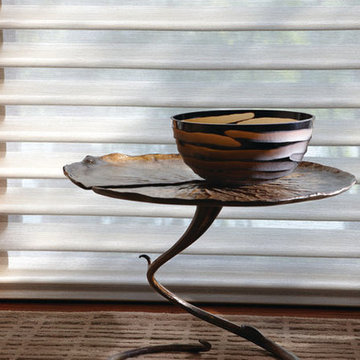
 Window Quilt Muskoka
Window Quilt (Muskoka) Recommends Hunter Douglas
Hunter Douglas Advantage. The Art of Window Dressing...
Well-designed window fashions do more than simply cover a window. At Hunter Douglas, form and function are inseparable.
Great design is beautiful to live with, provides variable light control, insulates rooms against heat and cold while saving energy, protects your furnishings from damaging UV rays, and even absorbs sound, improving the acoustics in a room. And, our advanced operating systems make using our products a pleasure every day.
Now that’s artful window dressing. Lifetime guarantee.
Privacy and Light Control
Hunter Douglas window fashions are available in a wide variety of product designs with fabrics and materials that come in a range of opacities from sheer to opaque—offering varying degrees of privacy and light control options.
Energy Efficiency
Up to 50% of your home’s heating and cooling energy can be lost through your windows. At Hunter Douglas, we're an industry leader in making a big energy savings difference at the window.
Keep your home warmer in the winter and cooler in the summer
At Hunter Douglas, we're an industry leader in making a big energy savings difference at the window. In 1985, we invented the highly energy-efficient Duette® honeycomb shades in response to the energy crisis of the late 1970s. Our latest innovation is the Duette Architella® honeycomb shades featuring a honeycomb-within-a-honeycomb design for even greater energy efficiency. Today, we continue to think about the impact all of our window fashions can make. Without energy-efficient window treatments, as much as 50% of a home's heating and cooling energy can be lost through its windows.
Hunter Douglas products help conserve energy at the window in many important ways:
Insulation
In winter months, your home heating escapes to the outdoors through your windows while in the summertime, the outside heat flows into your home through these same windows. With window treatments that provide insulation, you can reduce energy consumption, save on heating and cooling costs, and create a more comfortable atmosphere.
At Hunter Douglas, we're an industry leader in making a big energy savings difference at the window. In 1985, we invented the highly energy-efficient Duette® honeycomb shades in response to the energy crisis of the late 1970s. Our latest innovation is the Duette Architella® honeycomb shades featuring a honeycomb-within-a-honeycomb design for even greater energy efficiency. Today, we continue to think about the impact all of our window fashions can make. Without energy-efficient window treatments, as much as 50% of a home's heating and cooling energy can be lost through its windows.
Hunter Douglas products help conserve energy at the window in many important ways:
The Duette Energy Efficiency Story Video Thumbnail
The Duette® Honeycomb Shades Energy Efficiency Story
Insulation Icon
Insulation
In winter months, your home heating escapes to the outdoors through your windows while in the summertime, the outside heat flows into your home through these same windows. With window treatments that provide insulation, you can reduce energy consumption, save on heating and cooling costs, and create a more comfortable atmosphere. Solar Heat Control Icon
Solar Heat Control
The warmth provided by the sun, its solar energy, may be desirable during the winter to help heat your home, but in the summer, it can make a room overly hot and uncomfortable—driving up air conditioning costs. Many Hunter Douglas window fashions help to control solar heat by allowing it into your home in the winter and minimizing the amount that comes in during the summer.
Daylighting
Daylighting is the practice of lighting rooms with natural light rather than artificial light.By drawing natural light into a room many of our window treatments reduce the need for other types of lighting, thereby reducing your energy use
5 Tips for Saving Energy at the Window:
1) Ensure your windows and doors are properly weather-stripped.
2) Caulk around basement and storm windows.
3) When heating or cooling, keep windows locked.
4) Open your window coverings during sunny winter days to catch free solar heat then close them at night to keep that heat in.
5) Close your window coverings during summer days to keep the heat out.
Innovation:
All of our window fashions are designed and custom-assembled in the U.S. Our longstanding commitment to quality and innovation means you’ll enjoy choices at Hunter Douglas that you won’t find anywhere else.
Child Safety:
From cordless manual and motorized operating systems, retractable lift cords, cord tensioners and wand controls, we offer a wide array of innovative lifting system options for enhanced child and pet safety as well as especially easy operation.
Advanced Operating Systems:
Power View Motorization-Intelligent Shades that Simply your Life:
Our brilliant new wireless operating system gives you the power to control and schedule your Hunter Douglas window treatments from your smartphone, tablet, or a remote control.

 Bend Craftsmen Company LLC
Bend Craftsmen Company LLC was founded in 2012 by Hank Hill. Bend Craftsmen Company operates as a residential and small commercial General Contractor and also offers carpentry, custom woodworking and project management services.
Bend Craftsmen Company’s mission is to provide a unique, creative approach to solving clients’ needs; listening to, visualizing and creating your dream space. Whether it’s building a piece of furniture, surprising your partner with a new “room makeover”, overseeing your whole house or partial house remodel, or building your new dream home, Bend Craftsmen Company wants to be there with you and provide a comfortable, pleasant experience along the way. We are dedicated to customer satisfaction and producing a high quality finished product in a timely, efficient manner.
Hank brings nearly 20 years of professional experience within the building industry. Growing up in South Carolina, Hank was surrounded by other family members who had a passion for building and woodworking. Whether helping his dad build a new coffee table for the family room or helping his uncles build a new deck on a beach house after a hurricane, Hank developed a sound sense of building and fine woodworking. This passion naturally led to working as a finish carpenter and eventually project manager for a Design/Build Remodeling Company in Charleston, SC. There, he also volunteered with the Charleston Stage Company, building sets for performing arts productions and attended the American College of Building Arts, fine-tuning specific craftsman skills. In 2007, Hank couldn’t resist his draw to the Pacific Northwest and moved to Bend for the small town living, outdoor splendor and great community. Hank is certified by Earth Advantage as a Sustainable Homes Professional and is a regional leader in sustainable, energy efficient building practices. When not building something, Hank enjoys snowboarding, kayaking and heading to the coast to catch a few waves. Hank is active in both the paddling and arts communities in Bend, and has donated time to the 2nd Street Theatre building sets. Hank is surrounded by his loving wife, Amber, wonderful daughter, Aidaleen, and dog, Wyatt.
Are you looking for a General Contractor in Bend, Oregon who has a personalized approach to visualizing and creating your dream space? Bend Craftsmen Company is here for you.
Sponsored
Delaware, OH

Buckeye Basements, Inc.
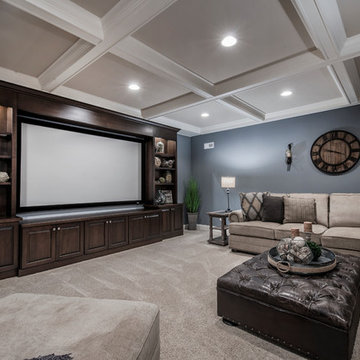
Central Ohio's Basement Finishing ExpertsBest Of Houzz '13-'21

 Slow Flowers LLC
Seasonal centerpiece for the holidays (c) Debra Prinzing
Dining room - eclectic dining room idea in Seattle
Dining room - eclectic dining room idea in Seattle
 SWANSON RENOVATIONS - LUXURY DESIGN & BUILD
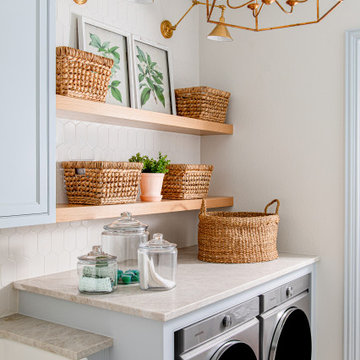
This French country laundry room exudes charm with its functional elegance. White hexagonal tile backsplash and marble-like countertops are complemented by warm, natural wood floating shelves, adorned with woven baskets for a rustic touch. The space is illuminated by brass sconces and a matching geometric chandelier, adding a contemporary yet classic flair. Black front-loading machines provide modern convenience, set against the backdrop of a patterned tile floor. The overall design creates a cozy yet chic environment, perfect for a serene home experience.


![WORD [Warren Office for Research and Design]](https://st.hzcdn.com/fimgs/2ad3d4fa02534aa2_9160-w32-h32-b0-p0--.jpg) WORD [Warren Office for Research and Design]
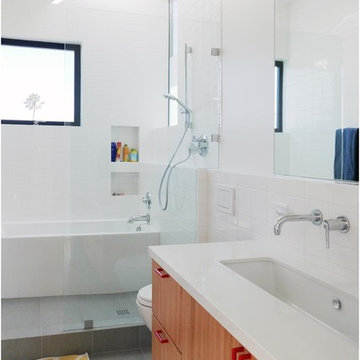
WORD [Warren Office for Research and Design]Mid-sized trendy 3/4 white tile and subway tile slate floor and gray floor bathroom photo in Los Angeles with flat-panel cabinets, medium tone wood cabinets, a two-piece toilet, white walls, a trough sink and quartzite countertops
 Kristen Bombeck
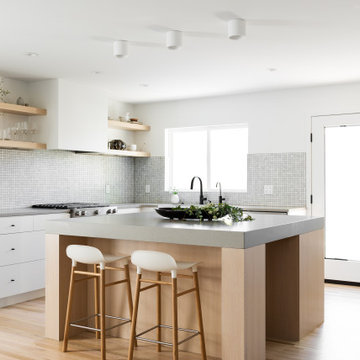
Example of a small danish l-shaped light wood floor and beige floor eat-in kitchen design in Salt Lake City with a farmhouse sink, flat-panel cabinets, light wood cabinets, quartz countertops, gray backsplash, mosaic tile backsplash, stainless steel appliances, an island and gray countertops
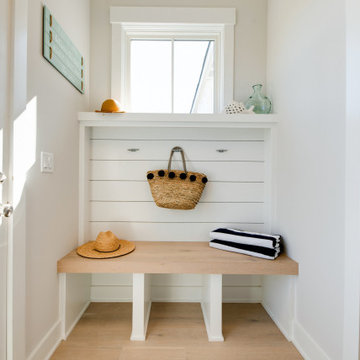
 Stephen Alexander Homes & Neighborhoods
Entryway - mid-sized coastal light wood floor, gray floor and shiplap wall entryway idea in Other with gray walls and a black front door
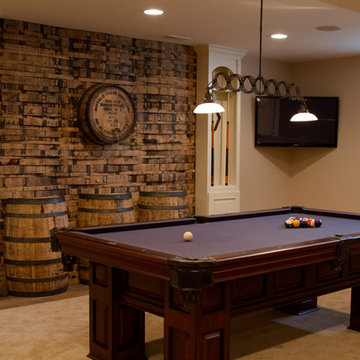
Sponsored
Delaware, OH
Buckeye Basements, Inc.
Central Ohio's Basement Finishing ExpertsBest Of Houzz '13-'21




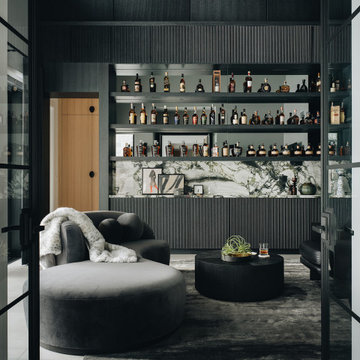
 DGI Design x Build
This cocktail lounge is the ultimate nightcap room, designed with a moody, sophisticated ambiance perfect for winding down. Every detail was intentionally darker, from the rich black wood and sleek grey mirrors to the copper metals that complement the room's sultry vibe. The dramatic, graphic porcelain stone adds a striking visual element while being durable enough to withstand whiskey spills and lime acids. The result is a space that feels both intimate and high-end, ideal for those quiet moments at the end of the day.



16