
Search results for "Protective barrier" in Home Design Ideas

 Pistils Landscape Design + Build
Steel trellis with Clematis.
Design ideas for a mid-sized tropical backyard concrete paver landscaping in Portland.
Design ideas for a mid-sized tropical backyard concrete paver landscaping in Portland.
 Tile Doctor Ltd
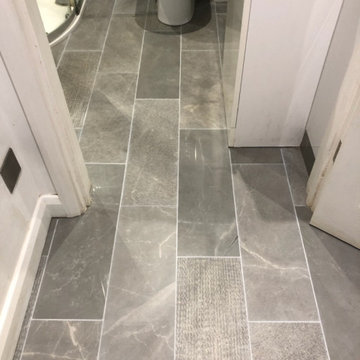
The pictures below detail the renovation of a Porcelain Tiled Floor I completed at a property in Ipswich. Installed throughout the Kitchen and into the adjacent WC the porcelain tile and grout were in a very dirty state and the client was desperate to get them clean. The situation wasn’t helped by their two dogs with grubby paws. She had tried all the usual household cleaners she could find, and nothing seemed to work. Unfortunately, household cleaners can make the problem worse due the strong chemicals they contain.
I visited the property to survey the floor and was able to reassure the client that although the grout was heavily stained it could be renovated by recolouring it with a Tile Doctor Grout Colourant. I was confident we would soon be able to get the floor looking great again and demonstrated the process I would use on a small part of the floor. The demonstration went well and happy with the result we agreed a date for my return the following week to complete the work which should be completed in a single day.
Returning on the agreed date we started by protecting the by applying a clear silicone sealant to the MDF skirting boards and kitchen base units. We left this to dry for an hour before proceeding with the cleaning.
The Porcelain tile and grout was cleaned with a strong dilution of Tile Doctor Pro-Clean using 3 parts cleaner to 5 parts water. The solution was applied to the tile and grout and then left to soak in for ten minutes before being worked in using a rotary machine fitted with a Black Scrubbing Pad. Tile Doctor Pro-Clean is a concentrated, multi-purpose high-alkaline cleaner which is designed for deep cleaning tile, stone and grout of dirt and grease and can also remove sealers.
Pads can struggle to reach into the recesses of the grout line so once I was finished with the tile, I hand scrubbed the grout with a wire brush. The floor was then rinsed with water and the resultant slurry extracted off the floor with wet vacuum.
The floor took about three hours to deep clean which was just the right timing for us to have lunch whilst the floor dried. The grout was much improved by the cleaning process but as suspected there were too many deep-seated stains to be able to guarantee a consistent finish. So as previously agreed with the client we set about colouring the grout using a light grey colourant. This took most of the afternoon as there was a lot of grout.
The Porcelain tiles were the non-porous type that won’t take a sealer and the colourant acts as a barrier over the grout protecting it and making it easy to clean so once I was done colouring there was no need to apply a sealer.
My client was relieved to have the floor looking clean and presentable again. For aftercare I recommended that moving forward it would be best to use Tile Doctor Neutral Tile Cleaner which is a pH neutral cleaner. This will ensure that with regular cleaning the floor will keep clean and the grout won’t be compromised by overly strong products.
Bruce Copping
Suffolk Tile Doctor
 Windy City Painters
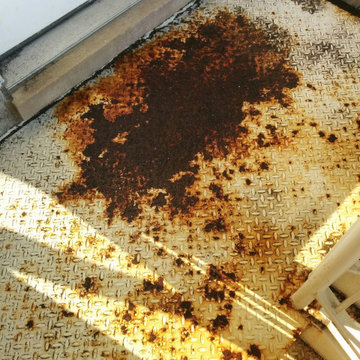
 recently tackled heavily corroded metal stairs on the North Side - the kind of job where surface prep makes or breaks the entire project. The stairs had years of rust scaling, flaking old paint, and a few sections where pitting had gone deep.Here in Chicago, metal stairs take a brutal beating. Freeze-thaw cycles crack protective coatings from October through April. Road salt spray migrates from boots and walkways. Humidity off the lake accelerates oxidation on any exposed metal. Older two-flats and greystones often have original ornamental iron stairways that haven't been properly treated in decades.OUR 4-STEP METAL STAIR PROCESS:Mechanical prep with wire wheel grinder and needle gun descaling on heavy corrosion zonesOspho rust-converting primer applied to all remaining oxidized surfaces - this chemically transforms rust into a stable baseSherwin-Williams Corothane moisture-cure urethane primer for extreme industrial barrier protectionTwo topcoats of Sherwin-Williams Corothane aliphatic finish for maximum UV, moisture, and chemical durability Q: What does metal stair painting cost in Chicago?A: Most North Side residential metal staircases run $800-$2,500 depending on step count, structure height, rust severity, and whether any welding repairs are needed before painting begins.Q: Can you paint over rust?A: Not directly. Windy City Painters always converts or removes rust first using Ospho or wire wheel grinding so high-performance coatings like Corothane bond correctly and last.Q: How long does painted metal stairs last in Chicago?A: With Sherwin-Williams Corothane moisture-cure urethane primer and topcoat, properly prepped metal staircases in Chicago typically hold 8-12 years through harsh winters and foot traffic. Q: Do you handle ornamental iron staircases on greystones or two-flats?A: Absolutely. Windy City Painters works regularly on vintage metal stairways found on North Side greystones, courtyard buildings, and Victorian brownstones.Q: What if sections are broken or bent?A: We assess whether a welder is needed before painting begins. We coordinate that repair before any coatings go down.Q: Is there prep before the primer?A: Yes - wire wheel grinding, needle gun descaling on heavy zones, and a full wipe-down before Ospho and Sherwin-Williams Corothane primer application.Q: How do I get a quote?A: Visit windypainters.com or call us directly. Windy City Painters provides free on-site estimates for all metal stair painting projects.Protect your investment before next winter hits. windypainters.com#ChicagoPainter #WindyCityPainters #ChicagoIL #HomeImprovement #ChicagoHome #MetalStairPainting #RustyStairs #ChicagoNorthSide #StairPainting #MetalPainting #ChicagoContractor #ExteriorPainting #GreystoneLiving #ChicagoTwoFlat #CurbAppeal
Find the right local pro for your project

 Envision Web
Stuart Wade, Envision Virtual Tours
The second-largest and most developed of Georgia's barrier islands, St. Simons is approximately twelve miles long and nearly three miles wide at its widest stretch (roughly the size of Manhattan Island in New York). The island is located in Glynn County on Georgia's coast and lies east of Brunswick (the seat of Glynn County), south of Little St. Simons Island and the Hampton River, and north of Jekyll Island. The resort community of Sea Island is separated from St. Simons on the east by the Black Banks River. Known for its oak tree canopies and historic landmarks, St. Simons is both a tourist destination and, according to the 2010 U.S. census, home to 12,743 residents.
Early History
The earliest
St. Simons Island Village
record of human habitation on the island dates to the Late Archaic Period, about 5,000 to 3,000 years ago. Remnants of shell rings left behind by Native Americans from this era survive on many of the barrier islands, including St. Simons. Centuries later, during the period known by historians as the chiefdom era, the Guale Indians established a chiefdom centered on St. Catherines Island and used St. Simons as their hunting and fishing grounds. By 1500 the Guale had established a permanent village of about 200 people on St. Simons, which they called Guadalquini.
Beginning in 1568, the Spanish attempted to create missions along the Georgia coast. Catholic missions were the primary means by which Georgia's indigenous Native American chiefdoms were assimilated into the Spanish colonial system along the northern frontier of greater Spanish Florida. In the 1600s St. Simons became home to two Spanish missions: San Buenaventura de Guadalquini, on the southern tip of the island, and Santo Domingo de Asao (or Asajo), on the northern tip. Located on the inland side of the island were the pagan refugee villages of San Simón, the island's namesake, and Ocotonico. In 1684 pirate raids left the missions and villages largely abandoned.
Colonial History
As
Fort Frederica
early as 1670, with Great Britain's establishment of the colony of Carolina and its expansion into Georgia territory, Spanish rule was threatened by the English. The Georgia coast was considered "debatable land" by England and Spain, even though Spain had fully retreated from St. Simons by 1702. Thirty-one years later General James Edward Oglethorpe founded the English settlement of Savannah. In 1736 he established Fort Frederica, named after the heir to the British throne, Frederick Louis, prince of Wales, on the west side of St. Simons Island to protect Savannah and the Carolinas from the Spanish threat.
Between 1736 and 1749 Fort Frederica was the hub of British military operations along the Georgia frontier. A town of the same name grew up around the fort and was of great importance to the new colony. By 1740 Frederica's population was 1,000. In 1736 the congregation of what would become Christ Church was organized within Fort Frederica as a mission of the Church of England. Charles Wesley led the first services. In 1742 Britain's decisive victory over Spain in the Battle of Bloody Marsh, during the War of Jenkins' Ear, ended the Spanish threat to the Georgia coast. When the British regimen disbanded in 1749, most of the townspeople relocated to the mainland. Fort Frederica went into decline and, except for a short time of prosperity during the 1760s and 1770s under the leadership of merchant James Spalding, never fully recovered. Today the historic citadel's tabby ruins are maintained by the National Park Service.
Plantation Era
By the start of the American Revolution (1775-83), Fort Frederica was obsolete, and St. Simons was left largely uninhabited as most of its residents joined the patriot army. Besides hosting a small Georgia naval victory on the Fort Frederica River, providing guns from its famous fort for use at Fort Morris in Sunbury, and serving as an arena for pillaging by privateers and British soldiers, the island played almost no role in the war.
Following the war, many of the townspeople, their businesses destroyed, turned to agriculture. The island was transformed into fourteen cotton plantations after acres of live oak trees were cleared for farm land and used for building American warships, including the famous USS Constitution, or "Old Ironsides." Although rice was the predominant crop along the neighboring Altamaha River, St. Simons was known for its production of long-staple cotton, which soon came to be known as Sea Island cotton.
Between
Ebos Landing
the 1780s and the outbreak of the Civil War (1861-65), St. Simons's plantation culture flourished. The saline atmosphere and the availability of cheap slave labor proved an ideal combination for the cultivation of Sea Island cotton. In 1803 a group of Ebo slaves who survived the Middle Passage and arrived on the west side of St. Simons staged a rebellion and drowned themselves. The sacred site is known today as Ebos Landing.
One of the largest owners of land and slaves on St. Simons was Pierce Butler, master of Hampton Point Plantation, located on the northern end of the island. By 1793 Butler owned more than 500 slaves, who cultivated 800 acres of cotton on St. Simons and 300 acres of rice on Butler's Island in the Altamaha River delta. Butler's grandson, Pierce Mease Butler, who at the age of sixteen inherited a share of his grandfather's estate in 1826, was responsible for the largest sale of human beings in the history of the United States: in 1859, to restore his squandered fortune, he sold 429 slaves in Savannah for more than $300,000. The British actress and writer Fanny Kemble, whose tumultuous marriage to Pierce ended in divorce in 1849, published an eyewitness account of the evils of slavery on St. Simons in her book Journal of a Residence on a Georgian Plantation in 1838-1839 (1863).
Another
Retreat Plantation
large owner of land and slaves on St. Simons was Major William Page, a friend and employee of Pierce Butler Sr. Before purchasing Retreat Plantation on the southwestern tip of the island in 1804, Page managed the Hampton plantation and Butler's Island. Upon Page's death in 1827, Thomas Butler King inherited the land together with his wife, Page's daughter, Anna Matilda Page King. King expanded his father-in-law's planting empire on St. Simons as well as on the mainland, and by 1835 Retreat Plantation alone was home to as many as 355 slaves.
The center of life during the island's plantation era was Christ Church, Frederica. Organized in 1807 by a group of island planters, the Episcopal church is the second oldest in the Diocese of Georgia. Embargoes imposed by the War of 1812 (1812-15) prevented the parishioners from building a church structure, so they worshiped in the home of John Beck, which stood on the site of Oglethorpe's only St. Simons residence, Orange Hall.
The first Christ Church building, finished on the present site in 1820, was ruined by occupying Union troops during the Civil War. In 1884 the Reverend Anson Dodge Jr. rebuilt the church as a memorial to his first wife, Ellen. The cruciform building with a trussed gothic roof and stained-glass windows remains active today as Christ Church.
Civil War and Beyond
The
St. Simons Island Lighthouse
outbreak of the Civil War in 1861 put a sudden end to St. Simons's lucrative plantation era. In January of that year, Confederate troops were stationed at the south end of the island to guard the entrance to Brunswick Harbor. Slaves from Retreat Plantation, owned by Thomas Butler King, built earthworks and batteries. Plantation residents were scattered—the men joined the Confederate army and their families moved to the mainland. Cannon fire was heard on the island in December 1861, and Confederate troops retreated in February 1862, after dynamiting the lighthouse to keep its beacon from aiding Union troops. Soon thereafter, Union troops occupied the island, which was used as a camp for freed slaves. By August 1862 more than 500 former slaves lived on St. Simons, including Susie King Taylor, who organized a school for freed slave children. But in November the ex-slaves were taken to Hilton Head, South Carolina, and Fernandina, Florida, leaving the island abandoned.
After the Civil War the island never returned to its status as an agricultural community. The plantations lay dormant because there were no slaves to work the fields. After Union general William T. Sherman's January 1865 Special Field Order No. 15 —a demand that former plantations be divided and distributed to former slaves—was overturned by U.S. president Andrew Johnson less than a year later, freedmen and women were forced to work as sharecroppers on the small farms that dotted the land previously occupied by the sprawling plantations.
By
St. Simons Lumber Mills
1870 real economic recovery began with the reestablishment of the timber industry. Norman Dodge and Titus G. Meigs of New York set up lumber mill operations at Gascoigne Bluff, formerly Hamilton Plantation. The lumber mills provided welcome employment for both blacks and whites and also provided mail and passenger boats to the mainland. Such water traffic, together with the construction of a new lighthouse in 1872, designed by architect Charles B. Cluskey, marked the beginning of St. Simons's tourism industry. The keeper of the lighthouse created a small amusement park, which drew many visitors, as did the seemingly miraculous light that traveled from the top of the lighthouse tower to the bottom. The island became a summer retreat for families from the mainland, particularly from Baxley, Brunswick, and Waycross.
The island's resort industry was thriving by the 1880s. Beachfront structures, such as a new pier and grand hotel, were built on the southeastern end of the island and could be accessed by ferry. Around this time wealthy northerners began vacationing on the island.
Twentieth Century
The
St. Simons Island Pier and Village
opening in 1924 of the Brunswick–St. Simons Highway, today known as the Torras Causeway, was a milestone in the development of resorts in the area. St. Simons's beaches were now easily accessible to locals and tourists alike. More than 5,000 automobiles took the short drive from Brunswick to St. Simons via the causeway on its opening day, paving the way for convenient residential and resort development.
In 1926 automotive pioneer Howard Coffin of Detroit, Michigan, bought large tracts of land on St. Simons, including the former Retreat Plantation, and constructed a golf course, yacht club, paved roads, and a residential subdivision. Although the causeway had brought large numbers of summer people to the island, St. Simons remained a small community with only a few hundred permanent residents until the 1940s.
The
St. Simons Island
outbreak of World War II (1941-45) brought more visitors and residents to St. Simons. Troops stationed at Jacksonville, Florida; Savannah; and nearby Camp Stewart took weekend vacations on the island, and a new naval air base and radar school became home to even more officers and soldiers. The increased wartime population brought the island its first public school. With a major shipyard for the production of Liberty ships in nearby Brunswick, the waters of St. Simons became active with German U-boats. In April 1942, just off the coast, the Texas Company oil tanker S. S. Oklahoma and the S. S. Esso Baton Rouge were torpedoed by the Germans, bringing the war very close to home for island residents.
Due in large part to the military's improvement of the island's infrastructure during the war, development on the island boomed in the 1950s and 1960s. More permanent homes and subdivisions were built, and the island was no longer just a summer resort but also a thriving community. In 1950 the Methodist conference and retreat center Epworth by the Sea opened on Gascoigne Bluff. In 1961 novelist Eugenia Price visited St. Simons and began work on her first works of fiction, known as the St. Simons Trilogy. Inspired by real events on the island, Price's trilogy renewed interest in the history of Georgia's coast, and the novelist herself relocated to the island in 1965 and lived there for thirty-one years. St. Simons is also home to contemporary Georgia writer Tina McElroy Ansa.
Since
Epworth by the Sea
1980 St. Simons's population has doubled. The island's continued status as a vacation destination and its ongoing development boom have put historic landmarks and natural areas at risk. While such landmarks as the Fort Frederica ruins and the Battle of Bloody Marsh site are preserved and maintained by the National Park Service, and while the historic lighthouse is maintained by the Coastal Georgia Historical Society, historic Ebos Landing has been taken over by a sewage treatment plant.
Several coastal organizations have formed in recent years to save natural areas on the island. The St. Simons Land Trust, for example, has received donations of large tracts of land and plans to protect property in the island's three traditional African American neighborhoods. Despite its rapid growth and development, St. Simons remains one of the most beautiful and important islands on the Georgia coast.
 Glenview Haus – Custom Doors & Wine Cellars
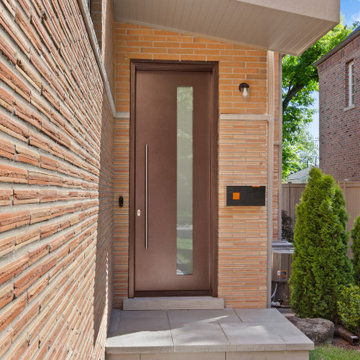
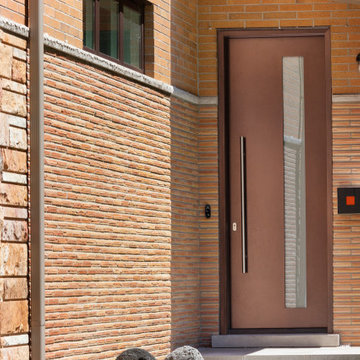
Durability and design are the most important components of every entry door. It is our goal to ensure that our clients do not have to compromise on either of these elements. Our Aluminum clad entry door line offers top of the line safety features that will not only perform beautifully but will have a visually pleasing appearance. This project is located along the lake on the North Shore of Chicago. It was important to provide a door that was aesthetically pleasing and complementary to this modern style home, but to also craft a product that can withstand below zero temperatures and direct sunlight. The duality of this product results in a perfectly secure and insulated entrance.
Durability of Aluminum Clad Entry Doors
Besides the sleek design, our aluminum clad entry door’s have a larger purpose. The durability of our aluminum shield product is unmatched. This shield is attached to our Euro-Tech door slab to ensure for sound insulation, and complete safety. With a thickness of 3-1/2”, our Aluminum Clad entry doors will protect your entryway from harsh elements, as well defend against damage from exposure to direct sunlight. These factors can create wear and tear on solid wood materials and causes aging to the surface. The aluminum shield is a barrier between the exterior elements, and the interior climate. Each aluminum shield has a powder coat finish and is available in any custom color. One feature that is important to note, is that this combination of our Euro-Technology door, paired with the Aluron Shield, creates a very secure and safe entrance.
The Beauty of Glenview Haus’ Aluminum Clad Entry Door
Ideal for residences in Chicago and the North Shore; this door line is built to last and to create a fully
insulated entrance. Our aluminum clad entry doors are incredibly sleek and will appeal to all modern
design enthusiasts. Fully customizable, these doors are guaranteed to stand out. The simple and elegant designs are complementary to Modern and Transitional home architecture.
 Glenview Haus – Custom Doors & Wine Cellars
Durability and design are the most important components of every entry door. It is our goal to ensure that our clients do not have to compromise on either of these elements. Our Aluminum clad entry door line offers top of the line safety features that will not only perform beautifully but will have a visually pleasing appearance. This project is located along the lake on the North Shore of Chicago. It was important to provide a door that was aesthetically pleasing and complementary to this modern style home, but to also craft a product that can withstand below zero temperatures and direct sunlight. The duality of this product results in a perfectly secure and insulated entrance.
Durability of Aluminum Clad Entry Doors
Besides the sleek design, our aluminum clad entry door’s have a larger purpose. The durability of our aluminum shield product is unmatched. This shield is attached to our Euro-Tech door slab to ensure for sound insulation, and complete safety. With a thickness of 3-1/2”, our Aluminum Clad entry doors will protect your entryway from harsh elements, as well defend against damage from exposure to direct sunlight. These factors can create wear and tear on solid wood materials and causes aging to the surface. The aluminum shield is a barrier between the exterior elements, and the interior climate. Each aluminum shield has a powder coat finish and is available in any custom color. One feature that is important to note, is that this combination of our Euro-Technology door, paired with the Aluron Shield, creates a very secure and safe entrance.
The Beauty of Glenview Haus’ Aluminum Clad Entry Door
Ideal for residences in Chicago and the North Shore; this door line is built to last and to create a fully
insulated entrance. Our aluminum clad entry doors are incredibly sleek and will appeal to all modern
design enthusiasts. Fully customizable, these doors are guaranteed to stand out. The simple and elegant designs are complementary to Modern and Transitional home architecture.

 safe ZOnea
Maintaining a pest-free home requires attention throughout the year. Seasonal changes affect pest behavior, and understanding these patterns can save homeowners from costly damage and health hazards. In this guide, we will explore practical strategies for spring pest prevention tips, ensuring your property stays protected through every season. From spotting early signs to implementing proactive measures, these steps empower homeowners to take control before infestations occur.
Understanding Seasonal Pest Patterns
Pests adapt to changing weather, and knowing their patterns helps prevent infestations effectively.
Spring: Awakening Pests
Spring signals the end of winter dormancy for many pests. Rodents, ants, and termites start seeking food and warmth. Effective spring pest prevention tips include:
● Cleaning gutters and removing debris
● Sealing cracks and gaps in exterior walls
● Inspecting wood piles and compost areas
● Monitoring early signs of termite activity
Pro Tip: Conduct a termite inspection or a professional evaluation to catch infestations early before they spread.
Summer: Peak Pest Season
Warm temperatures accelerate pest breeding cycles. For a comprehensive summer pest prevention guide:
● Maintain lawns and trim vegetation away from homes
● Check window and door screens for tears
● Store food in sealed containers
● Inspect water sources that attract mosquitoes
Do You Know? Mosquitoes can lay eggs in a teaspoon of water. Eliminating stagnant water is crucial to reducing their population.
Fall: Preparing for Winter
As temperatures drop, pests search for warm indoor spaces. Key actions include:
● Inspecting for winter rodent entry points
● Sealing attic vents, crawl spaces, and foundation gaps
● Cleaning storage areas to minimize hiding spots
● Checking chimney and fireplace openings
Quick Fact: Rodents can enter homes through openings as small as ¼ inch.
Seasonal Pest Checklist for Homeowners
Creating a structured seasonal pest checklist simplifies preventive measures and ensures nothing is overlooked.
Season
Key Actions
Spring
Inspect for termites, seal exterior gaps, clean gutters, and check compost
Summer
Repair screens, trim vegetation, remove standing water, and secure food
Fall
Seal entry points, inspect attic/crawlspace, clear debris, and prepare storage
Winter
Monitor indoor activity, keep firewood away from walls, and maintain traps
Inspection & Maintenance Tips
● Schedule annual pest inspections by professional Virginia pest control consultation to detect hidden problems
● Keep a log of pest sightings and treatment dates
● Regularly replace weather stripping and caulk cracks
Note: Even small preventive steps, when consistently applied, drastically reduce infestations.
Common Pests and Their Seasonal Behaviors
Understanding how different pests behave each season helps homeowners take timely action to protect their property.
● Ants and Termites: Ants emerge in spring seeking food, while termites become active and can damage wood unnoticed. Early detection is critical.
● Rodents and Mice: Fall and winter increase rodent intrusions. Block all entry points and keep food sealed.
● Mosquitoes and Flies: Summer creates the ideal breeding environment for mosquitoes. Eliminate standing water and use physical barriers like nets.
● Spiders and Other Insects: Seasonal shifts cause spiders to move indoors. Regular vacuuming and decluttering reduce hiding spots.
Eco-Friendly Prevention Methods
● Use natural repellents like peppermint oil or diatomaceous earth
● Encourage beneficial insects, such as ladybugs, to reduce pest populations
● Plant pest-deterring plants near home boundaries, like marigolds or lavender
Integrated Pest Management (IPM)
Adopt an IPM approach by combining physical barriers, monitoring, and environmentally safe treatments. This minimizes chemical use while maintaining a pest-free home.
Quote: “Prevention is the most effective form of pest control.” – National Pest Management Association
Seasonal Pest Prevention Tools
● Snap traps and humane rodent traps
● Sticky traps for insects
● Outdoor perimeter sprays (eco-friendly)
● Moisture meters to detect early termite or mold problems
Pro Tip: Keep tools organized and accessible to act quickly when pest activity is noticed.
Planning: Annual Pest Calendar
Month
Recommended Action
March-April
Spring pest prevention tips: Inspect, seal, clean gutters
June-July
Summer pest prevention guide: Screens, standing water, food storage
September
Seasonal pest checklist: Seal entries, declutter, prep storage
November
Winter rodent entry points: Monitor indoors, maintain traps
Key Takeaways
● Seasonal awareness prevents infestations and property damage
● Consistent inspections and maintenance are essential
● Simple eco-friendly measures can significantly reduce pests
● Use a structured checklist and calendar for effective prevention
Conclusion
Homeowners who stay proactive and follow spring pest prevention tips, along with year-round monitoring, ensure their properties remain safe and comfortable. Using a summer pest prevention guide, checking winter rodent entry points, and maintaining a seasonal pest checklist ensure your home remains safe and comfortable. Remember to combine inspections, physical barriers, and environmentally friendly methods for the best results.
FAQs
Q1: How often should I perform a termite inspection?
A1: Conduct inspections annually, especially in spring, to detect early signs of termite activity and prevent extensive damage.
Q2: Can pests enter my home during winter?
A2: Yes, rodents and insects seek warmth and shelter indoors. Sealing entry points and monitoring for activity is crucial.
Q3: What is the most effective eco-friendly method for pest prevention?
A3: Using natural repellents, encouraging beneficial insects, and eliminating water sources effectively reduces pest populations without chemicals.
Ensure your home is ready for every season. Schedule a professional Virginia pest control consultation or a termite inspection in Suffolk, VA, today and stay ahead of potential infestations.
Sponsored
Sunbury, OH

J.Holderby - Renovations
Franklin County's Leading General Contractors - 2X Best of Houzz!
 Glenview Haus – Custom Doors & Wine Cellars
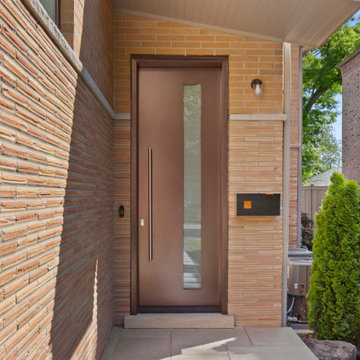
Durability and design are the most important components of every entry door. It is our goal to ensure that our clients do not have to compromise on either of these elements. Our Aluminum clad entry door line offers top of the line safety features that will not only perform beautifully but will have a visually pleasing appearance. This project is located along the lake on the North Shore of Chicago. It was important to provide a door that was aesthetically pleasing and complementary to this modern style home, but to also craft a product that can withstand below zero temperatures and direct sunlight. The duality of this product results in a perfectly secure and insulated entrance.
Durability of Aluminum Clad Entry Doors
Besides the sleek design, our aluminum clad entry door’s have a larger purpose. The durability of our aluminum shield product is unmatched. This shield is attached to our Euro-Tech door slab to ensure for sound insulation, and complete safety. With a thickness of 3-1/2”, our Aluminum Clad entry doors will protect your entryway from harsh elements, as well defend against damage from exposure to direct sunlight. These factors can create wear and tear on solid wood materials and causes aging to the surface. The aluminum shield is a barrier between the exterior elements, and the interior climate. Each aluminum shield has a powder coat finish and is available in any custom color. One feature that is important to note, is that this combination of our Euro-Technology door, paired with the Aluron Shield, creates a very secure and safe entrance.
The Beauty of Glenview Haus’ Aluminum Clad Entry Door
Ideal for residences in Chicago and the North Shore; this door line is built to last and to create a fully
insulated entrance. Our aluminum clad entry doors are incredibly sleek and will appeal to all modern
design enthusiasts. Fully customizable, these doors are guaranteed to stand out. The simple and elegant designs are complementary to Modern and Transitional home architecture.
 Glenview Haus – Custom Doors & Wine Cellars
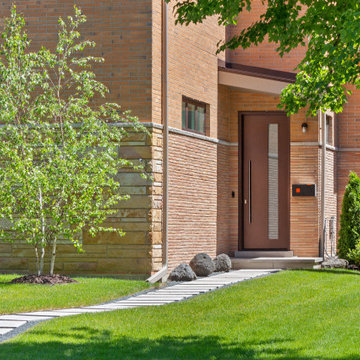
Durability and design are the most important components of every entry door. It is our goal to ensure that our clients do not have to compromise on either of these elements. Our Aluminum clad entry door line offers top of the line safety features that will not only perform beautifully but will have a visually pleasing appearance. This project is located along the lake on the North Shore of Chicago. It was important to provide a door that was aesthetically pleasing and complementary to this modern style home, but to also craft a product that can withstand below zero temperatures and direct sunlight. The duality of this product results in a perfectly secure and insulated entrance.
Durability of Aluminum Clad Entry Doors
Besides the sleek design, our aluminum clad entry door’s have a larger purpose. The durability of our aluminum shield product is unmatched. This shield is attached to our Euro-Tech door slab to ensure for sound insulation, and complete safety. With a thickness of 3-1/2”, our Aluminum Clad entry doors will protect your entryway from harsh elements, as well defend against damage from exposure to direct sunlight. These factors can create wear and tear on solid wood materials and causes aging to the surface. The aluminum shield is a barrier between the exterior elements, and the interior climate. Each aluminum shield has a powder coat finish and is available in any custom color. One feature that is important to note, is that this combination of our Euro-Technology door, paired with the Aluron Shield, creates a very secure and safe entrance.
The Beauty of Glenview Haus’ Aluminum Clad Entry Door
Ideal for residences in Chicago and the North Shore; this door line is built to last and to create a fully
insulated entrance. Our aluminum clad entry doors are incredibly sleek and will appeal to all modern
design enthusiasts. Fully customizable, these doors are guaranteed to stand out. The simple and elegant designs are complementary to Modern and Transitional home architecture.

 SHIFT_DESIGN
Laser-cut shower screen
Inspiration for a small modern backyard landscaping in Philadelphia.
Inspiration for a small modern backyard landscaping in Philadelphia.


 Glenview Haus – Custom Doors & Wine Cellars
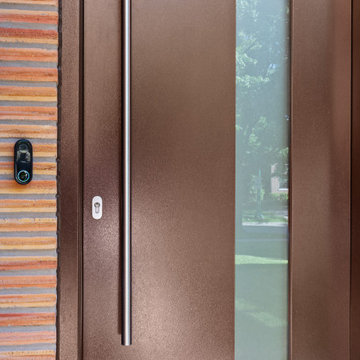
Durability and design are the most important components of every entry door. It is our goal to ensure that our clients do not have to compromise on either of these elements. Our Aluminum clad entry door line offers top of the line safety features that will not only perform beautifully but will have a visually pleasing appearance. This project is located along the lake on the North Shore of Chicago. It was important to provide a door that was aesthetically pleasing and complementary to this modern style home, but to also craft a product that can withstand below zero temperatures and direct sunlight. The duality of this product results in a perfectly secure and insulated entrance.
Durability of Aluminum Clad Entry Doors
Besides the sleek design, our aluminum clad entry door’s have a larger purpose. The durability of our aluminum shield product is unmatched. This shield is attached to our Euro-Tech door slab to ensure for sound insulation, and complete safety. With a thickness of 3-1/2”, our Aluminum Clad entry doors will protect your entryway from harsh elements, as well defend against damage from exposure to direct sunlight. These factors can create wear and tear on solid wood materials and causes aging to the surface. The aluminum shield is a barrier between the exterior elements, and the interior climate. Each aluminum shield has a powder coat finish and is available in any custom color. One feature that is important to note, is that this combination of our Euro-Technology door, paired with the Aluron Shield, creates a very secure and safe entrance.
The Beauty of Glenview Haus’ Aluminum Clad Entry Door
Ideal for residences in Chicago and the North Shore; this door line is built to last and to create a fully
insulated entrance. Our aluminum clad entry doors are incredibly sleek and will appeal to all modern
design enthusiasts. Fully customizable, these doors are guaranteed to stand out. The simple and elegant designs are complementary to Modern and Transitional home architecture.
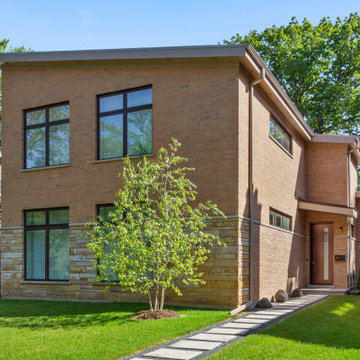 Glenview Haus – Custom Doors & Wine Cellars
Durability and design are the most important components of every entry door. It is our goal to ensure that our clients do not have to compromise on either of these elements. Our Aluminum clad entry door line offers top of the line safety features that will not only perform beautifully but will have a visually pleasing appearance. This project is located along the lake on the North Shore of Chicago. It was important to provide a door that was aesthetically pleasing and complementary to this modern style home, but to also craft a product that can withstand below zero temperatures and direct sunlight. The duality of this product results in a perfectly secure and insulated entrance.
Durability of Aluminum Clad Entry Doors
Besides the sleek design, our aluminum clad entry door’s have a larger purpose. The durability of our aluminum shield product is unmatched. This shield is attached to our Euro-Tech door slab to ensure for sound insulation, and complete safety. With a thickness of 3-1/2”, our Aluminum Clad entry doors will protect your entryway from harsh elements, as well defend against damage from exposure to direct sunlight. These factors can create wear and tear on solid wood materials and causes aging to the surface. The aluminum shield is a barrier between the exterior elements, and the interior climate. Each aluminum shield has a powder coat finish and is available in any custom color. One feature that is important to note, is that this combination of our Euro-Technology door, paired with the Aluron Shield, creates a very secure and safe entrance.
The Beauty of Glenview Haus’ Aluminum Clad Entry Door
Ideal for residences in Chicago and the North Shore; this door line is built to last and to create a fully
insulated entrance. Our aluminum clad entry doors are incredibly sleek and will appeal to all modern
design enthusiasts. Fully customizable, these doors are guaranteed to stand out. The simple and elegant designs are complementary to Modern and Transitional home architecture.
Sponsored
Sunbury, OH
J.Holderby - Renovations
Franklin County's Leading General Contractors - 2X Best of Houzz!
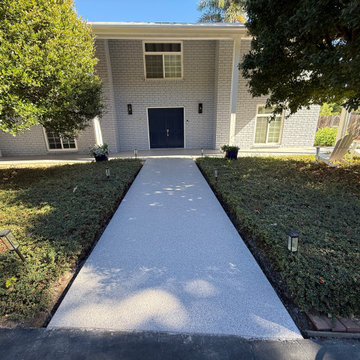
 C&N Decorative Concrete
Comprehensive mechanical restoration and decorative resurfacing of an exterior front entryway and connecting pedestrian pathways in Goleta, California. The existing concrete porch presented extensive structural fracturing and surface wear, while the adjoining perimeter walkways required complete visual and functional integration. Work began with dustless mechanical surface profiling across the entire slab footprint using commercial rotary diamond grinders tethered directly to HEPA source-capture dust extractors. All settlement cracks were mechanically routed, cleared, and repaired with structural resin to stabilize the substrate and permanently arrest reflective cracking through the new surface. Due to Goleta's coastal soil moisture levels, the prepped slab was primed with a 100%-solids moisture-block epoxy base coat to form an impenetrable vapor barrier against subterranean hydrostatic pressure. The wet matrix received a 100% full broadcast of multi-tone decorative vinyl flakes, followed by mechanical scraping and profiling to achieve an even, polished-flake texture underfoot. The restoration was sealed with a heavy-duty, UV-stable matte polyaspartic clear topcoat. The polyaspartic chemistry guarantees zero ambering under direct solar exposure, while the matte sheen cuts surface glare and delivers a sleek, architectural finish engineered for lasting abrasion resistance, moisture defense, and continuous curb appeal from the side gates to the front door. Execution Specifications:Substrate Preparation: Rotary planetary diamond grinding with industrial HEPA dust containment Crack Remediation: Mechanical chase routing and structural crack stabilization Vapor Defense: Moisture-mitigation epoxy primerBroadcast Layer: Full-coverage multi-tone vinyl flake matrix, mechanically profiled Protective Finish: Commercial-grade, non-yellowing matte polyaspartic clear coat Contractor: C&N Decorative Concrete | CSLB #908395 | 25+ Years Experience
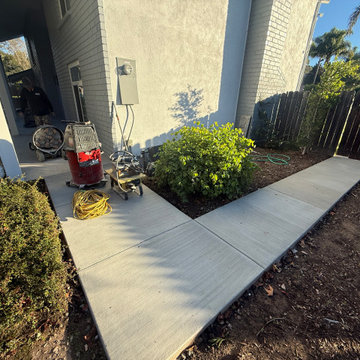 C&N Decorative Concrete
Comprehensive mechanical restoration and decorative resurfacing of an exterior front entryway and connecting pedestrian pathways in Goleta, California. The existing concrete porch presented extensive structural fracturing and surface wear, while the adjoining perimeter walkways required complete visual and functional integration. Work began with dustless mechanical surface profiling across the entire slab footprint using commercial rotary diamond grinders tethered directly to HEPA source-capture dust extractors. All settlement cracks were mechanically routed, cleared, and repaired with structural resin to stabilize the substrate and permanently arrest reflective cracking through the new surface. Due to Goleta's coastal soil moisture levels, the prepped slab was primed with a 100%-solids moisture-block epoxy base coat to form an impenetrable vapor barrier against subterranean hydrostatic pressure. The wet matrix received a 100% full broadcast of multi-tone decorative vinyl flakes, followed by mechanical scraping and profiling to achieve an even, polished-flake texture underfoot. The restoration was sealed with a heavy-duty, UV-stable matte polyaspartic clear topcoat. The polyaspartic chemistry guarantees zero ambering under direct solar exposure, while the matte sheen cuts surface glare and delivers a sleek, architectural finish engineered for lasting abrasion resistance, moisture defense, and continuous curb appeal from the side gates to the front door. Execution Specifications:Substrate Preparation: Rotary planetary diamond grinding with industrial HEPA dust containment Crack Remediation: Mechanical chase routing and structural crack stabilization Vapor Defense: Moisture-mitigation epoxy primerBroadcast Layer: Full-coverage multi-tone vinyl flake matrix, mechanically profiled Protective Finish: Commercial-grade, non-yellowing matte polyaspartic clear coat Contractor: C&N Decorative Concrete | CSLB #908395 | 25+ Years Experience
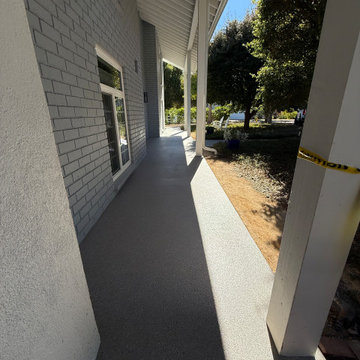 C&N Decorative Concrete
Comprehensive mechanical restoration and decorative resurfacing of an exterior front entryway and connecting pedestrian pathways in Goleta, California. The existing concrete porch presented extensive structural fracturing and surface wear, while the adjoining perimeter walkways required complete visual and functional integration. Work began with dustless mechanical surface profiling across the entire slab footprint using commercial rotary diamond grinders tethered directly to HEPA source-capture dust extractors. All settlement cracks were mechanically routed, cleared, and repaired with structural resin to stabilize the substrate and permanently arrest reflective cracking through the new surface. Due to Goleta's coastal soil moisture levels, the prepped slab was primed with a 100%-solids moisture-block epoxy base coat to form an impenetrable vapor barrier against subterranean hydrostatic pressure. The wet matrix received a 100% full broadcast of multi-tone decorative vinyl flakes, followed by mechanical scraping and profiling to achieve an even, polished-flake texture underfoot. The restoration was sealed with a heavy-duty, UV-stable matte polyaspartic clear topcoat. The polyaspartic chemistry guarantees zero ambering under direct solar exposure, while the matte sheen cuts surface glare and delivers a sleek, architectural finish engineered for lasting abrasion resistance, moisture defense, and continuous curb appeal from the side gates to the front door. Execution Specifications:Substrate Preparation: Rotary planetary diamond grinding with industrial HEPA dust containment Crack Remediation: Mechanical chase routing and structural crack stabilization Vapor Defense: Moisture-mitigation epoxy primerBroadcast Layer: Full-coverage multi-tone vinyl flake matrix, mechanically profiled Protective Finish: Commercial-grade, non-yellowing matte polyaspartic clear coat Contractor: C&N Decorative Concrete | CSLB #908395 | 25+ Years Experience

 Vintage Cellars - Luxury Custom Wine Cellars LA
We created a stellar custom small wine cellar design for a couple who had lost their home and wine collection in the wildfires in Rancho Bernardo in North County San Diego, California in 2007. We encountered some challenges in this project.
The room where the client wanted to build the wine cellar was relatively small, and we needed to hide a beam that runs through the left wall. We provided a wine storage solution that solved the construction issues and met our client's requirements.
This glass enclosed, contemporary yet rustic small wine room features magnum storage, individual bottle redwood wine racking, diamond bins, wine case storage, horizontal displays, as well as a section in the wall for liquor storage. Wine Cellar Builders at Vintage Cellars were able to construct this wine room after bumping out a wall in the client's kitchen for additional storage space. This added 80 square feet more to the tiny room on the second floor.
We framed the small wine closet before installing the racking for the Rancho Bernardo San Diego California wine cellar. We also installed the proper insulation and vapor barrier to protect our client's wine from damage, and to prevent wine cooling system or wine cooling unit breakdowns.
Vintage Cellars has built gorgeous custom wine cellars and wine storage rooms across the United States and World for over 25 years. We are your go-to business for anything wine cellar and wine storage related! Whether you're interested in a wine closet, wine racking, custom wine racks, a custom wine cellar door, or a cooling system for your existing space, Vintage Cellars has you covered!
We carry all kinds of wine cellar cooling and refrigeration systems, incuding: Breezaire, CellarCool, WhisperKool, Wine Guardian, CellarPro and Commercial systems.
We also carry many types of Wine Refrigerators, Wine Cabinets, and wine racking types, including La Cache, Marvel, N'Finity, Transtherm, Vinotheque, Vintage Series, Credenza, Walk in wine rooms, Climadiff, Riedel, Fontenay, and VintageView.
Vintage Cellars also does work in many styles, including Contemporary and Modern, Rustic, Farmhouse, Traditional, Craftsman, Industrial, Mediterranean, Mid-Century, Industrial and Eclectic.
Some locations we cover often include: San Diego, Rancho Santa Fe, Corona Del Mar, Del Mar, La Jolla, Newport Beach, Newport Coast, Huntington Beach, Del Mar, Solana Beach, Carlsbad, Orange County, Beverly Hills, Malibu, Pacific Palisades, Santa Monica, Bel Air, Los Angeles, Encinitas, Cardiff, Coronado, Manhattan Beach, Palos Verdes, San Marino, Ladera Heights, Santa Monica, Brentwood, Westwood, Hancock Park, Laguna Beach, Crystal Cove, Laguna Niguel, Torrey Pines, Thousand Oaks, Coto De Caza, Coronado Island, San Francisco, Danville, Walnut Creek, Marin, Tiburon, Hillsborough, Berkeley, Oakland, Napa, Sonoma, Agoura Hills, Hollywood Hills, Laurel Canyon, Sausalito, Mill Valley, San Rafael, Piedmont, Paso Robles, Carmel, Pebble Beach
Contact Vintage Cellars today with any of your Wine Cellar needs!
(800) 876-8789
Vintage Cellars
904 Rancheros Drive
San Marcos, California 92069
(800) 876-8789
 C&N Decorative Concrete
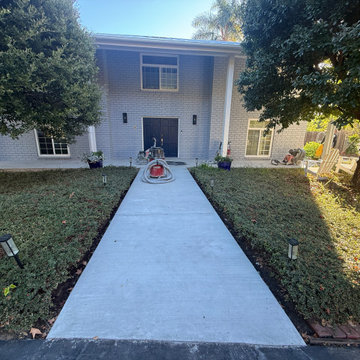
Comprehensive mechanical restoration and decorative resurfacing of an exterior front entryway and connecting pedestrian pathways in Goleta, California. The existing concrete porch presented extensive structural fracturing and surface wear, while the adjoining perimeter walkways required complete visual and functional integration. Work began with dustless mechanical surface profiling across the entire slab footprint using commercial rotary diamond grinders tethered directly to HEPA source-capture dust extractors. All settlement cracks were mechanically routed, cleared, and repaired with structural resin to stabilize the substrate and permanently arrest reflective cracking through the new surface. Due to Goleta's coastal soil moisture levels, the prepped slab was primed with a 100%-solids moisture-block epoxy base coat to form an impenetrable vapor barrier against subterranean hydrostatic pressure. The wet matrix received a 100% full broadcast of multi-tone decorative vinyl flakes, followed by mechanical scraping and profiling to achieve an even, polished-flake texture underfoot. The restoration was sealed with a heavy-duty, UV-stable matte polyaspartic clear topcoat. The polyaspartic chemistry guarantees zero ambering under direct solar exposure, while the matte sheen cuts surface glare and delivers a sleek, architectural finish engineered for lasting abrasion resistance, moisture defense, and continuous curb appeal from the side gates to the front door. Execution Specifications:Substrate Preparation: Rotary planetary diamond grinding with industrial HEPA dust containment Crack Remediation: Mechanical chase routing and structural crack stabilization Vapor Defense: Moisture-mitigation epoxy primerBroadcast Layer: Full-coverage multi-tone vinyl flake matrix, mechanically profiled Protective Finish: Commercial-grade, non-yellowing matte polyaspartic clear coat Contractor: C&N Decorative Concrete | CSLB #908395 | 25+ Years Experience
 Five Star Tree Care
Winter has arrived and this means many months of snow and ice are ahead. When trees shed their leaves and go dormant for the winter, this is like how bears hibernate; they are both sleeping through the cold and waiting until the warm spring weather comes back. But unlike hibernating bears, who are safe and snuggled up in a warm cave somewhere, trees are left to withstand the harsh, cold elements throughout the entire winter. This means that they are more impacted than you might believe.
It is easier for mature trees to be able to handle the long winter months due to their extensive root system and thick bark. But saplings and other newly planted trees are not yet fully equipped with these natural defenses to handle the cold. No matter if you have new or older trees, following our tips will help them prosper during the cold Canadian winter ahead. Our team at Five Star Tree Services has come up with some winter maintenance essentials for your trees that will give them an extra hand over the winter.
One Last Water
Getting one last good watering in before the ground freezes is helpful to newly planted and young trees. Always make sure to water your tree slowly and gently. This allows the water to seep down into the root system as opposed to it running off the top and freezing.
Apply Mulch
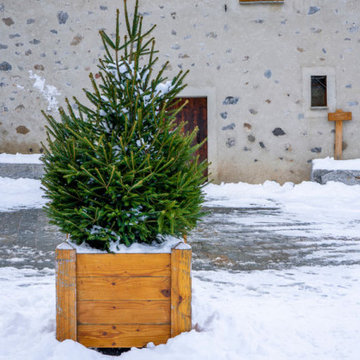
When you use mulch, it acts like a barrier between the tree roots and the cold snow, it helps to insulate it. When you are applying mulch, make sure you spread it around the base of the tree so that it is no more than 3 inches deep. You also need to make sure to spread the mulch all the way to the drip line surrounding the tree. Make sure to not exceed 3 inches around your entire tree and keep the mulch away from the trunk of the tree.
Wrap Tree Trunks
There is a condition called sunscalding that can occur during the winter months. This happens when there is a temperature change that happens quickly. You might notice it when the sun warms the trees, which thaws the bark but during the night, when it gets cold again, it causes the melted water in the bark to rupture, causing cracks in the tree’s trunk. Young trees are especially susceptible to this happening. To help stop this from happening, it is best to wrap your trees with tree wraps or a plastic guard. It is advisable to wrap the trunk from the ground up and stop just below the first branch.
Shelter Your Trees
Young or newly planted trees are fairly defenseless for the first handful of years. Older and more mature trees have had time to develop a strong root system and hardy bark that help to protect them against things like animals and the freezing cold. If you want to help your little sapling along this winter, you can build a shelter that can handle having snow piled on it. You can also periodically use a broom to brush off the snow that accumulates on a tree’s branches. But try to avoid breaking off any ice that has formed on the branches, as this can actually end up hurting the tree if you accidentally break one of its branches instead.
Keep Road Salt Away
It’s no big secret that the use of road salt is detrimental to trees. When it gets on them, the end result come springtime is a dead tree, or at least, a severely damaged one. As much as you can, protect your trees and limit their exposure to salt over the winter.
Protect Your Trees
Winter is not only limiting for trees, but for a lot of other animals as well. This includes rabbits, mice, moles, squirrels, and other furry little creatures, who like to use trees as a food source during the summer months. During the winter, this food is now cut off when the trees go dormant. This only leaves the tree’s bark as an alternative food source for these critters. They seem to especially like young tree bark to chew on over the winter. In order to stop this from happening, you need to protect the bark with things like a fence surrounding your tree, wrapping the trunk with a plastic guard or hardware cloth.
Winter Pruning
The best time to prune any tree is during the winter months when the tree is dormant. Pruning allows you to rid the tree of any excess branches and control disease. Winter pruning is highly beneficial and lets your tree improve branch development in the spring.
Don’t Use
Always make sure to avoid products that are known to hurt trees, especially ones containing sodium chloride. Products like that cause negative reactions in trees or any plants, as it hinders their water intake. Instead, look for products that have potassium, calcium, and magnesium chloride.
How Five Star Tree Services Can Help
For newly planted and young trees, it is especially important to help them through the winter as best you can. We here at Five Star Tree Services are here to help you get your trees through the winter. If you require Toronto Tree Care, make sure to give us a call at (416) 990-3355.

 ILT Vignocchi
Weeping mortared joints
This is an example of a large traditional full sun backyard stone formal garden in Chicago for summer.
This is an example of a large traditional full sun backyard stone formal garden in Chicago for summer.
34