
Search results for "Proteins" in Home Design Ideas

 Clawson Architects, LLC
This kitchen truly is the Hub!. Open to Dining Room with the Front door and Formal Living Room to one side and the Family room with glass pocket doors and glass transom to divide when needed. The Sage Woodharbor Cabinets for Clawson Cabinets create a showstopping kitchen.
Glass door reflect light and allow for the display of beautiful dishes and serving pieces and eliminate the hunt for guests trying to be helpful. The coffee, blender and toaster are easily accessible in what we like to call the “Self Help Zone” be it toasting your bagel, making your protein shake or grabbing a cup of coffee. Counter clutter is minimized as the retracting doors can be closed when you are finished. Cabinets by Woodharbor

 Savvy Giving by Design
Baylen is 9 years old and was diagnosed at age 6 with Duchenne Muscular Dystrophy (DMD) in October 2020, in the middle of the pandemic. DMD is a rare disease caused by a genetic mutation that prevents the body from producing a protein called Dystrophin, to which there is currently no cure. In lieu of Dystrophin, his muscles are slowly being encompassed with scar tissue. Without Dystrophin the scar tissue will eventually take over his muscles until they cannot perform adequately for his body.

 harry schott
Running a small restaurant is a high-wire act - delicious plates on one end, razor-thin margins on the other. With food costs averaging 28-35 percent of revenue and labor at 30 percent, every dollar counts. The good news? Targeted tweaks can shave 10-20 percent off your bottom line without sacrificing quality. From smarter sourcing to streamlined waste handling, these strategies empower independents to thrive. One underrated gem: Efficient waste management via roll-off dumpster rentals, which can slash disposal fees by up to 40 percent. Let's break it down.
Optimize Inventory: Waste Less, Save More
Overstocked pantries are profit killers - U.S. restaurants toss $25 billion in food yearly. Audit weekly. Track sales data to forecast demand, using apps like Toast or MarketMan for real-time insights. Trim your menu to 12-15 core items, focusing on seasonal, high-margin stars like farm-fresh salads over imported proteins. Portion control is key - pre-weighed scoops cut overuse by 15 percent.
Repurpose scraps creatively. Veggie peels into stocks, bread ends for croutons. Donate extras to food banks via apps like Too Good To Go, earning tax deductions up to $5,000 annually. These habits reclaim 5-10 percent of food budgets, freeing cash for upgrades. Additionally, consider using citrus rinds for infused oils or desserts, and coffee grounds for compost to support local gardens. Engaging staff in sustainability efforts also builds morale and can be highlighted in marketing materials to attract eco-conscious diners.
Trim Energy and Utilities: Go Green for Greenbacks
Utilities gobble 4-10 percent of expenses. Swap to LED bulbs and energy-star appliances - upfront costs pay back in 6-12 months via 20-30 percent bill drops. Install low-flow faucets and programmable thermostats; during off-hours, dial down to 55°F to save $200/month on HVAC.
Use induction cooktops for precise heat, reducing gas by 15 percent. Train staff on "last out" protocols - unplugging idle equipment. Solar panels? For rooftops under 1,000 sq ft, incentives cover 30 percent installation, yielding ROI in 5 years.
Master Waste Management: Dumpsters as Cost Commanders
Trash isn't just garbage - it's a budget black hole, with disposal eating 2-5 percent of revenues. Small spots generate 1-2 tons monthly from food scraps, packaging, and grease. Ditch overflowing bins and irregular hauls for roll-off dumpster rentals. A 10-15 yard unit centralizes waste, handling bulk like fryer oil drums or produce crates without daily pickups.
Efficiency Over Headcount
Labor's your biggest line item - cross-train staff for multi-roles, like servers prepping during lulls, trimming overtime 10-15 percent. Shift scheduling software optimizes based on reservations, avoiding idle payroll.
Negotiate bulk buys with local suppliers for 5-10 percent discounts; loyalty programs from Sysco yield free deliveries. Go digital - QR menus cut printing costs, speed table turnover, and allow menu updates in real time without waste. Loyalty apps boost repeat visits without increasing your advertising budget, making it easier to track customer preferences and send targeted promotions. Consider bundling purchases with other area restaurants to unlock deeper discounts and leverage supplier relationships for exclusive seasonal specials. These strategies can reduce overhead, improve customer retention, and keep operations flexible as trends shift.
Find the right local pro for your project
 Muna Home
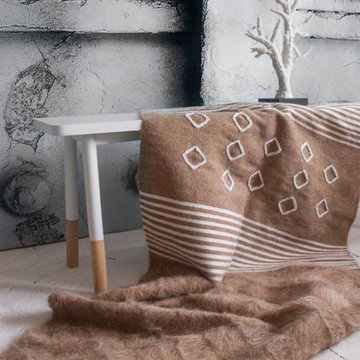
These luxury authentic flat-weave collection represent an ancient method of creating a faux animal hair pile which was widespread amongst nomads from Central Asia to Turkey. Woven with cotton warps and Angora goat hair wefts. The goat hair creates the long haired fur-like look. Angora goats are named after the Turkish province of their origin, Ankara and these goats produce the fibre known as mohair. The lustrous hair of the angora goat occurs in every natural shade ranging from black through browns to white, thus making possible a wide variety of colour-schemes with no dyes.
More about Mohair…
Mohair is one of the oldest textile fibres in use. The Angora goat is thought to originate from the mountains of Tibet, reaching Turkey in the 16th century. Mohair is warm in winter as it has great insulating properties, while remaining cool in summer due to its moisture wicking properties. It’s possible to use double-side, hairy side for winter, woven side for summer. It is durable, naturally elastic, flame resistant, crease resistant, and does not felt.
It is a luxury fiber, like cashmere, angora and silk, and is more expensive than most wools that comes from sheep. Mohair is composed mostly of keratin, a protein found in the hair, wool, horns and skin of all mammals.
 Savvy Giving by Design
Baylen is 9 years old and was diagnosed at age 6 with Duchenne Muscular Dystrophy (DMD) in October 2020, in the middle of the pandemic. DMD is a rare disease caused by a genetic mutation that prevents the body from producing a protein called Dystrophin, to which there is currently no cure. In lieu of Dystrophin, his muscles are slowly being encompassed with scar tissue. Without Dystrophin the scar tissue will eventually take over his muscles until they cannot perform adequately for his body.
Since his diagnosis, he has taken to lego building and gaming, which are activities he can participate in without causing any damage to his muscles. Unfortunately the game room in his house is located upstairs while his room is located downstairs making it difficult for him to participate in these activities without assistance or pain from walking up the stairs.
One of the biggest issues is at night, when his legs are in pain, he ends up in his parents room which prevents anyone from getting a restful night's sleep. A room where he feels comfortable and safe would greatly help both him and his parents. It would also be beneficial for his room to have more space for lego building and play video games without having to walk up the stairs.

 Orion Design, Inc.
Ryan Hill 8183 Studio
Trendy kitchen photo in Kansas City with an undermount sink, flat-panel cabinets, medium tone wood cabinets, green backsplash, stainless steel appliances and a peninsula
Trendy kitchen photo in Kansas City with an undermount sink, flat-panel cabinets, medium tone wood cabinets, green backsplash, stainless steel appliances and a peninsula
 Sproutly Meals
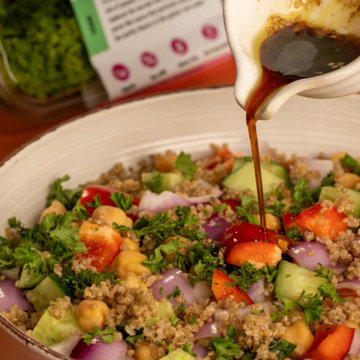
Imagine finishing a long workday and coming home to a colorful plate filled with fresh vegetables, protein-packed lentils, and whole grains, all without lifting a finger. That’s the beauty of plant-based meals delivered straight to your door. A plant-based diet isn’t just about eating vegetables; it’s about fueling your body with nature’s best ingredients. From vibrant salads to hearty lentil bowls, every bite carries nutrition that supports energy, weight management, and long-term wellness. Many busy professionals and families are turning to plant-based meal delivery services because they want to eat clean without spending hours in the kitchen. This lifestyle is also eco-friendly, as plant-based food reduces your carbon footprint and supports sustainability. With each dish, you’re not only nourishing your body but also contributing to a healthier planet. Whether you’re new to plant-based diets or already love them, having plant-based meals delivered makes healthy living easier and more exciting.

 Soda Pop Design Inc.
Custom design by Cynthia Soda of Soda Pop Design Inc. in Toronto, Canada. Photography by Stephani Buchman Photography.
Living room - large transitional open concept medium tone wood floor living room idea in Toronto with no fireplace, a wall-mounted tv and white walls
Living room - large transitional open concept medium tone wood floor living room idea in Toronto with no fireplace, a wall-mounted tv and white walls
 Muna Home
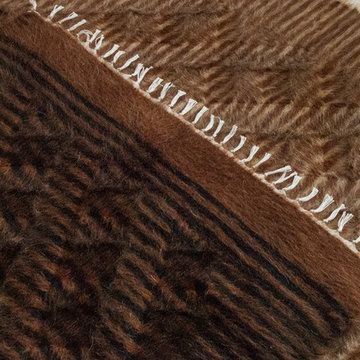
These luxury authentic flat-weave collection represent an ancient method of creating a faux animal hair pile which was widespread amongst nomads from Central Asia to Turkey. Woven with cotton warps and Angora goat hair wefts. The goat hair creates the long haired fur-like look. Angora goats are named after the Turkish province of their origin, Ankara and these goats produce the fibre known as mohair. The lustrous hair of the angora goat occurs in every natural shade ranging from black through browns to white, thus making possible a wide variety of colour-schemes with no dyes.
More about Mohair…
Mohair is one of the oldest textile fibres in use. The Angora goat is thought to originate from the mountains of Tibet, reaching Turkey in the 16th century. Mohair is warm in winter as it has great insulating properties, while remaining cool in summer due to its moisture wicking properties. It’s possible to use double-side, hairy side for winter, woven side for summer. It is durable, naturally elastic, flame resistant, crease resistant, and does not felt.
It is a luxury fiber, like cashmere, angora and silk, and is more expensive than most wools that comes from sheep. Mohair is composed mostly of keratin, a protein found in the hair, wool, horns and skin of all mammals.
 Muna Home
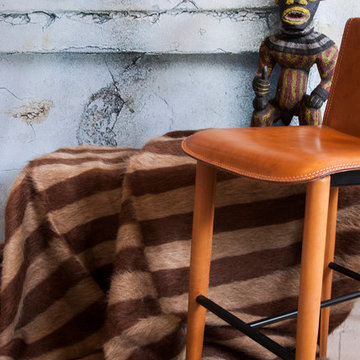
These luxury authentic flat-weave collection represent an ancient method of creating a faux animal hair pile which was widespread amongst nomads from Central Asia to Turkey. Woven with cotton warps and Angora goat hair wefts. The goat hair creates the long haired fur-like look. Angora goats are named after the Turkish province of their origin, Ankara and these goats produce the fibre known as mohair. The lustrous hair of the angora goat occurs in every natural shade ranging from black through browns to white, thus making possible a wide variety of colour-schemes with no dyes.
More about Mohair…
Mohair is one of the oldest textile fibres in use. The Angora goat is thought to originate from the mountains of Tibet, reaching Turkey in the 16th century. Mohair is warm in winter as it has great insulating properties, while remaining cool in summer due to its moisture wicking properties. It’s possible to use double-side, hairy side for winter, woven side for summer. It is durable, naturally elastic, flame resistant, crease resistant, and does not felt.
It is a luxury fiber, like cashmere, angora and silk, and is more expensive than most wools that comes from sheep. Mohair is composed mostly of keratin, a protein found in the hair, wool, horns and skin of all mammals.
 Muna Home
These luxury authentic flat-weave collection represent an ancient method of creating a faux animal hair pile which was widespread amongst nomads from Central Asia to Turkey. Woven with cotton warps and Angora goat hair wefts. The goat hair creates the long haired fur-like look. Angora goats are named after the Turkish province of their origin, Ankara and these goats produce the fibre known as mohair. The lustrous hair of the angora goat occurs in every natural shade ranging from black through browns to white, thus making possible a wide variety of colour-schemes with no dyes.
More about Mohair…
Mohair is one of the oldest textile fibres in use. The Angora goat is thought to originate from the mountains of Tibet, reaching Turkey in the 16th century. Mohair is warm in winter as it has great insulating properties, while remaining cool in summer due to its moisture wicking properties. It’s possible to use double-side, hairy side for winter, woven side for summer. It is durable, naturally elastic, flame resistant, crease resistant, and does not felt.
It is a luxury fiber, like cashmere, angora and silk, and is more expensive than most wools that comes from sheep. Mohair is composed mostly of keratin, a protein found in the hair, wool, horns and skin of all mammals.
 gardenaar
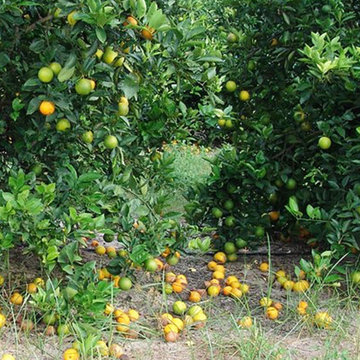
Does your orange tree drop its fruit before it reaches full size, or worse, does it drop flowers before the fruit starts to form?
Trees photosynthesize to produce carbohydrates like sugar which they store as a source of energy. They can maintain a limited amount, which is used to drive the growth of new leaves, branches, roots and stem. Fruitfulness requires the tree to divert its limited energy sources away from these vital functions to the production of flowers, blossoms and fruits.
Fruit development involves maturity followed by fertilization, growth, maturity and maturity. This process takes between 6-7 months in warmer climates, which requires a large number of tree energy sources as a result.
Trees are able to manage their resources, and will also divert them to emergencies ...
Fruit Drop and Crop Depression
In regions where oranges produce one crop per year, they go through a series of growth stages as follows:
Sprout formation and flower launching (mid-winter)
Flowers and fruit set (early spring)
Fruit growth - cell division (late spring to early summer)
Fruit growth - cell proliferation (mid-summer to early autumn)
Fruit ripening (autumn to late winter)
The difference is in the regions where most citrus crops are produced year-round. In these cases, the different stages of development will take place simultaneously.
The orange tree can handle its plant load well, and it will bear as much fruit as we can support. It is natural for all citrus trees to produce too little fruit and too little flowers in early spring to prevent overproduction. There is no need to worry too much about flowering, as an orange tree needs only 1% to 2% of flowers to produce a good crop, and sometimes even less than 1% is enough.
If a tree is depressed because it does not get enough water in hot, dry weather, and if it dies of nitrogen starvation because it is not given enough fertilizer, fruit set will be very difficult in the spring. There may also be a small number of fruit losses in the summer under stressful conditions.
Solution: Provide enough water, and water often in hot weather and strong winds. Orange feed with moderate fertilizer in early spring (September in Southern hemisphere, March in the Northern Hemisphere)
Fruit Drop and Lack of Potassium Nutrient
When orange trees are heavy, the decline in fruit can be exacerbated by low potassium levels.
Potassium, also known as potash (represented by the chemical mark K on fertilizer labels meaning N-P-K or nitrogen-phosphorus-potassium ratio) is a major macronutrient needed for flowering and fruit formation. Next to nitrogen, plants absorb more potassium than any other nutrient. Without potassium, the trees stop flowering and fruiting, which is what happens if they are not fed regularly.
Before any smug horticulturist declares to you that potassium has no direct effect on flowering and fruit set, let me say that as a horticulturist and biochemist, plant chemistry, like the chemistry of all living things is complex, but some input it is necessary to produce certain results. , and the references I have made to the end of this article support what I am saying!
Entering science, Potassium (K) is essential for water, nutrients and the movement of carbohydrates in plant tissues. It also activates enzymes that facilitate the synthesis of complex chemicals within the plant - such as starch, protein and adenosine triphosphate (ATP) production. The role of ATP is to transport the energy needed for all cellular metabolic activities to all living things, and in plants ATP production can regulate the level of photosynthesis.
Potassium also helps regulate the opening and closing of stomata, holes or cavities under which oxygen and carbon dioxide are exchanged with the atmosphere, and respiratory losses are controlled. It increases root growth which increases the absorption of nutrients and improves drought resistance, and increases resistance to frost, pests and diseases. High potassium levels produce similar maturity and fruit growth rate, as well as better nutritional quality, taste and range.
Agricultural extension agencies suggest that large amounts of potash are needed in many crops, and that potassium deficiency or macronutrient deficiency leads to reduced crop growth and reduced yields, and that potassium levels not only affect yield, but fruit size, juice. quality and shelf life.
Since potassium plays an important role in water regulation, deficiency can clearly increase the pressures associated with the declining fruit mentioned in the previous section.
Solution: Make sure that the orange trees are fertilized with the right fertilizer as previously discussed. Extra potassium can be brought in using seaweed extract (which is not a fertilizer but contains a good amount of potassium), wood ash (used in small quantities only as it is very alkaline), or potash sulphate (potassium sulphate) - all this is guaranteed. as acceptable in a natural garden.
Never use potassium chloride as it can be harmful to plants, it is a very inexpensive alternative to fertilizer manufacturers to save money!
Even if there are sufficient levels of potassium in the soil, it may not be accessible to plants, unless we make some improvements.
 Muna Home
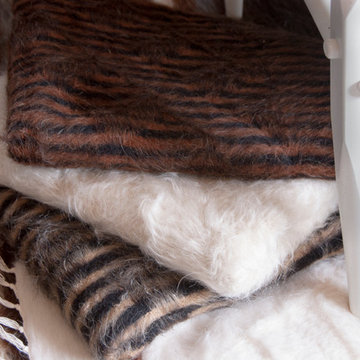
These luxury authentic flat-weave collection represent an ancient method of creating a faux animal hair pile which was widespread amongst nomads from Central Asia to Turkey. Woven with cotton warps and Angora goat hair wefts. The goat hair creates the long haired fur-like look. Angora goats are named after the Turkish province of their origin, Ankara and these goats produce the fibre known as mohair. The lustrous hair of the angora goat occurs in every natural shade ranging from black through browns to white, thus making possible a wide variety of colour-schemes with no dyes.
More about Mohair…
Mohair is one of the oldest textile fibres in use. The Angora goat is thought to originate from the mountains of Tibet, reaching Turkey in the 16th century. Mohair is warm in winter as it has great insulating properties, while remaining cool in summer due to its moisture wicking properties. It’s possible to use double-side, hairy side for winter, woven side for summer. It is durable, naturally elastic, flame resistant, crease resistant, and does not felt.
It is a luxury fiber, like cashmere, angora and silk, and is more expensive than most wools that comes from sheep. Mohair is composed mostly of keratin, a protein found in the hair, wool, horns and skin of all mammals.
 Muna Home
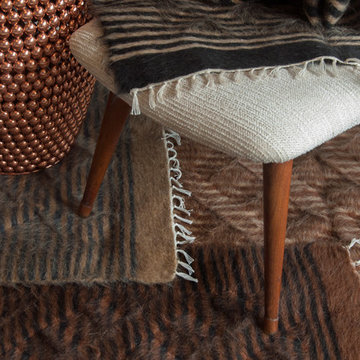
These luxury authentic flat-weave collection represent an ancient method of creating a faux animal hair pile which was widespread amongst nomads from Central Asia to Turkey. Woven with cotton warps and Angora goat hair wefts. The goat hair creates the long haired fur-like look. Angora goats are named after the Turkish province of their origin, Ankara and these goats produce the fibre known as mohair. The lustrous hair of the angora goat occurs in every natural shade ranging from black through browns to white, thus making possible a wide variety of colour-schemes with no dyes.
More about Mohair…
Mohair is one of the oldest textile fibres in use. The Angora goat is thought to originate from the mountains of Tibet, reaching Turkey in the 16th century. Mohair is warm in winter as it has great insulating properties, while remaining cool in summer due to its moisture wicking properties. It’s possible to use double-side, hairy side for winter, woven side for summer. It is durable, naturally elastic, flame resistant, crease resistant, and does not felt.
It is a luxury fiber, like cashmere, angora and silk, and is more expensive than most wools that comes from sheep. Mohair is composed mostly of keratin, a protein found in the hair, wool, horns and skin of all mammals.
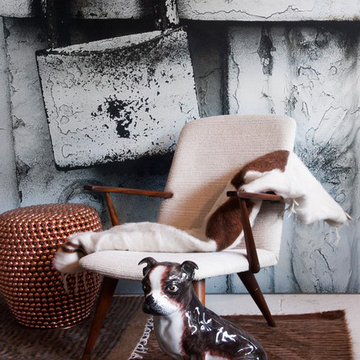 Muna Home
These luxury authentic flat-weave collection represent an ancient method of creating a faux animal hair pile which was widespread amongst nomads from Central Asia to Turkey. Woven with cotton warps and Angora goat hair wefts. The goat hair creates the long haired fur-like look. Angora goats are named after the Turkish province of their origin, Ankara and these goats produce the fibre known as mohair. The lustrous hair of the angora goat occurs in every natural shade ranging from black through browns to white, thus making possible a wide variety of colour-schemes with no dyes.
More about Mohair…
Mohair is one of the oldest textile fibres in use. The Angora goat is thought to originate from the mountains of Tibet, reaching Turkey in the 16th century. Mohair is warm in winter as it has great insulating properties, while remaining cool in summer due to its moisture wicking properties. It’s possible to use double-side, hairy side for winter, woven side for summer. It is durable, naturally elastic, flame resistant, crease resistant, and does not felt.
It is a luxury fiber, like cashmere, angora and silk, and is more expensive than most wools that comes from sheep. Mohair is composed mostly of keratin, a protein found in the hair, wool, horns and skin of all mammals.
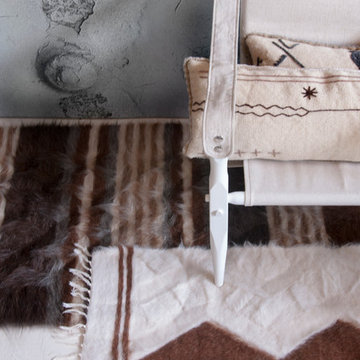 Muna Home
These luxury authentic flat-weave collection represent an ancient method of creating a faux animal hair pile which was widespread amongst nomads from Central Asia to Turkey. Woven with cotton warps and Angora goat hair wefts. The goat hair creates the long haired fur-like look. Angora goats are named after the Turkish province of their origin, Ankara and these goats produce the fibre known as mohair. The lustrous hair of the angora goat occurs in every natural shade ranging from black through browns to white, thus making possible a wide variety of colour-schemes with no dyes.
More about Mohair…
Mohair is one of the oldest textile fibres in use. The Angora goat is thought to originate from the mountains of Tibet, reaching Turkey in the 16th century. Mohair is warm in winter as it has great insulating properties, while remaining cool in summer due to its moisture wicking properties. It’s possible to use double-side, hairy side for winter, woven side for summer. It is durable, naturally elastic, flame resistant, crease resistant, and does not felt.
It is a luxury fiber, like cashmere, angora and silk, and is more expensive than most wools that comes from sheep. Mohair is composed mostly of keratin, a protein found in the hair, wool, horns and skin of all mammals.
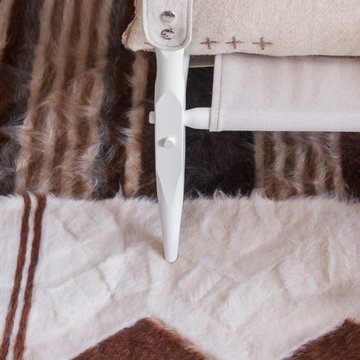 Muna Home
These luxury authentic flat-weave collection represent an ancient method of creating a faux animal hair pile which was widespread amongst nomads from Central Asia to Turkey. Woven with cotton warps and Angora goat hair wefts. The goat hair creates the long haired fur-like look. Angora goats are named after the Turkish province of their origin, Ankara and these goats produce the fibre known as mohair. The lustrous hair of the angora goat occurs in every natural shade ranging from black through browns to white, thus making possible a wide variety of colour-schemes with no dyes.
More about Mohair…
Mohair is one of the oldest textile fibres in use. The Angora goat is thought to originate from the mountains of Tibet, reaching Turkey in the 16th century. Mohair is warm in winter as it has great insulating properties, while remaining cool in summer due to its moisture wicking properties. It’s possible to use double-side, hairy side for winter, woven side for summer. It is durable, naturally elastic, flame resistant, crease resistant, and does not felt.
It is a luxury fiber, like cashmere, angora and silk, and is more expensive than most wools that comes from sheep. Mohair is composed mostly of keratin, a protein found in the hair, wool, horns and skin of all mammals.
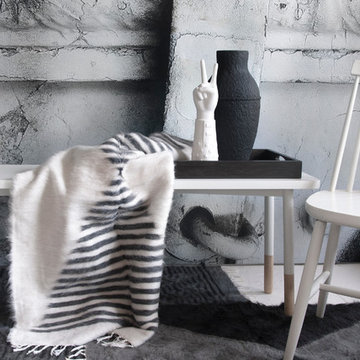 Muna Home
These luxury authentic flat-weave collection represent an ancient method of creating a faux animal hair pile which was widespread amongst nomads from Central Asia to Turkey. Woven with cotton warps and Angora goat hair wefts. The goat hair creates the long haired fur-like look. Angora goats are named after the Turkish province of their origin, Ankara and these goats produce the fibre known as mohair. The lustrous hair of the angora goat occurs in every natural shade ranging from black through browns to white, thus making possible a wide variety of colour-schemes with no dyes.
More about Mohair…
Mohair is one of the oldest textile fibres in use. The Angora goat is thought to originate from the mountains of Tibet, reaching Turkey in the 16th century. Mohair is warm in winter as it has great insulating properties, while remaining cool in summer due to its moisture wicking properties. It’s possible to use double-side, hairy side for winter, woven side for summer. It is durable, naturally elastic, flame resistant, crease resistant, and does not felt.
It is a luxury fiber, like cashmere, angora and silk, and is more expensive than most wools that comes from sheep. Mohair is composed mostly of keratin, a protein found in the hair, wool, horns and skin of all mammals.
 Muna Home
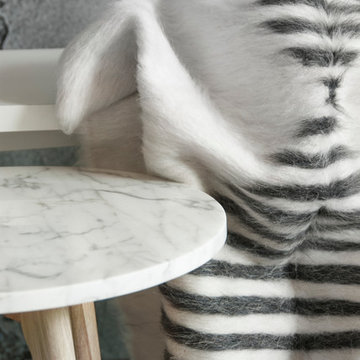
These luxury authentic flat-weave collection represent an ancient method of creating a faux animal hair pile which was widespread amongst nomads from Central Asia to Turkey. Woven with cotton warps and Angora goat hair wefts. The goat hair creates the long haired fur-like look. Angora goats are named after the Turkish province of their origin, Ankara and these goats produce the fibre known as mohair. The lustrous hair of the angora goat occurs in every natural shade ranging from black through browns to white, thus making possible a wide variety of colour-schemes with no dyes.
More about Mohair…
Mohair is one of the oldest textile fibres in use. The Angora goat is thought to originate from the mountains of Tibet, reaching Turkey in the 16th century. Mohair is warm in winter as it has great insulating properties, while remaining cool in summer due to its moisture wicking properties. It’s possible to use double-side, hairy side for winter, woven side for summer. It is durable, naturally elastic, flame resistant, crease resistant, and does not felt.
It is a luxury fiber, like cashmere, angora and silk, and is more expensive than most wools that comes from sheep. Mohair is composed mostly of keratin, a protein found in the hair, wool, horns and skin of all mammals.
 Muna Home
These luxury authentic flat-weave collection represent an ancient method of creating a faux animal hair pile which was widespread amongst nomads from Central Asia to Turkey. Woven with cotton warps and Angora goat hair wefts. The goat hair creates the long haired fur-like look. Angora goats are named after the Turkish province of their origin, Ankara and these goats produce the fibre known as mohair. The lustrous hair of the angora goat occurs in every natural shade ranging from black through browns to white, thus making possible a wide variety of colour-schemes with no dyes.
More about Mohair…
Mohair is one of the oldest textile fibres in use. The Angora goat is thought to originate from the mountains of Tibet, reaching Turkey in the 16th century. Mohair is warm in winter as it has great insulating properties, while remaining cool in summer due to its moisture wicking properties. It’s possible to use double-side, hairy side for winter, woven side for summer. It is durable, naturally elastic, flame resistant, crease resistant, and does not felt.
It is a luxury fiber, like cashmere, angora and silk, and is more expensive than most wools that comes from sheep. Mohair is composed mostly of keratin, a protein found in the hair, wool, horns and skin of all mammals.
3