
Search results for "Reduce does" in Home Design Ideas
 Segal Shuart Landscape Architects
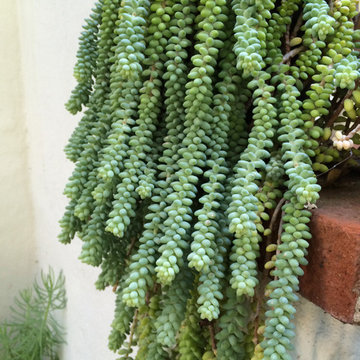
Sedum morganianum (Burro's Tail)
Design ideas for a rustic shade landscaping in Los Angeles.
Design ideas for a rustic shade landscaping in Los Angeles.
 Veritas Products
There are a lot of ways to make our homes look fun and appealing to others.
A wall makeover of the interior of the house can be one of the steps that will create a beautiful and attractive house design.
There is no need to make it a new construction project, so you don't need to spend more money to impress your friends. Redecorating is a job that must be done right the first time, because, lets face it, we really don't want to have to go back and do it again.
If you already have a home built, them maybe when you look around, some parts are incomplete. Look at your current style, maybe it is out date, or you want to apply a new style of the decoration for your rooms.
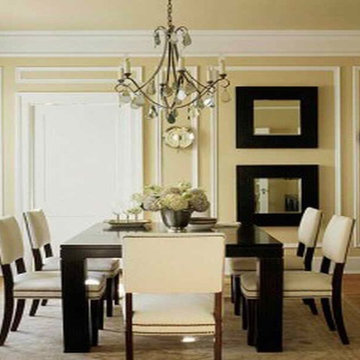
Most existing homes usually have flat smooth walls or bare ceilings. As you know, the ceiling and the wall are both space that must not be wasted, especially in home decorating. You can dress up the walls and the ceilings by adding some Spectis Ceiling Medallions, Squares, Rings or Wall Molding Designs.
The Spectis molding can be placed at the wall, the ceiling, or maybe at the limit of the ceiling and the wall. For the moldings that are located in the wall, it is better to apply molding that is thin and has a neutral color.
It will make the room feel warm and inviting without reducing the color scheme impression of the room. You can put the shape of the wall moldings that have layers in it. Place it randomly, vertical and horizontal as you wish.
On the other hand, you can also make it surround your picture frame or a mirror on the wall. The appropriate wall molding accents will give you a lot of benefits. You can make your decorated wall as the focal point of the room.
This is a cheap decoration because it does not take much to do and its fast and easy to install with Premium adhesive.


Find the right local pro for your project

 Thyme & Place Design LLC
When my client had to move from her company office to work at home, she set up in the dining room. Despite her best efforts, this was not the long-term solution she was looking for. My client realized she needed a dedicated space not on the main floor of the home. On one hand, having your office space right next to the kitchen is handy. On the other hand, it made separating work and home life was not that easy.
The house was a ranch. In essence, the basement would run entire length of the home. As we came down the steps, we entered a time capsule. The house was built in the 1950’s. The walls were covered with original knotty pine paneling. There was a wood burning fireplace and considering this was a basement, high ceilings. In addition, there was everything her family could not store at their own homes. As we wound though the space, I though “wow this has potential”, Eventually, after walking through the laundry room we came to a small nicely lit room. This would be the office.
My client looked at me and asked what I thought. Undoubtedly, I said, this can be a great workspace, but do you really want to walk through this basement and laundry to get here? Without reservation, my client said where do we start?
Once the design was in place, we started the renovation. The knotty pine paneling had to go. Specifically, to add some insulation and control the dampness and humidity. The laundry room wall was relocated to create a hallway to the office.
At the far end of the room, we designated a workout zone. Weights, mats, exercise bike and television are at the ready for morning or afternoon workouts. The space can be concealed by a folding screen for party time. Doors to an old closet under the stairs were relocated to the workout area for hidden storage. Now we had nice wall for a beautiful console and mirror for storage and serving during parties.
In order to add architectural details, we covered the old ugly support columns with simple recessed millwork panels. This detail created a visual division between the bar area and the seating area in front of the fireplace. The old red brick on the fireplace surround was replaced with stack stone. A mantle was made from reclaimed wood. Additional reclaimed wood floating shelves left and right of the fireplace provides decorative display while maintaining a rustic element balancing the copper end table and leather swivel rocker.
We found an amazing rug which tied all of the colors together further defining the gathering space. Russet and burnt orange became the accent color unifying each space. With a bit of whimsy, a rather unusual light fixture which looks like roots from a tree growing through the ceiling is a conversation piece.
The office space is quite and removed from the main part of the basement. There is a desk large enough for multiple screens, a small bookcase holding office supplies and a comfortable chair for conference calls. Because working from home requires many online meetings, we added a shiplap wall painted in Hale Navy to contrast with the orange fabric on the chair. We finished the décor with a painting from my client’s father. This is the background online visitors will see.
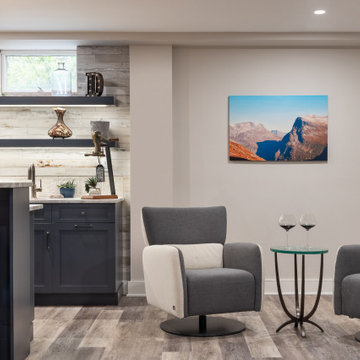
The last and best part of the renovation is the beautiful bar. My client is an avid collector of wine. She already had the EuroCave refrigerator, so I incorporated it into the design. The cabinets are painted Temptation Grey from Benjamin Moore. The counter tops are my favorite hard working quartzite Brown Fantasy. The backsplash is a combination of rustic wood and old tin ceiling like porcelain tiles. Together with the textures of the reclaimed wood and hide poofs balanced against the smooth finish of the cabinets, we created a comfortable luxury for relaxing.
There is ample storage for bottles, cans, glasses, and anything else you can think of for a great party. In addition to the wine storage, we incorporated a beverage refrigerator, an ice maker, and a sink. Floating shelves with integrated lighting illuminate the back bar. The raised height of the front bar provides the perfect wine tasting and paring spot. I especially love the pendant lights which look like wine glasses.
Finally, I selected carpet for the stairs and office. It is perfect for noise reduction. Meanwhile for the overall flooring, I specifically selected a high-performance vinyl plank floor. We often use this product as it is perfect to install on a concrete floor. It is soft to walk on, easy to clean and does not reduce the overall height of the space.
 All Surface Restoration
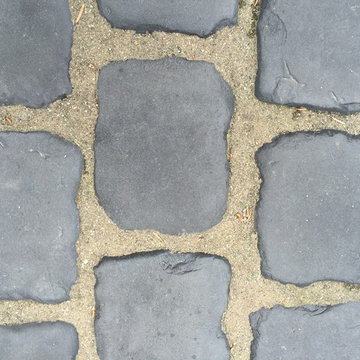
All brands of polymeric sand are NOT equal. Don’t waste money on inferior quality polymeric sand that will cause surface hazing or wash away during a heavy rain. Your brick paver patio, walkway or driveway deserves the best finish possible.
Many types of polymeric sand rely on Portland cement, which often causes hazing, & cracking. Portland cement does not surpass a cohesion threshold that will prevent rain or strong wind from causing washout of the sand.
All Surface Restoration has tested every major brand of polymeric sand on the market in Michigan’s climate for cohesion, adhesion & set up. The most durable, longest lasting type of polymeric sand is Poly Sweep.
Poly Sweep is a different blend of sands with high quality synthetic polymers specially formulated to allow joints to expand & contract with extreme freeze thaw cycles common in Michigan. No sealer is required to keep the sand hard & stable.
Poly Sweep Polymeric Sand has an advanced clear set technology, which uses high quality clear polymers that don’t leave a white haze.
Poly Sweep proved it had a significantly stronger set up than ALL other brands.
It reduces overall maintenance by inhibiting weed growth & deterring insects.
Salt & deicing chemicals do not affect performance. Poly Sweep is available in Tan or Gray to blend with the color of your brick pavers.
Searching for solution to prevent weeds, moss & water penetration in brick pavers in Michigan? Contact the paver maintenance experts at All Surface Restoration to request a free estimate today on cleaning & installing Poly Sweep Polymeric Sand.
Michigan residents request a free estimate at: www.surfacerestoration.com/contact or call 248-475-0004
 Refugia Design/Build
Losing large specimen trees is never desirable. But when the unimaginable happens, we are presented with an opportunity to rethink and refresh, even in traditional residential settings.
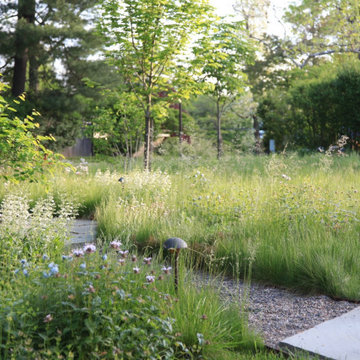
We replaced the lawn area beneath the remaining London plane with a fine fescue seed mix. Our design strategy was to hold space and create immediate impact while reducing maintenance needs as the landscape matured. Into this base, we planted evergreen basal foliage, long bloomers and early spring/late fall color to create an immersive all-season groundcover that will slowly intermingle. Annually, this low mow is cut no lower than 4” (thereby safeguarding habitat) while the tidily trimmed perimeter utilizes remnant turf grass as visible cues to care.
Dissecting the rectilinear green space, permeable hardscaping offers a gently curved path towards the front entryway; an invitation to pause and observe the landscape’s diverse textures and activity up close. Within which, a legacy planting of new specimen trees.
Traditional shrub heavy foundation plantings are often static and rigid; this perennial rich redesign is structured yet airy to retain design cohesion with the naturalistic stylized meadow and offer vibrant textural all-season interest.
This project blends different landscape styles to create a biodiverse habitat that is ecologically beneficial, beautiful and resilient. In high summer, a doe finds refuge for her fawn while the family’s children delight in the buzzing activity of smaller inhabitants, native bees and assorted pollinators, that now call this habitat home.
Sponsored
Columbus, OH

Structural Remodeling
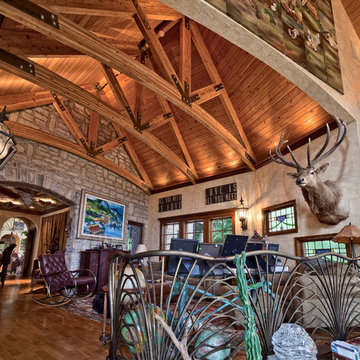
Franklin County's Heavy Timber Specialists | Best of Houzz 2020!
 Refugia Design/Build
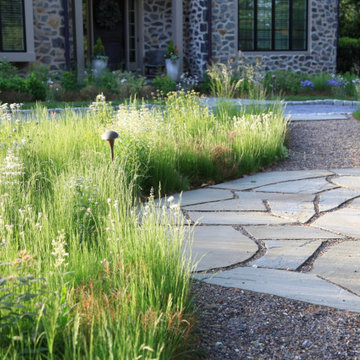
Losing large specimen trees is never desirable. But when the unimaginable happens, we are presented with an opportunity to rethink and refresh, even in traditional residential settings.
We replaced the lawn area beneath the remaining London plane with a fine fescue seed mix. Our design strategy was to hold space and create immediate impact while reducing maintenance needs as the landscape matured. Into this base, we planted evergreen basal foliage, long bloomers and early spring/late fall color to create an immersive all-season groundcover that will slowly intermingle. Annually, this low mow is cut no lower than 4” (thereby safeguarding habitat) while the tidily trimmed perimeter utilizes remnant turf grass as visible cues to care.
Dissecting the rectilinear green space, permeable hardscaping offers a gently curved path towards the front entryway; an invitation to pause and observe the landscape’s diverse textures and activity up close. Within which, a legacy planting of new specimen trees.
Traditional shrub heavy foundation plantings are often static and rigid; this perennial rich redesign is structured yet airy to retain design cohesion with the naturalistic stylized meadow and offer vibrant textural all-season interest.
This project blends different landscape styles to create a biodiverse habitat that is ecologically beneficial, beautiful and resilient. In high summer, a doe finds refuge for her fawn while the family’s children delight in the buzzing activity of smaller inhabitants, native bees and assorted pollinators, that now call this habitat home.
 Refugia Design/Build
Losing large specimen trees is never desirable. But when the unimaginable happens, we are presented with an opportunity to rethink and refresh, even in traditional residential settings.
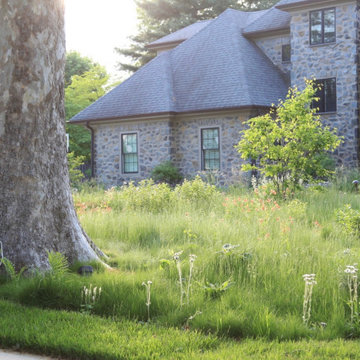
We replaced the lawn area beneath the remaining London plane with a fine fescue seed mix. Our design strategy was to hold space and create immediate impact while reducing maintenance needs as the landscape matured. Into this base, we planted evergreen basal foliage, long bloomers and early spring/late fall color to create an immersive all-season groundcover that will slowly intermingle. Annually, this low mow is cut no lower than 4” (thereby safeguarding habitat) while the tidily trimmed perimeter utilizes remnant turf grass as visible cues to care.
Dissecting the rectilinear green space, permeable hardscaping offers a gently curved path towards the front entryway; an invitation to pause and observe the landscape’s diverse textures and activity up close. Within which, a legacy planting of new specimen trees.
Traditional shrub heavy foundation plantings are often static and rigid; this perennial rich redesign is structured yet airy to retain design cohesion with the naturalistic stylized meadow and offer vibrant textural all-season interest.
This project blends different landscape styles to create a biodiverse habitat that is ecologically beneficial, beautiful and resilient. In high summer, a doe finds refuge for her fawn while the family’s children delight in the buzzing activity of smaller inhabitants, native bees and assorted pollinators, that now call this habitat home.
 Refugia Design/Build
Losing large specimen trees is never desirable. But when the unimaginable happens, we are presented with an opportunity to rethink and refresh, even in traditional residential settings.
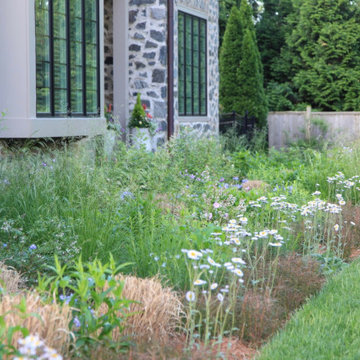
We replaced the lawn area beneath the remaining London plane with a fine fescue seed mix. Our design strategy was to hold space and create immediate impact while reducing maintenance needs as the landscape matured. Into this base, we planted evergreen basal foliage, long bloomers and early spring/late fall color to create an immersive all-season groundcover that will slowly intermingle. Annually, this low mow is cut no lower than 4” (thereby safeguarding habitat) while the tidily trimmed perimeter utilizes remnant turf grass as visible cues to care.
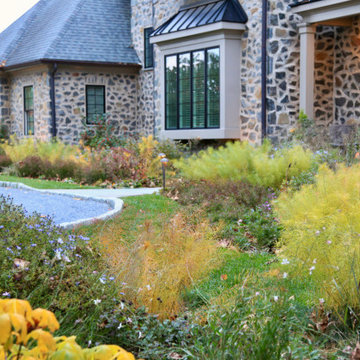
Dissecting the rectilinear green space, permeable hardscaping offers a gently curved path towards the front entryway; an invitation to pause and observe the landscape’s diverse textures and activity up close. Within which, a legacy planting of new specimen trees.
Traditional shrub heavy foundation plantings are often static and rigid; this perennial rich redesign is structured yet airy to retain design cohesion with the naturalistic stylized meadow and offer vibrant textural all-season interest.
This project blends different landscape styles to create a biodiverse habitat that is ecologically beneficial, beautiful and resilient. In high summer, a doe finds refuge for her fawn while the family’s children delight in the buzzing activity of smaller inhabitants, native bees and assorted pollinators, that now call this habitat home.
 Refugia Design/Build
Losing large specimen trees is never desirable. But when the unimaginable happens, we are presented with an opportunity to rethink and refresh, even in traditional residential settings.
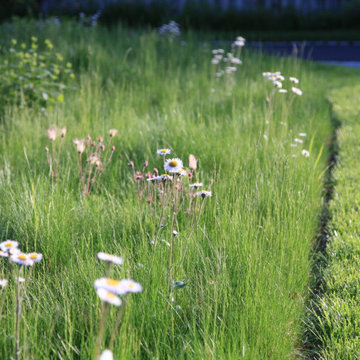
We replaced the lawn area beneath the remaining London plane with a fine fescue seed mix. Our design strategy was to hold space and create immediate impact while reducing maintenance needs as the landscape matured. Into this base, we planted evergreen basal foliage, long bloomers and early spring/late fall color to create an immersive all-season groundcover that will slowly intermingle. Annually, this low mow is cut no lower than 4” (thereby safeguarding habitat) while the tidily trimmed perimeter utilizes remnant turf grass as visible cues to care.
Dissecting the rectilinear green space, permeable hardscaping offers a gently curved path towards the front entryway; an invitation to pause and observe the landscape’s diverse textures and activity up close. Within which, a legacy planting of new specimen trees.
Traditional shrub heavy foundation plantings are often static and rigid; this perennial rich redesign is structured yet airy to retain design cohesion with the naturalistic stylized meadow and offer vibrant textural all-season interest.
This project blends different landscape styles to create a biodiverse habitat that is ecologically beneficial, beautiful and resilient. In high summer, a doe finds refuge for her fawn while the family’s children delight in the buzzing activity of smaller inhabitants, native bees and assorted pollinators, that now call this habitat home.
 Refugia Design/Build
Losing large specimen trees is never desirable. But when the unimaginable happens, we are presented with an opportunity to rethink and refresh, even in traditional residential settings.
We replaced the lawn area beneath the remaining London plane with a fine fescue seed mix. Our design strategy was to hold space and create immediate impact while reducing maintenance needs as the landscape matured. Into this base, we planted evergreen basal foliage, long bloomers and early spring/late fall color to create an immersive all-season groundcover that will slowly intermingle. Annually, this low mow is cut no lower than 4” (thereby safeguarding habitat) while the tidily trimmed perimeter utilizes remnant turf grass as visible cues to care.
Dissecting the rectilinear green space, permeable hardscaping offers a gently curved path towards the front entryway; an invitation to pause and observe the landscape’s diverse textures and activity up close. Within which, a legacy planting of new specimen trees.
Traditional shrub heavy foundation plantings are often static and rigid; this perennial rich redesign is structured yet airy to retain design cohesion with the naturalistic stylized meadow and offer vibrant textural all-season interest.
This project blends different landscape styles to create a biodiverse habitat that is ecologically beneficial, beautiful and resilient. In high summer, a doe finds refuge for her fawn while the family’s children delight in the buzzing activity of smaller inhabitants, native bees and assorted pollinators, that now call this habitat home.
 Refugia Design/Build
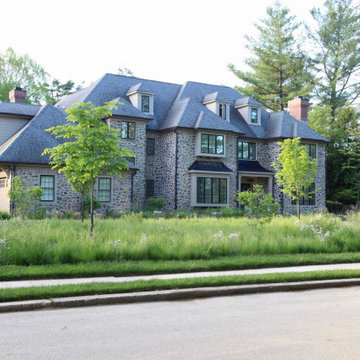
Losing large specimen trees is never desirable. But when the unimaginable happens, we are presented with an opportunity to rethink and refresh, even in traditional residential settings.
We replaced the lawn area beneath the remaining London plane with a fine fescue seed mix. Our design strategy was to hold space and create immediate impact while reducing maintenance needs as the landscape matured. Into this base, we planted evergreen basal foliage, long bloomers and early spring/late fall color to create an immersive all-season groundcover that will slowly intermingle. Annually, this low mow is cut no lower than 4” (thereby safeguarding habitat) while the tidily trimmed perimeter utilizes remnant turf grass as visible cues to care.
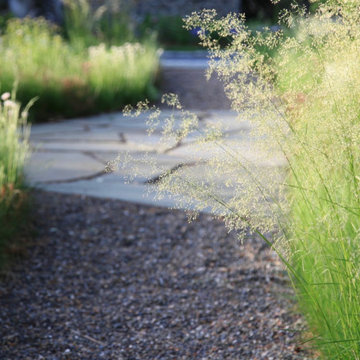
Dissecting the rectilinear green space, permeable hardscaping offers a gently curved path towards the front entryway; an invitation to pause and observe the landscape’s diverse textures and activity up close. Within which, a legacy planting of new specimen trees.
Traditional shrub heavy foundation plantings are often static and rigid; this perennial rich redesign is structured yet airy to retain design cohesion with the naturalistic stylized meadow and offer vibrant textural all-season interest.
This project blends different landscape styles to create a biodiverse habitat that is ecologically beneficial, beautiful and resilient. In high summer, a doe finds refuge for her fawn while the family’s children delight in the buzzing activity of smaller inhabitants, native bees and assorted pollinators, that now call this habitat home.

 Refugia Design/Build
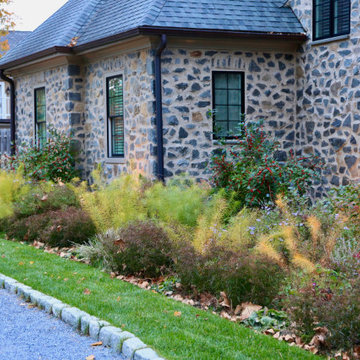
Losing large specimen trees is never desirable. But when the unimaginable happens, we are presented with an opportunity to rethink and refresh, even in traditional residential settings.
We replaced the lawn area beneath the remaining London plane with a fine fescue seed mix. Our design strategy was to hold space and create immediate impact while reducing maintenance needs as the landscape matured. Into this base, we planted evergreen basal foliage, long bloomers and early spring/late fall color to create an immersive all-season groundcover that will slowly intermingle. Annually, this low mow is cut no lower than 4” (thereby safeguarding habitat) while the tidily trimmed perimeter utilizes remnant turf grass as visible cues to care.
Dissecting the rectilinear green space, permeable hardscaping offers a gently curved path towards the front entryway; an invitation to pause and observe the landscape’s diverse textures and activity up close. Within which, a legacy planting of new specimen trees.
Traditional shrub heavy foundation plantings are often static and rigid; this perennial rich redesign is structured yet airy to retain design cohesion with the naturalistic stylized meadow and offer vibrant textural all-season interest.
This project blends different landscape styles to create a biodiverse habitat that is ecologically beneficial, beautiful and resilient. In high summer, a doe finds refuge for her fawn while the family’s children delight in the buzzing activity of smaller inhabitants, native bees and assorted pollinators, that now call this habitat home.
 Refugia Design/Build
Losing large specimen trees is never desirable. But when the unimaginable happens, we are presented with an opportunity to rethink and refresh, even in traditional residential settings.
We replaced the lawn area beneath the remaining London plane with a fine fescue seed mix. Our design strategy was to hold space and create immediate impact while reducing maintenance needs as the landscape matured. Into this base, we planted evergreen basal foliage, long bloomers and early spring/late fall color to create an immersive all-season groundcover that will slowly intermingle. Annually, this low mow is cut no lower than 4” (thereby safeguarding habitat) while the tidily trimmed perimeter utilizes remnant turf grass as visible cues to care.
Dissecting the rectilinear green space, permeable hardscaping offers a gently curved path towards the front entryway; an invitation to pause and observe the landscape’s diverse textures and activity up close. Within which, a legacy planting of new specimen trees.
Traditional shrub heavy foundation plantings are often static and rigid; this perennial rich redesign is structured yet airy to retain design cohesion with the naturalistic stylized meadow and offer vibrant textural all-season interest.
This project blends different landscape styles to create a biodiverse habitat that is ecologically beneficial, beautiful and resilient. In high summer, a doe finds refuge for her fawn while the family’s children delight in the buzzing activity of smaller inhabitants, native bees and assorted pollinators, that now call this habitat home.
 Refugia Design/Build
Losing large specimen trees is never desirable. But when the unimaginable happens, we are presented with an opportunity to rethink and refresh, even in traditional residential settings.
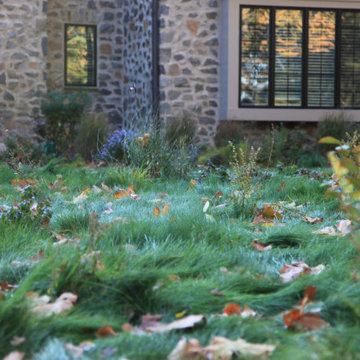
We replaced the lawn area beneath the remaining London plane with a fine fescue seed mix. Our design strategy was to hold space and create immediate impact while reducing maintenance needs as the landscape matured. Into this base, we planted evergreen basal foliage, long bloomers and early spring/late fall color to create an immersive all-season groundcover that will slowly intermingle. Annually, this low mow is cut no lower than 4” (thereby safeguarding habitat) while the tidily trimmed perimeter utilizes remnant turf grass as visible cues to care.
Dissecting the rectilinear green space, permeable hardscaping offers a gently curved path towards the front entryway; an invitation to pause and observe the landscape’s diverse textures and activity up close. Within which, a legacy planting of new specimen trees.
Traditional shrub heavy foundation plantings are often static and rigid; this perennial rich redesign is structured yet airy to retain design cohesion with the naturalistic stylized meadow and offer vibrant textural all-season interest.
This project blends different landscape styles to create a biodiverse habitat that is ecologically beneficial, beautiful and resilient. In high summer, a doe finds refuge for her fawn while the family’s children delight in the buzzing activity of smaller inhabitants, native bees and assorted pollinators, that now call this habitat home.
 Refugia Design/Build
Losing large specimen trees is never desirable. But when the unimaginable happens, we are presented with an opportunity to rethink and refresh, even in traditional residential settings.
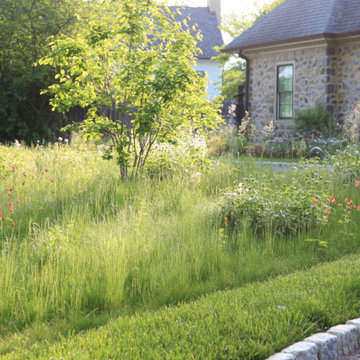
We replaced the lawn area beneath the remaining London plane with a fine fescue seed mix. Our design strategy was to hold space and create immediate impact while reducing maintenance needs as the landscape matured. Into this base, we planted evergreen basal foliage, long bloomers and early spring/late fall color to create an immersive all-season groundcover that will slowly intermingle. Annually, this low mow is cut no lower than 4” (thereby safeguarding habitat) while the tidily trimmed perimeter utilizes remnant turf grass as visible cues to care.
Dissecting the rectilinear green space, permeable hardscaping offers a gently curved path towards the front entryway; an invitation to pause and observe the landscape’s diverse textures and activity up close. Within which, a legacy planting of new specimen trees.
Traditional shrub heavy foundation plantings are often static and rigid; this perennial rich redesign is structured yet airy to retain design cohesion with the naturalistic stylized meadow and offer vibrant textural all-season interest.
This project blends different landscape styles to create a biodiverse habitat that is ecologically beneficial, beautiful and resilient. In high summer, a doe finds refuge for her fawn while the family’s children delight in the buzzing activity of smaller inhabitants, native bees and assorted pollinators, that now call this habitat home.
 Refugia Design/Build
Losing large specimen trees is never desirable. But when the unimaginable happens, we are presented with an opportunity to rethink and refresh, even in traditional residential settings.
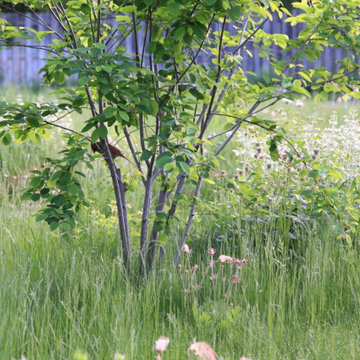
We replaced the lawn area beneath the remaining London plane with a fine fescue seed mix. Our design strategy was to hold space and create immediate impact while reducing maintenance needs as the landscape matured. Into this base, we planted evergreen basal foliage, long bloomers and early spring/late fall color to create an immersive all-season groundcover that will slowly intermingle. Annually, this low mow is cut no lower than 4” (thereby safeguarding habitat) while the tidily trimmed perimeter utilizes remnant turf grass as visible cues to care.
Dissecting the rectilinear green space, permeable hardscaping offers a gently curved path towards the front entryway; an invitation to pause and observe the landscape’s diverse textures and activity up close. Within which, a legacy planting of new specimen trees.
Traditional shrub heavy foundation plantings are often static and rigid; this perennial rich redesign is structured yet airy to retain design cohesion with the naturalistic stylized meadow and offer vibrant textural all-season interest.
This project blends different landscape styles to create a biodiverse habitat that is ecologically beneficial, beautiful and resilient. In high summer, a doe finds refuge for her fawn while the family’s children delight in the buzzing activity of smaller inhabitants, native bees and assorted pollinators, that now call this habitat home.
 Refugia Design/Build
Losing large specimen trees is never desirable. But when the unimaginable happens, we are presented with an opportunity to rethink and refresh, even in traditional residential settings.
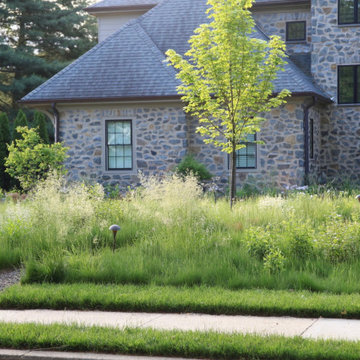
We replaced the lawn area beneath the remaining London plane with a fine fescue seed mix. Our design strategy was to hold space and create immediate impact while reducing maintenance needs as the landscape matured. Into this base, we planted evergreen basal foliage, long bloomers and early spring/late fall color to create an immersive all-season groundcover that will slowly intermingle. Annually, this low mow is cut no lower than 4” (thereby safeguarding habitat) while the tidily trimmed perimeter utilizes remnant turf grass as visible cues to care.
Dissecting the rectilinear green space, permeable hardscaping offers a gently curved path towards the front entryway; an invitation to pause and observe the landscape’s diverse textures and activity up close. Within which, a legacy planting of new specimen trees.
Traditional shrub heavy foundation plantings are often static and rigid; this perennial rich redesign is structured yet airy to retain design cohesion with the naturalistic stylized meadow and offer vibrant textural all-season interest.
This project blends different landscape styles to create a biodiverse habitat that is ecologically beneficial, beautiful and resilient. In high summer, a doe finds refuge for her fawn while the family’s children delight in the buzzing activity of smaller inhabitants, native bees and assorted pollinators, that now call this habitat home.
 Refugia Design/Build
Losing large specimen trees is never desirable. But when the unimaginable happens, we are presented with an opportunity to rethink and refresh, even in traditional residential settings.
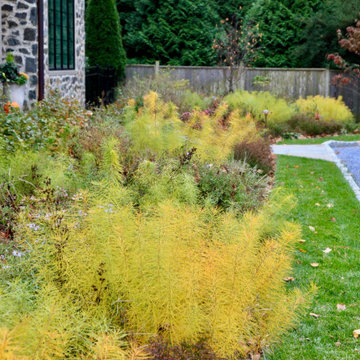
We replaced the lawn area beneath the remaining London plane with a fine fescue seed mix. Our design strategy was to hold space and create immediate impact while reducing maintenance needs as the landscape matured. Into this base, we planted evergreen basal foliage, long bloomers and early spring/late fall color to create an immersive all-season groundcover that will slowly intermingle. Annually, this low mow is cut no lower than 4” (thereby safeguarding habitat) while the tidily trimmed perimeter utilizes remnant turf grass as visible cues to care.
Dissecting the rectilinear green space, permeable hardscaping offers a gently curved path towards the front entryway; an invitation to pause and observe the landscape’s diverse textures and activity up close. Within which, a legacy planting of new specimen trees.
Traditional shrub heavy foundation plantings are often static and rigid; this perennial rich redesign is structured yet airy to retain design cohesion with the naturalistic stylized meadow and offer vibrant textural all-season interest.
This project blends different landscape styles to create a biodiverse habitat that is ecologically beneficial, beautiful and resilient. In high summer, a doe finds refuge for her fawn while the family’s children delight in the buzzing activity of smaller inhabitants, native bees and assorted pollinators, that now call this habitat home.
14