
Search results for "Reduce moderate" in Home Design Ideas
 Epic Development
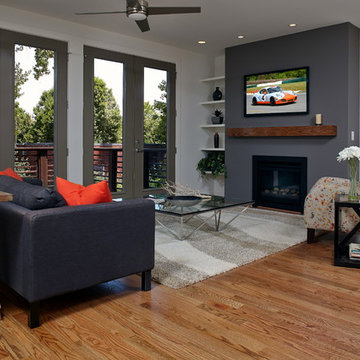
The family room of this new Modern style home features oak hardwood floors, modern gas fireplace with wood mantle, built-in bookshelves, recessed lighting and a wall of patio doors to the rear deck. Designed by Eric Rawlings; Built by Epic Development; Interior Design by Mike Horton; Photo by Brian Gassel
 IronStrike Stoves & Inserts
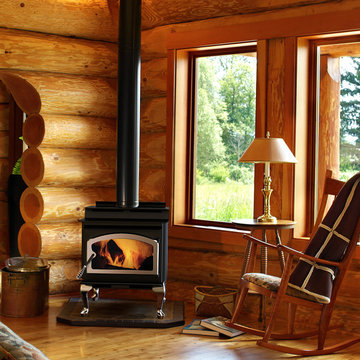
The Performer™ ST210 is the solution to moderate heating needs. Its elegance and engineered simplicity makes it a pleasure to burn and a large cooktop surface allows for food preparation – even during power outages. The Performer will add efficiency, ambiance and warmth to your home.
Aesthetics
Unique, integral airwash system keeps the glass clean and clear for a wide-open view of the fire.
Constructed from premium materials, like heavy-gauge stainless steel for dependable performance and striking appearance.
Comfort
Ceramic-fiber blanket utilizes technology developed by NASA that has 10 times the insulation value of firebrick, radiating heat back into the firebox and creating higher efficiencies and cleaner gas.
Uniquely designed refractory baffle assists in igniting fuel-rich gases, increasing efficiency and reducing emissions.
Stainless steel afterburner tubes mix oxygen with unburned gases and smoke to create a secondary burn, lowering fuel costs.
Heavy-duty door contains no nuts or washers, forming a 360° seal for long-lasting durability.
EPA Phase II-certified for clean and efficient operation.
Ease of Operation
Singular draft control for simple operation and burn rate adjustment.
Design Versatility
Five unique door finishes to fit your style and home.
Pedestal or leg choices provide customizable appearance for personalized styling preference.
*Square-feet heating capacities are approximations only. Actual performance may vary depending upon home design and insulation, ceiling heights, climate, condition and type of wood used, appliance location, burn rate, accessories chosen, chimney installation and how the appliance is operated.

Find the right local pro for your project

 Trane Residential
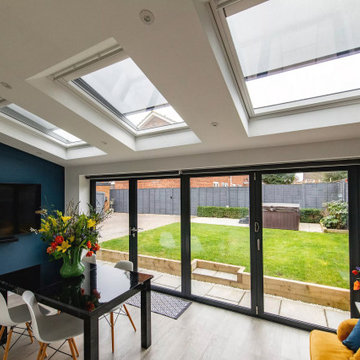
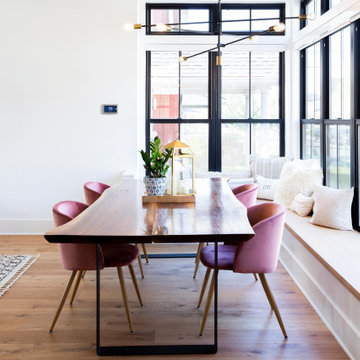
Inspiration for a large contemporary medium tone wood floor and brown floor dining room remodel in Charlotte with white walls
 Beyond Efficiency
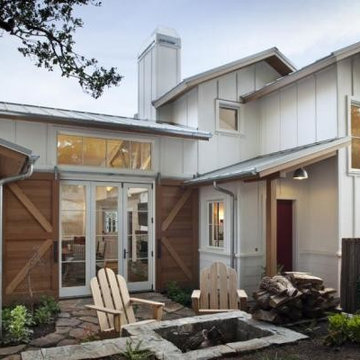
Winning Best New Home of 2013 and labeled “Passive House Perfection” by Fine Homebuilding, this 1600-square foot farmhouse achieves the highest performance standards without sacrificing aesthetic standards. The owners “learned that good design and modern aesthetics were compatible with the kind of energy we were seeking and we couldn’t be more pleased.”
Beyond Efficiency coached the team in resource-efficient framing, and builder Rob Nicely incorporated practices such as 24” stud spacing and appropriately sized insulated headers to reduce lumber costs, speed construction and maximize insulation. He planned ahead by pre-insulating components such as doubled I-joists to ensure an uninterrupted thermal boundary. To achieve the strict Passive House heating demand requirements, phase-change materials (PCMs) are installed behind drywall in walls and dropped ceilings to absorb the sun’s heat from large south-facing windows and release it for passive heating once temperatures cool down. PCMs provide temperature moderation and peak load shifting benefits that were traditionally available only in heavy, high-thermal mass materials.
The house is designed to use about 70% less energy than its code-level counterpart. The homeowners have reported that temperatures remain very stable throughout the home, varying no more than 2 degrees from north to south and top to bottom.

Rosa californica / California wild rose
Photo: Jerry Kirkhart, via Flickr, licensed under Creative Commons Attribution-2.0 Generic
 AirField Systems, LLC
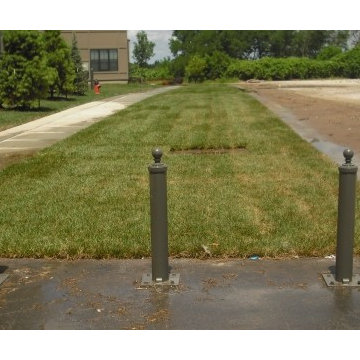
Market Center Station Grass Pave Fire Lane Kansas City, Kansas.
A grass pave project designed by AMR Architects Inc out of Little Rock, Arkansas and developed by Houston-based The Morgan Group Inc., Market Station is the largest new construction project erected in Downtown Kansas City since Quality Hill in 1984. AirPave was chosen as the solution for porous flexible paving in the 7,100 square foot grass pave fire lane.
AirPave is a synthetic porous paving and drainage system for grass fire lanes, flexible porous paving and swales. With over 400 installations AirPave is 233psi unfilled, 6747psi sand filled and is made of 100% recycled content which can contribute to LEED™ points. AirPave can ship more than 91,000 sqft per truck load and 798 sqft per pallet with each part weighing only 3.1 lbs. AirPave can save the owner up to $0.80 per square foot or more over our competitors.
Benefits of an AirPave Grass Paving System Include:
Incredible load bearing strength
Protects plant root systems
Slows stormwater runoff
Filters stormwater pollutants
Captures airborne dust and pollutants
Safely consumes moderate engine oil drippings
Reduces uncomfortably hot surface temperature
Increased oxygen production
Reduces or eliminates costly stormwater structures
Applications
Overflow Parking
Fire lanes
Event Parking
Driveways
Employee Parking
Utility Access
On-street Parking
Pedestrian Access
Handicap Parking
Emergency Access
Infiltration Basins
To discuss your grass pave construction project, call AirField Systems at (405) 359-3775.
 WestOne Construction
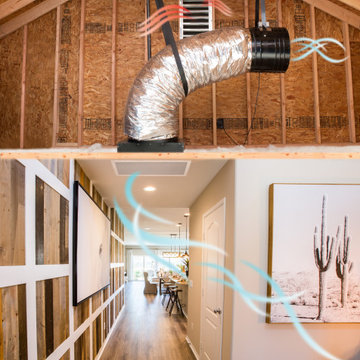
Our weather is moderate in San Diego and you could benefit from using a whole house fan to reduce your needs for air conditioning. Whole house fans keep your home cool through the usage of a powerful suction that pulls indoor warm air out, replacing that stale warm air with cooler outside air. Whole house fans can be manually turned on or programmed to run on a schedule. In order to achieve the desired results, windows for the home need to be open. The ideal time to run your whole house fan is when outside temperatures drop below inside temperatures. The fan will evacuate the warm air inside your home and exhaust it through the roof vents, while drawing in cooler outside air into the home through open windows.
Design Options
The simplest design option for whole-house fans are ceiling-mounted variations. These types of fans are installed in the attic between the ceiling and living space. These fans are the least expensive however they can be noisy and create vibrations. Ducted whole-house fans run much quieter than ceiling-mounted fans. With ducted whole-house fans, the ductwork will vent the inside warm air directly out of the home, rather than through attic vents likes the ceiling-mounted variation.
With whole house fans you also have variable speeds that allow you to control the speed of inside warm air being expelled from the home. You can adjust it to high speed to flush air out quickly or low speed to allow for a continuous, gentle air flow. Programmable thermostats and temperature controllers add to the convenience by automating the whole-house fan.
 Zelaya Properties LLC
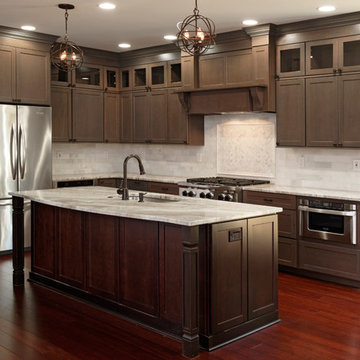
We used: Custom cherry cabinetry in Arts & Crafts Shaker style by Kabinart in Boulder and Espresso stains. Liberty Hardware Venetian bronze 1-1/2" cabinet knobs. KitchenAid Architect II Series 22 CF counter-depth French door refrigerator. KitchenAid Architect Series II 27" convection single wall oven. KitchenAid 36" 6-burner dual fuel freestanding commercial-style range. KitchenAid Architect II Series 24" dishwasher. Sharp Insight Pro Series 24" built-in microwave drawer (Model #KB6524PS). Crystorama Solaris 12" wide pendant lights in English bronze. Granite countertops in Brown Fantasy. 3"x6" polished marble backsplash.
Paint colors:
Walls: Glidden Silver Cloud 30YY 63/024
Ceilings/Trims/Doors: Glidden Swan White GLC23
Robert B. Narod Photography
 Homestead Doors, Inc.
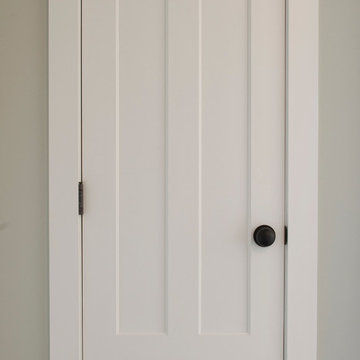
Door #10
FP3190
Flat 3 Panel Interior Door with Farmhouse Sticking
Solid Poplar stiles and rails
MDF panels
Painted White
1 x 4 door casing
1 x 6 baseboard
Bravura 336B door knob
Call us for a quote on your door project
419-684-9582
Visit https://www.door.cc
 Goodall Custom Cabinetry
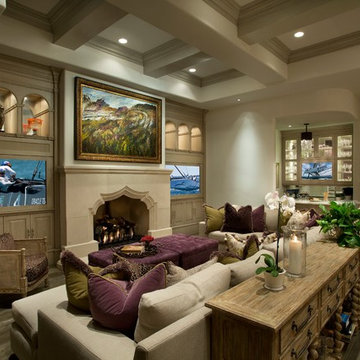
Living room - traditional formal dark wood floor living room idea in Phoenix with beige walls, a standard fireplace and a media wall

 Storey Design
Photo Credit: Helynn Ospina
Inspiration for a mid-century modern living room remodel in San Francisco
Inspiration for a mid-century modern living room remodel in San Francisco

 Houtje Touwtje
We moved these four Pileas to a bigger pot when they were still young, about three years ago. The bigger the pot, the more space they have to grow and the bigger the plant will become. Credits: instagram.com/houtje.touwtje
 gardenaar
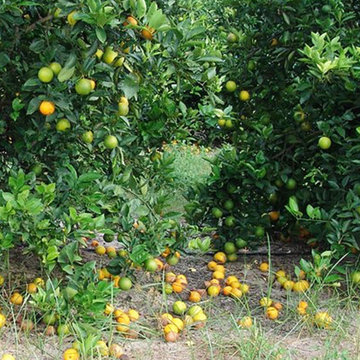
Does your orange tree drop its fruit before it reaches full size, or worse, does it drop flowers before the fruit starts to form?
Trees photosynthesize to produce carbohydrates like sugar which they store as a source of energy. They can maintain a limited amount, which is used to drive the growth of new leaves, branches, roots and stem. Fruitfulness requires the tree to divert its limited energy sources away from these vital functions to the production of flowers, blossoms and fruits.
Fruit development involves maturity followed by fertilization, growth, maturity and maturity. This process takes between 6-7 months in warmer climates, which requires a large number of tree energy sources as a result.
Trees are able to manage their resources, and will also divert them to emergencies ...
Fruit Drop and Crop Depression
In regions where oranges produce one crop per year, they go through a series of growth stages as follows:
Sprout formation and flower launching (mid-winter)
Flowers and fruit set (early spring)
Fruit growth - cell division (late spring to early summer)
Fruit growth - cell proliferation (mid-summer to early autumn)
Fruit ripening (autumn to late winter)
The difference is in the regions where most citrus crops are produced year-round. In these cases, the different stages of development will take place simultaneously.
The orange tree can handle its plant load well, and it will bear as much fruit as we can support. It is natural for all citrus trees to produce too little fruit and too little flowers in early spring to prevent overproduction. There is no need to worry too much about flowering, as an orange tree needs only 1% to 2% of flowers to produce a good crop, and sometimes even less than 1% is enough.
If a tree is depressed because it does not get enough water in hot, dry weather, and if it dies of nitrogen starvation because it is not given enough fertilizer, fruit set will be very difficult in the spring. There may also be a small number of fruit losses in the summer under stressful conditions.
Solution: Provide enough water, and water often in hot weather and strong winds. Orange feed with moderate fertilizer in early spring (September in Southern hemisphere, March in the Northern Hemisphere)
Fruit Drop and Lack of Potassium Nutrient
When orange trees are heavy, the decline in fruit can be exacerbated by low potassium levels.
Potassium, also known as potash (represented by the chemical mark K on fertilizer labels meaning N-P-K or nitrogen-phosphorus-potassium ratio) is a major macronutrient needed for flowering and fruit formation. Next to nitrogen, plants absorb more potassium than any other nutrient. Without potassium, the trees stop flowering and fruiting, which is what happens if they are not fed regularly.
Before any smug horticulturist declares to you that potassium has no direct effect on flowering and fruit set, let me say that as a horticulturist and biochemist, plant chemistry, like the chemistry of all living things is complex, but some input it is necessary to produce certain results. , and the references I have made to the end of this article support what I am saying!
Entering science, Potassium (K) is essential for water, nutrients and the movement of carbohydrates in plant tissues. It also activates enzymes that facilitate the synthesis of complex chemicals within the plant - such as starch, protein and adenosine triphosphate (ATP) production. The role of ATP is to transport the energy needed for all cellular metabolic activities to all living things, and in plants ATP production can regulate the level of photosynthesis.
Potassium also helps regulate the opening and closing of stomata, holes or cavities under which oxygen and carbon dioxide are exchanged with the atmosphere, and respiratory losses are controlled. It increases root growth which increases the absorption of nutrients and improves drought resistance, and increases resistance to frost, pests and diseases. High potassium levels produce similar maturity and fruit growth rate, as well as better nutritional quality, taste and range.
Agricultural extension agencies suggest that large amounts of potash are needed in many crops, and that potassium deficiency or macronutrient deficiency leads to reduced crop growth and reduced yields, and that potassium levels not only affect yield, but fruit size, juice. quality and shelf life.
Since potassium plays an important role in water regulation, deficiency can clearly increase the pressures associated with the declining fruit mentioned in the previous section.
Solution: Make sure that the orange trees are fertilized with the right fertilizer as previously discussed. Extra potassium can be brought in using seaweed extract (which is not a fertilizer but contains a good amount of potassium), wood ash (used in small quantities only as it is very alkaline), or potash sulphate (potassium sulphate) - all this is guaranteed. as acceptable in a natural garden.
Never use potassium chloride as it can be harmful to plants, it is a very inexpensive alternative to fertilizer manufacturers to save money!
Even if there are sufficient levels of potassium in the soil, it may not be accessible to plants, unless we make some improvements.
 M2 Los Angeles Custom Furniture Manufacturing
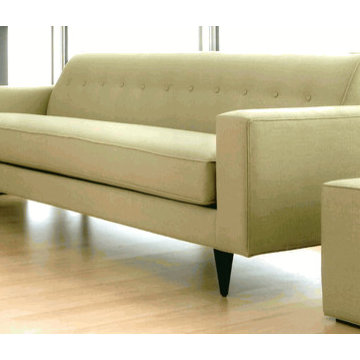
Incredibly unique Sofa. Made to exacting specs. Modern Sofa produced in our factory at an unbeatable price!
Amazing SOLID wood internal frame sofa with High Quality Poly Cotton blend Upholstery throughout. ANY ASPECT OF THIS SOFA CAN BE CUSTOMIZED AND IT'S AVAILABLE IN 1000'S OF FABRICS AND TEXTURES. Can be ordered in Soft, Medium, or Firm seating.
All of our furniture is made with incredible attention to detail for that highly tailored look and feel.
MADE IN L.A. LOS ANGELES, CALIFORNIA

2