
Search results for "Required pay" in Home Design Ideas
 Rocky Tops Granite & Marble LLC
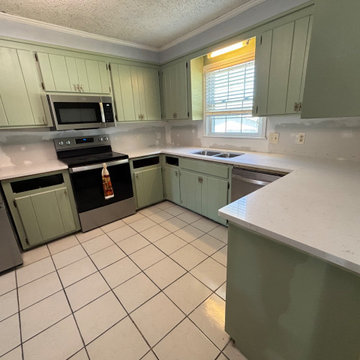
We put GK Carrara Gold quartz into a kitchen in West Columbia, and it's the kind of stone that gives a bright, classic look without asking the homeowner to babysit it. White background, soft gray veining moving through it, a clean bright field that works with just about any cabinet color. Engineered quartz gives us that light, veined look with a material that's built for how a kitchen actually gets used, day in and day out, with hot pans and spills and everything else that happens on a counter.
The templating on a job like this is where the work really happens before it ever shows up on a truck. We measure the cabinets and openings on site, build a template that accounts for every corner and cutout, and send it to the shop so the slab gets cut once, correctly. With a veining pattern like Carrara Gold's, we're paying close attention to how it flows across seams, especially anywhere two pieces meet on an island or a run of countertop that turns a corner. You want the eye to read it as one continuous piece, not two slabs bolted together.
Quartz like this is engineered to be non-porous, so there's no sealing required and no worrying about wine or oil soaking into the surface the way you'd have to watch with some natural stones. It resists scratching and staining well under normal kitchen use, though we still tell people to use a cutting board and a trivet for anything straight off the stove, since sustained high heat can still cause trouble at a seam or in the material itself. Day to day, it wipes clean with soap and water and holds its color and shine for years without a lot of fuss.
We finished the edge simple and eased, which keeps the whole thing looking clean and doesn't compete with the veining for attention. That's a small decision, but it's the right one on a stone with this much movement in the pattern already.
West Columbia's seen a good bit of kitchen work like this lately, and it's easy to see why a bright, veined quartz keeps coming up. It gives a kitchen that clean, timeless feel homeowners are after, backed by a material that's built to actually live in a working kitchen for the long haul.

 Sweet Smiling Landscape Design
This project was do in collaboration with my friends at Sweetwater Collaborative. Sweetwater Collaborative is a non-profit organization that work to educate the public about water wise and regenerative landscape practices.
Funded by the City of Santa Barbara as well as several other business and agency Sweetwater Collaborative and I worked to installed this project with the help of volunteers. In a hands-on work shop we explained principles of water wise gardening and demonstrated best practices when installing sustainable landscapes.
When the owner of this property decided to build an ADU ( Auxiliary Dwelling Unit) in their back yard they expanded the roof line of their property. In order to be in compliance with new California building the project required that a portion of the rain water coming onto this property must be stored on the property. That is where we came into help. Directing down spouts into basins, or swales in the soil is one of the most efficient and cost-effective way to capture and store rain water on a piece of land.
Calculations were done to determine the volume of water coming of the roof line in a given rain event from the ADU. The calculations go: square footage of roofline times .62 times 1, for 1” of rain. That total gives you the amount of water in gallons. Then divide the number in gallons by 7.48 find the cubic feet in that number of gallons. Then a basin with that holding capacity was designed into the landscape. Then the plantings were chosen. In this project we went with an 100% California Native Plant palette. We did this to help educate people about all the benefits of growing natives and to show case some of the beautiful plants native to Southern California. Sothern California is how to some of the greatest biodiversity of plants in the world. Native Plants are best adapted to thrive conditions from which they are natively found plus they help provide forage to the native fauna such as birds and insects.
Now the tenants in the ADU can look out and enjoy this colorful garden without the home owners needing to pay a huge water bill.
 Rocky Tops Granite & Marble LLC
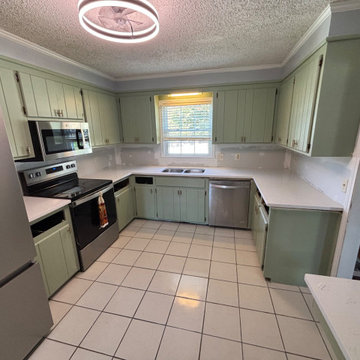
We put GK Carrara Gold quartz into a kitchen in West Columbia, and it's the kind of stone that gives a bright, classic look without asking the homeowner to babysit it. White background, soft gray veining moving through it, a clean bright field that works with just about any cabinet color. Engineered quartz gives us that light, veined look with a material that's built for how a kitchen actually gets used, day in and day out, with hot pans and spills and everything else that happens on a counter.
The templating on a job like this is where the work really happens before it ever shows up on a truck. We measure the cabinets and openings on site, build a template that accounts for every corner and cutout, and send it to the shop so the slab gets cut once, correctly. With a veining pattern like Carrara Gold's, we're paying close attention to how it flows across seams, especially anywhere two pieces meet on an island or a run of countertop that turns a corner. You want the eye to read it as one continuous piece, not two slabs bolted together.
Quartz like this is engineered to be non-porous, so there's no sealing required and no worrying about wine or oil soaking into the surface the way you'd have to watch with some natural stones. It resists scratching and staining well under normal kitchen use, though we still tell people to use a cutting board and a trivet for anything straight off the stove, since sustained high heat can still cause trouble at a seam or in the material itself. Day to day, it wipes clean with soap and water and holds its color and shine for years without a lot of fuss.
We finished the edge simple and eased, which keeps the whole thing looking clean and doesn't compete with the veining for attention. That's a small decision, but it's the right one on a stone with this much movement in the pattern already.
West Columbia's seen a good bit of kitchen work like this lately, and it's easy to see why a bright, veined quartz keeps coming up. It gives a kitchen that clean, timeless feel homeowners are after, backed by a material that's built to actually live in a working kitchen for the long haul.
Find the right local pro for your project
 Sweet Smiling Landscape Design
This project was do in collaboration with my friends at Sweetwater Collaborative. Sweetwater Collaborative is a non-profit organization that work to educate the public about water wise and regenerative landscape practices.
Funded by the City of Santa Barbara as well as several other business and agency Sweetwater Collaborative and I worked to installed this project with the help of volunteers. In a hands-on work shop we explained principles of water wise gardening and demonstrated best practices when installing sustainable landscapes.
When the owner of this property decided to build an ADU ( Auxiliary Dwelling Unit) in their back yard they expanded the roof line of their property. In order to be in compliance with new California building the project required that a portion of the rain water coming onto this property must be stored on the property. That is where we came into help. Directing down spouts into basins, or swales in the soil is one of the most efficient and cost-effective way to capture and store rain water on a piece of land.
Calculations were done to determine the volume of water coming of the roof line in a given rain event from the ADU. The calculations go: square footage of roofline times .62 times 1, for 1” of rain. That total gives you the amount of water in gallons. Then divide the number in gallons by 7.48 find the cubic feet in that number of gallons. Then a basin with that holding capacity was designed into the landscape. Then the plantings were chosen. In this project we went with an 100% California Native Plant palette. We did this to help educate people about all the benefits of growing natives and to show case some of the beautiful plants native to Southern California. Sothern California is how to some of the greatest biodiversity of plants in the world. Native Plants are best adapted to thrive conditions from which they are natively found plus they help provide forage to the native fauna such as birds and insects.
Now the tenants in the ADU can look out and enjoy this colorful garden without the home owners needing to pay a huge water bill.
 Rocky Tops Granite & Marble LLC
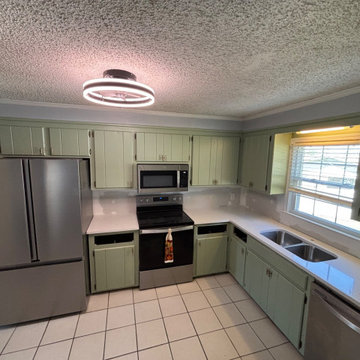
We put GK Carrara Gold quartz into a kitchen in West Columbia, and it's the kind of stone that gives a bright, classic look without asking the homeowner to babysit it. White background, soft gray veining moving through it, a clean bright field that works with just about any cabinet color. Engineered quartz gives us that light, veined look with a material that's built for how a kitchen actually gets used, day in and day out, with hot pans and spills and everything else that happens on a counter.
The templating on a job like this is where the work really happens before it ever shows up on a truck. We measure the cabinets and openings on site, build a template that accounts for every corner and cutout, and send it to the shop so the slab gets cut once, correctly. With a veining pattern like Carrara Gold's, we're paying close attention to how it flows across seams, especially anywhere two pieces meet on an island or a run of countertop that turns a corner. You want the eye to read it as one continuous piece, not two slabs bolted together.
Quartz like this is engineered to be non-porous, so there's no sealing required and no worrying about wine or oil soaking into the surface the way you'd have to watch with some natural stones. It resists scratching and staining well under normal kitchen use, though we still tell people to use a cutting board and a trivet for anything straight off the stove, since sustained high heat can still cause trouble at a seam or in the material itself. Day to day, it wipes clean with soap and water and holds its color and shine for years without a lot of fuss.
We finished the edge simple and eased, which keeps the whole thing looking clean and doesn't compete with the veining for attention. That's a small decision, but it's the right one on a stone with this much movement in the pattern already.
West Columbia's seen a good bit of kitchen work like this lately, and it's easy to see why a bright, veined quartz keeps coming up. It gives a kitchen that clean, timeless feel homeowners are after, backed by a material that's built to actually live in a working kitchen for the long haul.
 Rocky Tops Granite & Marble LLC
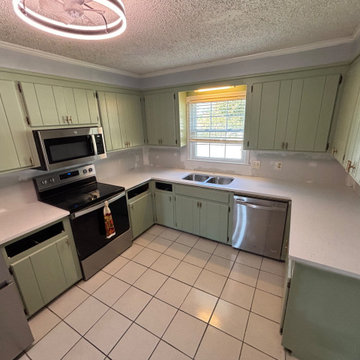
We put GK Carrara Gold quartz into a kitchen in West Columbia, and it's the kind of stone that gives a bright, classic look without asking the homeowner to babysit it. White background, soft gray veining moving through it, a clean bright field that works with just about any cabinet color. Engineered quartz gives us that light, veined look with a material that's built for how a kitchen actually gets used, day in and day out, with hot pans and spills and everything else that happens on a counter.
The templating on a job like this is where the work really happens before it ever shows up on a truck. We measure the cabinets and openings on site, build a template that accounts for every corner and cutout, and send it to the shop so the slab gets cut once, correctly. With a veining pattern like Carrara Gold's, we're paying close attention to how it flows across seams, especially anywhere two pieces meet on an island or a run of countertop that turns a corner. You want the eye to read it as one continuous piece, not two slabs bolted together.
Quartz like this is engineered to be non-porous, so there's no sealing required and no worrying about wine or oil soaking into the surface the way you'd have to watch with some natural stones. It resists scratching and staining well under normal kitchen use, though we still tell people to use a cutting board and a trivet for anything straight off the stove, since sustained high heat can still cause trouble at a seam or in the material itself. Day to day, it wipes clean with soap and water and holds its color and shine for years without a lot of fuss.
We finished the edge simple and eased, which keeps the whole thing looking clean and doesn't compete with the veining for attention. That's a small decision, but it's the right one on a stone with this much movement in the pattern already.
West Columbia's seen a good bit of kitchen work like this lately, and it's easy to see why a bright, veined quartz keeps coming up. It gives a kitchen that clean, timeless feel homeowners are after, backed by a material that's built to actually live in a working kitchen for the long haul.
 AG Construction & Remodeling
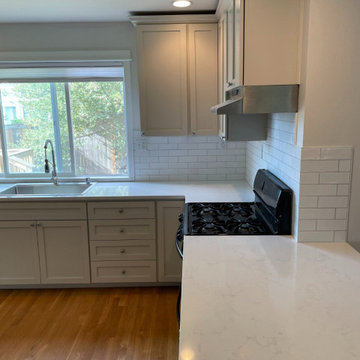
Kitchen Remodeling Project
Transform your kitchen into a stylish, functional, and inviting space with our professional kitchen remodeling services. We specialize in designing custom kitchens that maximize space, enhance functionality, and elevate the overall look of your home. Whether you’re looking for a modern upgrade or a complete kitchen renovation, we’re here to make your vision a reality.
Why Choose Our Kitchen Remodeling Services?
Personalized Designs: We customize every kitchen remodel to fit your unique needs and design preferences.
High-Quality Materials: We use premium, durable materials that ensure your kitchen remains beautiful and functional for years to come.
Skilled Craftsmanship: Our experienced team pays attention to every detail, ensuring exceptional results.
Our Kitchen Remodeling Process
Initial Consultation and Design: We start by discussing your ideas, lifestyle requirements, and budget. Our design team then creates a custom kitchen plan tailored to your needs.
Planning and Approvals: We take care of all necessary permits and develop a detailed project timeline.
Demolition and Installation: Our team carefully removes the existing kitchen and expertly installs new elements, including cabinets, countertops, flooring, and appliances.
Final Touches: We complete the remodel with finishing details such as modern backsplashes, stylish lighting, and elegant hardware.
Popular Kitchen Remodeling Features
Custom Cabinets and Innovative Storage Solutions
Durable Quartz, Granite, or Marble Countertops
Energy-Efficient and High-Performance Appliances
Contemporary Backsplashes and Ambient Lighting
Open-Concept Layouts for a Spacious, Airy Feel
Benefits of Kitchen Remodeling
Investing in a kitchen remodel enhances both the functionality and appearance of your home. It also boosts property value and makes your kitchen a more enjoyable space for cooking, entertaining, and spending time with family. Whether you’re upgrading an outdated kitchen or creating a brand-new space, our team can turn your dream kitchen into a reality.
Get Started Today!
Ready to begin your kitchen remodeling journey? Contact us today for a free consultation! Let us help you design and create the kitchen you’ve always wanted.

 American Design & Landscape
Use of retaining walls allow for a perfect location to plant herbs, vegetables and edible plants near the outdoor kitchen.
Inspiration for a mid-sized partial sun backyard mulch vegetable garden landscape in Denver for spring.
Inspiration for a mid-sized partial sun backyard mulch vegetable garden landscape in Denver for spring.

 Architect
Not all architectural imagery is created equal. Some renderings look obviously computer-generated, with flat lighting and plastic-looking materials that fail to convince viewers. Others are so precise that they are indistinguishable from photographs. That second category, realistic architectural visualization rendering, has become the standard expectation for architects, developers, and marketers who need imagery capable of withstanding close scrutiny from investors, buyers, and planning authorities. As audiences grow more visually literate, the tolerance for obviously artificial, video-game-like imagery in professional presentations continues to shrink.
What Sets Realistic Visualization Apart
Realistic architectural visualization goes beyond simply modeling a building in three dimensions. It requires physically accurate lighting simulation, true-to-life material properties, and careful attention to the small imperfections that make real-world photography convincing, such as subtle reflections, ambient occlusion in corners, and natural depth of field. The goal is an image that a viewer would believe was captured by a camera on-site rather than generated by software. Achieving that level of believability typically means dozens of small adjustments layered on top of one another rather than any single dramatic setting.
Realistic Versus Stylized Rendering Approaches
Stylized or conceptual renderings still have their place, particularly in early design phases when a looser, more artistic representation helps convey mood without locking in every detail. But once a project moves toward marketing, investment, or permitting, stakeholders need to see exactly what they are getting. Realistic visualization removes ambiguity, showing true material colors, accurate proportions, and honest lighting conditions rather than idealized abstractions. Understanding which approach a project actually needs at each stage helps clients avoid paying for a level of polish that a given milestone does not yet require.
Why Realism Builds Client and Buyer Confidence
Buyers and investors are understandably skeptical of overly polished or unrealistic marketing images. When a rendering looks convincingly real, it builds trust rather than raising doubts about what the finished project will actually look like. This is especially important in real estate presales, where buyers are committing significant sums based largely on visual material rather than a finished physical space. A rendering that later turns out to have misrepresented the finished product can also create legal and reputational exposure for developers, making accuracy a genuine business risk rather than just an aesthetic preference.
The Technical Pillars Behind Every Realistic Scene
Achieving true realism depends on several technical disciplines working together: physically based rendering engines that simulate how light actually behaves, high-resolution texture libraries that replicate real materials like stone, wood, and glass, and careful camera work that mimics real photographic lenses and exposure. Post-production adds a final layer of color grading and atmospheric effects that ties everything together into a cohesive, believable image. Each of these pillars depends on the others; even flawless material work can be undermined by lighting that behaves in a physically implausible way.
Applications Across Residential, Commercial, and Institutional Projects
Realistic visualization serves a wide range of building types, from single-family homes and luxury condominiums to office towers, hotels, schools, and healthcare facilities. Each typology has its own material palette and lighting expectations, and an experienced studio adjusts its approach accordingly, whether that means warm, inviting tones for a residential lobby or crisp, professional lighting for a corporate headquarters. Institutional clients such as universities and hospitals often have additional requirements around accessibility signage and wayfinding, which need to be represented accurately alongside the architecture itself.
How AIMIR CG Delivers Photorealistic Accuracy
Our studio specializes in realistic architectural visualization rendering that holds up under close inspection. Every project moves through a disciplined pipeline of modeling, texturing, lighting, and post-production review, with artists cross-checking material references and lighting studies against real-world photography. This attention to detail is why clients consistently describe our end product as impressive and our process as easy to work with. A dedicated quality review stage before delivery catches inconsistencies that might otherwise slip through a faster, less structured pipeline.
Common Challenges in Achieving True Realism
Realistic rendering is technically demanding. Common obstacles include accurately simulating how light bounces between surfaces, matching material reflectivity to real product specifications, and avoiding the uncanny, slightly artificial look that comes from over-processed images. Overcoming these challenges requires experienced artists who understand both the science of light and the craft of photography, not just software proficiency. Rushed production schedules are often the real culprit behind unconvincing renderings, since realism typically requires several iterative passes rather than a single render.
What to Look for in a Realism-Focused Rendering Studio
When evaluating a rendering partner, review their portfolio critically. Do the images include convincing shadow detail and material variation, or do surfaces look uniformly smooth and artificial? Ask about their revision process and how closely they work with architects to source accurate material and lighting references, since realism is ultimately the product of disciplined collaboration, not a single software setting. It also helps to ask for examples of past projects in a similar building type, since a studio's strengths can vary across typologies.
Ready for Renderings That Look Real
If your project deserves imagery that can stand up to the scrutiny of investors, buyers, and planning boards, AIMIR CG is ready to help. Our team combines technical precision with artistic judgment to deliver visualization that looks and feels genuinely real. Contact us to discuss how photorealistic rendering can strengthen your next presentation or marketing campaign, and let us show you examples from projects similar to your own.
 Homestead Doors, Inc.
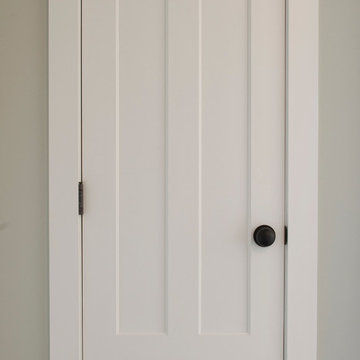
Door #10
FP3190
Flat 3 Panel Interior Door with Farmhouse Sticking
Solid Poplar stiles and rails
MDF panels
Painted White
1 x 4 door casing
1 x 6 baseboard
Bravura 336B door knob
Call us for a quote on your door project
419-684-9582
Visit https://www.door.cc

 Charlie
Buying term papers from academic writing services and freelance writers is becoming a popular deal. Therefore, former and current professors are entering this industry to write papers for money more and more often. Such services as CourseworkService.com are becoming popular among students all over the world. An interesting fact is that they hire not only former graduates but also out-of-work academics.
When professors find a compromise about cheating
Jennifer Sunseri, a former assistant professor, lost her job in 2009. She has been looking for a job for almost three years. At long last, she had abandoned all hope of finding a new job and started working as an academic writing service creating papers for college students.
Jenifer says, “I realize that it is legal, but highly unethical especially regarding the fact that I am a former professor. For me this is an equivalent of prostitution. But I have been living in a tight situation for years without an opportunity to visit a doctor or pay my bills. I am 53, and I have no kids to help me when I am out-of-work.”
She has been a tutor in Texas Tech since 1998, where she established a Slavic folklore course. Jenifer didn’t have any publications during her working years at Texas Tech, so when the time has come to apply for a venture, she realized that she has no chances and left. She moved to her sister and her mom and now she is living in her studio apartment with her two cats.
Sunseri was worried when she lost her job even though she has master’s degrees in Slavic linguistics and technical communications.
“I thought that my educator’s and writer’s skills will be useful,” she said. “However, I was shocked at the quantity of applications for an instructor at the local college, as well as for the office manager, or an adjunct at the local institution. Even an effort to apply for a substitute teacher failed. I cannot believe that those who have academic background, experience and a degree are in less demand than those have not.”
When Ph.D. and master’s degrees lose their magical power, people with academic background have no choice but to start their term paper writing career. Once professors become unemployed, one may say that they feel themselves like high school graduates looking for a part-time job. However, you will be surprised, but according to statistics sometimes those with high school or college diplomas are more welcome than people with higher education. The reason is that a lot of new job places in America were created at times of economic recovery and, therefore, they are low-paying and require specialists with lower skills. It turns to be that it is much easier to learn a less-educated worker and train him/her in a particular way suitable for a certain company or service than to teach a higher-educated worker all over again. In addition, higher educated job candidates are more selective about their choice.
How to become a ghostwriter if you have been punishing others for paper cheating
Jenifer was not fastidious. She was looking for a job that would correspond her skills and finally decided to try herself as an online editor. While searching for an editing job, she ran against term paper writing service. This company asked her to send examples of her works and complete a test task. She has been accepted as a ghostwriter.
In fact, term paper writing services gladly accept people with higher education and offer them to write papers of all kinds for money. Jenifer says that her first assignments for sale included a 5-page paper on public debt, 10-page paper on linguistics, and an editing work of someone else’s 20-page paper. All these assignments brought her about $150. Jenifer reports that it is possible to turn a useful penny by writing academic papers.
Jenifer realized that ghostwriting is a good source of income after she read an article about an anonymous academic writer who earned almost $70,000 a year writing papers for high school and college students.
“Currently this business becomes more and more popular. During finals and midterms, we have a lot of work to do since there are a lot of students ready to pay for a custom paper and submit it as their own,” he says. “It is no wonder that students use writing services. I have seen a lot of their writings, and I realize why they are so desperate about writing their assignments. Some of them are unable to compose a grocery list without additional help. They really need it. We help them pass a course, that’s all.”
Jenifer says that this work helped her be on form and develop her core skills like writing and researching all the time. She was unemployed for a long time and was afraid that her skills might become lower due to a lack of practice. However, at a writing company she never stops practicing. She claims that this is a hard work mostly because you have to be meet urgent deadlines.
The other challenge was a paper that she couldn’t complete once. The problem was not in a lack of competency, but in ethics. She discovered that it was an order for a student from her former place of work, Tech University. She says that she felt weird about completing this work and refused to write it.
“I became angry when I realized that I am going to serve a kid who is partying in Florida, while being a former faculty member of the university he is attending.”
Currently, Jenifer is working as a Russian translator. However, she is not abandoning academic writing industry even though she feels a little awkward about helping students to cheat. It is not that bad that unemployable professors have an opportunity to earn for living being ghostwriters even though it is not very ethical.
Ironically, a place of work like academic writing company that makes out-of-job educators feel that they are performing a crime assisting students in cheating seems to be the only place in the job market that values their experience in the sphere of education.

 Samantha Smith
Buying term papers from academic writing services and freelance writers is becoming a popular deal. Therefore, former and current professors are entering this industry to write papers for money more and more often. Such services as CourseworkService.com are becoming popular among students all over the world. An interesting fact is that they hire not only former graduates but also out-of-work academics.
When professors find a compromise about cheating
Jennifer Sunseri, a former assistant professor, lost her job in 2009. She has been looking for a job for almost three years. At long last, she had abandoned all hope of finding a new job and started working as an academic writing service creating papers for college students.
Jenifer says, “I realize that it is legal, but highly unethical especially regarding the fact that I am a former professor. For me this is an equivalent of prostitution. But I have been living in a tight situation for years without an opportunity to visit a doctor or pay my bills. I am 53, and I have no kids to help me when I am out-of-work.”
She has been a tutor in Texas Tech since 1998, where she established a Slavic folklore course. Jenifer didn’t have any publications during her working years at Texas Tech, so when the time has come to apply for a venture, she realized that she has no chances and left. She moved to her sister and her mom and now she is living in her studio apartment with her two cats.
Sunseri was worried when she lost her job even though she has master’s degrees in Slavic linguistics and technical communications.
“I thought that my educator’s and writer’s skills will be useful,” she said. “However, I was shocked at the quantity of applications for an instructor at the local college, as well as for the office manager, or an adjunct at the local institution. Even an effort to apply for a substitute teacher failed. I cannot believe that those who have academic background, experience and a degree are in less demand than those have not.”
When Ph.D. and master’s degrees lose their magical power, people with academic background have no choice but to start their term paper writing career. Once professors become unemployed, one may say that they feel themselves like high school graduates looking for a part-time job. However, you will be surprised, but according to statistics sometimes those with high school or college diplomas are more welcome than people with higher education. The reason is that a lot of new job places in America were created at times of economic recovery and, therefore, they are low-paying and require specialists with lower skills. It turns to be that it is much easier to learn a less-educated worker and train him/her in a particular way suitable for a certain company or service than to teach a higher-educated worker all over again. In addition, higher educated job candidates are more selective about their choice.
How to become a ghostwriter if you have been punishing others for paper cheating
Jenifer was not fastidious. She was looking for a job that would correspond her skills and finally decided to try herself as an online editor. While searching for an editing job, she ran against term paper writing service. This company asked her to send examples of her works and complete a test task. She has been accepted as a ghostwriter.
In fact, term paper writing services gladly accept people with higher education and offer them to write papers of all kinds for money. Jenifer says that her first assignments for sale included a 5-page paper on public debt, 10-page paper on linguistics, and an editing work of someone else’s 20-page paper. All these assignments brought her about $150. Jenifer reports that it is possible to turn a useful penny by writing academic papers.
Jenifer realized that ghostwriting is a good source of income after she read an article about an anonymous academic writer who earned almost $70,000 a year writing papers for high school and college students.
“Currently this business becomes more and more popular. During finals and midterms, we have a lot of work to do since there are a lot of students ready to pay for a custom paper and submit it as their own,” he says. “It is no wonder that students use writing services. I have seen a lot of their writings, and I realize why they are so desperate about writing their assignments. Some of them are unable to compose a grocery list without additional help. They really need it. We help them pass a course, that’s all.”
Jenifer says that this work helped her be on form and develop her core skills like writing and researching all the time. She was unemployed for a long time and was afraid that her skills might become lower due to a lack of practice. However, at a writing company she never stops practicing. She claims that this is a hard work mostly because you have to be meet urgent deadlines.
The other challenge was a paper that she couldn’t complete once. The problem was not in a lack of competency, but in ethics. She discovered that it was an order for a student from her former place of work, Tech University. She says that she felt weird about completing this work and refused to write it.
“I became angry when I realized that I am going to serve a kid who is partying in Florida, while being a former faculty member of the university he is attending.”
Currently, Jenifer is working as a Russian translator. However, she is not abandoning academic writing industry even though she feels a little awkward about helping students to cheat. It is not that bad that unemployable professors have an opportunity to earn for living being ghostwriters even though it is not very ethical.
Ironically, a place of work like academic writing company that makes out-of-job educators feel that they are performing a crime assisting students in cheating seems to be the only place in the job market that values their experience in the sphere of education.
 Tile Doctor Ltd
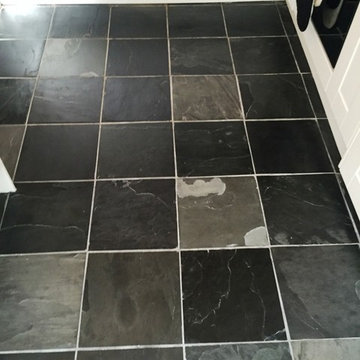
These Slate kitchen floor tiles at a property in Oxford were in good physical condition, but had become dull over time due to heavy usage, and upon close inspection the grout was stained. The customer contacted me as she was keen to get the tiles back to looking their best. This would require a thorough clean and the application of a fresh sealer.
While Slate floor tiles are reputed to be hard wearing and damage resistant – and are therefore a popular choice for high traffic areas like kitchens – this does not exclude them from needing regular maintenance.
To begin, I mixed a strong solution of Tile Doctor Pro Clean and water. Pro-Clean is a versatile cleaner that when used in a weak dilution can be used as a regular cleaner for most types of natural stone floor, including more sensitive stones such as Limestone and Marble.
The cleaning was then spread across the surface area of the floor, and left it to dwell for ten minutes to allow the solution to seep into the pores of the stone and lift the ingrained dirt to the surface. Pro-Clean in a strong dilution also functions as a stripping product, meaning it works to strip away any old and ineffectual sealer.
I then scrubbed the solution into the floor using a stiff scrubbing brush, paying particular attention to the grout in order to break down the visible staining. The tiles and grout lines came up really well during the cleaning process – this became clear once I had rinsed the floor and removed the residue using a wet vacuum.
With the customer eager to have the job completed quickly, I installed portable room dryers and utilised a heat gun to dry the floor, allowing me to seal it on the same day.
Once I had ensured the floor was completely dry, I commenced the sealing process by firstly applying a coat of Tile Doctor Stone Oil, a product which is designed to bring out all of the natural dark shades in the Slate.
When this was dry, I applied a single coat of Tile Doctor Colour Grow. This is an impregnating sealer, meaning that it soaks into pores of the stone to provide durable protection from within against ingrained dirt and stains. Colour Grow also enhances the natural colours in the stone even further.
The customer was amazed by just how big a difference could be made to the tiles in the space of just a day. Although the tiles were generally in very good nick, my main task was to be liven them up – judging by the before and after photos, I think this was achieved. And, now that they have been treated to a fresh seal, the tiles will be prevented from quickly becoming dull again.
Barry Woodward
Oxfordshire Tile Doctor
 Imperial Tile & Stone Anaheim
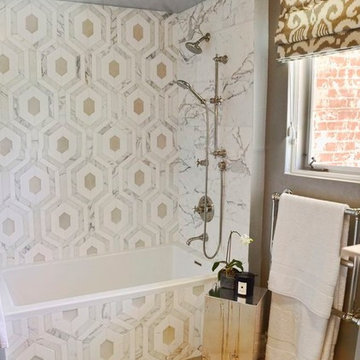
Marble is fun! If you have a weakness for geometrical patterns this will be the perfect tile for you, this pattern brings together Beach glass and Calacata Marble. The best part, you get to choose the color of the glass.

 safe ZOnea
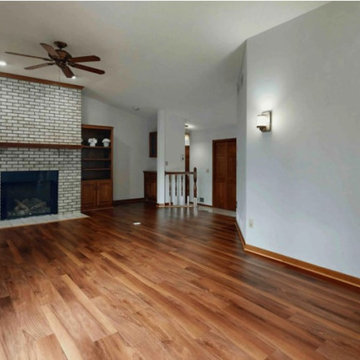
Flooring needs vary widely depending on the space. A homeowner seeking beautiful floors for their living room has different priorities than a business owner outfitting a commercial space. Yet in both cases, the right flooring well chosen and well installed makes an enormous difference. This guide looks at hardwood flooring for homes and flooring for commercial spaces, including the increasingly popular option of engineered hardwood, and what those in the Chicago area should know about each.
The enduring appeal of hardwood
Hardwood flooring has an enduring appeal that few other materials can match. It brings warmth, beauty, and a sense of quality to a home, complementing a wide range of styles from traditional to modern. Hardwood floors add character and elegance to a space, and they're often seen as a desirable feature that can enhance a home's appeal and value. For many homeowners, hardwood represents the ideal flooring choice.
Part of hardwood's appeal is its longevity. Quality hardwood floors, properly cared for, can last for decades, and they can often be refinished over time to restore their appearance, extending their life even further. This durability makes hardwood a worthwhile long-term investment. Combined with its timeless beauty, this longevity explains why hardwood remains so popular despite the many flooring options available. Homeowners seeking this classic look often invest in quality hardwood flooring chicago for their homes. Understanding the enduring appeal of hardwood helps homeowners appreciate why it remains a favorite and consider it for their spaces.
Flooring for commercial spaces
Commercial spaces have their own distinct flooring needs, quite different from those of a typical home. A commercial environment whether an office, retail space, restaurant, or other business often sees high traffic, heavy use, and demands that residential flooring might not withstand. Commercial flooring must be durable, functional, and appropriate for the specific business and its needs, while also contributing to the space's appearance and atmosphere.
Choosing flooring for a commercial space involves considering factors like durability, maintenance requirements, safety, appearance, and suitability for the particular use. The flooring in a commercial space affects not just its look but its functionality and the impression it makes on customers and clients. Because commercial spaces have demanding requirements, selecting appropriate, durable flooring and having it properly installed is especially important. Business owners in the Chicago area often work with professionals for their commercial flooring chicago needs. Understanding that commercial spaces have distinct flooring needs helps business owners make appropriate choices for their spaces.
The rise of engineered hardwood
For those who love the look of hardwood but want added versatility, engineered hardwood has become an increasingly popular option. Engineered hardwood features a real wood surface layer over a constructed core, offering the beauty of hardwood with some practical advantages. It provides the appearance of traditional hardwood while offering enhanced stability and versatility in certain applications.
Engineered hardwood's construction gives it greater dimensional stability than solid hardwood in some respects, which can make it suitable for a wider range of applications and conditions. This versatility, combined with the authentic wood appearance, makes engineered hardwood an appealing option for many homeowners and even some commercial applications. It offers a way to enjoy the beauty of hardwood in situations where solid hardwood might be less ideal. Homeowners considering this option often explore engineered hardwood flooring Chicago for their spaces. Understanding the rise of engineered hardwood helps people consider whether it offers the right combination of beauty and practicality for their needs.
Matching flooring to the space and use
Whether for a home or a commercial space, matching flooring to the specific space and its use is key to a good result. Different spaces and uses have different requirements, and the ideal flooring for one situation may be unsuitable for another. A residential living room, a busy commercial space, and an area exposed to particular conditions all call for flooring suited to their needs.
This is why understanding the demands of a space is so important in choosing flooring. Factors like the level of traffic, the type of use, exposure to moisture or other conditions, maintenance considerations, and the desired appearance all factor into the choice. Matching the flooring to these factors ensures a result that performs well and looks good over time. For commercial spaces in particular, the demands can be significant, making appropriate flooring choices essential. Understanding the importance of matching flooring to the space and its use helps both homeowners and business owners make choices that serve their needs well and provide lasting satisfaction.
The value of quality installation
For any flooring project, whether residential or commercial, quality installation is essential. Even the best flooring won't perform or look its best if it's not installed properly. Proper installation ensures the flooring is laid correctly, looks its best, and lasts as it should, standing up to the demands placed on it. This is especially important in commercial settings, where flooring endures heavy use.
Different flooring types have their own installation requirements, and skilled installers know how to handle each properly, from preparing the space to executing the correct techniques. Quality installation involves attention to the details that make the difference between a lasting, attractive result and a disappointing one. Given the investment that flooring represents and, for businesses, its impact on operations and impressions ensuring quality installation is well worth it. Understanding the value of quality installation helps homeowners and business owners recognize why the choice of who does the work matters as much as the flooring itself.
Making the right choice
Ultimately, making the right flooring choice whether for a home or a business involves understanding the options, considering the specific needs of the space, and ensuring quality installation. Hardwood offers timeless beauty for homes, commercial flooring meets the demanding needs of business spaces, and engineered hardwood provides a versatile option combining beauty and practicality. The right choice depends on the particular space, use, and goals.
Taking the time to understand the options and match them to the specific situation, rather than making a hasty choice, pays off in the quality and longevity of the result. Flooring is a significant investment that shapes a space for years, so getting it right matters. Whether outfitting a home or a commercial space, thoughtful choices and quality installation lead to results that look good, perform well, and provide lasting value. Understanding how to make the right choice empowers homeowners and business owners to achieve flooring results they'll be happy with for years to come.
The bottom line
Flooring needs vary widely between residential and commercial spaces, and understanding the options helps in making the right choice for each. Hardwood offers timeless beauty and longevity for homes, commercial flooring meets the demanding requirements of business spaces, and engineered hardwood provides a versatile option combining the beauty of wood with practical advantages. Matching flooring to the specific space and use, and ensuring quality installation, are essential to a good result in any setting. By understanding these options and priorities, those in the Chicago area can make flooring choices that serve their spaces well and provide lasting satisfaction. Whether the goal is timeless beauty at home or durable performance in a demanding commercial setting, thoughtful choices paired with quality installation deliver results that last.

 Top Price Buyers
What Do I Need To Do To Sell My House In Laveen Arizona
September 20, 2019
By brianpascal
You want to sell your Laveen house, and you want to get top dollar.
Excellent!
But “What do I need to do to sell my house in Laveen“?
Woman holding tablet pc with question marks hiding her face
Here are some tips on how to get your home ready to sell if you’re looking for top dollar that the market will bear:
*NOTE: These instructions are if you’re looking to get full retail value for your house sale. However, if you don’t want to do the things below… or don’t have the time or money to do the things below… you can still sell your Laveen house fast for a fair value in a win-win sale that’ll save you time and expense.
What Do I Need To Do To Sell My House In Laveen Arizona - Cleaning the Floor
2) Cultivate a cohesive, neutral style. You don’t have to paint everything off-white. In fact, some subtle colors can really help change the perception of spaces – for example, a soft yellow will help brighten up a dark kitchen, while a deep dark blue or green will help a bright bedroom to feel like a calm place to sleep (but be careful, dark colors will also make rooms feel small).
Spend the money to get high-quality paint and professional help. Subconsciously people will pay more money for a property with just the right colors and very neat lines – it makes the home feel better built, even though it’s just paint.
Optical illusions are real, and psychologists study this stuff. Don’t believe me?
Look it up. And don’t neglect the outside and just do the inside, or anything else that’s unbalanced.
3) Fix or replace anything that’s broken. Yeah, it might feel like a waste of money to spend an extra couple hundred bucks on a dishwasher that someone else might just pull out and replace again. But really, quite a few buyers will get a home inspection and use the opportunity to negotiate with you. As the seller, you’ll often end up paying more if you try to hide neglected maintenance from the purchaser – and of course you don’t want to be guilty of fraud.
Make sure you stay in compliance with all the laws.
It’s often a good use of money to hire a home inspector to come through before you put the property on the market. If you ask in advance, they’ll often charge you a tiny rate to come back after you’ve done a bunch of minor repairs and deliver you a clean bill of health. Prospective buyers love to see an independent report on the condition of the house – it makes them feel very comfortable with the purchase.
4) Make only the necessary improvements. The biggest mistake people make when getting their house ready to sell is over-improving. They often spend too much money on customized frills that can’t be recovered in the sale.
Paint is about the only safe investment – it’s easy to overspend on almost everything else, and it’s easy to get ripped off by unscrupulous contractors.
It’s important to know what improvements will produce a return on investment to avoid wasting money.
5) Get expert opinions. You should definitely find at least a few decent real estate brokers who will help you price your property, but be honest with them. If you’re going to market the property on your own, don’t make enemies by lying about your intentions. Great brokers are rare, but they make more money for their clients than they earn.
6) Have a really great marketing plan. Again, great brokers earn their value by doing this work and spreading the advertising expenses across many clients. It’s pretty expensive and time-consuming to start from scratch on your own, but if you’re already a marketing expert you’re ahead of the pack.
If you’re not, spend the time listening to what the best brokers do to sell houses in Laveen – just to educate yourself on the options.
What Do I Need To Do To Sell My House In Laveen Arizona - Cash Offer7) Get a cash offer. We buy houses all over the Laveen area, and we do all the work so you don’t have to deal with any of this stuff.
——————————————-
Don’t Want To Do The Things Above Yourself? But Still Want To Sell Your Laveen Arizona House Fast?
While everyone wants to get as much as they possibly can from their house sale… not everyone can do the things or wants to do the things required to sell it at full retail value to an end buyer.
Doing the repairs, cleaning the property up, upgrading the property, marketing the property… those all take money and can take lots of time.
If you have the funds to do these things... AND you can wait the 3-9 months it takes to sell houses in this market… then you’ll be better off financially to do those things then list it on the MLS (the main property listing service that real estate agents use).
If you don’t have the funds to do these things... AND can’t wait months to sell your house… then you may be a perfect fit for our local Laveen house buying service. You’ll submit basic info about your house over here on our website, we’ll evaluate your house, we’ll make you a fair all-cash offer on your house, and you can decide if it’s a fit for you.
What Do I Need To Do To Sell My House In Laveen Arizona Exterior House Arizona Photo
Then we can close FAST (often times within 7 days) if you need us to.
Take a look at what we’ll pay you not to do anything versus the time, expense and hassle involved with doing it on your own.
So if you’re still asking “what do I need to do to sell my house in Laveen“… now you have 2 solid options.
Either…
Fix the property up and get it all nice and ready with the steps above to sell it at top dollar
Let us do all of the work and we’ll make you a cash offer on your house in AS-IS condition. This saves you time, money, and gets the hassle off of your hands.
If you need to sell a property near Laveen, we can help you.
We buy properties like yours from people who need to sell fast.
We’d like to make you a fair offer on your Laveen house
Give us a call anytime at (602) 560-9260 or
fill out the form on this website today!
 Northern Roof Tiles
Architect: Andre Tchelistcheff Architects New York. NY
Builder: Xhema of Greenwich CT
Installer: TRM Enterprises Bridgehampton NY
Back story.
Northern has worked with both Xhema and TRM many tiles. We have worked with Andre before he branched out on his own.
Originally Xhema’s contact was to replace the roof and repair the garage, which as some point had been made into an indoor swimming pool without adequate ventilation. The budget was about $8m and there were 20 drawings.
By the time the job was 6 months old the scope of work has expanded to over $30m and over 200 drawings had been produced.
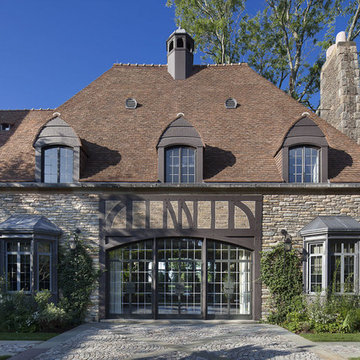
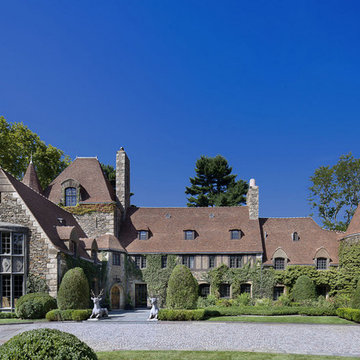
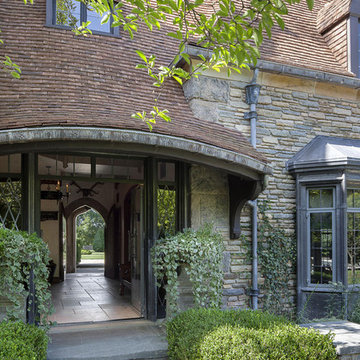
Northern was contacted to visit the site and evaluate the existing roof. Although the house had been added to over the years the same tile was used but due to the location of the house the color of the tile varied considerably from the front to the back.
Northern identified a large number of custom details which would require us to:
1) Match the existing Field tile in size, thickness (it was actually thicker at the butt and reduced to ½” where the tile is overlapped) , surface texture and the color.
2) Make tiles that are curved in their length to suit the curved rafter on the gabled dormers.
3) Make the curved tiles to suit the low slope octagonal tower.
4) Make the curved tiles and Arris style hips to suit the hipped dormers with the curved rafters.
5) Make the segmented tiles to suit the round turret.
6) Make the custom arris style hip tiles for the octagonal tower.
7) Make the custom Arris style hip to suit the different roof pitches as well as the varying splays at the eaves.
8) Make the custom pieces to suit the swept valleys
Simon broke down each section of the roof. He indented all items for each section and agreed the measure etc with the installers. This ‘Project Bible’ became an invaluable tool for the installer, our tile makers and us.
We shipped some samples from the original roof to Sahtas who replicated tall the details. I was visiting factory and delayed my return to the Saturday so that the tiles coming out of the kiln late Friday night could be wrapped and packed into newly purchase suit cases. I arrived home late Saturday evening and Simon picked me up Sunday afternoon and drove us down to Greenwich for an 8 am meeting with the clients. When we unpacked the tiles they were still warm and Hilfiger signed off on the color, although his wife suggested we make them a bit darker a ‘as he has a dreadful sense of color!’
We took Vincent Liot, owner of TRM to the factory twice so that he could oversee the prototyping of all the myriad custom pieces. This was an invaluable move as he pre-approved all the pieces before they were shipped.
The installation was completed and everyone was very pleased with the final outcome.
The Hilfiger’s estate manager told me that a group of friends who were staying the weekend after all the work was completed were heard to ask Mr. Hilfiger ‘I thought you were having a new roof’…to which he responded ‘we did but you can’t tell, which as the plan” …perfect!
In refection this is probably the most complicated roof Northern has ever had the pleasure to supply. We learned a lot of very valuable lessons but in future when we are asked how did we do it we will answer ‘that is for us to know and for you to pay for!’
 Northern Roof Tiles
Architect: Andre Tchelistcheff Architects New York. NY
Builder: Xhema of Greenwich CT
Installer: TRM Enterprises Bridgehampton NY
Back story.
Northern has worked with both Xhema and TRM many tiles. We have worked with Andre before he branched out on his own.
Originally Xhema’s contact was to replace the roof and repair the garage, which as some point had been made into an indoor swimming pool without adequate ventilation. The budget was about $8m and there were 20 drawings.
By the time the job was 6 months old the scope of work has expanded to over $30m and over 200 drawings had been produced.
Northern was contacted to visit the site and evaluate the existing roof. Although the house had been added to over the years the same tile was used but due to the location of the house the color of the tile varied considerably from the front to the back.
Northern identified a large number of custom details which would require us to:
1) Match the existing Field tile in size, thickness (it was actually thicker at the butt and reduced to ½” where the tile is overlapped) , surface texture and the color.
2) Make tiles that are curved in their length to suit the curved rafter on the gabled dormers.
3) Make the curved tiles to suit the low slope octagonal tower.
4) Make the curved tiles and Arris style hips to suit the hipped dormers with the curved rafters.
5) Make the segmented tiles to suit the round turret.
6) Make the custom arris style hip tiles for the octagonal tower.
7) Make the custom Arris style hip to suit the different roof pitches as well as the varying splays at the eaves.
8) Make the custom pieces to suit the swept valleys
Simon broke down each section of the roof. He indented all items for each section and agreed the measure etc with the installers. This ‘Project Bible’ became an invaluable tool for the installer, our tile makers and us.
We shipped some samples from the original roof to Sahtas who replicated tall the details. I was visiting factory and delayed my return to the Saturday so that the tiles coming out of the kiln late Friday night could be wrapped and packed into newly purchase suit cases. I arrived home late Saturday evening and Simon picked me up Sunday afternoon and drove us down to Greenwich for an 8 am meeting with the clients. When we unpacked the tiles they were still warm and Hilfiger signed off on the color, although his wife suggested we make them a bit darker a ‘as he has a dreadful sense of color!’
We took Vincent Liot, owner of TRM to the factory twice so that he could oversee the prototyping of all the myriad custom pieces. This was an invaluable move as he pre-approved all the pieces before they were shipped.
The installation was completed and everyone was very pleased with the final outcome.
The Hilfiger’s estate manager told me that a group of friends who were staying the weekend after all the work was completed were heard to ask Mr. Hilfiger ‘I thought you were having a new roof’…to which he responded ‘we did but you can’t tell, which as the plan” …perfect!
In refection this is probably the most complicated roof Northern has ever had the pleasure to supply. We learned a lot of very valuable lessons but in future when we are asked how did we do it we will answer ‘that is for us to know and for you to pay for!’
 Northern Roof Tiles
Architect: Andre Tchelistcheff Architects New York. NY
Builder: Xhema of Greenwich CT
Installer: TRM Enterprises Bridgehampton NY
Back story.
Northern has worked with both Xhema and TRM many tiles. We have worked with Andre before he branched out on his own.
Originally Xhema’s contact was to replace the roof and repair the garage, which as some point had been made into an indoor swimming pool without adequate ventilation. The budget was about $8m and there were 20 drawings.
By the time the job was 6 months old the scope of work has expanded to over $30m and over 200 drawings had been produced.
Northern was contacted to visit the site and evaluate the existing roof. Although the house had been added to over the years the same tile was used but due to the location of the house the color of the tile varied considerably from the front to the back.
Northern identified a large number of custom details which would require us to:
1) Match the existing Field tile in size, thickness (it was actually thicker at the butt and reduced to ½” where the tile is overlapped) , surface texture and the color.
2) Make tiles that are curved in their length to suit the curved rafter on the gabled dormers.
3) Make the curved tiles to suit the low slope octagonal tower.
4) Make the curved tiles and Arris style hips to suit the hipped dormers with the curved rafters.
5) Make the segmented tiles to suit the round turret.
6) Make the custom arris style hip tiles for the octagonal tower.
7) Make the custom Arris style hip to suit the different roof pitches as well as the varying splays at the eaves.
8) Make the custom pieces to suit the swept valleys
Simon broke down each section of the roof. He indented all items for each section and agreed the measure etc with the installers. This ‘Project Bible’ became an invaluable tool for the installer, our tile makers and us.
We shipped some samples from the original roof to Sahtas who replicated tall the details. I was visiting factory and delayed my return to the Saturday so that the tiles coming out of the kiln late Friday night could be wrapped and packed into newly purchase suit cases. I arrived home late Saturday evening and Simon picked me up Sunday afternoon and drove us down to Greenwich for an 8 am meeting with the clients. When we unpacked the tiles they were still warm and Hilfiger signed off on the color, although his wife suggested we make them a bit darker a ‘as he has a dreadful sense of color!’
We took Vincent Liot, owner of TRM to the factory twice so that he could oversee the prototyping of all the myriad custom pieces. This was an invaluable move as he pre-approved all the pieces before they were shipped.
The installation was completed and everyone was very pleased with the final outcome.
The Hilfiger’s estate manager told me that a group of friends who were staying the weekend after all the work was completed were heard to ask Mr. Hilfiger ‘I thought you were having a new roof’…to which he responded ‘we did but you can’t tell, which as the plan” …perfect!
In refection this is probably the most complicated roof Northern has ever had the pleasure to supply. We learned a lot of very valuable lessons but in future when we are asked how did we do it we will answer ‘that is for us to know and for you to pay for!’
13