
Search results for "Site growth" in Home Design Ideas
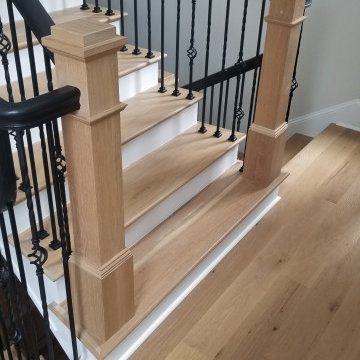

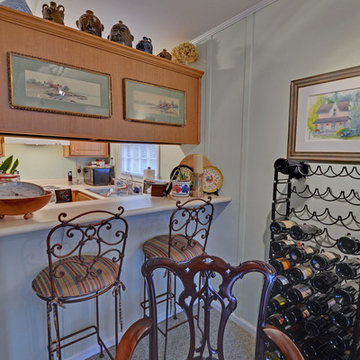
 Envision Web
Stuart Wade, Envision Virtual Tours
Envision Virtual Tours and High Resolution Photography is your best choice to find just what you are looking for in the Ellijay, Ga. area .Ellijay, Georgia, known as the “Apple Capital” of Georgia, is located between the Ellijay and Cartecay Rivers where they join to make the Coosawattee River and is the county seat of Gilmer County, Georgia. The origin of the city’s name is not certain but thought to be the English derivative of an Indian word(s) meaning “many waters”, “place of green things” or “new ground”. Some histories say it may have been named for an Indian chief.
Inhabited for countless years by the Cherokee people indigenous to the North Georgia, the area was first mentioned as a village and trade center before the onslaught of white settlers inhabited the region. During the 1830’s both white settlers and Indians occupied Ellijay. During the original land lottery in 1832, Martin Scalf acquired the 160 acre lot where the town now stands. In 1833, Clemonds Quinland bought 10 acres from Scalf, retained one acre for himself and donated the rest of the purchase to the County. A plan for twenty town lots, streets and a public square was created and the streets were oriented to allow maximum sunlight exposure to the buildings.
Proceeds from lot sales were used to build a jail and courthouse and pay other city expenses. During this same year, Gilmer County was appropriated $800.00 from the State to build a school, and a three-acre lot was donated for the city cemetery. On December 29, l834, Ellijay was incorporated and designated as the County seat of Gilmer County. By 1837, the town had twenty dwellings, three stores and one attorney. Most of these early buildings were of log construction.
Many roads led to Ellijay by 1849. The population had grown to 150 by 1850 and the town at five stores. Some wood-frame buildings were being constructed at this time and in 1854, a new courthouse was built in the center of the square, replacing the earlier building. The County’s first newspaper was the Ellijay Courier, started in 1875, and during this time period, Ellijay was a stop on the stagecoach line. The railroad bridge over the Cartecay River was completed in 1884 and the town now had rail service.
With the arrival of the railroad and subsequent tracks to White Path, Ellijay began to grow much faster. Many hotels were constructed and land was donated for a depot east of town. More industries, such as a cheese factory and the Shippen Brothers Lumber Mill, located in Ellijay. By 1898, the city had expanded its limits in every direction and now included the depot.
By 1900, all the buildings on the town square were brick. This included the recently completed Hyatt Hotel. Most of the other buildings in town were still of log construction, but new wood-frame buildings were being built. The Shippen Brothers Lumber Company production was expanding and exporting their lumber to Europe. Within the next few decades, this company grew to be one of the largest employers in Ellijay, often with five to six million feet of lumber in the yard at one time.
The population of Ellijay grew to 659 by 1910, and began to acquire many new modern conveniences such as electric lights and power, a telephone company and many new businesses.
Then in 1912, a fire ravaged the city, destroying 23 buildings. As a result, many new buildings were constructed under new and stricter fire and safety guidelines. The population, however, decreased slightly at this time to 632 in 1920.
During the 1920’s the town’s population began to grow again and, by this time, apples were being shipped out of the county and new storage facilities were built. Chickens were also shipped to markets outside of Ellijay and Gilmer County.
From the mid 1930’s to 1950, Ellijay received much assistance from the Federal WPA Programs. The old courthouse was removed from the center of town square and the Hyatt Hotel was remodeled to be the new courthouse. A park was created on the site of the old courthouse and the streets around the square were paved. A new street was built at this time entering town from the northeast. Other new roads, bridges, sidewalks and gutters were constructed to improve the city. A school and gymnasium were also built and other structures improved.
This growth began to impact the city’s infrastructure and in the l950’s and l960’s, a period of upgrading water systems, roads, and power supplies began. New low-rent housing appeared in l960 and a new hospital was built in l957. Georgia Highway 5 was widened in l962, new buildings around the square replaced old ones and some were remodeled. In 1974, the hospital was enlarged.
Currently, Ellijay attracts tourists who love the small-town feel and friendly atmosphere. Hotels and restaurants, unique shops, antiques and art galleries lend their charms to those who visit. A new courthouse constructed to resemble the old one, new streetscaping, family-oriented downtown events and the beautification of the square have stepped up the social and economic activity and have made Ellijay a popular destination.
 Artscape Garden Associates Ltd
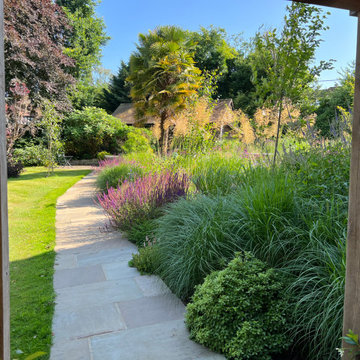
This paving and planting scheme features new hard landscaping elements and a new planting scheme. Artscape was initially briefed to extend and enhance the patio in the garden of a lovely home in the village of Cookham Dean in Berkshire. Our clients wanted to increase the size of the paved area so they could use it more frequently for relaxing and dining in the sun during the day. As well as increasing its size and practicality, they wanted the terrace to look and feel more inviting. The existing site was a mixture of brick paving, which was slippery underfoot, and tired concrete crazy paving. The patio also had stone retaining walls surrounded by sloped lawns and a few poorly maintained and mismatched shrubs.
Redesigned and repaved area
We first created a new, larger layout with a series of wider steps closer to the house, making a more inviting and welcoming area. Our landscapers paved the area with coursed sandstone, renowned for its incredible strength and durability. The earthy tones and unique texture of the sandstone gives it a natural timeless look which blends sympathetically with the garden setting. The worn finish of the paving also makes the surface safer to walk on. The edge of the paving curves in line from the end of the house to visually link the areas.
Bullnosed edges enhance looks and safety
Bullnosing provides the garden step edges with a smooth, luxury appearance, which also enhance safety. Safety is an important factor to consider when renovating or building new steps and paved areas. Smooth, rounded bullnosed steps or edges means there won’t be any harshly cut, sharp edges to injure someone should they trip or fall. Our Artscape paving experts can advise on the best bespoke, professionally profiled bullnose edges to suit the needs of your garden project.
Replacing sloped lawns with plants
Our initial brief was to create a new planted border just around the paved area. However, after various discussions and designs, our clients decided to follow our recommendation to expand the planting, so it included the whole sloping bank. The planting design also included the addition of small trees to create vertical interest.
New nature-friendly planting
The planting features an easy-to-maintain mix of perennials, grasses, and shrubs. This adds softness to the seating area and brings an everchanging display of flowers, foliage, textures and colours to the garden. The plants will attract more birds and butterflies to the garden, and will be beneficial for insects too.
The lawn was doing very little to support a diversity of insects and birds. Replacing even a small section of lawn with perennial flowers, shrubs, grasses, wildflowers, or groundcovers will benefit nature and wildlife. As well as supporting greater biodiversity, plants are more environmentally friendly than maintaining a lawn. Lawns are drought tolerant and will recover even if the grass has turned brown and patchy in a heatwave. But to keep the lawn looking lush, green, and beautiful in a hot, dry spell will require constant and wasteful watering.
The planting is informal and includes grasses, taking inspiration from the fields opposite. Ornamental grasses soften the scheme and bring movement to the garden as they shimmer in the slightest of breezes. Grasses are easy to grow and require little ongoing care. The main maintenance task is to cut the planting back in spring ready for the new growth to come through.
To keep the whole project within our client’s budget, we retained the existing walls, simply carrying out some small repairs and modifications where necessary. We were also able to add stunning new atmospheric lighting to the older existing lighting circuit to illuminate the area at night.
Find the right local pro for your project
 Flooring Supply Shop
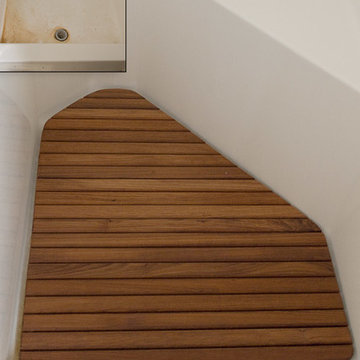
Bathroom and Shower Teak Wood Mat
Superior Quality
Price start at $89.95
5 sizes and custom order available
Teak Wood Mat Rectangle 14" x 20" - $89.95
Teak Wood Mat Square Round Corners 30" x 30" - $295.00
Teak Wood Mat Rectangle 14" x 32" - $165.00
Teak Wood Mat Rectangle 36" x 30" - $345.00
Teak Wood Mat Rectangle 18" x 25" - $165.00
Custom mats at $0.48 per sq inch
We offer a wide range of standard sizes and styles plus we can create just about any size, shape or design that you can imagine. Whether you want to add a non-slip surface by your tub or totally surround your shower with a rich, custom mat, we can do it. Best of all, these mats can be used inside the shower as well as outside!
Feature
• Ideal for indoor or outdoor use
• Marine grade stainless steel screws are used in the construction
• Made of natural teak wood
• All screws are countersunk into the bottom supports and into the top slats.
• Ideal for use in or out of the shower and or high-moisture areas.
• Slip and bacteria resistant
• Battens are 1/4" rounded on the edge of each top batten to assure comfort
• All mats are built on 3/4" x 3/4" solid teak supports
• Anti-bacterial rubberized strips are bonded to each teak support to assure the mat stays in place
Plantation Teak
Our FSC certified Plantation Teak comes from trees harvested from an actual plantation of younger Teak trees. Since we only use the heartwood of the tree, it has all the same qualities of old growth Burmese Teak but it is a little lighter in color.
Handcrafted in the USA
Ship same day Worldwide
Our store open to the Public
5047 W Jefferson Blvd Los Angeles CA 90016
Mon - Fri 7:00 am - 5:00pm
Sunday 8:00 am- 12:00 noon
For more product visit our web site http://www.flooringsupplyshop.com
Or call us at 323-731-8453
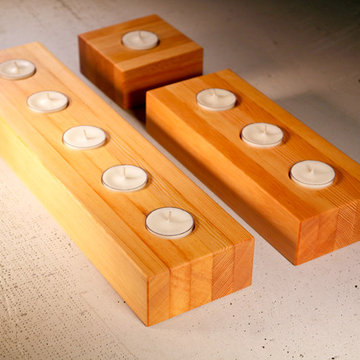
 Todd Alan Woodcraft
Reclaimed Vertical Grain Fir Tea Light Candle holder.
Our decorative tea light holder made from reclaimed old growth, vertical grain Douglass Fir, adds a modern look of rustic charm to your events charcuterie spread, home dining area, or around your personal space during relaxation time.
Choose size in the drop down menu on site. These are sold as individual pieces OR as a full set.
Sizes:
Single Candle Holder - 4" x 4" x 2"
Triple Candle Holder - 10" x 4" x 2"
Five Candle Holder - 16" x x 4" x 2"
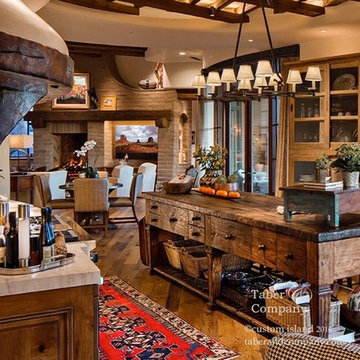
 Taber & Company
Taber & Company handcrafts and finishes custom kitchen islands wood countertops from old growth reclaimed and salvaged wood. Taber & Company mills wood on site from logs with the ability to cut any thickness and lengths.
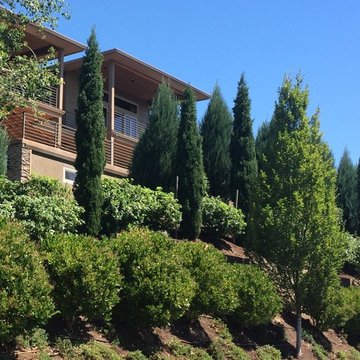
 Seasons Garden Design LLC
AFTER: View after 7 years of growth. Note that the columnar conifers have been strategically located to prevent blocking the river view, but their height also gives the owner some privacy and the house has an improved sense of belonging to the site.
 Custom Gardens, LLC
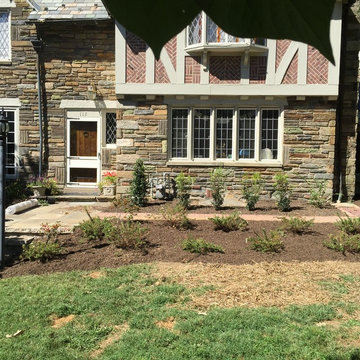
This is a lovely old home that experienced major renovations last year. We
were very fortunate to be requested by the owners to update their
landscaping upon completion of the renovations. The project relied heavily
on collaboration with the owners who made the key decisions in choosing the
plants that I suggested and deciding upon concepts. We decided to re-create
the formal garden by using informal plants. We also decided that the flower
color should be white throughout the formal garden. We spent time deciding
upon color preferences, plants they like (such as lilac), and the "look" of
the plants. We wanted them to fit the architecture of the house. The goal
was to come up with interesting and unusual plants that provided lots of
year round color and did not require lots of maintenance. The landscape
will require periodic maintenance to monitor the plants and keep everything
looking good. We used lots of Native plants where appropriate and re-used
many of the plants on site. For example, we removed the cranesbill geranium
from the old formal garden but discarded the dead and dying boxwood. We
used the cranesbill geranium in beds against the back of the house. The
plants will form a low carpet that flowers and reduces weed growth. We moved
a very large pink flowering crape myrtle that was blocking the view to a
corner of the house where it brackets the corner with another large pink
crape myrtle on the other side of the corner.
 Envision Web
Stuart Wade, Envision Virtual Tours
Envision Virtual Tours and High Resolution Photography is your best choice to find just what you are looking for in the Ellijay, Ga. area .Ellijay, Georgia, known as the “Apple Capital” of Georgia, is located between the Ellijay and Cartecay Rivers where they join to make the Coosawattee River and is the county seat of Gilmer County, Georgia. The origin of the city’s name is not certain but thought to be the English derivative of an Indian word(s) meaning “many waters”, “place of green things” or “new ground”. Some histories say it may have been named for an Indian chief.
Inhabited for countless years by the Cherokee people indigenous to the North Georgia, the area was first mentioned as a village and trade center before the onslaught of white settlers inhabited the region. During the 1830’s both white settlers and Indians occupied Ellijay. During the original land lottery in 1832, Martin Scalf acquired the 160 acre lot where the town now stands. In 1833, Clemonds Quinland bought 10 acres from Scalf, retained one acre for himself and donated the rest of the purchase to the County. A plan for twenty town lots, streets and a public square was created and the streets were oriented to allow maximum sunlight exposure to the buildings.
Proceeds from lot sales were used to build a jail and courthouse and pay other city expenses. During this same year, Gilmer County was appropriated $800.00 from the State to build a school, and a three-acre lot was donated for the city cemetery. On December 29, l834, Ellijay was incorporated and designated as the County seat of Gilmer County. By 1837, the town had twenty dwellings, three stores and one attorney. Most of these early buildings were of log construction.
Many roads led to Ellijay by 1849. The population had grown to 150 by 1850 and the town at five stores. Some wood-frame buildings were being constructed at this time and in 1854, a new courthouse was built in the center of the square, replacing the earlier building. The County’s first newspaper was the Ellijay Courier, started in 1875, and during this time period, Ellijay was a stop on the stagecoach line. The railroad bridge over the Cartecay River was completed in 1884 and the town now had rail service.
With the arrival of the railroad and subsequent tracks to White Path, Ellijay began to grow much faster. Many hotels were constructed and land was donated for a depot east of town. More industries, such as a cheese factory and the Shippen Brothers Lumber Mill, located in Ellijay. By 1898, the city had expanded its limits in every direction and now included the depot.
By 1900, all the buildings on the town square were brick. This included the recently completed Hyatt Hotel. Most of the other buildings in town were still of log construction, but new wood-frame buildings were being built. The Shippen Brothers Lumber Company production was expanding and exporting their lumber to Europe. Within the next few decades, this company grew to be one of the largest employers in Ellijay, often with five to six million feet of lumber in the yard at one time.
The population of Ellijay grew to 659 by 1910, and began to acquire many new modern conveniences such as electric lights and power, a telephone company and many new businesses.
Then in 1912, a fire ravaged the city, destroying 23 buildings. As a result, many new buildings were constructed under new and stricter fire and safety guidelines. The population, however, decreased slightly at this time to 632 in 1920.
During the 1920’s the town’s population began to grow again and, by this time, apples were being shipped out of the county and new storage facilities were built. Chickens were also shipped to markets outside of Ellijay and Gilmer County.
From the mid 1930’s to 1950, Ellijay received much assistance from the Federal WPA Programs. The old courthouse was removed from the center of town square and the Hyatt Hotel was remodeled to be the new courthouse. A park was created on the site of the old courthouse and the streets around the square were paved. A new street was built at this time entering town from the northeast. Other new roads, bridges, sidewalks and gutters were constructed to improve the city. A school and gymnasium were also built and other structures improved.
This growth began to impact the city’s infrastructure and in the l950’s and l960’s, a period of upgrading water systems, roads, and power supplies began. New low-rent housing appeared in l960 and a new hospital was built in l957. Georgia Highway 5 was widened in l962, new buildings around the square replaced old ones and some were remodeled. In 1974, the hospital was enlarged.
Currently, Ellijay attracts tourists who love the small-town feel and friendly atmosphere. Hotels and restaurants, unique shops, antiques and art galleries lend their charms to those who visit. A new courthouse constructed to resemble the old one, new streetscaping, family-oriented downtown events and the beautification of the square have stepped up the social and economic activity and have made Ellijay a popular destination.

 Cricket Badshah
In recent history cricket has seen a worldwide growth in players, spectators and betting sites. The amount of people enjoying the game has reached unprecedented levels with more juniors playing the game than ever before.
Behind the boom has been the introduction of 20 over cricket. The shortened format of the game has been targeted towards those that find the longer 4/5 day games too time consuming to watch. Cricket tips help the punters to place the bet on right predictions and odds.
As the popularity of cricket continues to grow, so do the betting markets. One aspect of betting has seen the biggest rise however, and that is of its in-play betting market. A host of separate markets are available to bet on each game, many offering solid value for the punter.
The UK’s cricket boom has mainly been as benefactor of the 2005 Ashes victory. The Ashes are arguably the pinnacle of the international season as fierce rivals England take on Australia over a 5 test series to win an urn which is only a few inches small. The urn is said to be over 100 years old and contains the ashes of the bails that were used in the first ever match between the two teams. The series was covered on terrestrial television with millions tuning in around the world and the nation coming to a complete stand still for most of the series.
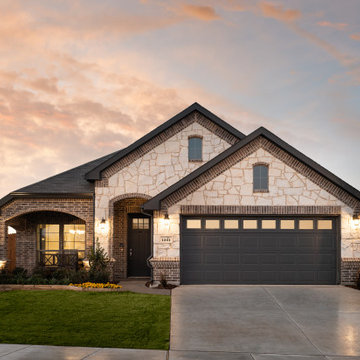
 Antares Homes
Find out more: https://bit.ly/3jdTzZI
Our final homes in this community are nearing completion and will be available soon! Please set an appointment to tour these homes and find the perfect one for you!
Come explore Kingspoint, our newest community located in Fort Worth! Nestled along the quiet southern edge of Fort Worth, this community offers the ease of small-town living while having easy access to big-city amenities. You will feel confident in a community whose mission is to provide innovative programs, inspire a passion for learning, and develop character and academic excellence in its students through Everman ISD.
Since it was founded in the mid-1850s, Everman has and continues to experience historical growth within its community. In 1917, the community was one of three sites selected to serve as a flight training school for the Canadian Royal Flying Corps, Aviation Section. Everman is located along Interstate 20 and Interstate 35, just 8 miles south of downtown Fort Worth, providing easy access to all that it has to offer including a variety of shopping, dining, and entertainment experiences such as Sundance Square, The Bass Hall Theatre, and Panther Island Pavilion. Also, just minutes down the road is quick access to shopping in Burleson Town Square, a day at the movies at the Burleson Premier Cinema, and access to 1187 Rendon Crowley Road if you’d like to spend the day in Mansfield. With access to so many cities and things to do, it is easy to enjoy the location and convenience of Everman.
Antares Homes offers our families a beautiful collection of home design concepts with inviting spaces and gourmet kitchens finished with designer details. Combine our competitive prices with the quality of our homes, Kingspoint is a dream come true for the homeowner who wants it all.
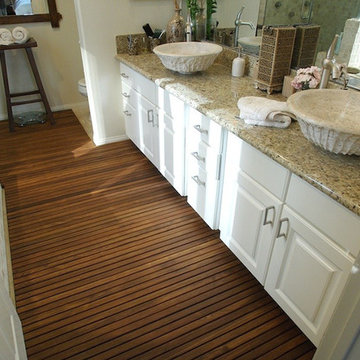 Flooring Supply Shop
Bathroom and Shower Teak Wood Mat
Superior Quality
Price start at $89.95
5 sizes and custom order available
Teak Wood Mat Rectangle 14" x 20" - $89.95
Teak Wood Mat Square Round Corners 30" x 30" - $295.00
Teak Wood Mat Rectangle 14" x 32" - $165.00
Teak Wood Mat Rectangle 36" x 30" - $345.00
Teak Wood Mat Rectangle 18" x 25" - $165.00
Custom mats at $0.48 per sq inch
We offer a wide range of standard sizes and styles plus we can create just about any size, shape or design that you can imagine. Whether you want to add a non-slip surface by your tub or totally surround your shower with a rich, custom mat, we can do it. Best of all, these mats can be used inside the shower as well as outside!
Feature
• Ideal for indoor or outdoor use
• Marine grade stainless steel screws are used in the construction
• Made of natural teak wood
• All screws are countersunk into the bottom supports and into the top slats.
• Ideal for use in or out of the shower and or high-moisture areas.
• Slip and bacteria resistant
• Battens are 1/4" rounded on the edge of each top batten to assure comfort
• All mats are built on 3/4" x 3/4" solid teak supports
• Anti-bacterial rubberized strips are bonded to each teak support to assure the mat stays in place
Plantation Teak
Our FSC certified Plantation Teak comes from trees harvested from an actual plantation of younger Teak trees. Since we only use the heartwood of the tree, it has all the same qualities of old growth Burmese Teak but it is a little lighter in color.
Handcrafted in the USA
Ship same day Worldwide
Our store open to the Public
5047 W Jefferson Blvd Los Angeles CA 90016
Mon - Fri 7:00 am - 5:00pm
Sunday 8:00 am- 12:00 noon
For more product visit our web site http://www.flooringsupplyshop.com
Or call us at 323-731-8453
 Envision Web
Stuart Wade, Envision Virtual Tours
Envision Virtual Tours and High Resolution Photography is your best choice to find just what you are looking for in the Ellijay, Ga. area .Ellijay, Georgia, known as the “Apple Capital” of Georgia, is located between the Ellijay and Cartecay Rivers where they join to make the Coosawattee River and is the county seat of Gilmer County, Georgia. The origin of the city’s name is not certain but thought to be the English derivative of an Indian word(s) meaning “many waters”, “place of green things” or “new ground”. Some histories say it may have been named for an Indian chief.
Inhabited for countless years by the Cherokee people indigenous to the North Georgia, the area was first mentioned as a village and trade center before the onslaught of white settlers inhabited the region. During the 1830’s both white settlers and Indians occupied Ellijay. During the original land lottery in 1832, Martin Scalf acquired the 160 acre lot where the town now stands. In 1833, Clemonds Quinland bought 10 acres from Scalf, retained one acre for himself and donated the rest of the purchase to the County. A plan for twenty town lots, streets and a public square was created and the streets were oriented to allow maximum sunlight exposure to the buildings.
Proceeds from lot sales were used to build a jail and courthouse and pay other city expenses. During this same year, Gilmer County was appropriated $800.00 from the State to build a school, and a three-acre lot was donated for the city cemetery. On December 29, l834, Ellijay was incorporated and designated as the County seat of Gilmer County. By 1837, the town had twenty dwellings, three stores and one attorney. Most of these early buildings were of log construction.
Many roads led to Ellijay by 1849. The population had grown to 150 by 1850 and the town at five stores. Some wood-frame buildings were being constructed at this time and in 1854, a new courthouse was built in the center of the square, replacing the earlier building. The County’s first newspaper was the Ellijay Courier, started in 1875, and during this time period, Ellijay was a stop on the stagecoach line. The railroad bridge over the Cartecay River was completed in 1884 and the town now had rail service.
With the arrival of the railroad and subsequent tracks to White Path, Ellijay began to grow much faster. Many hotels were constructed and land was donated for a depot east of town. More industries, such as a cheese factory and the Shippen Brothers Lumber Mill, located in Ellijay. By 1898, the city had expanded its limits in every direction and now included the depot.
By 1900, all the buildings on the town square were brick. This included the recently completed Hyatt Hotel. Most of the other buildings in town were still of log construction, but new wood-frame buildings were being built. The Shippen Brothers Lumber Company production was expanding and exporting their lumber to Europe. Within the next few decades, this company grew to be one of the largest employers in Ellijay, often with five to six million feet of lumber in the yard at one time.
The population of Ellijay grew to 659 by 1910, and began to acquire many new modern conveniences such as electric lights and power, a telephone company and many new businesses.
Then in 1912, a fire ravaged the city, destroying 23 buildings. As a result, many new buildings were constructed under new and stricter fire and safety guidelines. The population, however, decreased slightly at this time to 632 in 1920.
During the 1920’s the town’s population began to grow again and, by this time, apples were being shipped out of the county and new storage facilities were built. Chickens were also shipped to markets outside of Ellijay and Gilmer County.
From the mid 1930’s to 1950, Ellijay received much assistance from the Federal WPA Programs. The old courthouse was removed from the center of town square and the Hyatt Hotel was remodeled to be the new courthouse. A park was created on the site of the old courthouse and the streets around the square were paved. A new street was built at this time entering town from the northeast. Other new roads, bridges, sidewalks and gutters were constructed to improve the city. A school and gymnasium were also built and other structures improved.
This growth began to impact the city’s infrastructure and in the l950’s and l960’s, a period of upgrading water systems, roads, and power supplies began. New low-rent housing appeared in l960 and a new hospital was built in l957. Georgia Highway 5 was widened in l962, new buildings around the square replaced old ones and some were remodeled. In 1974, the hospital was enlarged.
Currently, Ellijay attracts tourists who love the small-town feel and friendly atmosphere. Hotels and restaurants, unique shops, antiques and art galleries lend their charms to those who visit. A new courthouse constructed to resemble the old one, new streetscaping, family-oriented downtown events and the beautification of the square have stepped up the social and economic activity and have made Ellijay a popular destination.
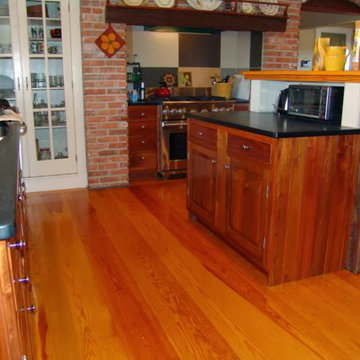
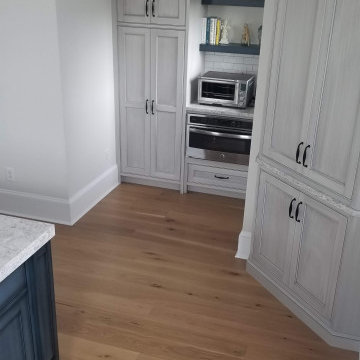
 Abeln Floor Systems
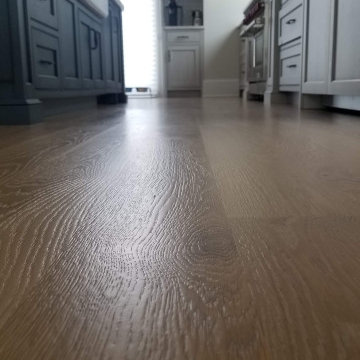
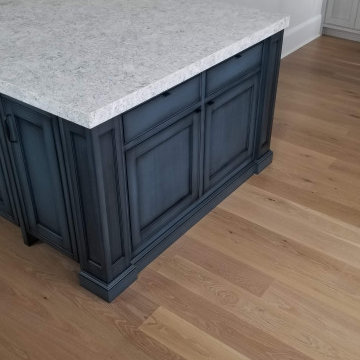
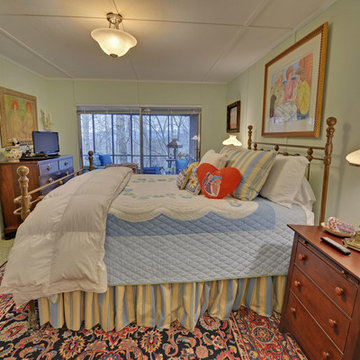
This 1860's log cabin kitchen was completely remodeled. The homeowner chose to install old growth wide plank yellow pine flooring sourced from Abeln Floor Systems. The flooring in these photos started out life as gymnasium bleacher seating and was converted into wide plank flooring at our local mill. Abeln Floor Systems warehouses vast quantities of bleacher boards and other reclaimed flooring which is reinstalled in both historic homes and in new homes alike. We have the experienced craftsmen and resources to provide, install, and finish the custom wood flooring of your dreams.
 Envision Web
Stuart Wade, Envision Virtual Tours
Envision Virtual Tours and High Resolution Photography is your best choice to find just what you are looking for in the Ellijay, Ga. area .Ellijay, Georgia, known as the “Apple Capital” of Georgia, is located between the Ellijay and Cartecay Rivers where they join to make the Coosawattee River and is the county seat of Gilmer County, Georgia. The origin of the city’s name is not certain but thought to be the English derivative of an Indian word(s) meaning “many waters”, “place of green things” or “new ground”. Some histories say it may have been named for an Indian chief.
Inhabited for countless years by the Cherokee people indigenous to the North Georgia, the area was first mentioned as a village and trade center before the onslaught of white settlers inhabited the region. During the 1830’s both white settlers and Indians occupied Ellijay. During the original land lottery in 1832, Martin Scalf acquired the 160 acre lot where the town now stands. In 1833, Clemonds Quinland bought 10 acres from Scalf, retained one acre for himself and donated the rest of the purchase to the County. A plan for twenty town lots, streets and a public square was created and the streets were oriented to allow maximum sunlight exposure to the buildings.
Proceeds from lot sales were used to build a jail and courthouse and pay other city expenses. During this same year, Gilmer County was appropriated $800.00 from the State to build a school, and a three-acre lot was donated for the city cemetery. On December 29, l834, Ellijay was incorporated and designated as the County seat of Gilmer County. By 1837, the town had twenty dwellings, three stores and one attorney. Most of these early buildings were of log construction.
Many roads led to Ellijay by 1849. The population had grown to 150 by 1850 and the town at five stores. Some wood-frame buildings were being constructed at this time and in 1854, a new courthouse was built in the center of the square, replacing the earlier building. The County’s first newspaper was the Ellijay Courier, started in 1875, and during this time period, Ellijay was a stop on the stagecoach line. The railroad bridge over the Cartecay River was completed in 1884 and the town now had rail service.
With the arrival of the railroad and subsequent tracks to White Path, Ellijay began to grow much faster. Many hotels were constructed and land was donated for a depot east of town. More industries, such as a cheese factory and the Shippen Brothers Lumber Mill, located in Ellijay. By 1898, the city had expanded its limits in every direction and now included the depot.
By 1900, all the buildings on the town square were brick. This included the recently completed Hyatt Hotel. Most of the other buildings in town were still of log construction, but new wood-frame buildings were being built. The Shippen Brothers Lumber Company production was expanding and exporting their lumber to Europe. Within the next few decades, this company grew to be one of the largest employers in Ellijay, often with five to six million feet of lumber in the yard at one time.
The population of Ellijay grew to 659 by 1910, and began to acquire many new modern conveniences such as electric lights and power, a telephone company and many new businesses.
Then in 1912, a fire ravaged the city, destroying 23 buildings. As a result, many new buildings were constructed under new and stricter fire and safety guidelines. The population, however, decreased slightly at this time to 632 in 1920.
During the 1920’s the town’s population began to grow again and, by this time, apples were being shipped out of the county and new storage facilities were built. Chickens were also shipped to markets outside of Ellijay and Gilmer County.
From the mid 1930’s to 1950, Ellijay received much assistance from the Federal WPA Programs. The old courthouse was removed from the center of town square and the Hyatt Hotel was remodeled to be the new courthouse. A park was created on the site of the old courthouse and the streets around the square were paved. A new street was built at this time entering town from the northeast. Other new roads, bridges, sidewalks and gutters were constructed to improve the city. A school and gymnasium were also built and other structures improved.
This growth began to impact the city’s infrastructure and in the l950’s and l960’s, a period of upgrading water systems, roads, and power supplies began. New low-rent housing appeared in l960 and a new hospital was built in l957. Georgia Highway 5 was widened in l962, new buildings around the square replaced old ones and some were remodeled. In 1974, the hospital was enlarged.
Currently, Ellijay attracts tourists who love the small-town feel and friendly atmosphere. Hotels and restaurants, unique shops, antiques and art galleries lend their charms to those who visit. A new courthouse constructed to resemble the old one, new streetscaping, family-oriented downtown events and the beautification of the square have stepped up the social and economic activity and have made Ellijay a popular destination.
 Custom Gardens, LLC
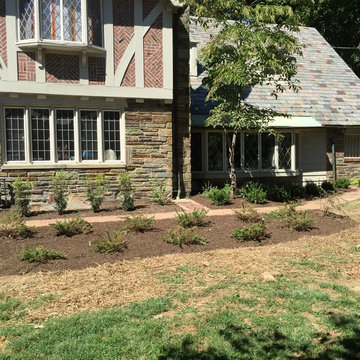
This is a lovely old home that experienced major renovations last year. We
were very fortunate to be requested by the owners to update their
landscaping upon completion of the renovations. The project relied heavily
on collaboration with the owners who made the key decisions in choosing the
plants that I suggested and deciding upon concepts. We decided to re-create
the formal garden by using informal plants. We also decided that the flower
color should be white throughout the formal garden. We spent time deciding
upon color preferences, plants they like (such as lilac), and the "look" of
the plants. We wanted them to fit the architecture of the house. The goal
was to come up with interesting and unusual plants that provided lots of
year round color and did not require lots of maintenance. The landscape
will require periodic maintenance to monitor the plants and keep everything
looking good. We used lots of Native plants where appropriate and re-used
many of the plants on site. For example, we removed the cranesbill geranium
from the old formal garden but discarded the dead and dying boxwood. We
used the cranesbill geranium in beds against the back of the house. The
plants will form a low carpet that flowers and reduces weed growth. We moved
a very large pink flowering crape myrtle that was blocking the view to a
corner of the house where it brackets the corner with another large pink
crape myrtle on the other side of the corner.
 ZODEGA | TIS
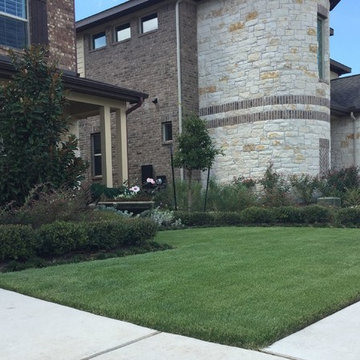
Gorgeous Zoysia turf that had 3" root growth in the first month on site as a result of sub-surface drip irrigation installed along with great soil and soil amendments.
10