
Search results for "Smelling" in Home Design Ideas

 Acadian Pools
The Hale pool features an innovative bridge over the pool for a lagoon-type feel in the backyard, as well as a variety of water features including sheer waterfalls on the side of the bridge, a spillover spa, sundeck and scuppers. The assortment of water features provide a relaxing sound-effect in the backyard. The travertine coping around the pool and spa give the backyard a high-end look, along with the stamped concrete for an eye-catching decorative touch.



Find the right local pro for your project


 The 4 Kids Inc.
NEW ITEM! Cat Tail and Water Lily post toppers really add a giant touch of nature to this playground.





 SUPERIOR CHIMNEY SERVICES CORPORATION
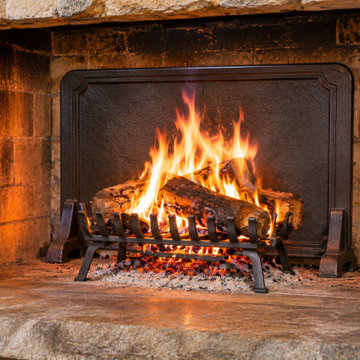
The fun part about cold weather is the fireplace. It’s cozy, warm and just mesmerizing to watch. Sometimes, even with the warmth coming into the home, it still seems like some cool air is coming into the home. How can you get more heat into the house instead of it drifting up the chimney? Can a fireplace heat shield help?
What is a Fireplace Heat Shield?
A fireplace heat shield is a thick stainless steel plate installed against the rear firewall of the fireplace. It pushes into the house anywhere from 20% to 40% more heat. However, a fireplace heat shield has other benefits as well such as protecting the firebricks and mortar.
The fireplace heat shield sits in front of the rear firewall. It takes the direct impact of the flame ensuring the infrastructure of the firebox and chimney stay intact.
Key Benefits of a Fireplace Heat Shield
We mentioned a couple of the benefits of a fireplace heat shield at the top of the article. Here is the full list of benefits and what it can mean to you and the comfort and protection of your home.
Does the Fireplace Need the Extra Protection?
Your firebox is built to handle intense heat from the fire. Over time, the heat cracks, pits and loosens the material. This is where the heat shield can help protect the firebox, and reduces the cost and frequency of repairs.
How Does the Heat Stay in the Back of the Firebox and Not Come Out?
A fire needs oxygen to burn. It finds it by pulling air into the firebox from your living space. As the air flows into the firebox, it pushes the heat from the fire right to the back of the firebox.
The intense heat causes the back wall made of brick and mortar to expand. When the fire dies down, the firebricks cool down and contract again. Yes, the cycle is similar to the freeze thaw cycle outside on the chimney which should be protected by Chimney Saver, a waterproofing agent.
For the fireplace, a heat shield reflects/radiates the heat’s direct contact, so your firebricks and mortar are protected.
Water Intrusion from the Chimney
Firebrick and firewall materials are porous - They tolerate very high temperatures. But, as we discussed in other articles, these materials also absorb water easily.
How can moisture get it? It can travel down from the top of the chimney through a crack in the chimney crown, a damaged cap, missing mortar or loose flashing to name a few. Superior Chimney can locate and correct these chimney leaks so your fireplace stays dry.
If the firebricks are wet or damp the direct flames from the fire can speed up the deterioration of the back wall. The heat shield acts as a protective barrier between the fire in the fireplace and the back wall.
Fireplace Mortar
Fireplace mortar does the same thing as the mortar outside. It’s important to have the fireplace cleaned and inspected by a certified technician to ensure any missing or deteriorated mortar is repaired. Without the repair, the firebricks will move, shift or fall off exposing your home to further damage.
Making a Safe Fire and Structural Integrity
If you are burning wood, or using a gas fireplace, the fire inside the firebox needs to be safe. When the materials are worn or weaken, that layer of protection is compromised. If a chimney inspection which includes the firebox, isn’t performed at least yearly, you can run the risk of home fire and needing a new firewall. Don’t let it get that far and pose a risk to your home. Including a heat shield will help protect the home.
How a Fireplace Heat Shield Protects Your Fireplace and Home
A Superior Chimney heat shield works by protecting your firebricks from direct heat and flames. The stainless steel material is built to take that impact and directs the heat to go inside of your home for a nice warm room.
With an installed heat shield, the back firewall gets about 1/3 less exposure to heat and flames. That reduction minimizes expansion and contraction in the firebricks and mortar.
Protected vs. Unprotected Firebox: A Side by Side Comparison
The table below shows how a heat shield changes the day to day life of your fireplace.
Tuckpointing or Firebox Rebuilds
Tuckpointing restores mortar joints and brings back the strength of your firebox. A heat shield helps that fresh work last as long as possible.
How Can Your Firebox Benefit from a Heat Shield
This is something you can do yourself. Take a look at the back wall of your fireplace. If you see any of these signs, a heat shield investment will save you on repairs and heating costs.
• Hairline or visible cracks in the rear firebricks
• Pitting or crumbling on the firebrick surface
• Mortar joints that look recessed, sandy, or uneven
• Loose firebricks that shift when touched
• Heavy soot staining that cleaning does not remove
• A history of chimney leaks or water stains in the firebox
• A recent tuckpointing or firebox rebuild you want to protect
From the Field: Our Technicians’ Perspective
Our certified technicians can explain how the firewall is almost always the first area of a firebox to show wear. It sits directly in the path of the draft, so it takes the most heat each time.
Homes with a heat shield consistently show cleaner, tighter mortar joints at their annual inspections.
Pairing Your Heat Shield with an Annual Inspection
A heat shield works best as part of a regular maintenance plan. The National Fire Protection Association’s NFPA 211 standard calls for chimneys, fireplaces, and vents to be inspected at least once a year.
The Chimney Safety Institute of America also encourages annual inspections and cleaning by a certified technician. During your inspection, we check your firebox, mortar, and heat shield together so everything stays healthy for your home.
Frequently Asked Questions About Fireplace Heat Shields
How much more heat does a fireplace heat shield provide?
Most homeowners enjoy 20% to 40% more radiant heat in the room. It depends on the fireplace size, design and the type of wood you burn.
What is a fireplace heat shield made of?
Superior Chimney heat shields are made from stainless steel. This material handles high heat, resists corrosion, and directs warmth back into your home.
Can a heat shield cover an old, stained back wall?
Yes. A heat shield covers soot stained and gives your fireplace a clean, updated appearance.
Should I repair my firebox before installing a heat shield?
If your mortar or firebricks show damage, repairs come first along with a cleaning and inspection. Once the firebox is ready, the heat shield helps preserve your firebox for years to come.
Is a heat shield the same as a fireback?
No. Stainless steel firebacks, cast iron firebacks and heat reflective shields are not the same. Firebacks are decorative whereas heat reflective shields do exactly as their name infers.
Do I still need chimney inspections with a heat shield?
Yes. Annual chimney inspections remain the best way to keep your entire chimney system working and efficient. A check on the heat shield is included in the inspection.
Protect Your Fireplace with Superior Chimney
A fireplace heat shield is a simple, affordable way to get more warmth from every fire. It protects your firebricks and mortar while making your fireplace look inviting.
Contact Superior Chimney today to schedule an inspection and learn more about heat shields. You’ll feel the difference from the very first fire!
 Metamorphosis Design
Koti Resorts
(Hotel Project)
Constructed commenced 1991
Location : Baldeyan, Himachal Pradesh
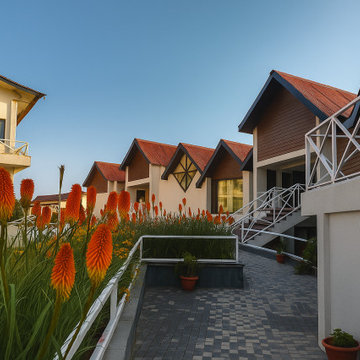
GENESIS OF A HOTEL PROJECT - KOTI RESORTS, NALDHERA, SHIMLA
How does a Newbie make an entry into the HOSPITALITY INDUSTRY.......???
Or, to be specific – HOW DOES ONE MAKE A HOTEL...... GET INTO THE HOTEL BUSINESS...???
Agreed, the business of teaching/learning of getting into this mammoth Industry is also BIG BUSINESS. Considering that almost each and every city in the country has several institutes/colleges/ and even University departments have jumped onto the band wagon of this reasonably popular academic course.
So when a long time friend from the neighbourhood wanted to start a new business/career on a family held plot in the hills – it smelled like a good opportunity. As a student of the University, he was also accidentally pushed into the “business” of running the University Cafeteria – which was on contract to some people. The student leaders (he was part of the Association) were dared to take over the Cafeteria and run it themselves if they had a problem with the then management.
Obviously, EGOS got hurt, and one doesn’t DARE a bunch of University leaders of the Student body running the roost.
So initial experience taught them supply chain management, financial acumen, human resource management, and of course – all about food. All components of running a ‘dicey operation’ such as a Student cafeteria in a volatile environment were experienced and the nut and bolts of the business learnt the hard way.
So it was full confidence and a positive gut feeling that this friend took that momentous decision. And the idea germinated.
Remember when we (almost the entire extended family from here in the plains + the rest from the hills) took off to Shimla to case the joint – to put mildly. Would’ve been summertime then – is all that I can remember.
Caught up with the ‘hill party’ at Shimla for further going towards the Naldhera Golf Course, where we were booked for lunch. The site was en route – a few strokes short, as ad people would put it, of the Golf Course...
On a hilltop called Baldeyan.
Anyway, after the family divisions of the land parcel ownership was settled, we (my friend and yours truly) spent some time at the site to figure out the way ahead. Ideas flew back and forth, including some number crunching – and just like that we zeroed in onto making a Resort Hotel. In the middle of a wild nowhere – with great views all around.
Shimla town visible at 7 o’clock (S/SW), and the snow capped peaks of the Upper Himalayas ranging from the North to the ESE (say 4 o’clock) the radio mast tower dead North, and the Craignano peak due South (that’s where Shimla’s water supply tanks are located}.
The location was a gift from heaven.
And the matter was settled – we all agreed that it was so......!!!!
So the next step – what kind of hotel do we plan for??? What kind of target customer, tariff, rooms, program...........and a thousand other questions befuddled us. I suggested going to a Hotel Consultant.
No ego!
So the both of us drove down to Delhi after zeroing in to the offices of Mr. AN Haksar (the recently retd Chairman of the ITC) – who had only recently set up this office. It hurt when we agreed to pay 1/2 a lakh as consultancy fees – in spite of me being the designated Architect for the job. But then.........cie la vie..........!!!!
Such is life!!!
We got into a quick learning curve of hotel industry terms, and practices. Of things like Occupancy rates, the ARR, peak season rates, and various depts. like F&B, Housekeeping, etc. But what the heck – we both were in our thirties.......!!!
And lapped up the learning without any fuss. And joyfully agreed when they said they’d do the hand holding for a while after the hotel started business.
Of course we’d agree – after all AN Haksar was the Chairman Emeritus of the ITC group – that super successful upstart in the Hotel Industry. With the Hotel Mughal Agra, the ITC Chola, the ITC Maurya, and the ITC Grand Kakatiya, amongst other successful Iconic properties under their belt.
I had already made up my mind on NOT DESTROYING THE ENVIRONMENT with a multi-floor frame structure that was standard pattern in the desecration of the hills. So a low rise low floor concept was a given. And that’s what we did – to achieve what we’d like to think of as the pioneer of hill resort hotel design character.........
We were already in competition with another resort being planned some distance away near Chail – another great resort hotel, and the game was on.
After getting sanctions and a starter loan from the HP SIDC, we borrowed money from family and friends, and – in a small Maruti 800 – took off for the site one summer morning. Also in the car back seat was my old mistri (now appointed thekedar) and his ‘brother mistri’......from their village in UP.
Stopped for a quick lunch immediately after crossing the Dhalli Tunnel, and the on to the site.
Now after throwing all tenets of site planning and architecture down the hill, one walked around to locate the point where we would start CONSTRUCTION OF THE RESORT HOTEL.
Took a few minutes (remember we were freshers in our thirties) and within the hour had laid out the foundation plan for the 1 st Block. Another added advantage – there were no site boundaries and no benchmarks to go by – excepting an old stone water tank used by the village below. And a few pipes going down from there.
Meanwhile left the contractor there in the wilderness for him to locate his construction huts, approach roads, material dump spaces, etc. No idea how he managed.
Within a month we were well into the making of the first ‘residential hut’ that one had envisaged. A block of four rooms – with outer rooms a bit larger with a separate dining space. And a vestibule as one entered. The toilets were located between the dining & bedroom spaces – and well ventilated. There was also an open lobby between the four rooms – giving safe access to all. And interesting approaches planned as per site conditions. With built in housekeeping stores, etc under the staircase landings. And space for 2-3 kilo-liters of water tanks
for the 8 rooms/suites per block.
One also planned for a central heating system – with insulated pipes servicing each block. A/C s were not even in our minds – but we were forced to install them later because of global warming and climate change. Neither were the ubiquitous ceiling fans - which are nowadays a must have in the towns of Shimla and Solan. Among other hill stations.....!!!
In fact one got insulated cavity walls made under duress...........a fact appreciated much later in life.
Incidentally, I think the cost of petrol was around Re. 8/50 or something those days, and it was easier on the pocket to drive up to the site beyond Shimla than stay over night in a hotel. And the Mandal Commission agitation had made us night birds on the highways to Shimla.
VP Singh was the PM, and globalisation of the economy had yet to take birth...........!!!!
The hotel had a soft opening in 1991, I think.
And the first customer stayed for a week. And then came back after a sort while to stay for a month. We felt vindicated.
And the Hotel has never looked back ever since.
designed by www.MetamorphosisDesign.org
Struggling to bring clarity to your vision before starting your dream project?
Let us help you refine your ideas and align them seamlessly with your budget.
Schedule your design consultation today - call - 9316511166
160