
Search results for "Steep fines" in Home Design Ideas
 Hogue Landscape Services
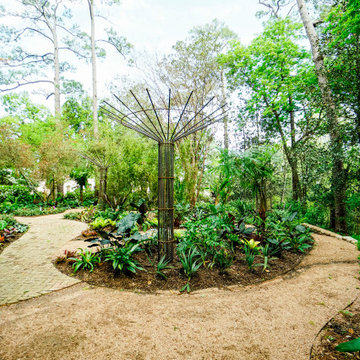
The concept of the garden was based on, “Brazilian Hummingbirds II”, a painting the MFAH has in its collection by the artist, Martin Johnson Heade. Heade travelled to the rainforest in Brazil between 1863 and 1864 and painted a
series of small paintings depicting hummingbirds in the lush foliage of the Brazilian rainforests. His painting, Brazilian
Hummingbirds, II, evokes the sultry atmosphere of the Brazilian rainforest with its misty quality and subtle lighting. His interest in ornithology can be seen in his detailed depictions of the hummingbirds. The garden location is adjacent to one of Buffalo Bayou’s steep, wooded ravines. The ravine, with its native plant communities and topography, is a perfect back-
drop for a garden with a rainforest theme. Because the date for the garden opening coincides with the spring migration of hummingbirds into our region, the hummingbird theme seemed appropriate for this garden competition. The garden will include a variety of tropical plants native to the rainforests such as bromeliads, orchids, heliconia, and passion fruit flowers. In addition, native plants to our region such as the Sabal Minor and Southern Wood Fern will be included to integrate
plants that are found nearby in the ravine. The Heliconia flowers produce considerable amounts of nectar, a high energy food essential for hummingbirds who are known to consume three times their bodyweight in a single day. In addition to nectar producing plants, there will be hummingbird nest materials dispersed throughout the garden. A misty quality to the garden will be provided by a misting system, and tropical colored lights will be lit at night for special events. Visitors to the garden will have a unique sensory experience reminiscent to that of Heade’s travels to Brazil’s rainforests.
 Fine Line Home Design LLC
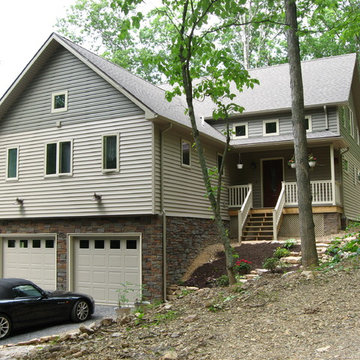
Bellastone faux stone panels on the basement-level garage
Example of a large arts and crafts multicolored three-story mixed siding gable roof design in DC Metro
Example of a large arts and crafts multicolored three-story mixed siding gable roof design in DC Metro
 Hogue Landscape Services
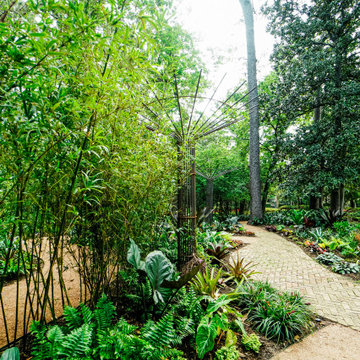
The concept of the garden was based on, “Brazilian Hummingbirds II”, a painting the MFAH has in its collection by the artist, Martin Johnson Heade. Heade travelled to the rainforest in Brazil between 1863 and 1864 and painted a
series of small paintings depicting hummingbirds in the lush foliage of the Brazilian rainforests. His painting, Brazilian
Hummingbirds, II, evokes the sultry atmosphere of the Brazilian rainforest with its misty quality and subtle lighting. His interest in ornithology can be seen in his detailed depictions of the hummingbirds. The garden location is adjacent to one of Buffalo Bayou’s steep, wooded ravines. The ravine, with its native plant communities and topography, is a perfect back-
drop for a garden with a rainforest theme. Because the date for the garden opening coincides with the spring migration of hummingbirds into our region, the hummingbird theme seemed appropriate for this garden competition. The garden will include a variety of tropical plants native to the rainforests such as bromeliads, orchids, heliconia, and passion fruit flowers. In addition, native plants to our region such as the Sabal Minor and Southern Wood Fern will be included to integrate
plants that are found nearby in the ravine. The Heliconia flowers produce considerable amounts of nectar, a high energy food essential for hummingbirds who are known to consume three times their bodyweight in a single day. In addition to nectar producing plants, there will be hummingbird nest materials dispersed throughout the garden. A misty quality to the garden will be provided by a misting system, and tropical colored lights will be lit at night for special events. Visitors to the garden will have a unique sensory experience reminiscent to that of Heade’s travels to Brazil’s rainforests.
Find the right local pro for your project
 Hogue Landscape Services
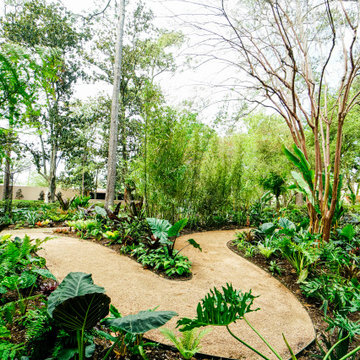
The concept of the garden was based on, “Brazilian Hummingbirds II”, a painting the MFAH has in its collection by the artist, Martin Johnson Heade. Heade travelled to the rainforest in Brazil between 1863 and 1864 and painted a
series of small paintings depicting hummingbirds in the lush foliage of the Brazilian rainforests. His painting, Brazilian
Hummingbirds, II, evokes the sultry atmosphere of the Brazilian rainforest with its misty quality and subtle lighting. His interest in ornithology can be seen in his detailed depictions of the hummingbirds. The garden location is adjacent to one of Buffalo Bayou’s steep, wooded ravines. The ravine, with its native plant communities and topography, is a perfect back-
drop for a garden with a rainforest theme. Because the date for the garden opening coincides with the spring migration of hummingbirds into our region, the hummingbird theme seemed appropriate for this garden competition. The garden will include a variety of tropical plants native to the rainforests such as bromeliads, orchids, heliconia, and passion fruit flowers. In addition, native plants to our region such as the Sabal Minor and Southern Wood Fern will be included to integrate
plants that are found nearby in the ravine. The Heliconia flowers produce considerable amounts of nectar, a high energy food essential for hummingbirds who are known to consume three times their bodyweight in a single day. In addition to nectar producing plants, there will be hummingbird nest materials dispersed throughout the garden. A misty quality to the garden will be provided by a misting system, and tropical colored lights will be lit at night for special events. Visitors to the garden will have a unique sensory experience reminiscent to that of Heade’s travels to Brazil’s rainforests.
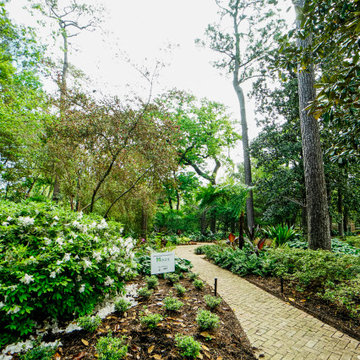 Hogue Landscape Services
The concept of the garden was based on, “Brazilian Hummingbirds II”, a painting the MFAH has in its collection by the artist, Martin Johnson Heade. Heade travelled to the rainforest in Brazil between 1863 and 1864 and painted a
series of small paintings depicting hummingbirds in the lush foliage of the Brazilian rainforests. His painting, Brazilian
Hummingbirds, II, evokes the sultry atmosphere of the Brazilian rainforest with its misty quality and subtle lighting. His interest in ornithology can be seen in his detailed depictions of the hummingbirds. The garden location is adjacent to one of Buffalo Bayou’s steep, wooded ravines. The ravine, with its native plant communities and topography, is a perfect back-
drop for a garden with a rainforest theme. Because the date for the garden opening coincides with the spring migration of hummingbirds into our region, the hummingbird theme seemed appropriate for this garden competition. The garden will include a variety of tropical plants native to the rainforests such as bromeliads, orchids, heliconia, and passion fruit flowers. In addition, native plants to our region such as the Sabal Minor and Southern Wood Fern will be included to integrate
plants that are found nearby in the ravine. The Heliconia flowers produce considerable amounts of nectar, a high energy food essential for hummingbirds who are known to consume three times their bodyweight in a single day. In addition to nectar producing plants, there will be hummingbird nest materials dispersed throughout the garden. A misty quality to the garden will be provided by a misting system, and tropical colored lights will be lit at night for special events. Visitors to the garden will have a unique sensory experience reminiscent to that of Heade’s travels to Brazil’s rainforests.
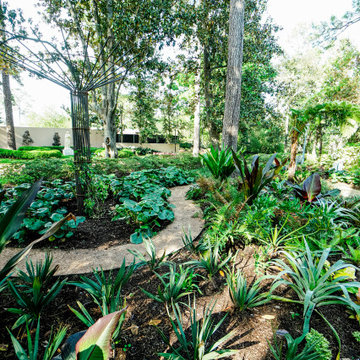 Hogue Landscape Services
The concept of the garden was based on, “Brazilian Hummingbirds II”, a painting the MFAH has in its collection by the artist, Martin Johnson Heade. Heade travelled to the rainforest in Brazil between 1863 and 1864 and painted a
series of small paintings depicting hummingbirds in the lush foliage of the Brazilian rainforests. His painting, Brazilian
Hummingbirds, II, evokes the sultry atmosphere of the Brazilian rainforest with its misty quality and subtle lighting. His interest in ornithology can be seen in his detailed depictions of the hummingbirds. The garden location is adjacent to one of Buffalo Bayou’s steep, wooded ravines. The ravine, with its native plant communities and topography, is a perfect back-
drop for a garden with a rainforest theme. Because the date for the garden opening coincides with the spring migration of hummingbirds into our region, the hummingbird theme seemed appropriate for this garden competition. The garden will include a variety of tropical plants native to the rainforests such as bromeliads, orchids, heliconia, and passion fruit flowers. In addition, native plants to our region such as the Sabal Minor and Southern Wood Fern will be included to integrate
plants that are found nearby in the ravine. The Heliconia flowers produce considerable amounts of nectar, a high energy food essential for hummingbirds who are known to consume three times their bodyweight in a single day. In addition to nectar producing plants, there will be hummingbird nest materials dispersed throughout the garden. A misty quality to the garden will be provided by a misting system, and tropical colored lights will be lit at night for special events. Visitors to the garden will have a unique sensory experience reminiscent to that of Heade’s travels to Brazil’s rainforests.
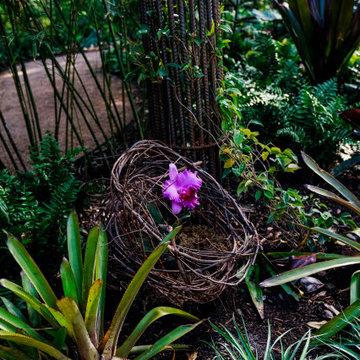 Hogue Landscape Services
The concept of the garden was based on, “Brazilian Hummingbirds II”, a painting the MFAH has in its collection by the artist, Martin Johnson Heade. Heade travelled to the rainforest in Brazil between 1863 and 1864 and painted a
series of small paintings depicting hummingbirds in the lush foliage of the Brazilian rainforests. His painting, Brazilian
Hummingbirds, II, evokes the sultry atmosphere of the Brazilian rainforest with its misty quality and subtle lighting. His interest in ornithology can be seen in his detailed depictions of the hummingbirds. The garden location is adjacent to one of Buffalo Bayou’s steep, wooded ravines. The ravine, with its native plant communities and topography, is a perfect back-
drop for a garden with a rainforest theme. Because the date for the garden opening coincides with the spring migration of hummingbirds into our region, the hummingbird theme seemed appropriate for this garden competition. The garden will include a variety of tropical plants native to the rainforests such as bromeliads, orchids, heliconia, and passion fruit flowers. In addition, native plants to our region such as the Sabal Minor and Southern Wood Fern will be included to integrate
plants that are found nearby in the ravine. The Heliconia flowers produce considerable amounts of nectar, a high energy food essential for hummingbirds who are known to consume three times their bodyweight in a single day. In addition to nectar producing plants, there will be hummingbird nest materials dispersed throughout the garden. A misty quality to the garden will be provided by a misting system, and tropical colored lights will be lit at night for special events. Visitors to the garden will have a unique sensory experience reminiscent to that of Heade’s travels to Brazil’s rainforests.
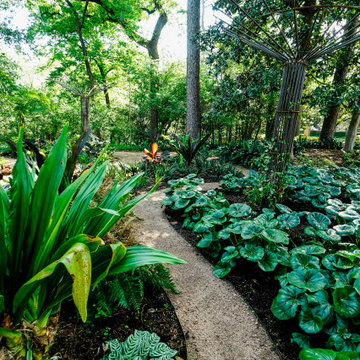 Hogue Landscape Services
The concept of the garden was based on, “Brazilian Hummingbirds II”, a painting the MFAH has in its collection by the artist, Martin Johnson Heade. Heade travelled to the rainforest in Brazil between 1863 and 1864 and painted a
series of small paintings depicting hummingbirds in the lush foliage of the Brazilian rainforests. His painting, Brazilian
Hummingbirds, II, evokes the sultry atmosphere of the Brazilian rainforest with its misty quality and subtle lighting. His interest in ornithology can be seen in his detailed depictions of the hummingbirds. The garden location is adjacent to one of Buffalo Bayou’s steep, wooded ravines. The ravine, with its native plant communities and topography, is a perfect back-
drop for a garden with a rainforest theme. Because the date for the garden opening coincides with the spring migration of hummingbirds into our region, the hummingbird theme seemed appropriate for this garden competition. The garden will include a variety of tropical plants native to the rainforests such as bromeliads, orchids, heliconia, and passion fruit flowers. In addition, native plants to our region such as the Sabal Minor and Southern Wood Fern will be included to integrate
plants that are found nearby in the ravine. The Heliconia flowers produce considerable amounts of nectar, a high energy food essential for hummingbirds who are known to consume three times their bodyweight in a single day. In addition to nectar producing plants, there will be hummingbird nest materials dispersed throughout the garden. A misty quality to the garden will be provided by a misting system, and tropical colored lights will be lit at night for special events. Visitors to the garden will have a unique sensory experience reminiscent to that of Heade’s travels to Brazil’s rainforests.
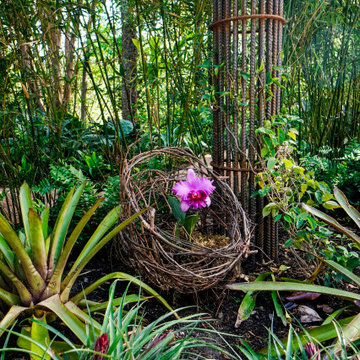 Hogue Landscape Services
The concept of the garden was based on, “Brazilian Hummingbirds II”, a painting the MFAH has in its collection by the artist, Martin Johnson Heade. Heade travelled to the rainforest in Brazil between 1863 and 1864 and painted a
series of small paintings depicting hummingbirds in the lush foliage of the Brazilian rainforests. His painting, Brazilian
Hummingbirds, II, evokes the sultry atmosphere of the Brazilian rainforest with its misty quality and subtle lighting. His interest in ornithology can be seen in his detailed depictions of the hummingbirds. The garden location is adjacent to one of Buffalo Bayou’s steep, wooded ravines. The ravine, with its native plant communities and topography, is a perfect back-
drop for a garden with a rainforest theme. Because the date for the garden opening coincides with the spring migration of hummingbirds into our region, the hummingbird theme seemed appropriate for this garden competition. The garden will include a variety of tropical plants native to the rainforests such as bromeliads, orchids, heliconia, and passion fruit flowers. In addition, native plants to our region such as the Sabal Minor and Southern Wood Fern will be included to integrate
plants that are found nearby in the ravine. The Heliconia flowers produce considerable amounts of nectar, a high energy food essential for hummingbirds who are known to consume three times their bodyweight in a single day. In addition to nectar producing plants, there will be hummingbird nest materials dispersed throughout the garden. A misty quality to the garden will be provided by a misting system, and tropical colored lights will be lit at night for special events. Visitors to the garden will have a unique sensory experience reminiscent to that of Heade’s travels to Brazil’s rainforests.
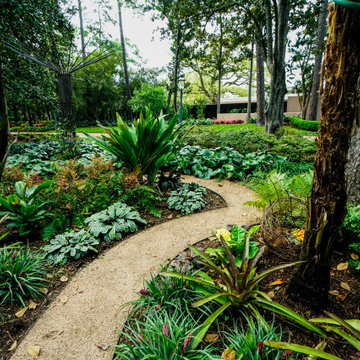 Hogue Landscape Services
The concept of the garden was based on, “Brazilian Hummingbirds II”, a painting the MFAH has in its collection by the artist, Martin Johnson Heade. Heade travelled to the rainforest in Brazil between 1863 and 1864 and painted a
series of small paintings depicting hummingbirds in the lush foliage of the Brazilian rainforests. His painting, Brazilian
Hummingbirds, II, evokes the sultry atmosphere of the Brazilian rainforest with its misty quality and subtle lighting. His interest in ornithology can be seen in his detailed depictions of the hummingbirds. The garden location is adjacent to one of Buffalo Bayou’s steep, wooded ravines. The ravine, with its native plant communities and topography, is a perfect back-
drop for a garden with a rainforest theme. Because the date for the garden opening coincides with the spring migration of hummingbirds into our region, the hummingbird theme seemed appropriate for this garden competition. The garden will include a variety of tropical plants native to the rainforests such as bromeliads, orchids, heliconia, and passion fruit flowers. In addition, native plants to our region such as the Sabal Minor and Southern Wood Fern will be included to integrate
plants that are found nearby in the ravine. The Heliconia flowers produce considerable amounts of nectar, a high energy food essential for hummingbirds who are known to consume three times their bodyweight in a single day. In addition to nectar producing plants, there will be hummingbird nest materials dispersed throughout the garden. A misty quality to the garden will be provided by a misting system, and tropical colored lights will be lit at night for special events. Visitors to the garden will have a unique sensory experience reminiscent to that of Heade’s travels to Brazil’s rainforests.
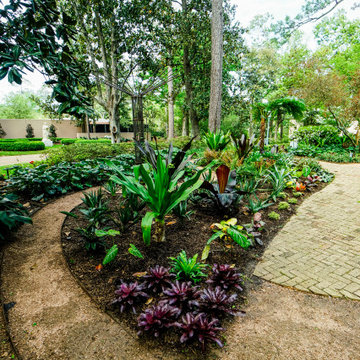 Hogue Landscape Services
The concept of the garden was based on, “Brazilian Hummingbirds II”, a painting the MFAH has in its collection by the artist, Martin Johnson Heade. Heade travelled to the rainforest in Brazil between 1863 and 1864 and painted a
series of small paintings depicting hummingbirds in the lush foliage of the Brazilian rainforests. His painting, Brazilian
Hummingbirds, II, evokes the sultry atmosphere of the Brazilian rainforest with its misty quality and subtle lighting. His interest in ornithology can be seen in his detailed depictions of the hummingbirds. The garden location is adjacent to one of Buffalo Bayou’s steep, wooded ravines. The ravine, with its native plant communities and topography, is a perfect back-
drop for a garden with a rainforest theme. Because the date for the garden opening coincides with the spring migration of hummingbirds into our region, the hummingbird theme seemed appropriate for this garden competition. The garden will include a variety of tropical plants native to the rainforests such as bromeliads, orchids, heliconia, and passion fruit flowers. In addition, native plants to our region such as the Sabal Minor and Southern Wood Fern will be included to integrate
plants that are found nearby in the ravine. The Heliconia flowers produce considerable amounts of nectar, a high energy food essential for hummingbirds who are known to consume three times their bodyweight in a single day. In addition to nectar producing plants, there will be hummingbird nest materials dispersed throughout the garden. A misty quality to the garden will be provided by a misting system, and tropical colored lights will be lit at night for special events. Visitors to the garden will have a unique sensory experience reminiscent to that of Heade’s travels to Brazil’s rainforests.
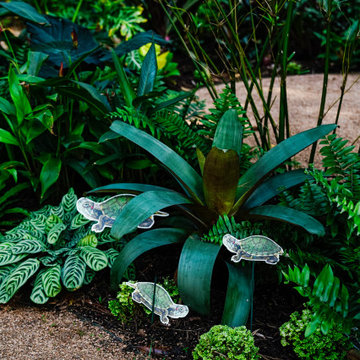 Hogue Landscape Services
The concept of the garden was based on, “Brazilian Hummingbirds II”, a painting the MFAH has in its collection by the artist, Martin Johnson Heade. Heade travelled to the rainforest in Brazil between 1863 and 1864 and painted a
series of small paintings depicting hummingbirds in the lush foliage of the Brazilian rainforests. His painting, Brazilian
Hummingbirds, II, evokes the sultry atmosphere of the Brazilian rainforest with its misty quality and subtle lighting. His interest in ornithology can be seen in his detailed depictions of the hummingbirds. The garden location is adjacent to one of Buffalo Bayou’s steep, wooded ravines. The ravine, with its native plant communities and topography, is a perfect back-
drop for a garden with a rainforest theme. Because the date for the garden opening coincides with the spring migration of hummingbirds into our region, the hummingbird theme seemed appropriate for this garden competition. The garden will include a variety of tropical plants native to the rainforests such as bromeliads, orchids, heliconia, and passion fruit flowers. In addition, native plants to our region such as the Sabal Minor and Southern Wood Fern will be included to integrate
plants that are found nearby in the ravine. The Heliconia flowers produce considerable amounts of nectar, a high energy food essential for hummingbirds who are known to consume three times their bodyweight in a single day. In addition to nectar producing plants, there will be hummingbird nest materials dispersed throughout the garden. A misty quality to the garden will be provided by a misting system, and tropical colored lights will be lit at night for special events. Visitors to the garden will have a unique sensory experience reminiscent to that of Heade’s travels to Brazil’s rainforests.
 Hogue Landscape Services
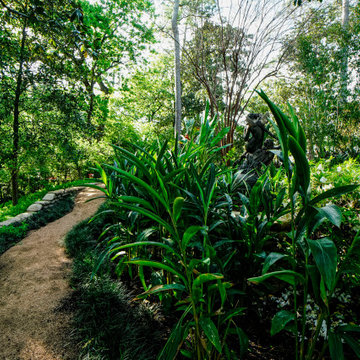
The concept of the garden was based on, “Brazilian Hummingbirds II”, a painting the MFAH has in its collection by the artist, Martin Johnson Heade. Heade travelled to the rainforest in Brazil between 1863 and 1864 and painted a
series of small paintings depicting hummingbirds in the lush foliage of the Brazilian rainforests. His painting, Brazilian
Hummingbirds, II, evokes the sultry atmosphere of the Brazilian rainforest with its misty quality and subtle lighting. His interest in ornithology can be seen in his detailed depictions of the hummingbirds. The garden location is adjacent to one of Buffalo Bayou’s steep, wooded ravines. The ravine, with its native plant communities and topography, is a perfect back-
drop for a garden with a rainforest theme. Because the date for the garden opening coincides with the spring migration of hummingbirds into our region, the hummingbird theme seemed appropriate for this garden competition. The garden will include a variety of tropical plants native to the rainforests such as bromeliads, orchids, heliconia, and passion fruit flowers. In addition, native plants to our region such as the Sabal Minor and Southern Wood Fern will be included to integrate
plants that are found nearby in the ravine. The Heliconia flowers produce considerable amounts of nectar, a high energy food essential for hummingbirds who are known to consume three times their bodyweight in a single day. In addition to nectar producing plants, there will be hummingbird nest materials dispersed throughout the garden. A misty quality to the garden will be provided by a misting system, and tropical colored lights will be lit at night for special events. Visitors to the garden will have a unique sensory experience reminiscent to that of Heade’s travels to Brazil’s rainforests.
 Hogue Landscape Services
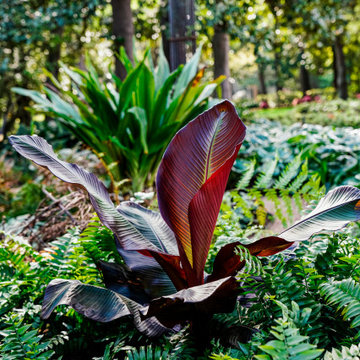
The concept of the garden was based on, “Brazilian Hummingbirds II”, a painting the MFAH has in its collection by the artist, Martin Johnson Heade. Heade travelled to the rainforest in Brazil between 1863 and 1864 and painted a
series of small paintings depicting hummingbirds in the lush foliage of the Brazilian rainforests. His painting, Brazilian
Hummingbirds, II, evokes the sultry atmosphere of the Brazilian rainforest with its misty quality and subtle lighting. His interest in ornithology can be seen in his detailed depictions of the hummingbirds. The garden location is adjacent to one of Buffalo Bayou’s steep, wooded ravines. The ravine, with its native plant communities and topography, is a perfect back-
drop for a garden with a rainforest theme. Because the date for the garden opening coincides with the spring migration of hummingbirds into our region, the hummingbird theme seemed appropriate for this garden competition. The garden will include a variety of tropical plants native to the rainforests such as bromeliads, orchids, heliconia, and passion fruit flowers. In addition, native plants to our region such as the Sabal Minor and Southern Wood Fern will be included to integrate
plants that are found nearby in the ravine. The Heliconia flowers produce considerable amounts of nectar, a high energy food essential for hummingbirds who are known to consume three times their bodyweight in a single day. In addition to nectar producing plants, there will be hummingbird nest materials dispersed throughout the garden. A misty quality to the garden will be provided by a misting system, and tropical colored lights will be lit at night for special events. Visitors to the garden will have a unique sensory experience reminiscent to that of Heade’s travels to Brazil’s rainforests.
 Hogue Landscape Services
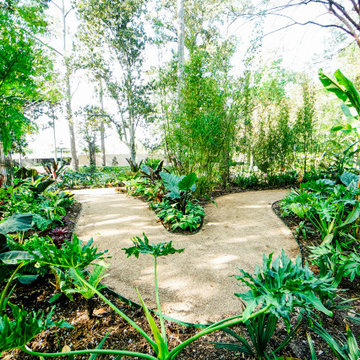
The concept of the garden was based on, “Brazilian Hummingbirds II”, a painting the MFAH has in its collection by the artist, Martin Johnson Heade. Heade travelled to the rainforest in Brazil between 1863 and 1864 and painted a
series of small paintings depicting hummingbirds in the lush foliage of the Brazilian rainforests. His painting, Brazilian
Hummingbirds, II, evokes the sultry atmosphere of the Brazilian rainforest with its misty quality and subtle lighting. His interest in ornithology can be seen in his detailed depictions of the hummingbirds. The garden location is adjacent to one of Buffalo Bayou’s steep, wooded ravines. The ravine, with its native plant communities and topography, is a perfect back-
drop for a garden with a rainforest theme. Because the date for the garden opening coincides with the spring migration of hummingbirds into our region, the hummingbird theme seemed appropriate for this garden competition. The garden will include a variety of tropical plants native to the rainforests such as bromeliads, orchids, heliconia, and passion fruit flowers. In addition, native plants to our region such as the Sabal Minor and Southern Wood Fern will be included to integrate
plants that are found nearby in the ravine. The Heliconia flowers produce considerable amounts of nectar, a high energy food essential for hummingbirds who are known to consume three times their bodyweight in a single day. In addition to nectar producing plants, there will be hummingbird nest materials dispersed throughout the garden. A misty quality to the garden will be provided by a misting system, and tropical colored lights will be lit at night for special events. Visitors to the garden will have a unique sensory experience reminiscent to that of Heade’s travels to Brazil’s rainforests.
 Arsight Studio
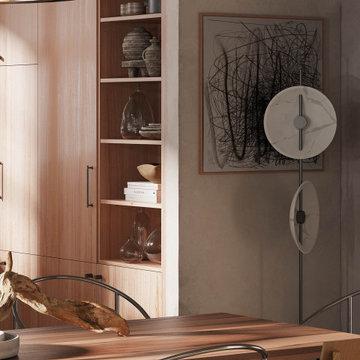
Steeped in sophistication, this Tribeca, New York dining room by Arsight Studio showcases the elegance of simplicity. Custom shelving harmonizes with carefully chosen accessories, while Scandinavian chairs encircle an inviting oak dining table. The room breathes life through expressive mental art and detailed dining room plasterwork. This curated space defines the nexus of fine dining and style, enticing all to partake in its luxury.
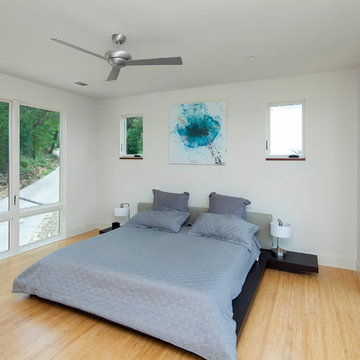
 Element 5 Architecture
Location: Austin, Texas, United States
2600 sf house on a steep hillside. The Hill Country views are to the rear where ample decks are located. The front is very private and therefore the glass entry door and kitchen windows face the front.
Fine Focus Photography
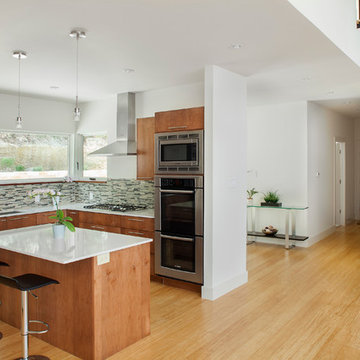 Element 5 Architecture
Location: Austin, Texas, United States
2600 sf house on a steep hillside. The Hill Country views are to the rear where ample decks are located. The front is very private and therefore the glass entry door and kitchen windows face the front.
Fine Focus Photography
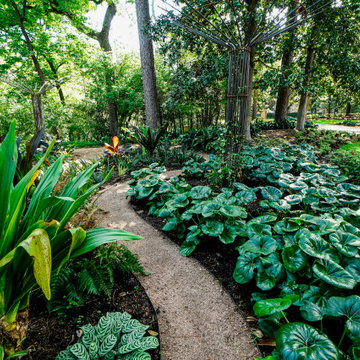 Hogue Landscape Services
The concept of the garden was based on, “Brazilian Hummingbirds II”, a painting the MFAH has in its collection by the artist, Martin Johnson Heade. Heade travelled to the rainforest in Brazil between 1863 and 1864 and painted a
series of small paintings depicting hummingbirds in the lush foliage of the Brazilian rainforests. His painting, Brazilian
Hummingbirds, II, evokes the sultry atmosphere of the Brazilian rainforest with its misty quality and subtle lighting. His interest in ornithology can be seen in his detailed depictions of the hummingbirds. The garden location is adjacent to one of Buffalo Bayou’s steep, wooded ravines. The ravine, with its native plant communities and topography, is a perfect back-
drop for a garden with a rainforest theme. Because the date for the garden opening coincides with the spring migration of hummingbirds into our region, the hummingbird theme seemed appropriate for this garden competition. The garden will include a variety of tropical plants native to the rainforests such as bromeliads, orchids, heliconia, and passion fruit flowers. In addition, native plants to our region such as the Sabal Minor and Southern Wood Fern will be included to integrate
plants that are found nearby in the ravine. The Heliconia flowers produce considerable amounts of nectar, a high energy food essential for hummingbirds who are known to consume three times their bodyweight in a single day. In addition to nectar producing plants, there will be hummingbird nest materials dispersed throughout the garden. A misty quality to the garden will be provided by a misting system, and tropical colored lights will be lit at night for special events. Visitors to the garden will have a unique sensory experience reminiscent to that of Heade’s travels to Brazil’s rainforests.
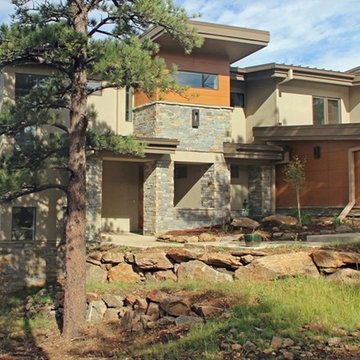
 TKP Architects
This Foothills Contemporary House stands at the edge of a steep mountain slope, looking down into a deep ravine and out to distant snowy peaks. Conforming to its rugged site, this house stacks three stories tall and stretches along a north-south axis, framing views of the vast western landscape from almost every living space in the house. This home is characterized by a dynamic geometry of simple forms shifting in and out of alignment, stacking and sometimes perforating each other.
4