
Search results for "United nations" in Home Design Ideas

 User
DECO Window Fashions
Sheer pleated custom made drapes, ceiling mount metal rod.
Trendy bedroom photo in Austin
Trendy bedroom photo in Austin

 Panama Keys
House Amenities
Security
– In the front, two custom-built solid metal security doors with keys that cannot be
duplicated.
– In the back, an outside custom built sliding door with metal security bars and a sliding
glass door on the inside. Each door requires a key.
– Additional aesthetically designed metal bars have been installed on all existing metal
security windows providing a more hardened and enhanced security posture.
– Infrastructure (wiring and conduit) has been installed and ready for the security system
of your choice
– Community has an active Vecinos Vigilantes program and daily police patrols.
Neighbors communicate in real time via Whatsapp on two channels. In this community,
neighbors know neighbors and who belongs here and who does not belong here.
Electric – A whole-house surge protector has been installed at the electrical junction box to protect against lightning strikes. Each A/C unit also has an additional surge protector at the electrical outlet.
– Water – Whole house water filtration system with five filters – 3 cartridge, 1 charcoal, and a UV sterilization filter. In addition, this water system features a 1,000 gallon backup water tank and a jet pump to maintain constant pressure. System is still under warranty.
– Every room has a ceiling fan.
– Internet and cable TV service is provided by Cableonda via a fiber optic connection with the promise of 100mb down and about 8-10 up.
Outside Amenities
Roof was cleaned and resealed about 2 months.
About 29m (95ft) of custom-designed cement planters with river rock exteriors border the house. You’ll find flowers, tomatoes, spinach, herbs and other vegetation growing year round.
In front of the cement planters, you’ll find about 25 meters (80ft) of cement walkways to step on during rainy season. In fact, you can maneuver nearly all around the back and sides of the house, work in the cement planters and not get your feet muddy.
A custom water drainage system was designed and installed for this property. It routes most rain water from the roof to the roadside drainage system. It works very well.
Out and about in the backyard, you’ll find some young fruit trees to include guanabana, (2) limón, melocotón, mangustin, and fig. We also have several active guandu bushes (pigeon peas) to add to your rice or feed your parrot. You’ll also find a small moringa tree, along with some eucalyptus, salvia, and artemisa bushes. The property has been maintained by the same gardener for over 7 years.
Community Amenities
El Frances is a highly desired location because of its central location to Boquete and David and because of the private bilingual school, Academia Internacional Boquete, about 2 km south of Emerald Drive.
For exploration, discovery, and family fun, you are just 10 minutes from the only skating rink in Panama – Boquete Skateworld. A popular upscale restaurant and spa (gym, pool, exercise equipment, massages) is just a 5 minute drive north to the Los Molinos properties. In and around Boquete, there are coffee, nature, and wildlife, hiking trips through the rain forest and up to the peak of Volcan Baru, two zipline parks, Volcan Baru National Park, horseback riding, multiple spas, “Tuesday Market,” rock climbing, water falls, community theater at the Boquete Community Players theater, and art studios. On the Pacific side, you’re about 1 hour to the beaches around Boca Chica, 90 minutes to the beach at Las Lajas, and on the Atlantic side, you are conveniently located 3 hours from the beaches of Bocas del Toro. It takes just a little over an hour to get to Cerro Punta on the other side of Volcan Baru.
For shopping, the border (Frontera) to Costa Rica is only 90 minutes down the road. The Frontera has a selection of small malls, small shops, street vendors and foods to check out. It also has the only Burger King in western Panama. The largest mall and centralized bus station in western Panama is scheduled to open in 2018 and it is just 20km directly south to David. David has two cinemas, several shopping centers, office supply businesses, a grocery warehouse (Pricesmart), and a variety of other shopping opportunities.
ATMs, convenience stores, and fuel stations are just 7KM down the road.
Approximately 11 to 12 years remain on a 20 year tax exemption.


Find the right local pro for your project
 Metamorphosis Design
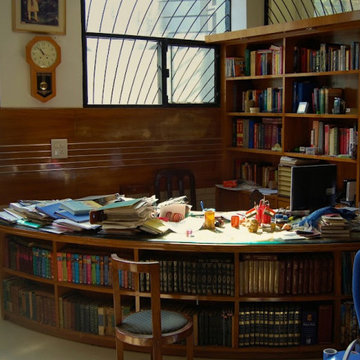
RESIDENCE FOR CAPT. REET M P SINGH, VrC 1965
Location: H.No. 303, Urban Estate, Patiala
Year of completion : 2009
The current generation, have no idea really what it means to go to battle, or fight a war.
In fact, most civvies in India have almost no idea about the Indian Army, or what it actually does – except that they are meant to protect the Nation (including it’s corrupt babus & netas).
We were lucky to have met him at a function of ‘The War Disabled’ decades ago at CSIO. Punjab has a large number of soldiers who faced the brunt of the wars with Pakistan – including the one in 1965 - which came as a surprise move after a feint in the region of the Kutch. With Lal Bahadur Shastri as the PM vs Ayub Khan in Pakistan.
The Pakis had then attacked in division strength in the North, where Punjab borders J&K. And it was here that famous tank battle of Khem Karan was fought. And Capt Reet MP Singh was there. All of 22 years old, and the date was 22nd Sept. 1965. As part of 8th Light Cavalry of the Armoured Corps.
Shrapnel blinded him in one eye, and also broke his one leg and an arm.
It was providence which led Indian troops to find him in the battle field the next morning – and evacuated him first to the Army Hospital at Ferozeopur, and then for more than a year and a half of surgeries and convalescing at Delhi.
So we were excited at being asked to design his family house in Patiala....... which he named Machhike, after the battlefield where he managed to come out alive after being hit by enemy shell splinters.
Small family – both son and daughter in the Army by now – we had no problems addressing the basic requirements of a 2 bedroom house with the upper storey for the son & his family (also a cavalry-man, in the same unit as his father). Another basic requirement was a large library cum study and a lot of storage space.
An analysis of the geography of Patiala and its propensity to flooding straight away pointed to a high plinth – which we planned for. But then the severely clayey soil (with a very low SBC) also necessitated a spread out foundation – which turned out to best in the form of a raft slab. Houses abutting both sides of the plot were built up – so we had to come up with a sloped basement slab for structural stability. This feature gave us an advantage inasmuch we gained a lot of visual space below the GF slab.
The entire house had a small footprint of about just over a thousand sft – 35’x35’. All supported with a column grid of 15’ square. With balconies and other projections , there was almost zero wastage in the use of standard rebars of 12 m lengths. A mere 9 columns with 4 bays did the trick.
The basement therefore turned out to be a 1000 sft plus hall with adequate seating and shelf space for books and memorabilia. And was done up as a comfortable den for the doyen.
The GF encompassed the usual DDK + 2 bedrooms – both with attached toilets and storage. A fireplace was a must, as was a small Powder Room for visitors.
A deck from the rear bedroom leads out to the large rear garden – which luckily, was in the south.
There is a separate Annexe block for staff and maybe a tenant.
The driveway is around 5 m wide – adequate for the various vehicles reqd to be parked within the house premises.
A unique feature built into the house is an EARTH COOLING SYSTEM – which uses the natural coolth of the earth a few meters below the surface to warm or cool the house throughout the seasons. There is also a natural wind driven exhaust system to continuously ventilate all the three floors.
A highly insulated roof – with arrangement for a roof garden – has been made to reduce the heat gain of the house from the day long solar insulation.
Because of the high clay content of the soil, Rain water harvesting or recharge was not a good option – although an attempt has been made to help increase the rain water absorption with a deep pipe with filters and such embedded in the front garden.
Solar water heating has been provided – complete with insulated plumbing to prevent heat loss.
And the house has become a landmark.......!!!
Mission accomplished.......!!!
designed by www.MetamorphosisDesign.org
Struggling to bring clarity to your vision before starting your dream project?
Let us help you refine your ideas and align them seamlessly with your budget.
Schedule your design consultation today - call - 9316511166

 Envision Web
Stuart Wade, Envision Virtual Tours
The second-largest and most developed of Georgia's barrier islands, St. Simons is approximately twelve miles long and nearly three miles wide at its widest stretch (roughly the size of Manhattan Island in New York). The island is located in Glynn County on Georgia's coast and lies east of Brunswick (the seat of Glynn County), south of Little St. Simons Island and the Hampton River, and north of Jekyll Island. The resort community of Sea Island is separated from St. Simons on the east by the Black Banks River. Known for its oak tree canopies and historic landmarks, St. Simons is both a tourist destination and, according to the 2010 U.S. census, home to 12,743 residents.
Early History
The earliest
St. Simons Island Village
record of human habitation on the island dates to the Late Archaic Period, about 5,000 to 3,000 years ago. Remnants of shell rings left behind by Native Americans from this era survive on many of the barrier islands, including St. Simons. Centuries later, during the period known by historians as the chiefdom era, the Guale Indians established a chiefdom centered on St. Catherines Island and used St. Simons as their hunting and fishing grounds. By 1500 the Guale had established a permanent village of about 200 people on St. Simons, which they called Guadalquini.
Beginning in 1568, the Spanish attempted to create missions along the Georgia coast. Catholic missions were the primary means by which Georgia's indigenous Native American chiefdoms were assimilated into the Spanish colonial system along the northern frontier of greater Spanish Florida. In the 1600s St. Simons became home to two Spanish missions: San Buenaventura de Guadalquini, on the southern tip of the island, and Santo Domingo de Asao (or Asajo), on the northern tip. Located on the inland side of the island were the pagan refugee villages of San Simón, the island's namesake, and Ocotonico. In 1684 pirate raids left the missions and villages largely abandoned.
Colonial History
As
Fort Frederica
early as 1670, with Great Britain's establishment of the colony of Carolina and its expansion into Georgia territory, Spanish rule was threatened by the English. The Georgia coast was considered "debatable land" by England and Spain, even though Spain had fully retreated from St. Simons by 1702. Thirty-one years later General James Edward Oglethorpe founded the English settlement of Savannah. In 1736 he established Fort Frederica, named after the heir to the British throne, Frederick Louis, prince of Wales, on the west side of St. Simons Island to protect Savannah and the Carolinas from the Spanish threat.
Between 1736 and 1749 Fort Frederica was the hub of British military operations along the Georgia frontier. A town of the same name grew up around the fort and was of great importance to the new colony. By 1740 Frederica's population was 1,000. In 1736 the congregation of what would become Christ Church was organized within Fort Frederica as a mission of the Church of England. Charles Wesley led the first services. In 1742 Britain's decisive victory over Spain in the Battle of Bloody Marsh, during the War of Jenkins' Ear, ended the Spanish threat to the Georgia coast. When the British regimen disbanded in 1749, most of the townspeople relocated to the mainland. Fort Frederica went into decline and, except for a short time of prosperity during the 1760s and 1770s under the leadership of merchant James Spalding, never fully recovered. Today the historic citadel's tabby ruins are maintained by the National Park Service.
Plantation Era
By the start of the American Revolution (1775-83), Fort Frederica was obsolete, and St. Simons was left largely uninhabited as most of its residents joined the patriot army. Besides hosting a small Georgia naval victory on the Fort Frederica River, providing guns from its famous fort for use at Fort Morris in Sunbury, and serving as an arena for pillaging by privateers and British soldiers, the island played almost no role in the war.
Following the war, many of the townspeople, their businesses destroyed, turned to agriculture. The island was transformed into fourteen cotton plantations after acres of live oak trees were cleared for farm land and used for building American warships, including the famous USS Constitution, or "Old Ironsides." Although rice was the predominant crop along the neighboring Altamaha River, St. Simons was known for its production of long-staple cotton, which soon came to be known as Sea Island cotton.
Between
Ebos Landing
the 1780s and the outbreak of the Civil War (1861-65), St. Simons's plantation culture flourished. The saline atmosphere and the availability of cheap slave labor proved an ideal combination for the cultivation of Sea Island cotton. In 1803 a group of Ebo slaves who survived the Middle Passage and arrived on the west side of St. Simons staged a rebellion and drowned themselves. The sacred site is known today as Ebos Landing.
One of the largest owners of land and slaves on St. Simons was Pierce Butler, master of Hampton Point Plantation, located on the northern end of the island. By 1793 Butler owned more than 500 slaves, who cultivated 800 acres of cotton on St. Simons and 300 acres of rice on Butler's Island in the Altamaha River delta. Butler's grandson, Pierce Mease Butler, who at the age of sixteen inherited a share of his grandfather's estate in 1826, was responsible for the largest sale of human beings in the history of the United States: in 1859, to restore his squandered fortune, he sold 429 slaves in Savannah for more than $300,000. The British actress and writer Fanny Kemble, whose tumultuous marriage to Pierce ended in divorce in 1849, published an eyewitness account of the evils of slavery on St. Simons in her book Journal of a Residence on a Georgian Plantation in 1838-1839 (1863).
Another
Retreat Plantation
large owner of land and slaves on St. Simons was Major William Page, a friend and employee of Pierce Butler Sr. Before purchasing Retreat Plantation on the southwestern tip of the island in 1804, Page managed the Hampton plantation and Butler's Island. Upon Page's death in 1827, Thomas Butler King inherited the land together with his wife, Page's daughter, Anna Matilda Page King. King expanded his father-in-law's planting empire on St. Simons as well as on the mainland, and by 1835 Retreat Plantation alone was home to as many as 355 slaves.
The center of life during the island's plantation era was Christ Church, Frederica. Organized in 1807 by a group of island planters, the Episcopal church is the second oldest in the Diocese of Georgia. Embargoes imposed by the War of 1812 (1812-15) prevented the parishioners from building a church structure, so they worshiped in the home of John Beck, which stood on the site of Oglethorpe's only St. Simons residence, Orange Hall.
The first Christ Church building, finished on the present site in 1820, was ruined by occupying Union troops during the Civil War. In 1884 the Reverend Anson Dodge Jr. rebuilt the church as a memorial to his first wife, Ellen. The cruciform building with a trussed gothic roof and stained-glass windows remains active today as Christ Church.
Civil War and Beyond
The
St. Simons Island Lighthouse
outbreak of the Civil War in 1861 put a sudden end to St. Simons's lucrative plantation era. In January of that year, Confederate troops were stationed at the south end of the island to guard the entrance to Brunswick Harbor. Slaves from Retreat Plantation, owned by Thomas Butler King, built earthworks and batteries. Plantation residents were scattered—the men joined the Confederate army and their families moved to the mainland. Cannon fire was heard on the island in December 1861, and Confederate troops retreated in February 1862, after dynamiting the lighthouse to keep its beacon from aiding Union troops. Soon thereafter, Union troops occupied the island, which was used as a camp for freed slaves. By August 1862 more than 500 former slaves lived on St. Simons, including Susie King Taylor, who organized a school for freed slave children. But in November the ex-slaves were taken to Hilton Head, South Carolina, and Fernandina, Florida, leaving the island abandoned.
After the Civil War the island never returned to its status as an agricultural community. The plantations lay dormant because there were no slaves to work the fields. After Union general William T. Sherman's January 1865 Special Field Order No. 15 —a demand that former plantations be divided and distributed to former slaves—was overturned by U.S. president Andrew Johnson less than a year later, freedmen and women were forced to work as sharecroppers on the small farms that dotted the land previously occupied by the sprawling plantations.
By
St. Simons Lumber Mills
1870 real economic recovery began with the reestablishment of the timber industry. Norman Dodge and Titus G. Meigs of New York set up lumber mill operations at Gascoigne Bluff, formerly Hamilton Plantation. The lumber mills provided welcome employment for both blacks and whites and also provided mail and passenger boats to the mainland. Such water traffic, together with the construction of a new lighthouse in 1872, designed by architect Charles B. Cluskey, marked the beginning of St. Simons's tourism industry. The keeper of the lighthouse created a small amusement park, which drew many visitors, as did the seemingly miraculous light that traveled from the top of the lighthouse tower to the bottom. The island became a summer retreat for families from the mainland, particularly from Baxley, Brunswick, and Waycross.
The island's resort industry was thriving by the 1880s. Beachfront structures, such as a new pier and grand hotel, were built on the southeastern end of the island and could be accessed by ferry. Around this time wealthy northerners began vacationing on the island.
Twentieth Century
The
St. Simons Island Pier and Village
opening in 1924 of the Brunswick–St. Simons Highway, today known as the Torras Causeway, was a milestone in the development of resorts in the area. St. Simons's beaches were now easily accessible to locals and tourists alike. More than 5,000 automobiles took the short drive from Brunswick to St. Simons via the causeway on its opening day, paving the way for convenient residential and resort development.
In 1926 automotive pioneer Howard Coffin of Detroit, Michigan, bought large tracts of land on St. Simons, including the former Retreat Plantation, and constructed a golf course, yacht club, paved roads, and a residential subdivision. Although the causeway had brought large numbers of summer people to the island, St. Simons remained a small community with only a few hundred permanent residents until the 1940s.
The
St. Simons Island
outbreak of World War II (1941-45) brought more visitors and residents to St. Simons. Troops stationed at Jacksonville, Florida; Savannah; and nearby Camp Stewart took weekend vacations on the island, and a new naval air base and radar school became home to even more officers and soldiers. The increased wartime population brought the island its first public school. With a major shipyard for the production of Liberty ships in nearby Brunswick, the waters of St. Simons became active with German U-boats. In April 1942, just off the coast, the Texas Company oil tanker S. S. Oklahoma and the S. S. Esso Baton Rouge were torpedoed by the Germans, bringing the war very close to home for island residents.
Due in large part to the military's improvement of the island's infrastructure during the war, development on the island boomed in the 1950s and 1960s. More permanent homes and subdivisions were built, and the island was no longer just a summer resort but also a thriving community. In 1950 the Methodist conference and retreat center Epworth by the Sea opened on Gascoigne Bluff. In 1961 novelist Eugenia Price visited St. Simons and began work on her first works of fiction, known as the St. Simons Trilogy. Inspired by real events on the island, Price's trilogy renewed interest in the history of Georgia's coast, and the novelist herself relocated to the island in 1965 and lived there for thirty-one years. St. Simons is also home to contemporary Georgia writer Tina McElroy Ansa.
Since
Epworth by the Sea
1980 St. Simons's population has doubled. The island's continued status as a vacation destination and its ongoing development boom have put historic landmarks and natural areas at risk. While such landmarks as the Fort Frederica ruins and the Battle of Bloody Marsh site are preserved and maintained by the National Park Service, and while the historic lighthouse is maintained by the Coastal Georgia Historical Society, historic Ebos Landing has been taken over by a sewage treatment plant.
Several coastal organizations have formed in recent years to save natural areas on the island. The St. Simons Land Trust, for example, has received donations of large tracts of land and plans to protect property in the island's three traditional African American neighborhoods. Despite its rapid growth and development, St. Simons remains one of the most beautiful and important islands on the Georgia coast.

 Dordevic Architecture + Construction
Chilipics Photography
Large minimalist wooden l-shaped staircase photo in Atlanta with wooden risers
Large minimalist wooden l-shaped staircase photo in Atlanta with wooden risers
 SUPERIOR CHIMNEY SERVICES CORPORATION
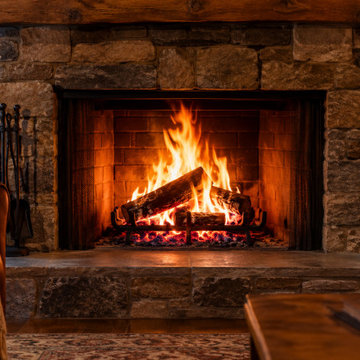
To prepare your fireplace and chimney for winter, schedule a professional inspection and chimney cleaning. The temperatures are just about right to either fire up those logs or turn on the gas fireplace. Either way, you don’t want to miss out on a cozy night in front of the fireplace.
But why is it important to prepare your fireplace and chimney for winter? That’s what we going to talk about today, everything from the damper, to chimney cap to what to look out for and what to repair now. The team at Superior Chimney is ready to share practical tips for getting ready for the cold to start.
Why is it Important to Prepare the Fireplace for Winter?
Your fireplace works hard during the winter. Using your fireplace just on the weekends or everyday while you relax causes system stress behind the scenes regardless. While providing you warmth and comfort, the fire in the fireplace creates a byproduct called creosote, which is sticky and gives off a smokey smell. All winter long, this will be slowly building inside of the chimney walls. Now that’s what’s going on inside your home.
Outside, your chimney endures the elements every day with the snow, ice, freezing rain, and critters looking for a nice warm place to settle. All these things add up putting stress on the chimney structure.
Getting this done now will give you peace of mind and helps your system run efficiently. This way, heat stays in your living room where you want it.
Start with an Annual Chimney Inspection
The most important step to take now is to get a certified chimney inspection before you light your first fire. A certified technician can identify creosote buildup, cracked flue liners, damaged masonry and blockages that are hard to see from inside and outside the home.
The National Fire Protection Association standard for chimneys, fireplaces, and vents calls for chimneys to be inspected at least once a year and cleaned as needed for safe operation (NFPA 211).
The Chimney Safety Institute of America gives the same guidance, recommending that fireplaces, chimneys, and vents be inspected annually by a certified professional (CSIA).
Ventilation is a Breath of Fresh Air for Your Home
Proper ventilation allows your home to breathe. Your home relies on vents connected to the fireplace and natural gas appliances to carry harmful gases such as carbon monoxide safely outdoors.
During the winter, snow and ice can pile up around the vents. When that happens, pollutants have a harder time leaving the home.
Signs of a Blocked Chimney Vent
A blocked vent can cause symptoms such as headaches, nausea, fatigue, and dizziness. If symptoms go away once you or your family leave the house, that’s a sign of a blocked chimney vent, and it needs to be addressed right away. Be sure your carbon monoxide detectors are in working order and located on every level of your home.
Keep the Cold Air Out of Your Fireplace
Pay attention to the chimney effect, also called the stack effect, during winter. Warm air inside your home rises to meet the colder air outside. That cold air can rush down the chimney and into your home.
This pressure imbalance can also pull smoke back into the room when you light a fire. Keeping the damper closed whenever the fireplace is not working, is one of the best ways to stop cold drafts from entering your home.
Have You Tried to Preheat the Chimney Flue?
What? What is that? When you are ready to light the fireplace, warming the flue can help smoke travel up the chimney flue and out of your home. Light your gas starter without wood in there for a few minutes or a small bundle of kindling if you don’t have the convenience of a gas log starter. This will warm the air and cold chimney walls within the chimney flue so when the fire starts, it will go up and out of your home (Priming the system). Never roll up a sheet of newspaper, or any paper, and hold it up toward the open damper!
The New Critter Home?
For many animals, a chimney looks like a warm and safe place from the cold and freezing temperatures. Squirrels, raccoons, birds, bats, possum and other small creatures may try to nest inside.
How do you know if a critter made its way in? If you hear scratching, chirping, or the sounds of moving around in the chimney, or a foul smell call a certified chimney professional to inspect the chimney flue. A technician can safely remove the animals and check for any nesting material or structural damage it left behind.
Sometimes an animal can die inside the chimney. Typical first signs can be a strong odor, trouble venting smoke, seeing flesh flies or maggots. Any situation, you will want to call Superior Chimney at 877-244-6349 for help.
You may want to consider a tightly fitted stainless steel chimney cap with mesh sides is the best long term solution. It keeps wildlife out while still allowing smoke and gases to escape freely.
What are Common Chimney Repairs
Your chimney stands tall and is exposed to the weather all year long. In winter, snow builds up on the chimney crown and rain always finds its way into small crack in the chimney masonry. Anytime you have spalling or cracked bricks with or without missing or deteriorating mortar, you have a problem brewing with the chimney structure. When water from rain or snow freezes, it expands and widens the cracks. This process is known as the freeze and thaw cycle.
Water that enters the chimney can mix with creosote. That’s what creates a musty, smoky smell. A persistent odor from your fireplace is often an early sign that moisture is getting inside, so prompt repairs help protect your home.
Don’t Forget the Chimney Flashing
Metal step flashing seals the joint where your chimney meets the roof. Over time, it can loosen, rust, or pull away from the chimney.
Have a certified chimney professional inspect the flashing each year to confirm it remains watertight. Adding a waterproofing sealant to the masonry and a crown repair when needed gives your chimney lasting protection through the wettest months.
The Chimney from Bottom to Top
Each year when your chimney inspection is performed, the certified chimney technician will automatically check the firebox all the way up to the damper and out to the exterior chimney itself. The chimney technician will be looking for cracked or missing firebricks, gaps in the mortar joints, and loose pieces within the chimney walls especially if you do not have a chimney liner.
The chimney technician is searching for hairline cracks, damaged bricks, ineffective damper, damaged or missing chimney cap to name a few on the 14-point inspection. Because it is difficult for a homeowner to inspect on top of the roof or inside of the chimney as well as know exactly what to look for, it is best to have a trained, certified technician to do it for you. The technician will show you and the office staff will email you pictures so you have an understanding of what the technician has found.
Keep Fire Safety Essentials Nearby
A few simple tools make a fire experience safer for family, pets and guests.
Keep a sturdy metal fireplace screen in front of the opening to catch sparks and embers.
Place a fire extinguisher rated for household use in a safe, dry space. If you can have it near the fireplace, even better. Be sure to talk to family members or anyone else living in your home so they know where it is.
Test smoke alarms and carbon monoxide detectors monthly throughout the heating season.
Keep rugs, furniture, holiday decorations including Santa stockings at least three feet from the fireplace. This space gives you plenty of room to ensure the fire stays in the fireplace.
When it is time to clean out the ashes, wait until they have cooled down… at least until the next morning. Shovel them into a metal container with a tight lid and keep it outside away from your home.
Preparing a Gas Fireplace for Winter
Gas fireplaces need attention before starting it up too. Have a certified chimney technician check the burner, pilot assembly, gas connections, and venting system before you turn it on for the season. The chimney technician will continue to conduct a thorough cleaning and inspection from bottom to top according to the 14-point inspection.
As a homeowner, clean the protective glass front that’s attached or separate from the fireplace only once the unit is cool. Look for any soot buildup, which can be an indication that a burner or vent is experiencing a problem.
Frequently Asked Questions
How often should a chimney be inspected?
CSIA (the Chimney Safety Institute of America), NCSG (the National Chimney Sweep Guild), NFPA (the National Fire Protection Association) and IRC (International Residential Code) all specify a chimney inspection at least once a year. Cleaning is then scheduled based on how much buildup the technician finds.
Why does my fireplace smell bad in winter?
A strong odor can point to creosote mixed with moisture, a downdraft caused by the stack effect, or an animal in the chimney flue. A certified inspection can pinpoint the cause quickly.
Should I close the damper when the fireplace is off or cooled?
Yes, once the fire is completely out and the ashes are cool. A closed damper keeps warm air inside and cold air outside.
What is the best time of year to have my chimney cleaning?
Right now! Scheduling before the first cold snap gives you more appointment options and time for any repairs.
Do I need a chimney cap?
A chimney cap is critical to the function of your chimney. It keeps out rain, snow, debris and animals while allowing smoke to go up and out of your home properly. Every chimney needs a chimney cap for the same reasons every home needs a roof!
Get Your Fireplace Winter-Ready With Superior Chimney
A well maintained fireplace is one of the coziest parts of winter. With a yearly inspection, clear vents, a sturdy chimney cap, and sound masonry, you can enjoy every fire without unnecessary worry. Now that you know how to prepare your fireplace and chimney for winter, contact Superior Chimney today to schedule your inspection and sweeping, and enjoy a warm and comfortable season by the fire.


 Direct Tile Warehouse
Regent Victorian tiles are a lovely choice for Victorian hall tiles or for creating bathrooms or kitchens in an original style. These are versatile decor floor tiles with borders and angles to facilitate individual designs. Please be aware there are 9 variations for the corner tiles (please see below). Orders will be made up with a mix of corners tiles and we cannot guarantee which tiles will be delivered.


 Atelier Armbruster
Master bathroom
Photos: Natalia Lorca Ruiz
Mid-sized trendy master white tile and ceramic tile ceramic tile and black floor doorless shower photo in New York with flat-panel cabinets, white cabinets, a wall-mount toilet, white walls, an integrated sink, solid surface countertops and a hinged shower door
Mid-sized trendy master white tile and ceramic tile ceramic tile and black floor doorless shower photo in New York with flat-panel cabinets, white cabinets, a wall-mount toilet, white walls, an integrated sink, solid surface countertops and a hinged shower door

 Custom Surface Solutions
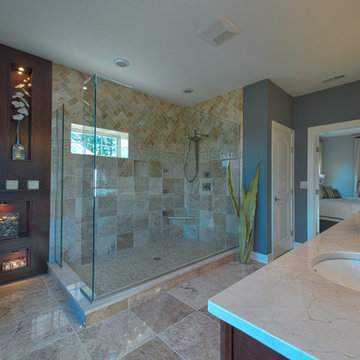
 (www.css-tile.com) - Owner Craig Thompson (512) 430-1215. This project shows a new construction master bathroom with two showers, and wall mounted vanities. Shower wall tile and vanity wall wainscots and floor base tile is 6" x 18" Carrera Marble on offset subway pattern. Shower floors are 5/8" Carrera Marble mosaic tile. All exposed edges including windows, shower walls, top wainscots and floor base are custom bull-nose profiled. Shower floor is custom mud set with SchluterSystems waterproofing and drain system.




 Envision Web
Stuart Wade, Envision Virtual Tours
The second-largest and most developed of Georgia's barrier islands, St. Simons is approximately twelve miles long and nearly three miles wide at its widest stretch (roughly the size of Manhattan Island in New York). The island is located in Glynn County on Georgia's coast and lies east of Brunswick (the seat of Glynn County), south of Little St. Simons Island and the Hampton River, and north of Jekyll Island. The resort community of Sea Island is separated from St. Simons on the east by the Black Banks River. Known for its oak tree canopies and historic landmarks, St. Simons is both a tourist destination and, according to the 2010 U.S. census, home to 12,743 residents.
Early History
The earliest
St. Simons Island Village
record of human habitation on the island dates to the Late Archaic Period, about 5,000 to 3,000 years ago. Remnants of shell rings left behind by Native Americans from this era survive on many of the barrier islands, including St. Simons. Centuries later, during the period known by historians as the chiefdom era, the Guale Indians established a chiefdom centered on St. Catherines Island and used St. Simons as their hunting and fishing grounds. By 1500 the Guale had established a permanent village of about 200 people on St. Simons, which they called Guadalquini.
Beginning in 1568, the Spanish attempted to create missions along the Georgia coast. Catholic missions were the primary means by which Georgia's indigenous Native American chiefdoms were assimilated into the Spanish colonial system along the northern frontier of greater Spanish Florida. In the 1600s St. Simons became home to two Spanish missions: San Buenaventura de Guadalquini, on the southern tip of the island, and Santo Domingo de Asao (or Asajo), on the northern tip. Located on the inland side of the island were the pagan refugee villages of San Simón, the island's namesake, and Ocotonico. In 1684 pirate raids left the missions and villages largely abandoned.
Colonial History
As
Fort Frederica
early as 1670, with Great Britain's establishment of the colony of Carolina and its expansion into Georgia territory, Spanish rule was threatened by the English. The Georgia coast was considered "debatable land" by England and Spain, even though Spain had fully retreated from St. Simons by 1702. Thirty-one years later General James Edward Oglethorpe founded the English settlement of Savannah. In 1736 he established Fort Frederica, named after the heir to the British throne, Frederick Louis, prince of Wales, on the west side of St. Simons Island to protect Savannah and the Carolinas from the Spanish threat.
Between 1736 and 1749 Fort Frederica was the hub of British military operations along the Georgia frontier. A town of the same name grew up around the fort and was of great importance to the new colony. By 1740 Frederica's population was 1,000. In 1736 the congregation of what would become Christ Church was organized within Fort Frederica as a mission of the Church of England. Charles Wesley led the first services. In 1742 Britain's decisive victory over Spain in the Battle of Bloody Marsh, during the War of Jenkins' Ear, ended the Spanish threat to the Georgia coast. When the British regimen disbanded in 1749, most of the townspeople relocated to the mainland. Fort Frederica went into decline and, except for a short time of prosperity during the 1760s and 1770s under the leadership of merchant James Spalding, never fully recovered. Today the historic citadel's tabby ruins are maintained by the National Park Service.
Plantation Era
By the start of the American Revolution (1775-83), Fort Frederica was obsolete, and St. Simons was left largely uninhabited as most of its residents joined the patriot army. Besides hosting a small Georgia naval victory on the Fort Frederica River, providing guns from its famous fort for use at Fort Morris in Sunbury, and serving as an arena for pillaging by privateers and British soldiers, the island played almost no role in the war.
Following the war, many of the townspeople, their businesses destroyed, turned to agriculture. The island was transformed into fourteen cotton plantations after acres of live oak trees were cleared for farm land and used for building American warships, including the famous USS Constitution, or "Old Ironsides." Although rice was the predominant crop along the neighboring Altamaha River, St. Simons was known for its production of long-staple cotton, which soon came to be known as Sea Island cotton.
Between
Ebos Landing
the 1780s and the outbreak of the Civil War (1861-65), St. Simons's plantation culture flourished. The saline atmosphere and the availability of cheap slave labor proved an ideal combination for the cultivation of Sea Island cotton. In 1803 a group of Ebo slaves who survived the Middle Passage and arrived on the west side of St. Simons staged a rebellion and drowned themselves. The sacred site is known today as Ebos Landing.
One of the largest owners of land and slaves on St. Simons was Pierce Butler, master of Hampton Point Plantation, located on the northern end of the island. By 1793 Butler owned more than 500 slaves, who cultivated 800 acres of cotton on St. Simons and 300 acres of rice on Butler's Island in the Altamaha River delta. Butler's grandson, Pierce Mease Butler, who at the age of sixteen inherited a share of his grandfather's estate in 1826, was responsible for the largest sale of human beings in the history of the United States: in 1859, to restore his squandered fortune, he sold 429 slaves in Savannah for more than $300,000. The British actress and writer Fanny Kemble, whose tumultuous marriage to Pierce ended in divorce in 1849, published an eyewitness account of the evils of slavery on St. Simons in her book Journal of a Residence on a Georgian Plantation in 1838-1839 (1863).
Another
Retreat Plantation
large owner of land and slaves on St. Simons was Major William Page, a friend and employee of Pierce Butler Sr. Before purchasing Retreat Plantation on the southwestern tip of the island in 1804, Page managed the Hampton plantation and Butler's Island. Upon Page's death in 1827, Thomas Butler King inherited the land together with his wife, Page's daughter, Anna Matilda Page King. King expanded his father-in-law's planting empire on St. Simons as well as on the mainland, and by 1835 Retreat Plantation alone was home to as many as 355 slaves.
The center of life during the island's plantation era was Christ Church, Frederica. Organized in 1807 by a group of island planters, the Episcopal church is the second oldest in the Diocese of Georgia. Embargoes imposed by the War of 1812 (1812-15) prevented the parishioners from building a church structure, so they worshiped in the home of John Beck, which stood on the site of Oglethorpe's only St. Simons residence, Orange Hall.
The first Christ Church building, finished on the present site in 1820, was ruined by occupying Union troops during the Civil War. In 1884 the Reverend Anson Dodge Jr. rebuilt the church as a memorial to his first wife, Ellen. The cruciform building with a trussed gothic roof and stained-glass windows remains active today as Christ Church.
Civil War and Beyond
The
St. Simons Island Lighthouse
outbreak of the Civil War in 1861 put a sudden end to St. Simons's lucrative plantation era. In January of that year, Confederate troops were stationed at the south end of the island to guard the entrance to Brunswick Harbor. Slaves from Retreat Plantation, owned by Thomas Butler King, built earthworks and batteries. Plantation residents were scattered—the men joined the Confederate army and their families moved to the mainland. Cannon fire was heard on the island in December 1861, and Confederate troops retreated in February 1862, after dynamiting the lighthouse to keep its beacon from aiding Union troops. Soon thereafter, Union troops occupied the island, which was used as a camp for freed slaves. By August 1862 more than 500 former slaves lived on St. Simons, including Susie King Taylor, who organized a school for freed slave children. But in November the ex-slaves were taken to Hilton Head, South Carolina, and Fernandina, Florida, leaving the island abandoned.
After the Civil War the island never returned to its status as an agricultural community. The plantations lay dormant because there were no slaves to work the fields. After Union general William T. Sherman's January 1865 Special Field Order No. 15 —a demand that former plantations be divided and distributed to former slaves—was overturned by U.S. president Andrew Johnson less than a year later, freedmen and women were forced to work as sharecroppers on the small farms that dotted the land previously occupied by the sprawling plantations.
By
St. Simons Lumber Mills
1870 real economic recovery began with the reestablishment of the timber industry. Norman Dodge and Titus G. Meigs of New York set up lumber mill operations at Gascoigne Bluff, formerly Hamilton Plantation. The lumber mills provided welcome employment for both blacks and whites and also provided mail and passenger boats to the mainland. Such water traffic, together with the construction of a new lighthouse in 1872, designed by architect Charles B. Cluskey, marked the beginning of St. Simons's tourism industry. The keeper of the lighthouse created a small amusement park, which drew many visitors, as did the seemingly miraculous light that traveled from the top of the lighthouse tower to the bottom. The island became a summer retreat for families from the mainland, particularly from Baxley, Brunswick, and Waycross.
The island's resort industry was thriving by the 1880s. Beachfront structures, such as a new pier and grand hotel, were built on the southeastern end of the island and could be accessed by ferry. Around this time wealthy northerners began vacationing on the island.
Twentieth Century
The
St. Simons Island Pier and Village
opening in 1924 of the Brunswick–St. Simons Highway, today known as the Torras Causeway, was a milestone in the development of resorts in the area. St. Simons's beaches were now easily accessible to locals and tourists alike. More than 5,000 automobiles took the short drive from Brunswick to St. Simons via the causeway on its opening day, paving the way for convenient residential and resort development.
In 1926 automotive pioneer Howard Coffin of Detroit, Michigan, bought large tracts of land on St. Simons, including the former Retreat Plantation, and constructed a golf course, yacht club, paved roads, and a residential subdivision. Although the causeway had brought large numbers of summer people to the island, St. Simons remained a small community with only a few hundred permanent residents until the 1940s.
The
St. Simons Island
outbreak of World War II (1941-45) brought more visitors and residents to St. Simons. Troops stationed at Jacksonville, Florida; Savannah; and nearby Camp Stewart took weekend vacations on the island, and a new naval air base and radar school became home to even more officers and soldiers. The increased wartime population brought the island its first public school. With a major shipyard for the production of Liberty ships in nearby Brunswick, the waters of St. Simons became active with German U-boats. In April 1942, just off the coast, the Texas Company oil tanker S. S. Oklahoma and the S. S. Esso Baton Rouge were torpedoed by the Germans, bringing the war very close to home for island residents.
Due in large part to the military's improvement of the island's infrastructure during the war, development on the island boomed in the 1950s and 1960s. More permanent homes and subdivisions were built, and the island was no longer just a summer resort but also a thriving community. In 1950 the Methodist conference and retreat center Epworth by the Sea opened on Gascoigne Bluff. In 1961 novelist Eugenia Price visited St. Simons and began work on her first works of fiction, known as the St. Simons Trilogy. Inspired by real events on the island, Price's trilogy renewed interest in the history of Georgia's coast, and the novelist herself relocated to the island in 1965 and lived there for thirty-one years. St. Simons is also home to contemporary Georgia writer Tina McElroy Ansa.
Since
Epworth by the Sea
1980 St. Simons's population has doubled. The island's continued status as a vacation destination and its ongoing development boom have put historic landmarks and natural areas at risk. While such landmarks as the Fort Frederica ruins and the Battle of Bloody Marsh site are preserved and maintained by the National Park Service, and while the historic lighthouse is maintained by the Coastal Georgia Historical Society, historic Ebos Landing has been taken over by a sewage treatment plant.
Several coastal organizations have formed in recent years to save natural areas on the island. The St. Simons Land Trust, for example, has received donations of large tracts of land and plans to protect property in the island's three traditional African American neighborhoods. Despite its rapid growth and development, St. Simons remains one of the most beautiful and important islands on the Georgia coast.

 Dunn-Edwards Paints
 colors -
Exterior body: Industrial Age DET618
Door: Postwar Boom DET584
Build: KUD Properties, Inc.
Photo: Agostino Creative
Example of a 1960s gray one-story exterior home design in Los Angeles
Example of a 1960s gray one-story exterior home design in Los Angeles


 Envision Web
Stuart Wade, Envision Virtual Tours
The second-largest and most developed of Georgia's barrier islands, St. Simons is approximately twelve miles long and nearly three miles wide at its widest stretch (roughly the size of Manhattan Island in New York). The island is located in Glynn County on Georgia's coast and lies east of Brunswick (the seat of Glynn County), south of Little St. Simons Island and the Hampton River, and north of Jekyll Island. The resort community of Sea Island is separated from St. Simons on the east by the Black Banks River. Known for its oak tree canopies and historic landmarks, St. Simons is both a tourist destination and, according to the 2010 U.S. census, home to 12,743 residents.
Early History
The earliest
St. Simons Island Village
record of human habitation on the island dates to the Late Archaic Period, about 5,000 to 3,000 years ago. Remnants of shell rings left behind by Native Americans from this era survive on many of the barrier islands, including St. Simons. Centuries later, during the period known by historians as the chiefdom era, the Guale Indians established a chiefdom centered on St. Catherines Island and used St. Simons as their hunting and fishing grounds. By 1500 the Guale had established a permanent village of about 200 people on St. Simons, which they called Guadalquini.
Beginning in 1568, the Spanish attempted to create missions along the Georgia coast. Catholic missions were the primary means by which Georgia's indigenous Native American chiefdoms were assimilated into the Spanish colonial system along the northern frontier of greater Spanish Florida. In the 1600s St. Simons became home to two Spanish missions: San Buenaventura de Guadalquini, on the southern tip of the island, and Santo Domingo de Asao (or Asajo), on the northern tip. Located on the inland side of the island were the pagan refugee villages of San Simón, the island's namesake, and Ocotonico. In 1684 pirate raids left the missions and villages largely abandoned.
Colonial History
As
Fort Frederica
early as 1670, with Great Britain's establishment of the colony of Carolina and its expansion into Georgia territory, Spanish rule was threatened by the English. The Georgia coast was considered "debatable land" by England and Spain, even though Spain had fully retreated from St. Simons by 1702. Thirty-one years later General James Edward Oglethorpe founded the English settlement of Savannah. In 1736 he established Fort Frederica, named after the heir to the British throne, Frederick Louis, prince of Wales, on the west side of St. Simons Island to protect Savannah and the Carolinas from the Spanish threat.
Between 1736 and 1749 Fort Frederica was the hub of British military operations along the Georgia frontier. A town of the same name grew up around the fort and was of great importance to the new colony. By 1740 Frederica's population was 1,000. In 1736 the congregation of what would become Christ Church was organized within Fort Frederica as a mission of the Church of England. Charles Wesley led the first services. In 1742 Britain's decisive victory over Spain in the Battle of Bloody Marsh, during the War of Jenkins' Ear, ended the Spanish threat to the Georgia coast. When the British regimen disbanded in 1749, most of the townspeople relocated to the mainland. Fort Frederica went into decline and, except for a short time of prosperity during the 1760s and 1770s under the leadership of merchant James Spalding, never fully recovered. Today the historic citadel's tabby ruins are maintained by the National Park Service.
Plantation Era
By the start of the American Revolution (1775-83), Fort Frederica was obsolete, and St. Simons was left largely uninhabited as most of its residents joined the patriot army. Besides hosting a small Georgia naval victory on the Fort Frederica River, providing guns from its famous fort for use at Fort Morris in Sunbury, and serving as an arena for pillaging by privateers and British soldiers, the island played almost no role in the war.
Following the war, many of the townspeople, their businesses destroyed, turned to agriculture. The island was transformed into fourteen cotton plantations after acres of live oak trees were cleared for farm land and used for building American warships, including the famous USS Constitution, or "Old Ironsides." Although rice was the predominant crop along the neighboring Altamaha River, St. Simons was known for its production of long-staple cotton, which soon came to be known as Sea Island cotton.
Between
Ebos Landing
the 1780s and the outbreak of the Civil War (1861-65), St. Simons's plantation culture flourished. The saline atmosphere and the availability of cheap slave labor proved an ideal combination for the cultivation of Sea Island cotton. In 1803 a group of Ebo slaves who survived the Middle Passage and arrived on the west side of St. Simons staged a rebellion and drowned themselves. The sacred site is known today as Ebos Landing.
One of the largest owners of land and slaves on St. Simons was Pierce Butler, master of Hampton Point Plantation, located on the northern end of the island. By 1793 Butler owned more than 500 slaves, who cultivated 800 acres of cotton on St. Simons and 300 acres of rice on Butler's Island in the Altamaha River delta. Butler's grandson, Pierce Mease Butler, who at the age of sixteen inherited a share of his grandfather's estate in 1826, was responsible for the largest sale of human beings in the history of the United States: in 1859, to restore his squandered fortune, he sold 429 slaves in Savannah for more than $300,000. The British actress and writer Fanny Kemble, whose tumultuous marriage to Pierce ended in divorce in 1849, published an eyewitness account of the evils of slavery on St. Simons in her book Journal of a Residence on a Georgian Plantation in 1838-1839 (1863).
Another
Retreat Plantation
large owner of land and slaves on St. Simons was Major William Page, a friend and employee of Pierce Butler Sr. Before purchasing Retreat Plantation on the southwestern tip of the island in 1804, Page managed the Hampton plantation and Butler's Island. Upon Page's death in 1827, Thomas Butler King inherited the land together with his wife, Page's daughter, Anna Matilda Page King. King expanded his father-in-law's planting empire on St. Simons as well as on the mainland, and by 1835 Retreat Plantation alone was home to as many as 355 slaves.
The center of life during the island's plantation era was Christ Church, Frederica. Organized in 1807 by a group of island planters, the Episcopal church is the second oldest in the Diocese of Georgia. Embargoes imposed by the War of 1812 (1812-15) prevented the parishioners from building a church structure, so they worshiped in the home of John Beck, which stood on the site of Oglethorpe's only St. Simons residence, Orange Hall.
The first Christ Church building, finished on the present site in 1820, was ruined by occupying Union troops during the Civil War. In 1884 the Reverend Anson Dodge Jr. rebuilt the church as a memorial to his first wife, Ellen. The cruciform building with a trussed gothic roof and stained-glass windows remains active today as Christ Church.
Civil War and Beyond
The
St. Simons Island Lighthouse
outbreak of the Civil War in 1861 put a sudden end to St. Simons's lucrative plantation era. In January of that year, Confederate troops were stationed at the south end of the island to guard the entrance to Brunswick Harbor. Slaves from Retreat Plantation, owned by Thomas Butler King, built earthworks and batteries. Plantation residents were scattered—the men joined the Confederate army and their families moved to the mainland. Cannon fire was heard on the island in December 1861, and Confederate troops retreated in February 1862, after dynamiting the lighthouse to keep its beacon from aiding Union troops. Soon thereafter, Union troops occupied the island, which was used as a camp for freed slaves. By August 1862 more than 500 former slaves lived on St. Simons, including Susie King Taylor, who organized a school for freed slave children. But in November the ex-slaves were taken to Hilton Head, South Carolina, and Fernandina, Florida, leaving the island abandoned.
After the Civil War the island never returned to its status as an agricultural community. The plantations lay dormant because there were no slaves to work the fields. After Union general William T. Sherman's January 1865 Special Field Order No. 15 —a demand that former plantations be divided and distributed to former slaves—was overturned by U.S. president Andrew Johnson less than a year later, freedmen and women were forced to work as sharecroppers on the small farms that dotted the land previously occupied by the sprawling plantations.
By
St. Simons Lumber Mills
1870 real economic recovery began with the reestablishment of the timber industry. Norman Dodge and Titus G. Meigs of New York set up lumber mill operations at Gascoigne Bluff, formerly Hamilton Plantation. The lumber mills provided welcome employment for both blacks and whites and also provided mail and passenger boats to the mainland. Such water traffic, together with the construction of a new lighthouse in 1872, designed by architect Charles B. Cluskey, marked the beginning of St. Simons's tourism industry. The keeper of the lighthouse created a small amusement park, which drew many visitors, as did the seemingly miraculous light that traveled from the top of the lighthouse tower to the bottom. The island became a summer retreat for families from the mainland, particularly from Baxley, Brunswick, and Waycross.
The island's resort industry was thriving by the 1880s. Beachfront structures, such as a new pier and grand hotel, were built on the southeastern end of the island and could be accessed by ferry. Around this time wealthy northerners began vacationing on the island.
Twentieth Century
The
St. Simons Island Pier and Village
opening in 1924 of the Brunswick–St. Simons Highway, today known as the Torras Causeway, was a milestone in the development of resorts in the area. St. Simons's beaches were now easily accessible to locals and tourists alike. More than 5,000 automobiles took the short drive from Brunswick to St. Simons via the causeway on its opening day, paving the way for convenient residential and resort development.
In 1926 automotive pioneer Howard Coffin of Detroit, Michigan, bought large tracts of land on St. Simons, including the former Retreat Plantation, and constructed a golf course, yacht club, paved roads, and a residential subdivision. Although the causeway had brought large numbers of summer people to the island, St. Simons remained a small community with only a few hundred permanent residents until the 1940s.
The
St. Simons Island
outbreak of World War II (1941-45) brought more visitors and residents to St. Simons. Troops stationed at Jacksonville, Florida; Savannah; and nearby Camp Stewart took weekend vacations on the island, and a new naval air base and radar school became home to even more officers and soldiers. The increased wartime population brought the island its first public school. With a major shipyard for the production of Liberty ships in nearby Brunswick, the waters of St. Simons became active with German U-boats. In April 1942, just off the coast, the Texas Company oil tanker S. S. Oklahoma and the S. S. Esso Baton Rouge were torpedoed by the Germans, bringing the war very close to home for island residents.
Due in large part to the military's improvement of the island's infrastructure during the war, development on the island boomed in the 1950s and 1960s. More permanent homes and subdivisions were built, and the island was no longer just a summer resort but also a thriving community. In 1950 the Methodist conference and retreat center Epworth by the Sea opened on Gascoigne Bluff. In 1961 novelist Eugenia Price visited St. Simons and began work on her first works of fiction, known as the St. Simons Trilogy. Inspired by real events on the island, Price's trilogy renewed interest in the history of Georgia's coast, and the novelist herself relocated to the island in 1965 and lived there for thirty-one years. St. Simons is also home to contemporary Georgia writer Tina McElroy Ansa.
Since
Epworth by the Sea
1980 St. Simons's population has doubled. The island's continued status as a vacation destination and its ongoing development boom have put historic landmarks and natural areas at risk. While such landmarks as the Fort Frederica ruins and the Battle of Bloody Marsh site are preserved and maintained by the National Park Service, and while the historic lighthouse is maintained by the Coastal Georgia Historical Society, historic Ebos Landing has been taken over by a sewage treatment plant.
Several coastal organizations have formed in recent years to save natural areas on the island. The St. Simons Land Trust, for example, has received donations of large tracts of land and plans to protect property in the island's three traditional African American neighborhoods. Despite its rapid growth and development, St. Simons remains one of the most beautiful and important islands on the Georgia coast.
29