
Search results for "Wind treated" in Home Design Ideas
 BKH Development, LLC
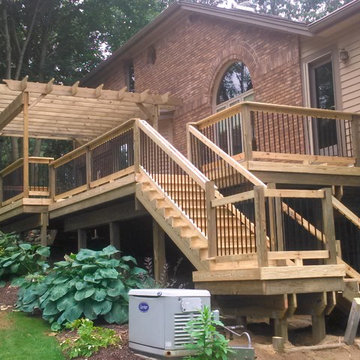
This is a large deck made of pressure treated wood with black aluminum spindles for easy staining and nice visibility. Pergola adds a small amount of shade from direct sunlight.
 Dvisionone Architects
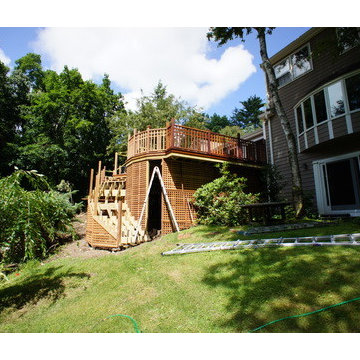
under construction deck showing steeply sloping site. Ocatgonal faceted segment stair wraps backside of upper deck tier and connects to basement.
Designed by Michael Raso, AIA
 Sweet Smiling Landscape Design
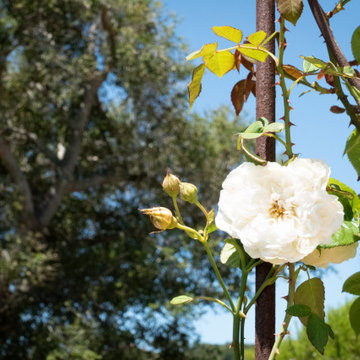
This beautiful property is located in the hills above of Montecito with 360 degree of views onto the Channel Islands and the surrounding mountains. Inspired by the Japanese landscape design principal of the borrowed landscape the gardens on this property serves as a kind of picture frame from which to view the natural beauty of its surroundings.
This 15-year-old costume-built home was crafted with all the style and workmanship ship found in Villa or Château in the Mediterranean. Unfortunately, the garden design was not as well thought out as the house was. Most of this property receives baking sun, drying winds and is in an extremely high fire danger area. Do to these factors many of the plants on the property were unsuitable for their location. The original planting scheme was also lifeless and colorless. Poor landscape maintenance had left many of the plants on the property sick and dying.
We came in to revive this landscape, breathing new life into it.
Creating a drought tolerant and fire wise landscape was of utmost importance to these clients. Staying true to the more formal landscape styles found in Southern Europe we also want to create an opportunity to design seamlessly blend with its natural surroundings. We did that by incorporating a lot of California native plants. This vast property also contains an avocado orchard and a vineyard. By adding California native plants the property is inviting in native birds and insects that help keep pollinate the orchard and vineyard and keep pest problems at bay. Because these clients enjoy harvesting from their land we added elements of edible landscaping to this project. We filled pottery and planter beds with fruit trees, culinary and medicinal herbs as well as flowers that can be used in cut flower arrangements. Lastly, we went through carefully pruning diseased plants, treating pest problems an improving the soil. Now the landscape is not only more beautiful it is more protected against fire, is more water wise and integrate into its surrounds with a wholistic approach.
Find the right local pro for your project
 BKH Development, LLC
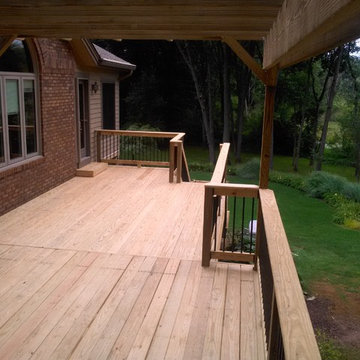
This is a large deck made of pressure treated wood with black aluminum spindles for easy staining and nice visibility. Pergola adds a small amount of shade from direct sunlight.
 The Kitchen Witch
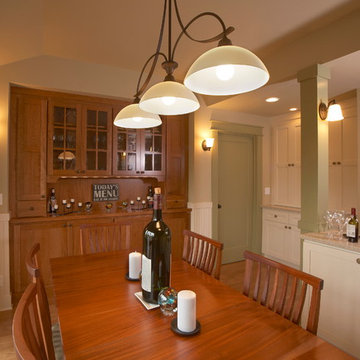
A pantry buffet hugs the wall next to the green door. This space is open and lends itself to easy conversation with the cook while relaxing with a glass of wind and special treats prepared by the chef.
 Rodwin Architecture & Skycastle Construction
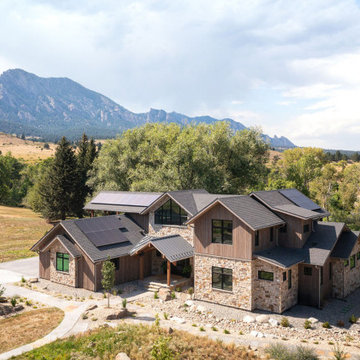
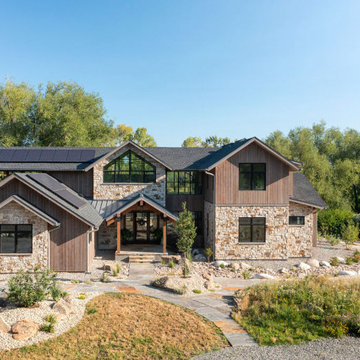
Nestled along South Boulder Creek with sweeping Flatirons views, Creekside is a custom modern mountain home shaped by one guiding principle: dissolve the boundary between light, landscape, and daily living. From the first conversations, the project began not with a floor plan, but with the land itself—carefully evaluating a rare, delicate site and letting its rhythms, constraints, and beauty set the tone for every decision.
Designed for a couple building their forever home in the Boulder foothills, the residence balances crisp modernity with the warmth and honesty of natural materials. Expansive glazing and clean lines are grounded by timber, stone, and tactile finishes—quietly luxurious rather than showy. The clients had spent years “chasing the light” from home to home; here, that pursuit became something more intentional. Instead of chasing the sun, the architecture invites sunlight to travel through the house across the day and seasons.
Light is treated as a living element, orchestrated to create moments of surprise and calm. An interior window captures southern exposure at the upper level, guiding it through the loft and filtering it into the northern living room below—an atmospheric shift that changes hour by hour. A glass stair bridge adds levitation and clarity, linking front and back, public and private. Beneath it, a serene Zen garden winds under floating stairs, creating a quiet pause in the home’s circulation.
Facing the creek, the home opens into a composition of glass and crisp geometry, framing moving water and long bands of daylight. Peaked roofs, timber beams, and stone cladding nod to regional vernacular, rooting the modern form in its mountain context.
Set beside a sensitive riparian corridor, Creekside demanded exceptional care, including meticulous deconstruction of an existing structure with 94% landfill diversion. Performance was treated as a design feature: HERS 4, ENERGY STAR certification, a 15.8 kWh solar array, 30 kW battery backup, 1 ACH air-sealed construction, and air-source heat pumps—proof that stewardship and comfort can coexist beautifully.
 BKH Development, LLC
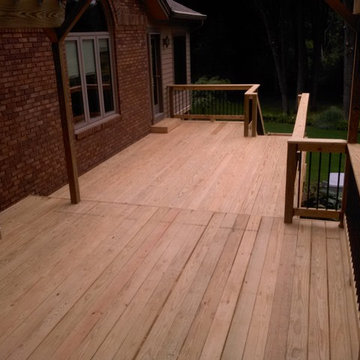
This is a large deck made of pressure treated wood with black aluminum spindles for easy staining and nice visibility. Pergola adds a small amount of shade from direct sunlight.

 Rodwin Architecture & Skycastle Construction
Nestled along South Boulder Creek with sweeping Flatirons views, Creekside is a custom modern mountain home shaped by one guiding principle: dissolve the boundary between light, landscape, and daily living. From the first conversations, the project began not with a floor plan, but with the land itself—carefully evaluating a rare, delicate site and letting its rhythms, constraints, and beauty set the tone for every decision.
Designed for a couple building their forever home in the Boulder foothills, the residence balances crisp modernity with the warmth and honesty of natural materials. Expansive glazing and clean lines are grounded by timber, stone, and tactile finishes—quietly luxurious rather than showy. The clients had spent years “chasing the light” from home to home; here, that pursuit became something more intentional. Instead of chasing the sun, the architecture invites sunlight to travel through the house across the day and seasons.
Light is treated as a living element, orchestrated to create moments of surprise and calm. An interior window captures southern exposure at the upper level, guiding it through the loft and filtering it into the northern living room below—an atmospheric shift that changes hour by hour. A glass stair bridge adds levitation and clarity, linking front and back, public and private. Beneath it, a serene Zen garden winds under floating stairs, creating a quiet pause in the home’s circulation.
Facing the creek, the home opens into a composition of glass and crisp geometry, framing moving water and long bands of daylight. Peaked roofs, timber beams, and stone cladding nod to regional vernacular, rooting the modern form in its mountain context.
Set beside a sensitive riparian corridor, Creekside demanded exceptional care, including meticulous deconstruction of an existing structure with 94% landfill diversion. Performance was treated as a design feature: HERS 4, ENERGY STAR certification, a 15.8 kWh solar array, 30 kW battery backup, 1 ACH air-sealed construction, and air-source heat pumps—proof that stewardship and comfort can coexist beautifully.

 KMSalter Design
Stephani Buchman Photography
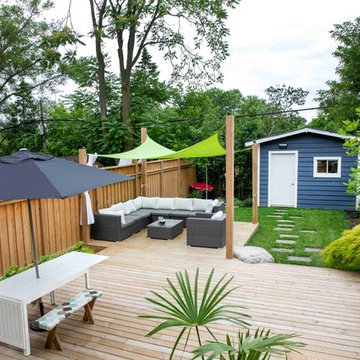
Example of a mid-sized minimalist glass railing balcony container garden design in Toronto with no cover
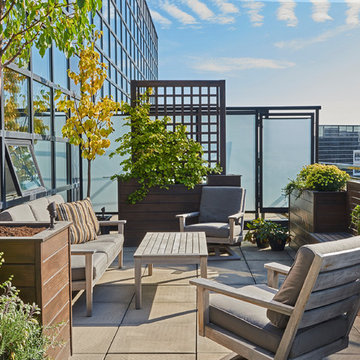
Example of a mid-sized minimalist glass railing balcony container garden design in Toronto with no cover
 Arbordale Landscaping Ltd
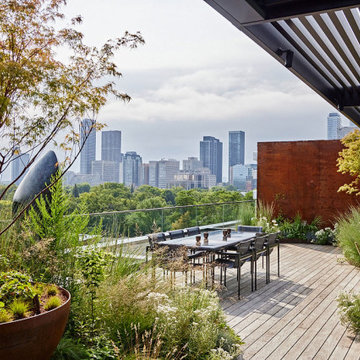
Thermory decking makes up the entertaining and dining spaces. The decking is surrounding with Corten steel edging and densely planted gardens which host Corten steel planters bowls and custom laser cut panels. A custom powder coated steel pergola covers the barbecue area.
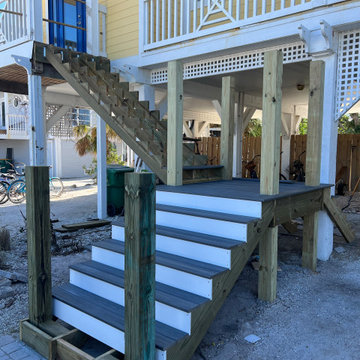
 Key Remodeling & Design
Structural rebuild of stair systems using treated framing and upgraded fasteners
Coastal exterior home idea in Miami
Coastal exterior home idea in Miami
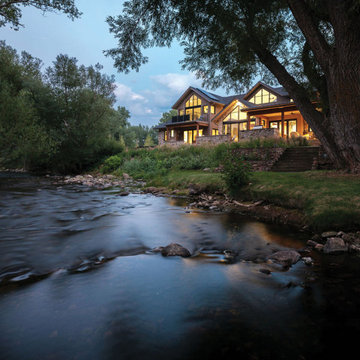 Rodwin Architecture & Skycastle Construction
Nestled along South Boulder Creek with sweeping Flatirons views, Creekside is a custom modern mountain home shaped by one guiding principle: dissolve the boundary between light, landscape, and daily living. From the first conversations, the project began not with a floor plan, but with the land itself—carefully evaluating a rare, delicate site and letting its rhythms, constraints, and beauty set the tone for every decision.
Designed for a couple building their forever home in the Boulder foothills, the residence balances crisp modernity with the warmth and honesty of natural materials. Expansive glazing and clean lines are grounded by timber, stone, and tactile finishes—quietly luxurious rather than showy. The clients had spent years “chasing the light” from home to home; here, that pursuit became something more intentional. Instead of chasing the sun, the architecture invites sunlight to travel through the house across the day and seasons.
Light is treated as a living element, orchestrated to create moments of surprise and calm. An interior window captures southern exposure at the upper level, guiding it through the loft and filtering it into the northern living room below—an atmospheric shift that changes hour by hour. A glass stair bridge adds levitation and clarity, linking front and back, public and private. Beneath it, a serene Zen garden winds under floating stairs, creating a quiet pause in the home’s circulation.
Facing the creek, the home opens into a composition of glass and crisp geometry, framing moving water and long bands of daylight. Peaked roofs, timber beams, and stone cladding nod to regional vernacular, rooting the modern form in its mountain context.
Set beside a sensitive riparian corridor, Creekside demanded exceptional care, including meticulous deconstruction of an existing structure with 94% landfill diversion. Performance was treated as a design feature: HERS 4, ENERGY STAR certification, a 15.8 kWh solar array, 30 kW battery backup, 1 ACH air-sealed construction, and air-source heat pumps—proof that stewardship and comfort can coexist beautifully.

 Rheir Home
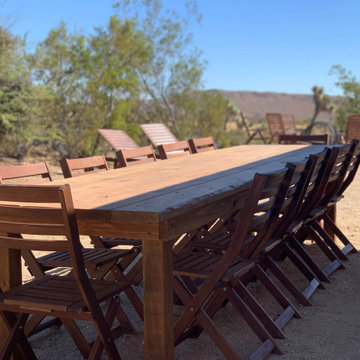
We built this 12 foot table to accommodate rental guests who wanted to enjoy and/or host outdoor dinner parties. The table is heavy enough to endure strong, year long winds, and treated to tolerate the intense sun and dryness of the desert. String lighting was hung above the table with a smart system, so it can be turned on/off remotely or after a certain period of time has been set.
 Rheir Home
We built this 12 foot table to accommodate rental guests who wanted to enjoy and/or host outdoor dinner parties. The table is heavy enough to endure strong, year long winds, and treated to tolerate the intense sun and dryness of the desert. String lighting was hung above the table with a smart system, so it can be turned on/off remotely or after a certain period of time has been set.
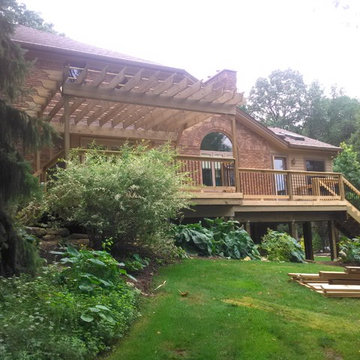 BKH Development, LLC
This is a large deck made of pressure treated wood with black aluminum spindles for easy staining and nice visibility. Pergola adds a small amount of shade from direct sunlight.


 Five Star Tree Care
During the summer, certain tree pests are particularly active and bent on the destruction of your beloved trees. Spider mites are one of these pests that like to make themselves at home all over your plants. Their only goal in life is to eat plant leaves. A great way to stop their destruction is being able to recognize the warning signs of their infestation. Once you have identified them, you can take care of them and put in precautions in order to keep them away and stop any future problems from them. We here at Five Star Tree Services have come up with ways that you can identify this pest and get rid of it before it’s too late for your precious plants.
Some Info on Spider Mites
You might have seen these little pests before but didn’t know what they were. They are these tiny creatures that are related to ticks and spiders.
What They Look Like
In order to see them properly, you will need to look at them through a magnifying glass. These little bugs come in a number of different patterns and colours. Being so incredibly small, they are roughly a millimeter at the most. For reverence, that’s about as thick as your credit card. Trying to look at them without a magnifying glass, all you might see are these tiny moving dots that might be brown, red, black, or yellow.
Causes of Spider Mites
Due to their shier tininess, these little invaders can waltz right into your gardens undetected. It’s even possible that you have bought a plant for a nursery or garden center that has had spider mites on them. They can even be brought into your garden by the wind. These little pests have the ability to spread very quickly due to their ability to eat a number of different plants. They are not very picky when it comes to eating your plants. They like outdoor and indoor plants, deciduous and evergreen, virtually nothing is safe from them.
How To Tell You Have Spider Mites
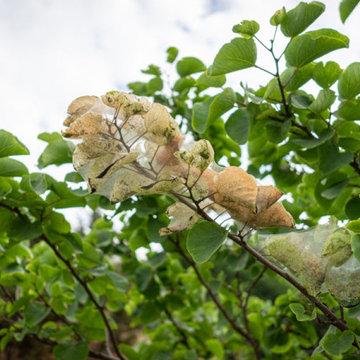
Spider mites prefer to cut and feed on the bottoms of tree leaves, however, the damage they do can be seen at the top of the leaf. Three key things to look for that indicate you have a spider mite infestations are:
Yellowing or bronze look to your tree in one or many different areas (common with a big infestation)
Silky webs that are woven around the leaves and stems
Little yellow or white spots appearing at the top of the leaves/needles
If you are suspicious that your plant has spider mites, one way to know for sure is holding a sheet of paper under an infected branch and shaking it. You will be able to see the little mites on the paper.
Rid Your Plants of Spider Mites
Whether it’s the summer or winter, follow these tips for treating spider mites.
Summer:
You can use a forceful water spray to knock them off of your tree. Once they are gone, periodically use your hose to rinse your trees for the season. Make sure to get the bottom of the leaves because this is where the mites like to live.
Winter:
This also includes any time before the buds come out in the spring. If your tree has spider mites, during this time, you will only see the eggs settled on the branches of your tree. Apply dormant oil to all the eggs before they hatch.
It is also handy to know what natural predators eat spider mites. Certain rival insects such as lacewings and predator beetles will aid in getting rid of your pesky mites.
Preventing Spider Mites
Spider mites are most active during drought season. When trees are stressed, this is when they attack. If you are experiencing extended hot days and long dry periods, it is important to keep your trees hydrated. This means giving them at least an inch of water a week and making sure you have enough mulch around them.
How Five Star Tree Service Can Help
Spider mites are a pest. Catching them before they do any permanent damage is important. If using the dormant oil or spraying your tree with water doesn’t seem to be working, you can give us at Five Star Tree Services a call at (416) 990-3355 and we will come and help take care of them. Visit our website to see a full list of our available tree care services in Toronto!
5