The Hartford, CT apartment designed by Jared Frank of Topsy Design is not our primary residence. But for me and my husband of nearly forty years, opening the door here feels like being home. We bought this apartment because of the building’s proximity to my work, as well as cultural institutions, entertainment, and restaurants in this small and increasingly vibrant city. After selecting the building, designed by I.M. Pei, we considered at least twenty apartments. We chose this one for its magical view of the State House and Bushnell Park at exactly the right height above the trees but not too distant. But we could not imagine how the dark, cramped one bedroom—with its Spanish colonial archways, unnecessary wall divisions, unpractical kitchen, and tiled and carpeted floors could ever suit our needs.
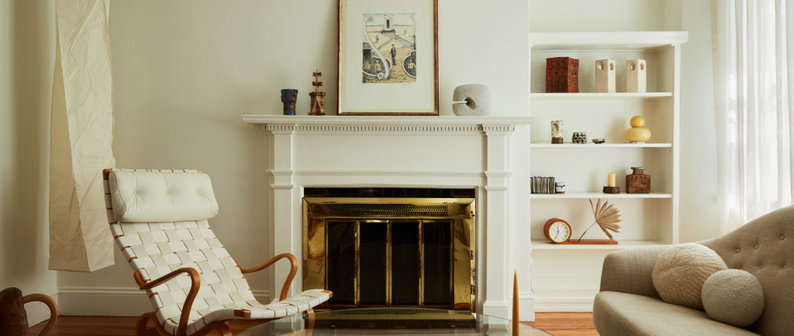
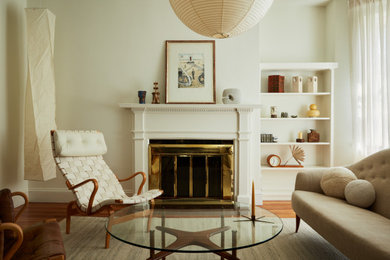
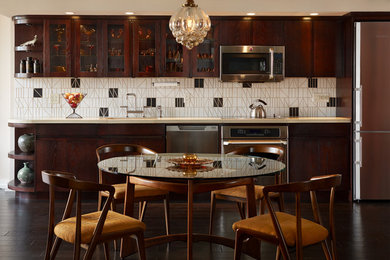
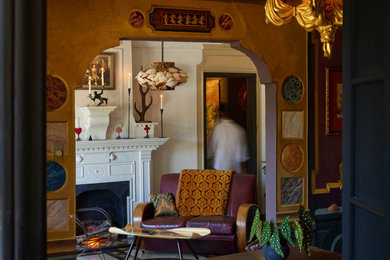
Those needs were personal—a romantic space for a couple in the frankly liberating “empty nester” stage of marriage—as well as professional—a place to entertain not only friends but also potential supporters and donors for a major non-profit cultural institution. Flexibility was critical to the design mission. So was creating a comfortable and an alluring mix of visual enticements of furniture, artworks, and vistas that would surprise and make us—and those who joined us here—want to linger. Jared immediately saw what we could not see: how to open the space to fabulous views of the park and the city, how to provide places to both work and play, how to balance intimacy with entertainment within 800 square feet. The elegant dark wood flooring, the window seats covered with vintage fabrics and woodwork that disguised utilitarian radiators, the open floor plan with a kitchen that encourages my joy of cooking and makes entertaining for two or twenty easy, the stunning glazed cabinets that showcase cherished George Sakier Fosteria glassware and tableware that descended in the family, the syncopated black-and-white tilework in the backsplash, the way that rectangular rhythm carried over to the black-and-white semicircular shaped on the floor of the balcony; the surprising yet relaxing play of colors—for example, the watermelon colored wall that greets you when you enter repeats in decorative touches in antique, contemporary and vintage objects, furniture and textiles. And every piece of mostly but not exclusively mid-century furniture was selected to be both visually compelling and physically comfortable for two people of very different sizes.
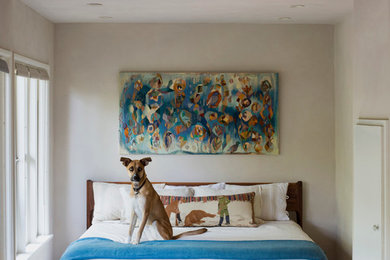
While the shapes and the colors echo throughout the small space, the mood in the bedroom is serene, the softest green-blue watery space. No distractions from electronics, monastic, yet tender. Throughout Jared brings nature inside through his choice of colors, light, plants, furniture and objects quintessentially modern yet never hard in their lines. Major designers from the 1920s through 1970s are represented, including lesser-known female innovators like furniture designer Bertha Schaefer—but so are folk art and outsider artists, unfamiliar or unknown makers and artists. A realist and a dreamer, Jared expresses his disciplined eye most uniquely through his attention to lighting—from Austrian mid-century bubble-glass to Noguchi lamps to sconces and candles that set every mood his clients’ might imagine.






11 Comments