Software
Houzz Logo Print
whiteivan

basement floor condensation

12 years ago
i have a major problem in my basement with the floor sweating
there is a little mold growth on some of the furniture and i had a mold remediation guy out to look at it and he told me i do not need a mold remediation company, i need to address my condensation issues and he felt that would take care of 95% of my issue
we do not have AC in the house, the previous owners used AC so i am quessing they never had a problem
when we open the windows on a hot day in the summer within a couple hours the floor is wet like someone dumped water over it
if we leave teh windows closed and run a dehumidifier once in a while the basement gets all stuffy and seems like the oxygen level is low
i am currently looking at air exchangers or ventilation fans
does anyone have experience with these systems and what are some good systems to use
i am also fairly handy with carpentry and basic electrical, is there something i could put together that do the same job

Comments (9)

  • PRO
    12 years ago
    It's difficult to give specific advise on this since it could be a number of things/ factors. I suggest you start by looking for a testing company in your area (engineering testing company) and engage them to come out. If the dehumidifier doesn't seem to work, then there might be a bigger challenge. The way you described the water on the floor when windows are open on a hot day, I'm wondering if perhaps it's condensation because the vapor retarder might be missing below the slab, but you'd need an expert to check on that.
  • PRO
    12 years ago
    You are describing a bizarre yet well documented concern = "sweating slab syndrome". It can be one of the most difficult things to "fix" because it has multiple factors that cause it. A professional moisture remediation company (they must specialize in basement moisture and concrete slab sealing) needs to find all of the "factors" and then fix each one individually.

    This can be a simple issue such as not having a vapour barrier underneath the slab (more common than you think) or it can be because of multiple factors that have recently come into play such as rising water tables, new builds in the neighborhood forcing ground water into new underground channels together with the age of your slab, lack of sump pump or weeping tiles, etc.

    A simple fix is probably not in the cards. Spend the money on the moisture remediation first and you might find you don't need the "air exchange" systems.

    I once had a family who installed in-floor heating to "dry out" their basement. It turned out the in-floor heating was evapourating off MORE moisture than ever before. The reason: water/evaporation channels in the slab (already there) were acting like straws. As the water was evaporating OFF the slab more water was being sucked into the slab = more evaporating off = more sucking through = more evaporating off. It was a massive circle which began to cause humidity problems upstairs and ruining their hardwood floors.

    They spent $7,000 for the in-floor system...only to find out the "real" fix would have been $8,000. Now they have run out of money and are still dealing with a wet basement AND another $8,000 worth of "fix" that should have been done in the first place. And their hardwoods are now in danger of needing replacement because of the moisture in the home.

    The lesson here is: get the diagnosis, fix it properly and you will end the battle with the mold without spending 3-4 times the amount because you are trying to "fix" the wrong thing.
  • 12 years ago
    good idea about trying the plastic, i need to try that
    we actualy had carpet in the basement and a few months back we had a heavy rain fall and got water in the basement so the carpet got all saoking wet, we ended up tking the carpet out, part of the basement had ceramic tile and this sweated before we got the water in (same situation as i described earlier) so we ended up taking tile and carpet out
    after this i dug up around the exterior and installed a foundation drain and brushed pitch on the foundation wall below grade
    over the past weekend we had 4 1/2" of rain in 2 hours and we did not get water in the basement so that problem is now fixed, but i still have the sweating and musty odor problem
  • PRO
    12 years ago
    Sounds like you are going in the right direction. Keep at it. The plastic test is an excellent, low cost option to see what is up. As a quick precaution, it is possible to have this test done, have no visible moisture on the plastic and yet still have evapouration issues off of the slab.

    The plastic, if there is moisture, is a very quick way to see if there is a BIG problem. It may not show a "subtle" problem. All the best and give it a go.
  • PRO
    12 years ago
    last modified: 12 years ago
    I’d try Center Lines method first. We do have air in the house, but if it is not on and the windows and doors in the basement are open, we get a wet floor very quickly. House is brand new, we built it and we know for sure it is condensation from the warm air hitting the cold floor.
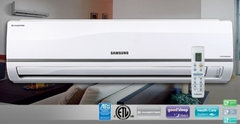
    Know what is a great product? The "bread box” wall mounted air conditioner/heater. We have had two in other homes. Samsung, I think it was.
    AQV09NSDY Neo Forte 9000 BTU High Wall Heat Pump Mini-Split Air Conditioner With · More Info
  • 12 years ago
    Judy, i'm not sure i know what you are saying when you say center lines method
    i actually know about the bread box they are also called mini split systems, but i was hoping that we could do something without AC
  • PRO
    12 years ago
    I thought CenterLineGroup’s suggestion above was a good thing to try first.
  • PRO
    12 years ago
    I would have the floor checked professionally. Like Cancork Floor said, you can run the plastic test and think you are okay, but then still have problems with the slab. Don't throw a bunch of money at trying to install systems that might not solve the real issue anyway. Moisture problems are not good for houses or people living in them. You should really locate and address the real problem.