Software
Houzz Logo Print
amaryll_gw

forcing amaryllis into dormancy`

21 years ago

In different threads I've noticed different suggestions. I usually do not force dormancy, and do not remove green leaves. I am curious to know what people who remove leaves when placing the plant in a dark place report. Has anyone tried both methods? It seems forcing dormancy would result in smaller bulbs and less blooming, but I am curious to hear the argument for dormancy.

Comments (11)

  • 21 years ago
    last modified: 11 years ago

    Me too.

  • 21 years ago
    last modified: 11 years ago

    If you have read some of my latest messages you will certainly be astonished that I have relevant arguments for a forced dormancy of knight star lily bulbs.

    Plants from outdoors are generally contaminated with dirt and insects ore more evil animals (mites) . For the sake of plant hygienic this should all be removed with a clear knife cut and spraying in order to disinfect and kill any remaining little critter

    Furthermore - if you have a good crop indoors which has covered your window and darken it with a dense mass of leaves it is better to cut these away because in the low light season of the year they would then respire some of these fine storage substances from the bulb.

    Overwintering at the windowsill makes sense if you have well husbanded, healthy looking plants with nice leaves which cover your window in a beautifull way, like a sickle or a fan towards the glass. and not BENT, and having still an adequate distance to the leaf fan of the neighbour plant.

    From these plants you will receive outstanding results in the next season.

    This way I multiplied my precious only little bloomable bulb of H.aulicum v.robustum to 4 bloomable bulbs within 4 years. And these bulbs are now sending scapes irregularly, the last even in January!

    This evergreen knight star lily with its particularly thick, broad and leathery leaves is a good example for amaryllis, which are permanently showable.

    On the other hand there are indeed some amaryllis, particularly big blooming tetraploid cultivars, like Appleblossom which do not bear so very ornamental leaves. These tend to collapse because they become so very long, but are not sufficiently keel shaped nor carrying a strong midrib to support them. Furthermore thhey tend to develop a harmless but undecorative fungus disease which manifests as very small brown dots on the leaves' surface.

    And certainly you know these terrible thin leaves of Red Lion, wich grow so very long, too, straight into the heaven and at last collapsing entirely at the slightest movement.

    I read so often that plants should be forced into dormancy by simply prolonged withholding of water. For my part I do this, too, but strategically clever, just to the point when the leavy plant has JUST dried its substrate. Then I immediately cut the leaves away.

    Witholding water in order to force withering of leaves is a cruel *ggg* act and not wise, because the leaves remove a lot of liquid from the bulb before they finally resign and become dry. The idea, that valuable storage products are transferred into the bulb during this process is of insignificant relevance. The effect is simply negliguible.

    Make a clear cut!
    Seems to be cruel, too, but ist is so quickly over!
    Slow dying is more painfull, as we all know *ggg*
    Do not remove the leaf entity while the substrate is still moist!!

    The most important subject in the cultivation of bulbous plants is to do the "homework" during the grow season. That means to administer adequately temperature, light, water, fertilizer, - and, sometimes becoming necessary, remedial action against tarsonemid mites and nematodes, particularly in crowded cultivations.

    Hans-Werner

  • 21 years ago
    last modified: 11 years ago

    Hans-Werner -

    Thanks for the information. So you suggest letting the plant dry just until the leaves begin to drop, and then cutting them?

  • 21 years ago
    last modified: 11 years ago

    No that is not correct.
    The leaves remain green still a rather long time after the substrat has gone dry and the pot has become "lightweight".

    Hans-Werner

  • 21 years ago
    last modified: 11 years ago

    What do you do if your amaryllis bulbs didn't completely 'rebuild' over the summer because of lack of light or fertilizer. Does it make sense to force them into dormancy if they might not bloom afterwards? Would it make more sense to just keep growing them inside? I have some amaryllis bulbs that didn't rebuild over the summer. Some have great, sturdy leaves, others have slightly bent or a few bent leaves, and others have all bent leaves. Should I keep growing the ones with the sturdy leaves and force the others into dormancy? Suggestions will be greatly appreciated.

    Thanks!

    DB

  • 21 years ago
    last modified: 11 years ago

    DB -

    Keep it growing. It doesn't have to go dormant and there is no point if it is not ready. Also, you can always force dormancy later in the year, it doesn't have to be fall. People use do it in the fall so that they can have blooms during the winter period.

  • 21 years ago
    last modified: 11 years ago

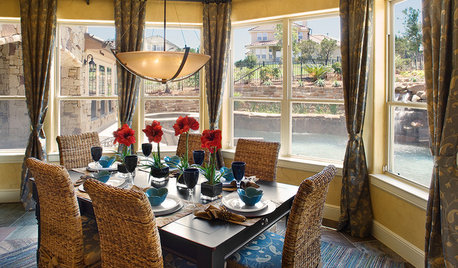
    I live in a cold climate so on mature bulbs I stop watering and let the foliage die back. In a cool well lit area. I place the pot in a cool dark place and when all foliage looks yellow I trim back and then water slightly perhaps once a month. In March or April I return them to the light and water well. I also repot if needed at this time. I think it best to not cause the children to go entirely dormant as the need to grow large to make big bulbs. My friend takes them out of the pots and stores big and little ones in the refrigerator in peat. His bloom later than mine as he repots and lets them spend most of the summer outdoors and brings in the blooming pots to enjoy. Both of us use dormancy. I treat Peruvian daffoldils in much the same manner. Canna I leave living in the pot, in the light all winter and it still blooms correctly in the fall. Now I am working on a pot of calla lily and not sure what technique to use so open to suggestions. Yes I do have an entire room full of plants that I store over the winter. It was supposed to be the diningroom. I now call it the sunroom with three sided windows and glass doors. I turn the heat low and enjoy. We do use it on holidays and in the summer for dining but such a hassle to move all the plants. House plants love the semi-cool season and grow out of control in there.

  • 21 years ago
    last modified: 11 years ago

    I have several amaryllis bulbs in the ground and in pots--most with sturdy green leaves. I want to force blooms for mid-January. Is it too late to accomplish this? Can anyone make suggestion for a time frame to do this? Will refridgerating the bulbs speed up dormancy?

  • 21 years ago
    last modified: 11 years ago

    Speeding up the dormancy can only be accomplished to some degree - yes I would even say marginal.
    Refrigerating at 5C eq 40°F stops all development processes and is unsuitable for your project.
    The naximum speed for the preformed buds to elongate during the low temperature storage (winter reposal) is 13°C that is 55°F
    That was found out by commercial researchers long ago. This process needs a minimum of 8 weeks - better are 10 -12 weeks.

    If you have already kept your plant a certain time outdoors at similar temperatures you might be lucky - but a serious planning is impossible!

    And not all cultivars react the same way on optimized storing conditions - some always need the "full time" otherwise sprouting speed as well as overall yield of flower stalks will be reduced.

    Hans-Werner

  • 21 years ago
    last modified: 11 years ago

    Finally I like to refer exactly to your assumption

    Amaryll:

    It seems forcing dormancy would result in smaller bulbs and less blooming.

    That depends.

    The plants at your windowsill take indeed good profit if they remain there during the winter, undisturbed and in full leaf.

    Those other plants which you transfer from outdoors to your winter storage room where they sit crowded together will have only disadvantages from leaves which remain on the plant. The unadequate light conditions lead to the respiration of valuable stored products from the bulb.
    And these crowded leaf bushes can not adequately be controlled for pests and diseases.

    I experience only advantages of the clear cut, particularly as regards to the phytosanitary aspect.
    The homework, that is to boost the bulbs by adequate watering and fertilization is already DONE (it was performed during the growing season - or not *g*) in this state, and minor effects by the actual weak irradiation from the winter sun would be simply negligible.

    Hans-Werner

  • 12 years ago
    last modified: 11 years ago

    I put one of my Amaryllis plants in the windowsill, it has several leaves which are resting on other pots and one new leaf that is sticking stright up. The temperatures are supposed to be in the 40's and 50's this week and weekend, I felt the glass and it was cool but not cold, we have a storm window on the outside as well. Do you think it will be ok to leave it there?

Sponsored
J.Holderby - Renovations
Average rating: 5 out of 5 stars4 Reviews
Franklin County's Leading General Contractors - 2X Best of Houzz!