Software
Houzz Logo Print
inkognito_gw

Naked

18 years ago

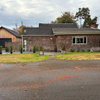
I have been doing some research into the foundation planting epidemic and several times I have come across a reference to a house being naked without it. Are houses without plants lined up in front of them indecent in your opinion? Another common justification is that placing conifers at the corners somehow disguises or rounds off the squareness of the house. Frank Lloyd Wright said words to the effect, a doctor is luckier than an architect because a doctor can bury has mistakes whereas an architect can only grow a vine over his. So is the whole foundation planting 'thing' an attempt to cover up the naked shape of a house and is this nakedness therefore a basic mistake in the way houses are built?

Comments (18)

  • 18 years ago

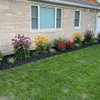
    Low foundation planting covers exposed foundations. Corner plantings tie the building to the ground. Corner plantings using exclamation point-shaped shrubs emphasize the corners instead of softening them.

    It's an epidemic only if numerous foundations that are not exposed and therefore not needing foundation planting are being planted up - or if lots of shrubs with the wrong shapes and mature sizes are being used for it.

    Here, in older neighborhoods there are quite a few cottages and bungalows under attack by now tree-sized foundation plants.

  • 18 years ago

    I always thought low foundation plantings originated with houses on piers...as a way of covering the gap? And then folks got used to the look...

    My house has NO foundation plantings...and I like it that way. Makes it easier to inspect for termites.

  • 18 years ago

    I see lots of very attractive ladies who adorn themselves with very nice clothing. One could make the same arguement as with Tony's view on foundation plantings, I suppose.

    Until houses drink and become responsive to some sweet talking, I suspect we will see foundation plantings with the same frequency we see clothing.

    It is not beauty that dictates foundation plantings or clothing. It is culture.

  • 18 years ago

    Maybe it's the HGTV world promoting the notion that foundation planting is a must, even though they're quick to caution that "nature isn't perfect". They do say, however, if you keep things symmetrical no one will ever notice imperfection. They go on to hint at what you mentioned in shrubbery being handy to soften, enhance, or hide.

    I just looked at some images of "round" houses and geodesic domes. Those do not seem to be immune from foundation plantings - many examples with chain-saw shaped shrubs, etc. An attempt to put back the corners and sharp edges these dwellings lack?

    Methinks foundation planting is imprinted in our DNA; it's almost futile to resist getting on the landscaping bandwagon in some fashion. And what's a more obvious jumping off point than the space immediately surrounding our dwelling? It's everywhere so it must be the thing to do and it's easy to justify or blur any line between want and need.

    Will labeling it as unnecessary or hackneyed make it go away like the moat did in lieu of the recirculating water feature and koi pond? I don't think so becuse when we see any kind of nakedness, the compulsion is there to dress it up like the Astor's pet horse. It's what we do.

  • 18 years ago

    I like these responses. Yes I think it is what we are used to or 'culture' as Andrew suggests. I also looked for round houses d in b thinking, if this is the desired shape then why not start there? I also looked up octagonal houses, did you try that? There seems to be a starting point some when in the 1940's can anyone explain that? is this when houses were first built on piers Mel?

  • 18 years ago

    I think 99%+ of houses would look dreadful without plantings around them. The Âlined up in front of them is perhaps the issue  i.e. a house without plants to soften it and make it look like less of a harsh imposition on the land is going to look raw and unfinished in most cases, but some foundation plantings also make for an uncomfortable composition. Time is also be a factor  both in the sense that tastes change over time so what is considered attractive at one point may not be considered such at a later point, but also in the practical sense that many plants will outgrow their space with time. I think too many people seem to have the sense that they can create a foundation planting and expect it to stay static when in fact it should be seen as something that will regularly need to be amended and renewed.

    IÂm not sure that Ânaked and Âindecent are the right words and IÂm not at all sure that the plantings have to be right at the foundation to soften things. Certainly, large scale buildings with tight foundation planting may look ridiculous; in that case the softening effect of plantings would more naturally go at a distance. But for the average moderate or small scale domestic building (i.e. house) I would expect to see plantings much closer to the house, with some of them likely at the foundation.

    Culture - and climate - are probably important factors too. The house on a paved courtyard is not a part of the vernacular architecture of most of North America. Freeze-thaw cyles would be a detriment to that style of building in many areas. Other than in dry areas of the continent, I think 'verdant landscape' is the idealized image and we want/expect our homes to be located in one. Foundatinon planting may be an unconscious - or conscious - attempt to wrap ourselves in verdant green....

  • 18 years ago

    If you have a teeny tiney lot and a big house about the only plantings you can have are foundation plantings.

    People have been arguing this for ever:

    "Thus, limited by custom and convention and the lack of a single degree of independent, individual thought, each average house is practically like its neighbor and is located on its plot of ground in practically the same wasteful way; and each average dooryard has the same features - or lack of them."

    Grace Tabor, Suburban Gardens, 1913,

    She argued strongly for the return of walls, fences and borders on a property to make the space more useable. Also lamennted the impact of cars. An interesting read.

  • 18 years ago

    I think a lot of it is a result of putting things in logical places. That is the same reason why we have lawns. You don't put things in areas where you want to have other things.

    In the past, I believe, a lawn held open space for a variety of use. You could work on it, store stuff on it, move through it, set things up on it, gather on it,..... If one were to plant a garden in the lawn area, it would no longer be open space in reserve for all of those happenings. If you chose to have a garden, it would be logical to put it out of the way.

    This explains three things - lawn, foundation plantings, and "perimeteritis". All of these things are viewed negatively by many garden writers these days, I am told. Many people try to blame the suburban establishment for lawns, border gardens, and foundation plantings. I think it was a logical "form follows function" thing.

    Nowadays, we are hardscaping to hold space for activities that used to take place on the lawn. Even more of those activities are just no longer done (at least not at home), so the need to hold space in the form of lawn is greatly reduced. Kids now make play dates at the park instead of having a kickball game at Jimmy's house. Weddings and other family events are at rented halls. Few people are getting full length tree logs delivered to cut, split, and stack. Graze any sheep lately? Croquet? Badminton? Volleyball? Lawn darts? slip'n'slide, frisbee?

    Clearly, our functions have changed and our need for traditional form is no longer recognized. It is, however, somewhat expected. When something is expected and is absent, it tends to make people uncomfortable.

    What would you think if you drove out through Vermont and saw a bunch of blue barns? (no French Canadian jokes, please) The color is not impractical, but is unexpected.

    One thing that interests me is the new trend toward large masonry outdoor fireplaces. These were things that were not around for years, but I saw the ruins of many as a kid in the 60's. They are embedded in my mind as useless old and impractical because they had obviously become so back then. I wonder if the latest round of them will suffer the same fate.

    Now will someone explain the dress thing to me?

  • 18 years ago

    Could this have been a response to environment? A tight foundation planting would have kept cold drafts from sweeping up under the floor, taller plants on the south side would provide shade on the wall.

    Myself, I see foundation planting in the fung shui(?sp) sense of softening sharp angles and abrupt lines, but I prefer less shrub and more groundcover.

    A client used to sweep his hand grandly and proclaim "A landscape should enhance a house! Not hide it!" And his was a nice example, but then, he had a pretty house.

  • 18 years ago

    I like to say "enhance the good and mitigate the bad". That can mean mitigating a heating bill as easily as an aesthetic.

    Everything in landscape is a balance of values. General values tend to change over time. Personal values are as individual as each of us are. Many gardeners value the aesthetics of individual plants and of planting compositions higher than someone else who is more focused on his house, or a person who is more interested in wanting his house to portray qualities about himself that he'd like people to perceive when they see his house, or others are more worried that they are following everything that is current in the environmental movement. That all defines what is good and what is bad.

    It is easy to understand that there would be huge differences in what is done to "enhance the good and mitigate the bad" depending on what you perceive to be good or bad.

    There are thousands of people rushing to tear up their lawns who have no idea what they will replace them with because they read that lawns are bad for the environment while you have others clearing away trees and understory to make a lawn.

  • 18 years ago

    We live in a climate with hot,dry summers. Foundation planting has helped to keep our house from becoming a solar oven in the summer time. It is pretty too!

  • 18 years ago

    But this offers foundation planting as a solution to a problem. It doesn't mean that this is the only answer or that it has to be unimaginative in plan or selection of plants. It certainly doesn't mean that all houses need foundation planting or that we feel they do which is what I was exploring.

  • 18 years ago

    Posted by inkognito:
    "So is the whole foundation planting 'thing' an attempt to cover up the naked shape of a house and is this nakedness therefore a basic mistake in the way houses are built?"

    My short answer: Yes, it is a flaw in the way houses are built.

    Longer answer: A properly designed and sited home will not need foundation plantings to warm or cool it.

    An aesthetically pleasing home will not have four feet of bare foundation concrete exposed above grade, necessitating "problem-solving" foundation plantings.

    A home that stands on its own design merits may be visually enhanced by artistically placed--or, at the very least, thoughtfully placed--landscaping, but the landscaping should not be required to cover or compensate for a flaw in the home itself.

    I have yet to visit a developer-designed subdivision in which siting was a factor in the home design. I've never heard of anyone being told, "We can't build the Ellington model on lot 171 because that would result in too much solar gain...."

    Aesthetics have fallen to the wayside in favor of cheaper, mass-produced, homogenized architecture that relies on later landscaping to camouflage.

    I know attractive women who make themselves look nicer by wearing pretty clothing. I also know unattractive women who wear heavy makeup to cover themselves.

  • 18 years ago

    Ink...I don't know about up nawth, but down here in the (termite riddent) south, many old houses were built up on piers. If foundation plantings as de rigueur showed up in the 1940's...then probably not because of the houses being up on piers.

  • 18 years ago

    My guess is that you are off by at least a century on the date. Foundation plantings are probably close behind an emphasis on appearance over raw practicality. I've seen enough period photographs to know they were well established by the late Victorian time, when photography became something that was done by reasonably normal people.

    Practially every historic mansion around here has a basement kitchen, along with a whole slew of servant quarters/activity rooms down there. If they are going to have any natural light to work by, that raises the whole house up to get real basement windows. Building anything is about compromises. So yes, you can design a house to be better integrated into its surroundings, but at what price?

  • 18 years ago

    I arrived at my date by looking at old photographs too mg. Let me qualify what 'foundation planting' means to me at its very basic prescriptive level: a straight row of nondescript evergreens lined up against the house with some of a taller variety strategically placed but along the same line. It seems to me that although, as you say plants were used to disguise unattractive features earlier, as a ubiquitous feature the habit took hold later.

  • 18 years ago

    This makes me think of the post from the person in south Florida who posted a design scheme of hundreds of shrubs lined up along every linear foot of the home. The main thing I took away from that drawing was that any inch of naked wall was intolerable to the designer.

    Also this thread puts me in mind of previous discussions about the difference between really close "foundation" planting vs. other plantings that might obscure "the foundation" from some vantage points, but because of being more carefully sited with respect to distance, relative size (height and bulk), "value" ( airy or dense), shape, point of view or other "design" concepts, are really more successful in grounding the house in the landscape. Some people might lump all these together as foundation plantings, while others might make more of a distinction according to exact location with respect to the "foundation."

  • 18 years ago

    perimeter foundations (continuous pour concrete), and codes that require min clearance between siding and the grade (dirt)... exposes more "ugly concrete".

    blame foundation censorship (planting) on the government :-)