Software
Houzz Logo Print
tn_veggie_gardner

The 'Hyponex Experiment'

17 years ago

My "Hyponex Experiment" originally posted on my blog.

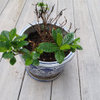
Recently, on a GardenWeb forum, there was a discussion regarding Hyponex Potting Soil. I think it's crap mainly because it has sand in it & clumps together too much, not allowing drainage. Well, I bought one of the $1 bags of it at a local grocery store. It's about 2/3 of a cubic foot. Anyways, I have a few pepper plants that need to be potted up. I decided, since I have some spares of them, to use one for an experiment with the Hyponex. It's a Jalapeno Early Organic plant. I filled the bucket with 100% Hyponex (no other additives, soil mixes, compost, peat, etc.). I figure also, if anything can survive being in just this soil, a pepper plant would be one of those. I did give it a shot of water-based MG fertilizer to help things a bit. I would normally do this right after transplant into what I consider a known good soil though. So, the MG doesn't affect this experiment any. The main goal is to see if the plant even survives. If it does, i'll compare it to one of my other Jalapeno Early plants to see how different fruit production, growth, etc. is from this one. Wish me luck! I'll update this experiment weekly, or sooner if anything changes (plant dies, etc.). Below are two pictures I took of the plant right after transplanting into the bucket.

{{gwi:28791}}

{{gwi:28792}}

Peace - Steve

Comments (66)

  • 17 years ago
    last modified: 11 years ago

    My Jalapeno Early Organic plant still does well. I've cut back the water on it a bit & it now has a few buds. I'll post pictures soon. With the Hyponex, IMO, only grow peppers in it & keep it wetter than usual. Also, fertilize well with liquid stuff.

    quillsd: Transplant them carefully, keeping in mind how much the Hyponex will clump & attach/trap the roots. Carefully dig away the soil from the plants as much as possible, then transplant to some standard good potting mix like MG Potting Mix (not soil & no sand). Fertilize with your choice of liquid-based. Water well & place in a location with as much sun as possible for 2-3 days. Let the soil dry out. Then, water normally (only when soil dry deep). They should do fine.

    Peace - Steve

  • 17 years ago
    last modified: 11 years ago

    Quillsd - Peppers don't like wet feet, and keeping them in a Hyponex soil that is 'wetter than usual' invites rotted roots. A choice of a soil that drains more freely than MG products would be much preferred to MG unamended product, as well.

    It's also not a good practice to transplant plants & place them in direct sun with directions to allow the soil to dry out. The soil of new transplants should be kept moist. If you water when the soil is dry deep in the container, the upper portion of the soil occupied by the root mass will have long been too dry and the plant in severe distress or worse.

    JaG's advice is spot on, from my perspective.

    Al

  • 17 years ago
    last modified: 11 years ago

    quillsd: Please excuse Al, he's a tad bitter from a previous conversation of ours. If you read the full details on this experiment, you will see that I reccomend keeping the soil wetter than usual at first and have cut back on the water i'm giving it, as I monitor the "Hyponex Experiment" plant. Al, you can look up "experiment" if you're confused as to my reccomendations made on this thread.

    "quillsd: Transplant them carefully, keeping in mind how much the Hyponex will clump & attach/trap the roots. Carefully dig away the soil from the plants as much as possible, then transplant to some standard good potting mix like MG Potting Mix (not soil & no sand). Fertilize with your choice of liquid-based. Water well & place in a location with as much sun as possible for 2-3 days. Let the soil dry out. Then, water normally (only when soil dry deep). They should do fine."

    I'll clear up what I meant, for all. Transplant, meaning transplant out of the Hyponex into a better mix. Then, like I said, water well and place in direct sunlight for 2-3 days. After that, move to your normal pepper location in your garden/yard (for normal sunlight exposure) and water as you would any other pepper plant. Most pepper experts will tell you to let the potting mix dry out quite well, if not fully before watering again.

    Hope this clarifies a few things for you. =)

    Peace - Steve

  • 17 years ago
    last modified: 11 years ago

    There was nothing bitter about my post, and no need to make excuses for me. I would have replied in the same fashion had anyone else offered what you did. I simply wanted to politely prevent someone from taking advice that was easily misunderstood. I'm glad you clarified what you said.

    Al

  • 17 years ago
    last modified: 11 years ago

    Picture took this morning...The plant is still doing quite well. The real test has begun as it is starting to produce buds.

    - Steve

    {{gwi:28794}}

  • 17 years ago
    last modified: 11 years ago

    O.K. I am curious . . . you mentioned in the original post that this was a spare so I am thinking that there were other peppers potted around the same time that might be considered a control plant to determine what the expected growth might be.

    Would you consider taking a comparison picture of them next time? I am following your experiment.

    I had major problems with water/soil and a pepper plant I planted in March. I ammended the soil two times to help improve drainage etc. My pepper plant although now bigger, stronger, and greener has yet to bloom. It gets plenty of Texas sun.

    I really like your experiment. Are you spraying with any bug deterrents and what is your fertilizer regime?

    L.

  • 17 years ago
    last modified: 11 years ago

    In the pic above it appears you are watering only around the stem and not saturating the entire container. Am I correct or are my eyes deceiving me?

    If I am correct are you doing this in an attempt to not 'over water'?

    I too, would like to see pics of, preferably, the same pepper variety in a better mix for comparison. Would also appreciate knowing the differences in how you are treating each. Particularly how you are treating the plant in hyponex differently in an attempt to compensate for the soil's inherent issues.

  • 17 years ago
    last modified: 11 years ago

    locteach: The plant right behind it in the picture is my somewhat control plant. It's a different variety (Serrano) and planted a week later, so probably not a good one...lol. I'll post a pic below of a better control plant from the same Jalapeno batch, which is grown in MG Potting Mix & Canadian Sphagnum Peat.

    For bug deterrents, i'm only using GardenSafe organic Neem Oil-based spray. I am soon going to order some ladybugs too though, as I have a deep hatred & fear of Aphids.

    Fertilizer plan is the same as most of my plants. I take a simple spray bottle, fill it up 2/3 with warm water, mix 1/2 tsp MG Tomato Food in it then shake vigorously. The Jalapenos currently get around 20 sprays of that every 2-3 weeks (started off on every 2 weeks and lengthening it to close to 3 weeks very carefully to make fertilization time on the weekend). Their next cycle (this weekend), they will also get a warm-water based Epsom Salts spray (also 1/2 tsp in 2/3rd full spray bottle).

    Peace - Steve

    {{gwi:28795}}

  • 17 years ago
    last modified: 11 years ago

    Cool Steve - I would agree aphids are the biggest, fattest pain in my garden at the moment. I am using a garlic, pepper, and palmolive mixture to rid myself of those mean little garden gobblers and I just sprayed spinosad. I am hoping that helps me.

    Truly - I am glad to keep up with a couple of you gardener guys. As I have my gardening failures it gives me true hope to see the fantastic growth. I probably need to embrace fertilizing more in order for me to expect the fantastic growth that I see in some of your plants.

    L.

  • 17 years ago
    last modified: 11 years ago

    Steve,

    I agree with almost all of the claims about the horrible condition of the Hyponex (Scotts) soil that have been made on this thread and other threads. It even says on the bag that it is to be used to fill holes and level areas. It also says they make no representation about its suitability as a growing medium.

    I have gardened for many years in containers and raised beds with success. I have always used the $1.00 per bag lousy soil as a starting point in all my gardens. When you pay $1.00 for a bag of soil, you get exactly the value you pay for. It is however a great starting point.

    I don't approach gardening from a scientific viewpoint. I approach it from the viewpoint of a home gardener using common sense to produce the most high quality vegetables, with the least labor, at the lowest cost.

    To me using $1.00 per bag dirt versus $6.95 per bag planting mix is a no brainer. I think of the dirt as nothing more than a base which probably contains some minerals and possibly some bacteria. I then add low cost amendments to it to make it a viable planting medium.

    I wish I had kept some of my old photos of four tomato plants, with three or four pepper plants in fifteen gallon pots producing like crazy. All of it planted with $1.00 per bag soil as the starting point. Unfortunately I didn't.

    I have included some photos of my raised beds which have been planted for the last two years with the cheap dirt used as the base. Check the link.

    I would have needed to get a second mortgage on my home if I had attempted to fill these beds with any of the commercial planting mixes.

    I believe you can't argue with success, but we need to keep in mind that sometimes more ways than one exist to be successful.

    Ted

    Here is a link that might be useful: My raised Beds #2

  • 17 years ago
    last modified: 11 years ago

    .... also wise to keep in mind that the difference between growing in a raised bed and growing in a container is vast. Much of what works well in a garden/raised bed works poorly in a container.

    Al

  • 17 years ago
    last modified: 11 years ago

    Looks very nice, Ted. Some cool/neat support systems. =) I am doing this experiment in a different point of view/approach than the one you explain. I completely understand everything you said & it's understandable/a great plan, IMO. Love the Jeep in the back. ;-) For the reasons of this experiment, I am considering Container Gardening with a "potting mix." Potting Mix being basic soil ingredients (spahgnum moss, peat, perlite, etc.) & possible added moisture control and/or slow-release fertilizer. So, Potting Mix vs. Hyponex Experiment being a more detailed name.

    Al: Good point. =) One of these days, i'm going to read all of your Container Gardening articles...lol. The little I have read sounds like great info.

    Peace - Steve

  • 17 years ago
    last modified: 11 years ago

    Al & Steve,

    You are both correct. I probably wouldn't have posted my reply to this thread if I hadn't grown the same vegetables in my container garden that I am now growing in my raised beds using the amended Hyponex product. The point being that it did work for me in containers. That does not mean it will work for everyone. We all do things a little different. For example when I grew in containers, I monitored my soil moisture in a way that most people wouldn't know how to do, but I learned from experience. I then adjusted my timer on the drip system accordingly for frequency and length.

    Steve, since you used a pepper plant as an example or control to compare to your other plants, I took some photos of my peppers in the raised beds simply to show the hyponex product does work for peppers. I agree that it is difficult to make comparisons between raised beds and containers. I can however make the point that the hyponex, when properly amended does make a good growing medium.

    The first photo shows a single Bell Pepper plant with a couple of Bell peppers that are ready to harvest. Remember that it is still early in the growing season in Texas and this plant is only about 18" tall.

    {{gwi:28796}}

    The second photo shows three Bell pepper plants planted and growing as one. I planted in late March and we had two hard frosts after I planted. I had two plants together which lost their leaves and tops to the frost. They were nothing but green sticks. I then replanted one new plant with the green sticks. All three survived and are flourishing.

    {{gwi:28797}}

    This photo shows a Serrano pepper. I purchased a container of nine Jalapeno peppers which turned out to be three vareities of hot peppers. I haven't identified one of them yet.
    {{gwi:28798}}

    This photo is only to show that other things grow well in the Hyponex.
    {{gwi:28799}}

    How about a Jalapeno pepper plant with a grand daddy longlegs spider hanging around enjoying the bugs as a benefit of the hyponex.
    {{gwi:28800}}

    And finally, a sweet banana pepper feeling kinda lonely but almost ready to pick.
    {{gwi:28801}}

    We are just now beginning to get the really hot weather peppers love so my plants are simply poised ready to explode.

    Steve, I do believe your experiement in the hyponex soil is a good experiment and will reveal the fact that it isn't as good as a high quality planting mix. I do believe that with the proper amendments, the hyponex is a viable medium even in containers.

    Ted

  • 17 years ago
    last modified: 11 years ago

    Great info & beautiful pictures! Good to have some "evidence" of sorts. It would be awesome to know what all you put in the Hyponex besides it & water, if anything; your fertilization plan, if you had one; etc.. =) My only additive, is the MG Tomato food, on the same schedule/ratio as all my other tomato plants. I just took the following pictures about 5 minutes ago...

    {{gwi:28802}}
    {{gwi:28803}}

    Peace - Steve

  • 17 years ago
    last modified: 11 years ago

    Steve,

    I took my photos about ten minutes after I made my first post this afternoon.

    The bed with the Bell peppers had about 30 bags of regular hyponex and about five bags of composted manure. I hand applied some 13-13-13 commercial fertilizer about three weeks ago. I will add additional fertilizer when the plants show evidence of needing it. No additional amendments were added.

    I did no preparation of the hard clay base beneath the bed. I simply spread the bags of hyponex over it. All of the plants are growing only in the hyponex. If the soil beneath the bed softens from the moisture, the plants will probably send their roots into the clay.

    When I first spread the hyponex, I thought I had made a horrible mistake because the hyponex this year was a lot worse than the hyponex sold last year. This year, it looked like something that had been scraped up from a construction site. It had rocks, twigs, large clumps of white caliche and simply looked horrible. I thought about it for a while and decided that it didn't matter because it still had a good mineral content and only needed some additional minerals and fertilizer. I think the photos prove me right.

    I am trying to make a point that can't be made because I have one hand tied behind my back. I am growing, and the photos reflect the fact that I am growing; in a raised bed instead of a container.

    The results of your experiment will be accurate to the parameters of the experiment. My imput about the hyponex relative to containers is irrelevent. My input relative to the value of the product as a growing medium is relevent.

    I love what you are doing.

    Ted

  • 17 years ago
    last modified: 11 years ago

    Steve,

    The following is a note I posted on a forum/thread when someone asked a specific question about container gardening. Keep in mind the fact that I haven't container gardened for about six years. The wife and I spent a few years going to Colorado for the summer to escape the Texas heat. We started staying home for the summer two years ago, but I started raised bed gardening instead of container gardening. I plan on adding some containers next year simply because I enjoy it. I also want to experiment a little with the upside down "topsy turvey" concept, but use five gallon buckets hanging from my cucumber trellis instead of the things they sell on television. I'm still trying to figure out the best way to install, monitor, and regulate the drip system to the buckets.

    Also remember that the following comments reflect the way I container gardened six years ago. At that time the Hyponex or Hyponex type soil sold by Walmart, Lowes, Home Depot was much better than it is today. It used to be a rich loamy true topsoil that required very little amendment. Today it is much more sandy (which I like). When I prepare my containers in the future, I will probably use 80% soil and 20% peat moss. I probably will not add the crushed limestone.

    "I did container gardening for many years and always had success with my method. I don't recommend it, but it worked for me.

    I always used fifteen gallon plastic containers with a drain hole/holes in the bottom. In the bottom of the pot, I would place two inches of 50/50 mixed pea gravel and washed river rock. Over the rock layer, I would place one layer of the permeable black landscape cloth. I would then mix 70% soil or dirt with 30% peat moss. I would add one small coffee can of crushed limestone and a good handful of commercial 10-10-10 fertilizer. I would mix all of it in a wheel barrow and fill the tub almost to the top with the mixture. I would then place each tub on some small tiles which were sitting on one of those large round landscape stones. Sitting the pots on the tiles facilitated air circulation under the pot keeping the soil at the bottom of the pot from turning sour. I would then prepare some tomato cages by bending the tips of the legs up to prevent the sharp ends from poking through the bottom of the pots. I would then push the legs through the soil into the rock to the bottom of the pot. I would then drill holes through the top edge of the pots at four locations. I would use good wire and wire the cages in a standing position to the edge of the pots. I would normally use a large washer on the pot end of the wire to prevent the wire from pulling back through the holes. I would then take a second tomato cage and turn it upside down and wire it's large round hoop to the large round hoop of the first cage. This method would result in a tomato cage about 8' tall. I usually allowed the whole thing to sit for about a week with the regulated drip irrigation going. This allowed time for the fertilizer, acid from the peat moss, minerals from the limestone, and micro nutrients and bacteria from the dirt to balance out. I would then plant each pot with three or four tomato plants and three or four cucumber plants.

    This method prevented me from purchasing a lot of very expensive potting soil/mix, and performed very well. "

    Ted

  • 17 years ago
    last modified: 11 years ago

    I'm glad Ted noted that he didn't recommend others follow the soil recipe he described. I wouldn't be able to recommend it for containers either. I think that the vast majority of those attempting to use a container soil comprised of any combination of topsoil and peat would be far more likely to be disappointed than pleased with the results. This would be especially true if the (top)soil you start with is KNOWN to be of inferior quality.

    Al

  • 17 years ago
    last modified: 11 years ago

    Ted: Love the idea about dual cages (making one 8 ft tall cage). I've been seriously thinking about doing that with mine this year. =) I just have to figure out a good way to wire them together with limited tools. My mater plants are already extending over the first cage a good bit. Your container mix sounds like an idea that i'm sure would have worked very well back when Hyponex was a good potting mix, like you mentioned.

  • 17 years ago
    last modified: 11 years ago

    Al,

    Your right, I don't recommend my system for others simply because I know from experience how to make it work. If however, someone reads my post and realizes that sitting pots with drain holes flat on the floor isn't good; maybe they will also sit their pots on tiles for improved areation. If someone is searching for a cheap way to get minerals into mineral poor soil, they may want to consider crushed limestone with peat moss. If they want to extend their tomato cages to 8' tall, they may think about placing one on top of the other. If they want an easy way to monitor their soil moisture, plant cucumbers with their other plants because cucumber leaves tell you real fast when they are thirsty. The fact is successful gardening in containers or raised beds isn't the result of a single big thing. It usually is the result of many small things.

    I am curious about the standard of excellence you use to declare one potting soil/mix to be of KNOWN inferior quality. The fact is, I agree with you, it is inferior quality; but if you use it correctly it can acheive great results at a much lower cost.

    They used to say "a picture is worth a thousand words". I think I have posted about 20,000 words worth of pictures to prove "Hyponex" is a viable growing medium. Whats next, a field trip? :)

    Most of the photos I take are in 15 megapixel size. I reduce them down to about 200 kb in order to post them. I can probably go back to one of the photos I took of my garden when I planted it, isolate an area of the soil and enlarge it to prove it really is that nasty, lousy, inexpensive, Hyponex.

    Al, I really appreciate all the good information you have posted on this forum. I've read most of it and agree with you 99% of the time.

    Steve, If you don't move that poor pepper plant over closer to the window, it's gonna die. It also looks like it needs some iron. :)

    Ted

  • 17 years ago
    last modified: 11 years ago

    I am curious about the standard of excellence you use to declare one potting soil/mix to be of KNOWN inferior quality. The fact is, I agree with you, it is inferior quality; but if you use it correctly it can acheive great results at a much lower cost.

    If you gave a fast draining potting mix to 100 people and hyponex to another 100 people and gave no instructions to either group what do you suppose would be the percentage from both groups that were pleased with the growth of their plants?

    I certainly don't doubt you have the skills to make it work. I have stood speechless and baffled at watching my best friend's wife grow cacti in pots without drainage holes using hyponex. They have been in her care for 3-4 years and they are alive and look healthy. I am pretty confident she could give me the container and entrust me to care for it and the cactus would be dead within weeks.

  • 17 years ago
    last modified: 11 years ago

    Ted: It was only in that location for picture purposes. =) I do plan to give it (and most of my other plants) a mineral "boost" sometime in the next few days.

    Peace - Steve

  • 17 years ago
    last modified: 11 years ago

    Hi justaguy,

    Good to see you!
    If you didn't teach either group how to use the product, the owners of the fast draining mix would have plants dieing of thirst, while the owners of the hyponex pots would have plants with root rot. If you taught both groups how to use their product, you would have 200 happy gardeners. The only difference would be the folks with the hyponex would have more money still in their pockets.

    Ted

  • 17 years ago
    last modified: 11 years ago

    Ted - my reason for posting wasn't to disagree with you. I disagree on other points about fertilizer, drainage, air circulation under pots, and a couple of other things you mentioned, but none were important enough for me to consider offering different views.

    An issue that I DID think was important enough to warrant another opinion or additional comments was the fact that you are growing in a soil in a raised bed that is almost certain to put anyone (but you) at a disadvantage from the outset, should they attempt to adapt it to container culture. What would be soup in a container might be a spectacular soil in a raised bed. I would pit the container soils in my raised beds against any others & they would show well,
    {{gwi:871}}
    but that doesn't mean I would even attempt to use it in containers.


    I would mention again that you said you do not recommend it (Hyponex), and that you said when you were using it in containers, it was quite different than it is now. We can also logically conclude that what the soil WAS like is not germane to a meaningful discussion about the advisability of including today's inferior product in container soils.

    You're saying, "I have figured out ways to make this soil work in a container ...", and I'm saying, "Why start out with an unforgiving soil that admittedly has inherent problems from the get-go?"

    Take care.

    Al


  • 17 years ago
    last modified: 11 years ago

    If you taught both groups how to use their product, you would have 200 happy gardeners.

    Gonna have to gently disagree. Perhaps you are correct that with an appropriate transfer of knowledge the percentage of folks happy with hyponex would improve, but a search on the forums on hyponex tends to produce results from very unhappy growers.

    A search on 'Al's mix' (in other words more coarse, better draining mixes) sees the vast majority very happy. Even a search on 'Miracle Grow mix' will show a far greater percentage of happy customers than with hyponex.

    Hyponex is so bad in containers even Colorado State University warns people against using it.

  • 17 years ago
    last modified: 11 years ago

    Justaguy,

    I checked the CSU report and the best I can understand is they tested Hyponex all purpose potting soil with peat in it. I don't think that is the product we have been discussing. I've been talking about their dollar a bag dirt, the stuff you get with free rocks, free sticks, and some other free stuff that you may not want. I think Steves test comparison features the hyponex dirt. If i'm wrong, then I owe everyone an apology. I've always used the dirt, not the potting soil/mix with peat. I did add some peat to the dirt when I used it in containers.

    Ted

  • 17 years ago
    last modified: 11 years ago

    Al,

    You asked "Why start out with an unforgiving soil that admittedly has inherent problems from the get-go?"

    Because it's cheap!

    I'm a recreational gardener. I do it for the fun of it. I also happen to enjoy eating what I grow.

    I've noticed on the Garden Web forums in the last few months, a lot of people saying they simply can't afford to eat vegetables from the grocery store any more. Like the old days, a lot of people seem to be turning to home gardens to supplement their diet because they have no choice. They probably aren't doing a lot of container gardening, but they may want to use a product that I know works in both containers and raised beds. If we can agree that it is lousy dirt, but it will grow good vegetables under the right conditions; it gives those people an inexpensive option for their home gardens. If we all simply agree with each other that it is a lousy soil and no one should waste their money on it, then we may have just convinced some of those people that an inexpensive option doesn't exist for their needs.

    Ted

  • 17 years ago
    last modified: 11 years ago

    I checked the CSU report and the best I can understand is they tested Hyponex all purpose potting soil with peat in it.

    There is only one Hyponex product labeled potting soil and sedge peat is it's primary ingredient. It looks basically like dirt and is quite different than sphagnum peat moss which is common in bagged mixes. It's the reason hyponex and anything else based on it is awful.

    While I agree with you that container growing can be costly when everything has to be purchased, consider this statement from the link: There are definite benefits to growing annual plants in media that may be more costly but result in better plant growth.

    I do think there are compromises that can be made to help keep costs under control. One would be not purchasing prepared mixes as they cost a premium. If one purchases the raw materials in bulk sized packages, the same thing can be made for less. By choosing ingredients that maintain their structural integrity as long as possible one could reuse that mix for multiple seasons. There may be good reasons not to reuse it, but it's a compromise that will save money without such a large sacrifice in plant performance as many growers have found with hyponex potting soil.

  • 17 years ago
    last modified: 11 years ago

    This is a good discussion & has some good arguments on both sides...a lot like the original Hyponex soil post that influenced me to do this experiment in the first place. What is happening is good arguments are presented on both sides(pro & con re: Hyponex as a container mix). We all agree it is an awful mix, but it is an awfully cheap mix @ $1 for the 8qt or whatever bag we're speaking of. I imagine this experiment will clear up some of the grey area. Anyways, don't go all tn_veggie_gardner on this thread & take it to the next level(Al knows what I mean...lol).

    Peace - Steve

    P.S. - JaG: 50 from each group. =)

  • 17 years ago
    last modified: 11 years ago

    Steve,

    If your experiment was only on some form of Hyponex potting mix, then I will admit I know absolutely nothing about it and quietly slink back to the vegetable gardening forum where I normally reside. I never use any of the pre-mixed stuff for vegetables or flowers.

    If you are discussing their revoltingly lousy dirt which happens to grow pretty decent vegetables, I will stick around so we can continue the discussion.

    Either way, I will be here next spring when I plant some containers in my dirt and peat moss mix.

    Peace to you!

    Ted

  • 17 years ago
    last modified: 11 years ago

    Yes...deffinitely talking about their revoltingly lousy dirt. =) Experimenting with crap! lol

  • 17 years ago
    last modified: 11 years ago

    If you are discussing their revoltingly lousy dirt which happens to grow pretty decent vegetables, I will stick around so we can continue the discussion.

    I am interested in hearing about the care practices you used to use your hyponex/peat mixture successfully.

    What was the ratio of hyponex to peat and was the peat sphagnum peat?

    How did you water? Did you water to saturation each time or did you water in sips to avoid the mix staying wet too long? How did you determine when it was appropriate to water again?

    What sized containers did you use and for which plants? For example what sized pot for a pepper or a large tomato?

    Any special 'tricks' you developed that you believe increased your success?

  • 17 years ago
    last modified: 11 years ago

    This is all good stuff. I think when I post the final results of the "Hyponex Experiment" later this year, i'll include the full body of this thread & the original Hyponex one.

    Ted: I'm kind of also interested in what your Hyponex mixture consists of (like JaG asked). I use Canadian Sphagnum Peat in some of my potting mixes, but not with my Hyponex.

    - Steve

  • 17 years ago
    last modified: 11 years ago

    Regarding the fast-draining mix versus slow-draining soil given to 100 gardeners each....

    Clearly, the 100 gardeners with fast-draining mix would be considerably more pleased with their results. Most people over-water. Therefore, you wouldn't have plants dying of thirst in equal proportion to plants dying of over-saturation.

    Further, I, too, was once mistaken about the fast-draining or gritty mixes. While they are certainly fast-draining, they also hold a good amount of moisture - much more than I had assumed.

    As Al has said numerous times, it *is* possible to over-water the fast-draining or gritty mix - but it is unlikely.

    Good luck, Steve! I look foward to your final results!

    Josh

  • 17 years ago
    last modified: 11 years ago

    justaguy,

    How bored do you want to be?

    I've already answered most of your questions in one of my earlier posts on this same thread. If you want the details, I can write a dissertation as long as the informative FAQ's Al writes. The difference would be the fact that Al's writings are scientifically and technically based. Mine are philosophically based. Al tells how things work. I tell why things work. One example would be my continuing assertion that the old hyponex dirt was much better than today's hyponex dirt. The fact is the old (good) dirt was much higher in organic material and bacteria and lower in mineral content. That made the "good" dirt harder to use in containers, but much better in raised beds. The newer(bad) dirt is almost devoid of organic materials, but high in basic minerals with an acceptable level of bacteria (it's almost impossible to get rid of bacteria without sterilization). The poor quality of today's hyponex dirt tends to make it easier to use in containers and more difficult to use in raised beds.

    So I ask again, how bored do you want to be?

    Ted

  • 17 years ago
    last modified: 11 years ago

    "The poor quality of today's Hyponex dirt tends to make it easier to use in containers and more difficult to use in raised beds."

    "Al tells how things work. I tell why things work."

    C'mon, Ted! ;o) There's a lot of error and conjecture, difficult if not impossible to support in your last post, much of it unrelated to what I highlighted.

    Although I think I harbor a muse more philosophical than the average bear, I won't squabble about your opinion in that regard, but I don't expect much disagreement when I point out that it's the technical and scientific application of the principles of husbandry that make you a successful gardener (you included) not philosophical meanderings. Mostly, we'd just have to argue AROUND the philosophy to get to the science that, in the end, will determine success/failure anyway.

    If you set limitations for yourself ($1 dirt) and live within those limitations, it's very reasonable to expect that those limitations will have several effects on your growing experience. It's very fine to say YOU are satisfied with the results of growing in some mix of Hyponex soil and peat, but we're pointing out that others who have not self-limited their options are free to build a $2 soil or buy something in a bag @ $2 and avoid those limitations.

    I think the real difference between us is that I approach gardening with the perspective that what is good for my plants comes first, and you have stated the $ is of extreme importance or most important. $s and my own convenience are secondary. If I have to spend $2/bushel for soil instead of $1/bushel (btw, there isn't near that much difference in what it costs me to make the 5:1:1 mix and what you pay for Hyponex) I'll gladly do it. If I have to water every day or every other day instead of watering once/week and worrying about if I over-watered and how I'm going to deal with soluble salts build-up, that's what I'm going to do.

    I'm nowhere near convinced that you're saving anything by using a poor soil, and I'm certain that the headaches associated with it aren't worth the possibilities of few pennies savings for a huge % of other gardeners. In the end, you lose certain things to save a buck, and I gain certain things because I spend one. It's up to each of us to determine how important that buck is, but for the results-oriented, I would say that the odds overwhelmingly favor the premise that the Hyponex path leads to frustration and trouble.

    Al

  • 17 years ago
    last modified: 11 years ago

    How long do you plan on growing those pepers in that soil? Longer than just a few short weeks? Of course they will grow.I use to grow them in just plain old backyard dirt before I found this forum..Not as nice as I do now though.
    I am afraid that if you let more than a summers time go by, the roots will rot. Then you would have to post sick plants.
    A better choice of vegetable to use as a test would of been tomato's...You would of had yellow leaves by now..

    I would never plant anything in that "hyponex" soil that was going to stay in it for more than a few weeks.
    I bet you will get fine results with your peppers, but try growing a normal houseplant, or citrus, or perenials, or any plant for that matter that has to stay in the same pot for a LONG period of time, and I bet you can kiss them goodbye eventually..
    Your lucky, you have time on your side, before your experiment is over and they die.. Growing season is very short ..
    I of dozens, including my local nusery owners, would never touch hyponex...
    I once new a neighbor that grew a watermelon in just plain old heavy dark pretreated waste sewer product, and that thing did well for the short time it grew in it, that is until our frost killed it before the soil collapsed..

    I too, would invest a better buck for my plants that I feel deserve to live alot longer than just a few months in the same pot...And have happy feet to boot..Their feet or roots like to breathe, just as the part above the soil, and your soil will put an end to that after your experiment is over..
    All my plants are like children, whether growing for just a few short weeks, or for a long time in the same pots..I treat then like I treat anything valuable to me, with the best..
    The gritty mix and the 5.1.1 are the best, and inexpensive to make..
    Nice thread though, very interesting to see everyones viewpoint!:-)

    For me , I will stick to my inexpensive and well formulated soiless mixes...
    You should see my peppers in the gritty mix that I started around the same time as you did, if not later,I think they are much bigger.....
    Good luck with the experiment though...Take care
    :-)

  • 17 years ago
    last modified: 11 years ago

    I've already answered most of your questions in one of my earlier posts on this same thread. If you want the details, I can write a dissertation as long as the informative FAQ's Al writes.

    I didn't see the answers to the questions I asked or I wouldn't have asked the questions ;) Also, I am not asking the questions to 'interrogate' you, but because I am sincerely interested in knowing how you deviated from 'normal' practices to compensate for the enormous water retention and lack of air porosity in hyponex. I think there is value in learning how to grow successfully in a very poor soil. Heck, tonite the nukes could fall and send us all back to the stone age and we would have to be able to deal with crap soils. The poor quality of today's hyponex dirt tends to make it easier to use in containers and more difficult to use in raised beds.

    Are you sure you didn't mean the exact opposite?

    No need to answer if you don't wish. I am not trying to pressure you or make you uncomfortable, I just have sincere questions, but since you haven't grown in containers for 6 years I can understand that you may already be weary of this discussion and wish to just move on.

  • 17 years ago
    last modified: 11 years ago

    Al, once again, you are correct. You and I travel slightly different paths to arrive at the same destination. Neither path is wrong, just different. Once again though, I keep telling people the lousy hyponex dirt will work simply because it will. I see no reason to convince people something more affordable will not work when it will and does.

    Mike,

    Thanks for joining the discussion. Your post was very interesting. I think you indicated you didn't believe anything but peppers would work in the hyponex and the leaves would quickly turn yellow. Maybe I should try growing some challenging vegetables like tomatoes. I take that to mean my pepper pictures didn't convince you (I did include one photo of yellow crookneck squash).

    Okay, I can do that. Try clicking the link below. I've already posted it once in this thread. Read the list of vegetables I'm growing and then look at the photos.

    The two beds with tomatoes have been growing in the same lousy hyponex dirt for two years. Before you ask, yes; I planted my tomatoes in the same exact spot I planted them in last year. No nematodes so far...............................Sorry, I had to leave for a moment to check my garden. Nope, no yellow leaves so far.

    The beds with the lighter colored wood are new this year. I decided growing the cucumbers up the tomato cages made it to difficult to harvest the tomatoes, so they got their own trellis this year. The new beds have lousy hyponex dirt I purchased this year and some composted manure. Last years beds didn't get any manure. All four beds have had one application of cheap commercial 13-13-13 fertilizer. Nothing scientific about it. When the leaves tell me they are short of minerals or nutrients, I supply it the same way they used to feed chickens. You simply take a handful or two and throw.

    Now a request for me. Mike, could I please see a photo of those wonderful pepper plants you have that are so much better than the ones I grew in that lousy hyponex dirt? I'm a reasonable person and your photos may convince me to give up growing in that lousy hyponex dirt.

    I almost forgot to mention that I gave about twenty lbs of vegetabes to my neighbors last night. They didn't get their gardens planted this year.

    Ted

    Here is a link that might be useful: My raised Beds #2

  • 17 years ago
    last modified: 11 years ago

    Ted, you *cannot* compare the performance of a soil in a raised bed to it's performance in a container.

    I understand you have posted pics of gorgeous plant's in raised beds.

    Raised beds are open to the earth and thus do not suffer the drainage/perched water problems that occur in closed bottom containers which necessitate larger particle sizes be used to get the same degree of drainage.

    And for the record, Mike has posted pics of his container peppers and they are fantastic.

    You said that 6 years ago you used hyponex in containers with great results. That experience is relevant here, your experience with it in raised beds is not. Two entirely different worlds and no direct comparison is possible. One is attached to a working soil system and the other is cut off from it.

  • 17 years ago
    last modified: 11 years ago

    Hi Ted,

    I believe you can do it, my dad has and does....
    I though, am rather a pestimistic on the type of soil you use based on my very bad experiences, because I have never been able to grow anything in the type of soil your suggesting..

    If it works for you awsome.My hats off to you...

    I will have take a look at what you have done..

    My path though will always be the way of the mixes I use, "especially" for long term planting in my neck of the woods..

    I am not saying this won't work for the short term as you have shown..

    Do you use this same soil for houseplants and the like, that are to be grown in containers for let's say over a year, or just outside stuff? Just curious...:-)

    You have definately showed us a different view of things, that may work for some, but not for me though. Funny, my Dad is alot like you, he refuses to use the mixes I use, instead prefers worst than hyponex, the dirt from the yard, and does well, but his "tomatos" always fail before the season is over.His dirt gets so hard after a month or two in his pots and his tomatos seem to hate it. All his leaves fall off yellow..
    Maybe he should meet you..lol

    I posted pictures of my peppers I started as babies about the second week of May under:

    justaguy2 sweet peppers
    Posted by: lesmatzek209 ca zone 9 on Wed, Jun 3, 09 at 21:52
    8 follow-ups, last one posted on Wed, Jun 10, 09 at 15:1.

    I think it is a couple threads down from this one..

    Take care from a bitter grower towards any kind of soil for container,including hyponex I use to use.
    The soiless mix I use has changed my life for me and my plants..:-)

    Good sucess to you and take care,

    Mike

  • 17 years ago
    last modified: 11 years ago

    P.s Ted,

    Just to clear up something..

    I meant to say that my peppers look bigger than tn veggies,
    not yours. Not indicating any insult at all towards tn veggie at all, just expressing what I see that's all.
    I have yet to see yours though.;-)

  • 17 years ago
    last modified: 11 years ago

    Mike and justaguy,

    Al has made the point many times and I agree with him that you can't compare container gardening soil and raised bed soil. That is unless you have done both with the same soil. I'm not really disagreeing with folks who use prepared mix in their pots. I'm disagreeing with folks who say hyponex dirt can't be successfully used long term in containers or raised beds. Some people want to just give it a broad brush condemnation and say it will not work, or it will work for two weeks and the plants will die or some other calamity will befall the ignorant gardener who uses it. My wife is the flower gardener (in pots) and I provide the same soil for her flowers that I use in my garden. I take that statement back. She did buy a large bag of MG moisture retention potting mix for a few plants this year because she has a tendency to forget to water her plants. Most of the flower pots have my soil in them and I can't see any difference in the results.

    Mike, If you want to see my peppers, just scroll up in this thread. Keep in mind that they are in raised beds instead of pots. It only proves the hyponex dirt will grow nice vegetables with minimal amendments. My photos do not prove it will do the same in containers.

    Keep Em Coming.

    Ted

  • 17 years ago
    last modified: 11 years ago

    justaguy, I think I agree with you and we have been over it many times about the practicality of comparing raised beds to containers. I will say it again. You can't compare the two unless you have done both. My raised beds only show that plants will grow "GREAT" in lousy hyponex dirt.

    In one of your previous posts you quoted me as follows.
    "The poor quality of today's hyponex dirt tends to make it easier to use in containers and more difficult to use in raised beds."

    You then asked if that was what I meant to say. Yes it was what I meant to say. The old (good) soil had a high amount of organics which in the presence of anaerobic bacteria at the bottom of the pot caused the planting soil to sour and eventually root rot would occur or sulphurous compounds released by the bacteria would simply kill the plant. The method I used with the old, good; (please remember that the word good only means it was more nutritious because of the organics) soil retained the organics in the upper part of the pot where they were available to the plants. The newer, bad; dirt has almost no organics in it. It does have a lot of minerals and bacteria. Because the organic content of the new dirt is so low, container gardeners will not have as much concern about souring. They still have to protect against it, but the probability is lower. The new soil also has more sand in it. Normally sand is thought of as bad by many people. In my mind it keeps the clay particles from clumping and hardening. It also facilitates movement of moisture by gravity and molecular attraction through the soil. This moisture movement is also facilitated by the sphagnum peat moss I add to it. Sphagnum peat has a low absorption rate, but it will facilitate moisture movement by molecular attraction or wicking.

    I've read your other questions in the same post and I certainly don't mind answering them. I am trying to decide whether to answer them with the short answer (how I did it) or the long answer (how and why I did it) The why is always longer than the how, but the how answer isn't worth much without the why answer.

    I think I will print your questions out and then form my answers in MS word. I can then cut and paste the answers. This dinky little editor drives me nuts.

    Ted

  • 17 years ago
    last modified: 11 years ago

    Hi Steve,

    It's still your thread, I apologize for my wordy answers. How is the experiment progressing?

    Ted

  • 17 years ago
    last modified: 11 years ago

    Hahaha...it's all good, Ted. =) The experiment progresses fine. A few buds growing on it. If my wife remembered to take a picture of it today with my others (grrrr!), i'd have a new one to post...women! ;-)

    Meyermike...

    "P.s Ted,
    Just to clear up something..

    I meant to say that my peppers look bigger than tn veggies,
    not yours. Not indicating any insult at all towards tn veggie at all, just expressing what I see that's all.
    I have yet to see yours though.;-) "

    Who said you've seen many (or any at all) of my other pepper plants? =) That crappy Jalapeno in the frozen desert dirt is literally just an experiment; an extra plant I never gave away. Anyways, you probably figured I had a few more...lol...

    Start off with a few babies...some of the later planted (95% from seed)...

    Habanero:
    {{gwi:28806}}

    Jalapeno:
    {{gwi:28808}}

    Serrano:
    {{gwi:28810}}

    The not started late pepper plants...

    Yellow Sweet Bell:
    {{gwi:28812}}

    California Wonder Bell:
    {{gwi:28815}}

  • 17 years ago
    last modified: 11 years ago

    Justaguy,
    Here are the questions you asked and my answers.

    I am interested in hearing about the care practices you used to use your hyponex/peat mixture successfully.

    I used a kitchen colander full of mix to determine saturation and penetration rates with different mixes.

    What was the ratio of hyponex to peat and was the peat sphagnum peat?

    The final mix rate of Hyponex to sphagnum peat with the old soil was 70% soil to 30% peat. I think with the new soil it would be 80% to 20%. I wont know for sure until I plant some containers next spring and test it with the colander.

    How did you water? Did you water to saturation each time or did you water in sips to avoid the mix staying wet too long? How did you determine when it was appropriate to water again?

    I used drip irrigation with a timer that let me set three different times per day I could water. It also let me set the duration of each water cycle. The drip system I used had three different drip heads or emitters which controlled the number of drops per minute provided at 60lbs of pressure. The emitters were colored brown, blue, and white indicating the drip rate of each. I normally would use three emitters of the same size in each pot to ensure equal distribution of the water. I would set the timer to water for short periods on each cycle in the spring when the plants were small. I would set the duration longer in the summer when the plants were large and the weather was hot. I would decrease the duration in the fall when the plants were nearing the end of their life cycle. I would also set the early morning duration shorter than the noon duration. The evening duration would usually be longer than the morning duration, but shorter than the noon duration. The plants normally would transpire more liquid from noon until late afternoon than any other time period. The evening duration required more fluid than the morning duration because by observation and measurement I determined that my plants grew the fruit more at night while the plants grew more in daylight. I set my pots on 3/8" tiles on top of large, round landscape stones. I could observe the amount of moisture leaving the pot through the drain hole/holes. I always wanted a small amount of water under the pot after each cycle, but I didnt want any runoff. I planted cucumbers on the outside circumference of the pots in order to watch their leaves to tell me if they were getting enough moisture. I would also monitor the tomato leaves, but they dont respond as quickly or obviously to stress as cucumber leaves. (That is the short answer to the question. If you want the long answer, I can get technical) I never watered to saturation.

    What sized containers did you use and for which plants? For example what sized pot for a pepper or a large tomato?

    I typically would line up 10 to 15, 15 gallon containers. I would space them about two feet apart. Each pot would be setting on its tiles on top of the landscape stones. I would run a single ¼ " black plastic water line from my timer which would cross over each pot. I would cut the line at each pot put a plastic tee in the line and drop my emitters from that tee. I planted all my plants in the same size pots. I didnt plant all the pots every year but I did some years. I experimented some years with plants I had not grown before. I unsuccessfully tried kiwi one year. It also depended on how much time I had each year to play with my system.

    Any special 'tricks' you developed that you believe increased your success?

    Sure, every gardener does. I could write a book on the tricks alone, but Im not going to. The problem with tricks is they dont always work the same for everyone. A few of the simple ones are as follows.

    I determined many years ago that I got better results (total output of product) by planting common, compatible vegetables like tomatoes and cucumbers very close to each other. I would typically plant four tomato plants per pot. I would plant eight or ten cucumber seeds around the circumference of the pots with the tomatoes in the center of the pot and then determine which plants were the most viable and pull all but four. I planted three bell pepper plants together with the root balls crammed tight this year in my raised beds. I have some single plants also for comparison. The three plants occupying the same space have a total of eight peppers while the single plants only have two. The plants are still young and are only about 18" tall. It seems that each of the three plants retained its own identity and genetic need to reproduce and produced fruit even though they share the same space. Tomatoes react differently. They dont mind other plants growing close, but they dont seem to like being planted root ball to root ball.

    I have no interest in growing tomatoes from seed. I probably will next year because I want to grow some heirloom varieties. I usually buy my tomato and pepper plants from a local supplier. I always try to find the tomato varieties I want and then select the most spindly plants I can find. Most people want short plants with thick trunks that look ready to grow. They seem to love plants that already have fruit on the plants not realizing most of those fruits will probably drop due to stress from replanting. I want the tall spindly plants because I always strip off the leaves up to the very top set of leaves. That lets me plant them as deep as possible causing them to grow roots at different mineral, moisture, and nutrient levels. Pots and beds may develop layers of each over a growing season.

    I think the trick I related in another post about increasing my tomato cage in pots to eight feet tall by inverting one on top of the other and wiring them together was pretty good.
    Thats enough.
    Let me know if you want the long answers
    Ted

  • 17 years ago
    last modified: 11 years ago

    Thank you, Ted. It's a bit hard for me to believe that your answers were the 'short' version ;) You have more than adequately answered the things I was curious about and I thank you for the time you took doing so.

  • 17 years ago
    last modified: 11 years ago

    Yea...good info Ted. Hyponex Experiment picture update to come soon (after caffiene...lol). Crappy camera pic, but good enough though. A cool/neat finding this morning. That Jalapeno plant I posted a few replies above that looks like it has a flower about to open now has 3 open! I didn't even see the other two. =)

  • 17 years ago
    last modified: 11 years ago

    justaguy,

    Your welcome! Here is another trick that I use. The point isn't that it works, but that it works in a lousy hyponex dirt mix. Im using this trick in my raised beds now, but I have also done it many times in my 15 gallon pots with hyponex.

    Check out the following photo. You are looking at my cucumber trellis bed. I have carrots growing on one end of the bed and lettuce on the other, under the shade of the cucumbers. The shade keeps them cool and causes the lettuce to bolt later than normal.

    {{gwi:28818}}

    If you have ever planted small seed like lettuce, carrot, radish, spinach; and many others, the seed is very small. The seed packs tell you to plant the seed at certain spaces. When you are working in the garden with moist hands or large hands like mine, it is difficult to pick out a single small seed and plant it with the proper spacing.

    I started determining how much space I wanted to plant. I then would figure out how much soil it would require to fill that space 3/8" thick. In my case with the pots, it was usually a three lb. coffee can full. With the pots, I would fill the coffee can full of a 50/50 mix of my soil from the pot and a cheap potting mix. I only used the potting mix to make the mix fluffy and grainy. I would then pour that mix of soil and potting mix into a five gallon bucket. To the bucket I would add either all or 1/2 of a seed packet. Sometimes, I would mix seed like radish and lettuce. I would put the lid on the bucket and shake it vigorously until I felt I had an even dispersion of the seed with the soil. I would then return to my pot and make sure the soil was level and smooth and then thoroughly wet the soil in the pot. I would distribute the soil/seed mix from the bucket over the pot soil and smooth it evenly over the top of the pot. I would then firmly press the seeded soil down until it was only about 1/4 inch thick. I would not water the pot for a few days, relying on the moisture already in the pot to keep the top moist. After about three days, I would lightly water the pot with a sprinkler type watering can. After the plants are about one inch tall, I would start the drip system. In a week or ten days, the pot will look like a giant chia pet. I would sometimes grow lettuce that you simply kept trimming with scissors to harvest relying on it to regrow. Sometimes I planted lettuce you needed to pull. When you pull the large plants, the smaller plants underneath would then get enough sunlight to refill the empty spots. With carrots, you need to start harvesting when they are small. As you harvest through the season, the later season carrots get larger and larger. If you don't harvest the carrots in this manner, they quickly become over crowded and deformed.

    Ted

  • 17 years ago
    last modified: 11 years ago

    Hyponex Experiment Update!...

    The lone Jalapeno measures almost 3 inches long now & new buds are starting to form. If I even get just a handful of Jalapenos off this plant, i'll consider the experiment at least a partial success. =) Holler at me with questions, if any. Peace - Steve

    {{gwi:28820}}

    {{gwi:28821}}

0