Software
Houzz Logo Print
loves2read

PROBLEM: big holes developing in back yard

19 years ago

Hope someone can offer some advice. about this problem, I usually read/post over on Building a Home forum (and will post this there as well since lots of traffic there.)

We are having problem w/some big holes at the back of our fenced yard and need some advice about how to handled them without sinking a lot of money into the work. We plan to build new home within the year and the resell on houses in our neighborhood won't support much upside expense.

We are original buyers of current home that is 20+ years old. It is on corner subdivision lot about .25 acre or little larger which backs to small creek. Creek area is about 30 ft wide, about a 3 ft drop from our wall to side of creek but water course itself is only about 2-3 ft wide.

Most of time usually not much moving water but in times of heavy rain, it can get about 3 ft deep and totally fill in the creek bed. Picture something like a wide-bottom U.

The water has never come over the top of the wall we have across back of our yard but it has come to the very top...

When we bought the house, the builder would not agree to put in a wall to separate backyard which sloped down to the creek bank from the creek...we did not know how often or how much the water would rise when there was heavy rains (This lot is not considered flood plain territory) and we wanted to capture as much backyard area as we could...

...so we had railroad tie wall (which was allowed by city) built that was about 3 ft high...the right corner abutted the bridge on where the street crosses creek (and goes over into another part of subdivision behind us) and ran across the back of property line. When the house next to ours on left side was sold, those people put in a similar tie wall and put in a pool later.

There is about a 2 ft slope from house to the back fence/wall but we never really had problem w/soil eroding in back yard until after we had the tie wall replaced a couple of years ago w/a concrete wall.

The guy who built it put in footings and built internal support w/rebar rods and chicken wire...when they tore down the tie wall they had to dig out part of the yard to get some of the ties out...they put some gravel into hole behind wall and then added dirt...there was some erosion after a couple of rains and the guy came back and put dirt into the holes--he didn't re-sod--we thought the grass would grow back quickly enough without that but it was slow because of summer drought.

Later some depressions/holes started to develop...my foot would sink in when I was cutting the grass...

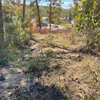
DH would get some dirt out of the creek bed and fill them in but this winter and spring we have had quite a bit of strong heavy rains and now we have several holes---biggest is about 2 ft deep and 2 feet across but there are others that are there and they are starting to work their way across from left to right...some parts of yard about 4 ft away from fence are soft and give when you mash your foot down---but we have had almost 6-8 inches of rain in last 2 weeks so ground has moisture...

We have a yard guy who says he can fix it by digging out the places where the holes are -- adding a good bedding of small gravel--and then refilling w/dirt and adding sod...

Yesterday he checked to make sure there are no sink holes along the the creekbed, especially where the worst hole is, which might show that the area under the wall is eroding as well and the wall will fail. There are no cracks or signs that the wall has any unusual runoff through the french drains...

So does anyone have any real landscaping experience to know if we need to get someone w/more technical knowledge to look at this problem...

When we built the first wall 20 years ago we had someone come in to give a bid who was from some landscape construction co. He wanted to spend a LOT of money, do all kinds of underground stabilization and build a masonry wall--would have cost 10 thousand 20 years ago--and no one else in neighborhood was doing that--some people did not even put in a wall between their yard and creek, they just moved their fence line back further into the yard, but we wanted a bigger yard...

We did not have problem w/this type of erosion until the concrete wall replaced the tie wall...

No one that I know of has had any real problem w/serious erosion of their back yards whether they have a wall or not..

So will what we plan to do be enough to stop the erosion?

We are trying not to spend any more money on this house than we really have to because we know we probably won't get it back when we sell, but we can't sell the house if there are holes like this.

Comments (6)

  • 19 years ago
    last modified: 11 years ago

    No experience building this type of wall, and I am not an enginner, but a few questions.

    Was the backfill compacted by the builder? Fluffed soil will settle. For example, a portion of my front sidewalk was built over non-compacted soil, and it has settled 3-inches over the years.

    Was the gravel covered with a filter fabic? The distance from the wall and the horizontal description of the depressions may suggest this.

  • 19 years ago
    last modified: 11 years ago

    ISABELLA--thanks for your input--
    your ideas are what I really consider is the reason for the erosion...the guy who did the concrete was was someone who had small construction co and whose wife was bridesmaid and good friend of our daughter at the time it was done. He also replaced our wood deck and did not do as good a job with that as we were expecting either...

    The landscape construction guy we talked to right after we moved in and were planning to build the first wall--the one who wanted to spend so much money and really over-build considering that we haven't had a problem in 20 years--said that there needed to be bed of gravel and some type of screening to slow the water's flow coming from the top of yard into the ground and/or through the tie wall---the material couldn't be too tight (like water-proof plastic) however because water/pressure would build up and actually work to burst the wall from the yard side...
    The guy who did this wall did put down some gravel but not enough and it was too big--he used the white landscaping chunks and did not just get several yards of small gravel from landscaping place...

    we did not realize until after it was done, what he was doing...he said he would lay a bed of gravel about an inch deep--one inch of big stones is not the same as an inch of small ones...
    He definitely did not have an impact machine to pack the dirt. They shoveled the dirt back and just stepped on it. He also did not get any extra dirt hauled in==just replaced what they dug out...so part of the problem was our neglect and refusal to make him do it right--guess we were embarrassed because of the relationship aspect...(Our daughter asked us to use him because they needed the money and he did seem like his other jobs went ok--but he had done more remodeling--not landscaping)

    Thanks for mentioning the screening material---that is something that I will get and have on hand for them to put down before the gravel...

    I am trying to get my husband to see that having some good top soil hauled in and spread at the back of the yard to raise the level and some sod on top would help cancel out part of the slope which would be beneficial since that would encourage water to drain more evenly, hold it in middle of yard more and not run to back where the wall is...

    I am glad that we decided to install our metal fence posts into the wall this time instead of inside the yard behind the wall or we would have lost the fence from having the poles sink...

  • 19 years ago
    last modified: 11 years ago

    Based on what you've reported, here's my guess on what's happening.

    Picture your concrete wall as a dam. Ground water flowing from the higher area where your house is down towards the creek used to back up slightly behind the RR tie wall, but given the nature of those walls (not being quite solid) there were always crevises and spaces through which the ground water could find its way out to the creek (seeking the lowest level, as water tends to do). The concrete wall has no such spaces, unless they're designed into the wall and formed before the concrete is poured. In the construction business they're called 'weeps'. Usually 1/12 to 2" PVC pipe spaced about 10 feet apart, allowing the groundwater that builds up behind the wall to find it's way out to the low side of the wall, keeping the hydrostatic head (water pressure) behind the wall at a relatively insignificant level. If your wall has them, you should be able to see them on the creek side of the wall near the bottom of the wall... about 6" above the point where the low grade meets the wall. Heavy rains will produce high groundwater in free draining soils, and the water will flow towards the lowest point... that most likely being your wall.

    Compound that with what sounds like a poor backfilling job behind the wall (large rocks? many voids? not a good 6-12" of free draining gravel behind the wall from just under the topsoils to the bottom of the footing?) and the surface soil will simply turn to mud. Once its reached the point of total saturation, it may become so fluid that it can 'drain' into any voids behind the wall. As long as the problem of trapped groundwater behind the wall exists, no amount of 'filling' will help permanently. It will only be a temporary fix until the next heavy rain. And if you're in a drought area, that may be any storm.

    Weeps can be added by drilling through the face of the wall, just about 6" above the low grade. But understand that weeps formed prior to the pouring of the concrete will have a 'screen' on the end behind the wall to help maintain a free flowing opening for the ground water. Unless you want to dig down to each and every drilled hole, you can't efficiently add the screening. Of course, if the wall is only 3 feet high, that's not a deep hole to dig.

    And... here's the kicker... if the creek swells on a regular basis and the water climbs to the top of the wall, all the weeps will be underwater, and that means.....(?)... right.... the water can flow back into the fill behind the wall. But if the backfill behind the wall was that 6-12" of free draining gravel from just under the topsoil to the bottom of the footing, any water that built up behind the wall would flow freely through that gravel, and exit quickly through the weeps as the creek level fell to normal.

    Hope that helps understand what happens behind a concrete wall, and why providing a way for the groundwater to drain out from behind the wall is not just desireable, but really necessary for the longevity of the wall and the condition of the earth behind the wall.

  • 19 years ago
    last modified: 11 years ago

    TREEBEARD--very logical and easy to comprehend...
    thanks for taking the time to be so lucid and thorough...
    couple of further questions/comments if you don't mind...
    After Googling for info about building these types of walls I got a lot of what you posted as well...so we realized the builder did only about half the job he should have since the proper backfill is just as important as the wall's construction...
    I remember that he said he would have weeps to allow for draining water on yard side to escape--but when DH walked the creek side of wall yesterday he did not see them. It is possible that the grass and weeds which are about a foot tall now on that side might have obscured them---should I have the men doing the backfill work, try to find the weep holes to make sure they are there?

    I would call the builder to find out but don't know that I would get response---we have heard that he and his wife--who was our daughter's friend--are in process of separating and he may not care to have any contact with us--certainly don't think he is going to take responsibility for doing a poor job at this stage...

    TREEBEARD, I am concerned that using just normal landscaping fabric--the black weed-blocker type -- will not allow water to drain quickly enough and might build up pressure that would cause wall itself to fail...we have rolls of landscaping cloth but yesterday bought some rolls of burlap advertised for erosion control that we saw at landscaping center

    Would it be ok to use a double layer of burlap or would that be too porous? will the regular weed-blocker landscaping cloth be ok? the types of techno-fabrics I saw mentioned on-line for this type of erosion control would be more expensive and difficult to obtain...

    2) When they work on digging out and redoing the drainage backfill--should they make like a 90 degree corner and put the fabric not only along the wall bottom but also along that side of our yard paralled to neighbor's wall/yard in that corner for a couple of feet or so--to wrap the corner so to speak with the landscaping cloth--
    and weight it at bottom w/gravel and then dirt backfill???

    My husband walked the ditch-side yesterday and thinks most of the problem comes from where the left side of our wall meets the neighbor's tie wall--that is the side where the erosion is the worst...also the lowest corner of the yard itself.
    When the guy built the wall, I made sure he set the form for the other corner behind (inside) the bridge/street foundation about 8-12 inches--so that there is a smooth concrete 90-degree angle there.

    I was concerned that if he just butted the form to the bridge (especially if there was 2x6 form board at the end which would leave a gap when taken out) that eventually water would work into the space and eat away the corner of yard...

    so far we have not had a problem there like back yard

    3) We are pretty certain that the poor backfill--
    certainly not enough or right type of gravel--
    no fabric was used that I know of--
    not enough packed dirt/top soil and lack of sod to topdress-

    has allowed the rain (and water from irrigation probably) to erode and wash away some serious holes in that left corner --- the other spots that developed were probably more from the dirt washing down because it was poorly packed/backfilled to start with. When we added dirt on top we were not able to really pack it down or add the gravel at the base...

    I understand what you are saying about needed the fabric all along the wall base--but we are talking a length of 100 or more feet across the back of the lot. Part of it would be even more expensive/difficult to do because there is not any erosion there to facilitate gettiing to the bottom of the wall...

    Would lining creekside-bottom of wall w/landscaping cloth and filling w/gravel, and then overlapping ends -- Making like a berm along the bottom of wall--make a difference to water seeping under wall from either direction since we can't get inside the wall to add the material???

    TREEBEARD--thanks very much for your input--and if you have an opinion about the questions I would really appreciate your response...

  • 19 years ago
    last modified: 11 years ago

    "...should I have the men doing the backfill work, try to find the weep holes to make sure they are there?"

    Yes. If they're there and buried, that may be a simple fix to the problem.

    "Would it be ok to use a double layer of burlap or would that be too porous? will the regular weed-blocker landscaping cloth be ok?"

    That depends on how you would be using the fabric. Generally, jute mesh (or sometimes burlap) is used in conditions where slopes that are to be planted with grass are extreme, and the likelyhood of any rain eroding the slope is high. The fabric is normally rolled out on the ground and held in place with long hand installed staples. The rolling is done down the slope, not across the slope. The open weave nature of the fabric and it being biodegradable allows for grass to germinate and under the fabric and grow up through it. In places where the grass will not be mowed, the biodegradable fabric can be left in place to rot. In areas where the grass will be mowed, leaving the fabric in place presents the likelyhood of the fabric being lifted by the mower and causing all sorts of problems. Jute mesh will degrabe faster than burlap, and it's weave is quite a bit more open...and it's usually less expensive. If your lot slopes 2 feet over a very short distance and the slope is steep, then using the natural fabric can help keep the topsoil and seed in place. If the slope is not steep, the fabric is probably not necessary. The black fabric should not be used at all on top of the soil if you're intent is to grow grass. Either way, mowing with the fabric in place will be near impossible, and pulling the fabric up after the grass has begun to grow will probably pull the grass up with it.

    The black weed fabric is used on the surface of the ground so that nothing will grow through it. It can be used to halt erosion, but if it's woven and has a tight weave, water will tend to run off faster than if it was a more open non-woven fabric. Again, if the slope isn't ateep, it may be a waste of money to use the fabric there.

    Erosion control fabrics, woven and non-woven, are usually used in a vertical fashion, stapled to stakes (essentially the same things as tomato stakes) with the bottom hem buried in the ground so as to catch and slow surface runoff. Normally, that sort of installation is used where required either by local or state code, or by site conditions such as steep slopes and open ground exposed to the elements without benefit and protection of turf or groundcover. On a quarter acre lot with shallow slopes, I'm not sure it would be beneficial, but then again, I can't see the lot, so local opinion and expertise may be a better option for you. Just get more than one opinion.

    Another use for fabrics is actually in the ground, separating different soil types. In the case of a wall like yours, it might be that the designer will call for such a fabric to be installed prior to placing the clean free draining gravel behind the wall. The fabric in this case would keep the gravel open and free draining by keeping the fine particles from adjacent native clayey or silty soils from infiltrating and blocking the voids in the gravel.In this case, burlap would not be used as it would degrade over time. There are many specialty fabrics for this use, and most are not available at your local nursery or big box vendor. Some weed block fabrics may be similar in weave and nature, some are not. Can't say whether yours is or not. If the soils behind the wal are removed and atrench prepared for gravel backfill, the fabric would normally be placed along the bottom of the excavation with 3-6 inches rising up agains the back of the wall. The rest would run up the excavation and be laid on theground away from the wall until the trench was filled with gravel and compacted. Then the remaining edge of the fabric would be pulled over the top of the gravel, back towartds the wall, covering the gravel before the topsoil or planting mix was replaced. This more or less creates an envelope around the gravel. I wouldn't bother putting anything against your neighbor, especially if they still have the timber wall. Understand that a fabric envelope like this isn't always part of the design. It really depends on the nature of the existing soils, groundwater, and the wall design. Your situation may not require it at all. Only local inspection can insure that you're not throwing money needlessly in a hole. I don't think I said anything about using fabric at all. What I did say was that each 'weep' hole in the wall should be covered by a 'screen'. That screen would only cover the hole and extend a few inches beyond the hole in each direction, on the back side of the wall. The gravel would lie up agains that screen, and groundwater would find it's way to the hole and through the screen.

    If the erosion is most visible where your wall meets your neighbors, remember that your wall may be acting as a dam, and any water building up behind it is seeking a way out. The junction of your wall with yuour neighbors would be that point, and the flow may be significant. Weeps through your wall would likely provide the necessary outlet to reduce the pressure forcing groundwater to find that junction and causing it to erode.

    I would stay away from constructing anything that looked like a berm on the creek-side of the wall. It wouldn't serve the purpose you think it might. It may only make flooding problems worse. And, you may be running afoul of local regulations having to do with wetlands.

    Good luck. And remember, this is only an internet forum. We can't see what you see, we can only read your words. Even pictures would serve as limited assistance. Your very best bet is to inquire locally, and get as many second opinions as you think necessary.

  • 19 years ago
    last modified: 11 years ago

    If someone comes out there and suggests using a powered tamper to tamp the soil don't let them get very close to the wall, those things exert a lot of force and depending on how well you wall is built could damage it.

Sponsored
J.Holderby - Renovations
Average rating: 5 out of 5 stars4 Reviews
Franklin County's Leading General Contractors - 2X Best of Houzz!