Software
Houzz Logo Print
inkognito_gw

original thoughts

19 years ago

Would every house look better with shutters at the windows, not shutters to keep out bad weather but the decorative kind. Does every house need an apron of evergreens and every path need to be lined with vegetation? Does every tree demand a necklace of ground cover and does every pond demand a band of rocks around its circumference? When landscape design becomes simply a variation of these set pieces I think we have lost the plot. When the questions here become formulaic, like, what do I plant along my walk or what do I grow along my foundations, then so do the answers. Is this design I wonder.

Comments (36)

  • 19 years ago
    last modified: 11 years ago

    I can only speak for myself, but since I know I will be moving again in another year or two, I am being very careful (primarily with the front yard) not to do any "unusual" landscaping...I'm going plain vanilla ("realtor beige").

    Most homebuyers today are too busy for gardening and they want to see a landscape that at least appears to be "low maintenance". They don't want to see plants that are unfamiliar (might need special care?) or that pull attention away from the house itself. They want grass...really really green grass.

    I already own my "next" home, it's an old house in an old neighborhood with no HOA (yay!) and a HUGE sunny front yard...I already have visions of a succulent garden with an undersea theme - agaves will play the role of octopuses!

    For now, I'll focus on trying to make my tiny front yard look "bigger" (an all white and green garden, no?) and let loose a bit in the backyard - tropical style...I still enjoy the process.

  • 19 years ago
    last modified: 11 years ago

    Maybe not original, but some thoughts anyway...you expressed some of the frustration I've been feeling with this forum in particular. Landscape design is so much more than 'Help me with my front stoop--pictures' or someone who posts their design for open critique and then refuses to consider the options and wastes 50 replies defending a poor design.

    Landscape designers/architects as well as many talented amateurs spend years developing the tools that allow them to take an exterior space from pedestrian to WOW! With sustainable design as a forceful current, many of what most consider desirable won't be. Maybe when that happens some small cracks will develop in the status quo.

    My small block has four houses that face each other. Three of them have weeping cherries, azaleas and hollies as part of their foundation plantings. These form a buffer zone between house and heavily irrigated, fertilized and pest treated lawns. Guess which house is different.

  • 19 years ago
    last modified: 11 years ago

    No, but a block of those designs can at least look tidy. (I won't say "inoffensive" because it will look offensive to some.) Those who venture to look "different" can really mess things up, too.

    I submit a question for your question -- for a front space is it better to look tidy or to look different?

    Of course, the question can never be that simple. There can be degrees of tidiness or innovation, but for the person who just wants Pleasant, is there such a thing as Ordinary with Flair?

  • 19 years ago
    last modified: 11 years ago

    Isn't "design" - of any kind - "illusion" anyway? Yes, design may be intended to evoke a mood, recall a place or time, but it's also intended to minimize flaws; to camouflage. Form follows function, right?

    So, if the facade of my house is less than optimal, landscape design just may do the trick!

    I totally agree Miss Rumphius, sustainable design is the wave of the future - whether people like it or not - so I quietly use organic fertilizer on my ever-shrinking-in-size lawn - all the while looking much like the Jones' yard (yes, "pedestrian"!). When I go to sell my house, will the new owners care if I already planted Milky Spore, or will they sign a contract with the chemical man to spray the life out of the lawn...based on what nearly every neighbor around me does, sadly, it will probably be the latter.

  • 19 years ago
    last modified: 11 years ago

    If I had to choose between tidy or different, I would choose tidy. Tidy is neighborly, tidy maintains property values.

    Of course, if "different" is done really well and is kept really really tidy - then I'm happiest of all!

  • 19 years ago
    last modified: 11 years ago

    In a biological sense it has long been established although we share a common ancestory we are each unique .. expressing this uniqueness is what real landscape design is all about .. reaching inward and giving the world the one thing they can't get anywhere else.

    But one must find it first ...

    So I say to new comers .. throw out the books .. and go sit in the yard .. just sit .. only sit .. and find that which is truly you .. not an easy task.

    Good Day ..

  • 19 years ago
    last modified: 11 years ago

    Thanks for expressing so handily exactly what I've been thinking, ink. No, I don't believe for a second this is "design" in the sense that any professional and most skilled amateurs regard it. It is simply "making nice" as a dear friend refers to it - prettying up a drab, perhaps even boring, exterior extension of the house.

    And I think this where the conflicts arise between those seeking help form this forum and most of those offering it - we are speaking two different languages and the communications gap is huge. The evidence of this is obvious in the "Design Challenge" thread. The OP is looking for ways to incorporate her wants within the confines of the existing, disasterous landscape. Is this 'design' or is it just an attempt to make a silk purse out of a sow's ear? We're saying one thing and she wants to hear something else and all parties become frustrated in the process.

    And I'm not sure I understand how 'tidy' and 'different' necessarily apply or why they must be mutually exclusive. Why does good design immediately get termed 'different'? Because it dares to go beyond the standard or perhaps demonstrate a small amount of creativity and innovation? It is still very easy to have a tidy yet distinctive garden that compliments both the house and the neighborhood and but still draw attention or stand out as being something better than just mediocre. To settle for less is not design in my book but simply attempting to "make nice" and falling far short in the process.

  • 19 years ago
    last modified: 11 years ago

    If the front yard is the "public" space then maybe chaos is more appropriate in this day and age. Certainly the American mentality of "keeping up with the Jones'" has fostered the mentality of sameness as good design.

    Tidyness can happen in any well designed space. The problem with most gardens is a matainence issue. Most landscapers can't maintain even the most basic plantings properly--forget about the lawn if you took away the irrigation and the chemicals.

  • 19 years ago
    last modified: 11 years ago

    I don't advocate 'unusual', rather 'non derivative' and the way to get to this is to ask different questions or to ask questions that don't already have a right or wrong answer. For instance "What can I plant to make my new house look like it belongs in its setting?" is a different and more open question than "What tall evergreens can I plant to soften the corners of my new house?" The answer to both questions could be the same, or not.

  • 19 years ago
    last modified: 11 years ago

    Most people don't think about it enough to even know the questions to ask. They see a neighbor's tree or shrub and want one like that or not. They see a house with a color combo they like and want that. They watch HGTV and want that. Landscape by number or just lack of thought?

  • 19 years ago
    last modified: 11 years ago

    inkognito,

    But the questions are not exclusive of each other, right?

    What I mean is, I ask myself variations of both of your hypothetical questions as I make choices in design.

    One question that I am always asking myself is "how will this look in 20 years?". This impacts everything from the way I prune a tree to making plant selections...I try to visualize them as they will look when they are mature and spend a lot of time driving through old neighborhoods seeing what plants still look great 20, 30, 40 years after they've been planted (hence my love for zamias!).

    But I also ask myself questions like "how can I make my entranceway look wider?" (narrowing the "horizon" of the plantings on either side leading up to the entranceway). Or "how can I ensure that I can take my ponytail palms with me when I move?" (plant them in containers!).

    Am I terrible? It's okay....I can take it (ha!).

  • 19 years ago
    last modified: 11 years ago

    inkognito, I just started visiting this site and have read a few of your posts. I'm quite curious, is there any with pictures of your landscape anywhere? I would love to see what you have done.

  • 19 years ago
    last modified: 11 years ago

    I don't think that Tony has EVER posted any photos of his work, or had someone else surreptitiously *out* his work for him. I would also be most interested to see Tony get visual on us, as I know he has a digital camera and surely must of learned how to use it and post pictures by now. Here's your chance to peal away some of the mystery, Tony!

    Then again, few of the actual landscape designers/architects who converse here at Garden Design Forum are much into posting examples of their own work. I wonder if this has to do with worries about the web forum host not protecting copyright privileges once things are posted here? I know Michelle, the Zonal Denial eccentric left this forum over exactly this issue...

  • 19 years ago
    last modified: 11 years ago

    But if he posted pictures, he'd no longer be incognito!

  • 19 years ago
    last modified: 11 years ago

    Egads! Perhaps we would see a capitulation to the great unwashed. In the real world of making a living at one's craft, a lucrative contract can trump all the personal landscape principles one considers sacrosanct... we may even find a foundation arrangement design for a house with decorative shutters.

  • 19 years ago
    last modified: 11 years ago

    When it comes to thought, I suppose I am fairly capable of a respectable originality. I would say that is mostly true where I have some level of competency and depth of understanding. With words and ideas, for instance, I am practicing my craft.

    Even when it comes to thoughts about garden scapes, I can come up with some inner vision that might be called original, that might have some claim to beauty or fitness. But it's only in my head, my mind's eye. It lacks reality. These mind scapes also probably lack practicality, even feasibility. One such "landscape" is the ideal garden I imagine for meditation purposes.

    Making an original design real in the landscape--that is where my respect for the designer comes in to play.

    In my own landscape I see myself as having made pretty much all the errors and poorly conceived assumptions of most amateurs. Perhaps not as egregiously as some, and perhaps with a modicum of more openness to learning a new thing, but still finding it an arduous process to conceive and then,more than that, achieve something that is not bland, not overdone, not unworkable, but somehow fitting and authentic. I guess that's the word I likeauthentic, the real thing, the genuine article.

    I also wonder whether part of the difficulty is that so many homes in the US start out as derivatives of other times and places. My European husband comments on this all the time. Housing sub-divisions play off our love of staging our lives. French provincial? English Tudor? I remember a home with Spanish styling and courtyard plopped down between a modern Colonial (oxymoronic, surely!), and an American ranch. This in one of the "best" neighborhoods. Nothing wrong with that, but we have been raised on the milk of referencing so many cultures and historical periods that it's hardly surprising that we get lost when it comes to developing a central idea, much less an original one, for our landscapes.

    Wellspring

    p.s.
    Ink, don't do it! Or, if you do, only with words please, not pictures.

  • 19 years ago
    last modified: 11 years ago

    Isn't a lot of this just the difference between professionals and non-professionals?

  • 19 years ago
    last modified: 11 years ago

    "Making an original design real in the landscape--that is where my respect for the designer comes in to play."

    Ahh .. enjoyed your post wellspring.

    Ofcourse the builder of the design plays a key role in making the design real in the landscape .. even a greater role .. which may bring dismay to many designers.

    Good Day ...

  • 19 years ago
    last modified: 11 years ago

    The missmash of building styles in so many subdivisions across the USA misses the boat in my opinion, and neighborhoods look so much better and fitting if the homes and gardens have some sense of regional style that relates to the history, culture and climate. If it doesn't happen organically over time, sometimes a good natural catastrophe can be a god send in giving a town a second chance to redefine itself.

    Santa Barbara and the big earthquake that destroyed much of the down town area is a great example of this. I think the quake happened in the late 1920's, and afterwards the design standards for new replacement construction required a spanish motif with stucco walls and clay tile roofs, and the result is a very harmonious composition of buildings with lots of public open space with lovely mediterranean gardens. The result is one of the most lovely communities in southern California, with the added benefit of those gorgeous rocky mountains as a backdrop, and views out to the Pacific with the lovely islands in full view, something not seen anywhere else along the California coast.

    None of this would have happened in such a concentrated way with the earthquake, and a common vision of creating a new historic image more in line with the founding culture of the first settlers.

  • 19 years ago
    last modified: 11 years ago

    "Isn't a lot of this just the difference between professionals and non-professionals?"

    To this query, (as a non-professional) I give a swift, "No". It really boils simply down to studying a topic enough to acquire a working knowledge. Once you achieve a certain level of understanding, things begin to make sense. In fact, the enjoyment you receive from visiting other gardens will soar to new heights.

    It never ceases to amaze me how quickly "avid gardeners" can conclude a tour of anothers garden and then promptly declare that there wasnt much to see. Landscape Design is clearly a subject matter that has the ability to make one realize that the more you learn about the subject, the more you realize just how little you really know. Also, my tours of others gardens seem to be taking longer and longer. This garden seems to work while another one doesnt but why? And... how could one tweak things to make the other one work? And... what lessons can I incorporate into my landscape? Therein lays the fascination for me.

    Well, we finally have a thread with some substance. And substance is what is lacking in most design attempts. I find the ubiquitous goal of "pretty" quite lacking and no longer worthy of pursuit. When a design is working, "pretty" seems to almost magically take care of itself.

    Perhaps we would achieve a more universal success if we approached landscape design in the same manner that we approach designing a kitchen layout. It is pretty well universally understood that a good kitchen layout has to place a priority on function. A phrase often heard about a kitchen design is that, "It works well." Why not just make it pretty and forget about how the kitchen space serves a purpose? Of course, the answer is that an ill-thought-out kitchen arrangement would impede ones activities in that space. So why is an ill-thought-out landscape arrangement of space acceptable? The answer is that it is not.

    I can accept the "realtor beige" designs for those who are looking at short-term term ownership. I can also accept the "no maintenance" designs for those who have no interest in gardening and are rarely home due to hectic schedules. Frankly, each of those decisions is actually quite substantive and well-reasoned.

    On the other hand, we find those attempting design promulgated from steroids chelated from gardening zeal as the sole ingredient. Emotion, not substance, tends to drive those decisions. We get a good laugh from the folks who wish for the "no maintenance landscape". In reality, we ought to be exploring lessons we should be learning from them. With nary a thought, far too many enthusiastically embrace "designs" meeting out a sentence of perpetual servitude. Where is the substance in that kind of thought? Slavery even self-imposed slavery is NOT a worthy outcome of any goal.

    An understanding of landscape design not only helps to make ones own living space better, it also helps to appreciate the world that surrounds us.

    IronBelly

  • 19 years ago
    last modified: 11 years ago

    History, climate, and culture do make up some components to regional style. In some places that is rather broad and in some others rather narrow. Still some others arevery hard to define.
    It is certainly can be a powerful influence to either work with or overcome. Sometimes a good design is going with the richness of that tradition and sometimes good design is going against that same tradition with success. Miss Rumphius's house might be one great design going in a different direction of three other properties of more traditional, yet great designs (or maybe not).

    It is a very diverse field. Sometimes the traditional is what give some a sense of place while others feel it is dull, unoriginal, and stale. Sometimes going against the grain ruins that sense of place for some while adding a "wow" for others.

    The diversity runs both ways. It runs in what we all do and it runs in how any of it is viewed.

    Some people hate Versailles. Others hate cottage gardens, or arbors with roses over them, or garden gnomes (travelocity, anyone?), or segmental block retaining walls, or gravel driveways,or foundation plants, or swiming pools, ..... But, none of these things would exist, if not thrive, if there were no one valuing these things enough to build, pay for, and maintain. That tells me that a lot of people like some things I like and others like things I really don't like.

    All the things that are being done are being done because someone wants them. It may not be you or me, but they are out there in number.

    I happen to like to work in two very distinct areas of landscape styles that are extremely different from one another. One is what I might call 20th century New England summer home seascape and the other an Asian influenced rock garden style. I don't hate everything else, but I don't want to do some of those other things. Its just not me. Not everyone likes the type of things that I do. I can appreciate that. Everyone has things that they really like and things that they really don't. A lot of the time the things that they don't like may be really well done - they just don't like them.

    I think that that it is more often than not that people view design to mean style or applied style rather than a process. Design is a process rather than a result (from my perspective). Style might be one of the objectives in the design process.

    A straight line or a curve is not good design or bad design until it is in the context of what the design is trying to address. A foundation planting is not good design or bad design ... Not having a foundation plan is not good design or bad design .... These are things that are put in to meet the criteria of the project often within the style of the person designing it.

    A lot of people want to feel progressive and will discount anything traditional as being poor design. Traditions don't become tradition because unless they are succesful. Sometimes they are successful only for a time period where certain influences existed but no longer do. But there was a reason at some point that was very sound.

    One of the reasons that I think there is a lack of continuity that keeps new traditional styles from becoming is that there are less constrictions to force similar results. These may be cultural, technological, or somehow modified by modern changes. These also take away the restrictions that made traditional things the steady answer in the past making us not recognise why these traditional responses made sense.

    We are now being very heavily influenced by the environmental movement which is often in strict opposition to things that were standard design practices. Lawn being the most notable. I see cultural values being discounted in favor of anything that can claim environmental benefits. That might not sound too bad, but I'm afraid it will be much like the destruction of the environment, ironically. We won't notice it until the damage is very great. Then we might need an earthquake or hurricane to rebuild it.

  • 19 years ago
    last modified: 11 years ago

    If "original thoughts " is the goal then ..

    ... every landscape is born .. like a child .. and like a child grows to adulthood and old age. Who's child is it ? If it is your landscape it better be your child.

    That's the goal of good "original" design.

    Good Day ...

  • 19 years ago
    last modified: 11 years ago

    Landscape design is indeed a process that has a definite beginning but a not so clear conclusion. It is at the beginning that original thinking is required to discover what the problem or question is rather than just to follow a convention that assumes what the question is for which there is a ready made answer. Once this is clarified then the process can begin apace and the 'one central idea' discovered is the reference for what follows. 'Principles,' as Duluth uses the word can play a part and if a designer offers this approach to a client who doesn't want to enter into it but hands over a sack of money instead then the designer gets to choose but I think it should be offered anyway. Original thinking doesn't necessarily lead to off the wall or expensive decisions but in fact is the basis of both the unity that David suggests and the discovery of context that Andrew is talking about. Following a trend is unoriginal. As a shortened example of what I mean, Norman Potter was once asked to redesign a University cafeteria and in a meeting with the client they started talking about the kind of chairs and material, colours etc. They talked about the danger of chairs in such a situation. Potter started to ask questions and asked what the area was for, "sitting" was the reply. The unoriginal thought was sitting = chairs. As I said before "chairs" might well be the best solution but to get to it you need to ask the right questions and I think this is safe to do at home even for a non-professional.

  • 19 years ago
    last modified: 11 years ago

    In order to think outside of the box, you have to recognize that there is a box to begin with.

  • 19 years ago
    last modified: 11 years ago

    "The time has come," the Walrus said,
    "To talk of many things:
    Of shoes--and ships--and sealing-wax--
    Of cabbages--and kings--
    And why the sea is boiling hot--
    And whether pigs have wings."

    Sorry, guys. Can't get cabbages out of my head tonight. Must be something I read? Tears of laughter still rolling

    But maybe Carroll fits here after all. He knew his box well, his craft, and so he knew how to break out of that box to achieve an effect. I suspect that he also knew his own strengths--humor, absurdity, ironic caricature--and his own limits.

    I'm still trying to figure out the original thought for my landscape. Cabbage is looking better and better.

    Wellspring

  • 19 years ago
    last modified: 11 years ago

    April is the cruellest month, breeding
    Lilacs out of the dead land, mixing
    Memory and desire, stirring
    Dull roots with spring rain.

    T.S. Eliot, 1922

    I've had the long Minnesota winter - which is getting longer with each new snowstorm - to contemplate translating my mind's garden into something real. But I have a poser; is an arbor best used to draw one into a space or to be the focal point of a space once inside? I have a "secret garden" and have entertained both possibilities.

  • 19 years ago
    last modified: 11 years ago

    By definition an (h)arbour is a safe resting place, ideal for a secret garden and for contemplation, perhaps the focal point should be your naval.

  • 19 years ago
    last modified: 11 years ago

    All this talk is nice, but the reality is that a lot of folks move into a previously owned home and most likely don't have the funds at that point in time to redesign from builder/previous homeowner standard to quality design.

    I can dream up tons of great design's for my own home and have, but I don't have one of the following to make it happen, money, time, or money $$$$.

    I talking about a complete design, sure i have money to go buy a few plants and stick them around the yard, but doing it all, regrading the lot, pouring new patios and walkways, adding stairs to the deck, putting in another concrete patio for the firepit etc. etc.

    That's what annoys me the most.....I'm stuck with what i got and what someone before me looked good.

  • 19 years ago
    last modified: 11 years ago

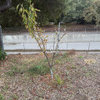
    Here is my home for example. We exhausted the funds we had at the time of move in for 2 neccessities ( in our minds). Removal of the bradford pears lining the driveway (20 years old and losing many branches every storm) and installing a privacy fence for the back yard (for privacy and our 3 dogs)

    before

    there were 7 bradfords in a slight curve
    {{gwi:25299}}

    after

    {{gwi:25301}}
    Now I have a giant bed with absolutly nothing growing in it as of yet. I want to return the majority to the lawn, and line the driveway with crepe's but time and money and inside the home renovations have prevented it.

    So for fun this year guess what we planted in that bed?

  • 19 years ago
    last modified: 11 years ago

    Corn?

  • 19 years ago
    last modified: 11 years ago

    Back to the original post, trying for a 'different' looking garden gets me in trouble. I've moved or replaced way too many plants in the cause of innovation. I would like to make something that's not boring. If my garden ended up looking like any of the pristine, exact, perfectly lined up creations which, although attractive, are BORING (to me), I would be unsatisfied. You have a spikey thing, a rounded thing, a flat thing, perfect edges, a pleasing combination. On the other hand, a cottage-y mess of color and riot is also not the solution. I guess my quest is vague and only I can figure it out.

  • 19 years ago
    last modified: 11 years ago

    Giant pumkin. I wish some folks would post pictures of their yards so we can see what people are talking about...

  • 19 years ago
    last modified: 11 years ago

    PATIENCE .... dont forget patience.

    The most magnificant of landscapes only develope in time ... great landscapes grow and are not made. Weather it be a tree or weathered stone .. a landscape needs time.

    .. and it's best to chisel away at your new or preexisting landscape then it is to get it all done overnight. Better for the creativity.

    It also helps the budget .. landscaping IS one of if not the most expensive of home improvement projects. Believe it or not.

    Good Day ...

  • 19 years ago
    last modified: 11 years ago

    duluthinbloomz4:
    I think an arbor can both draw you in and be a focal point, though I don't know what you mean by "the focal point of a space once inside". Unless you mean that it can frame a view, creating another focal point.

    Thusly:
    {{gwi:25303}}

    (Not on my property, unfortunately. This is the arbor at Country Petals in New Ulm, Texas.)

  • 19 years ago
    last modified: 11 years ago

    Very earthy ...

    Good Day ..

  • 19 years ago
    last modified: 11 years ago

    Paul Harvey?