Software
Houzz Logo Print
lisa2004

Bringing my gardens together

20 years ago

For years I've been working on planting gardens. But, when I look at my yard it is definately missing something. There is nothing that ties all the gardens together. Most of my plants range from a few inches high to about 4' high, and my yard is perfectly flat...so I'm thinking that I definately need height. But, I need more than that...maybe paths, or structures, or something. Is there either a website or book that I can go to? I always hear, "start with drawing your yard on graph paper" but honestly, that's done nothing for me. Any suggestions?

Comments (8)

  • 20 years ago

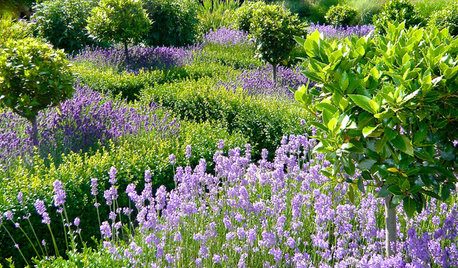
    In my garden, I use repeating themes in color, shape and material. Colors are pinks and purples with punches of white interspersed regularly. I try to use the plant shapes to create a visual rhythm (conifers, rounded shrubs, spiky shapes with mound-shaped plants in front, then back to conifers). I use black iron for any structure, so there's consistency between the garden arch, the obelisks and the sundial.

    Does that help any? If you can post a photo, perhaps we can tailor suggestions better to your site.

  • 20 years ago

    Lisa2004,

    I'm not a professional, but I do have a couple ideas - free, so take them for what they're worth with good intentions:

    I recommend Tracy DiSabato-Aust's book "The Well-Designed Mixed Garden." It covers all the design basics in a readable, interesting fashion, and describes small, medium, and large (read: HUGE) gardens, with great photos and an index of plants. It's a good book for refining what you want out of your garden, and looking at it from a design point of view. It will help you look at your own and other's gardens and ask yourself, "What makes this WORK?" (Or, "Why DOESN'T this work?")

    My second recommendation is just from personal experience: a good path/series of paths can work wonders. We've been in our house for 9 years, but its only the past few years we've seen the plantings in the yard start to "mature." Still, something was missing. It just didn't "hang" together as a whole. Last fall, I decided to remedy the last glaring problem down by our car port (shaded, thin grassy area leading to a gate, totally uninteresting) and in the back yard on our seriously sloped lot. I created a terrace patio and steps in back using dry-laid stone and gravel, a lower patio using gravel, and two paths - gravel again, running from the front of the yard by the driveway all the way around to the back, edged with brick. It was AMAZING what a simple path did to pull the three spaces (front, side, back) together, and it created extra planting space which looks MUCH better than the thin scraggly grass that was there before. It makes the yard look PLANNED, like a WHOLE rather than a series of unconnected spaces.

    A path can be any material you like - it's the idea of GOING someplace, and looking ahead, and anticipating what's around the corner, that makes a path such a moving force in a garden.

    I hope these ideas are helpful to you!

    Laurel

  • 20 years ago

    I'm kind of embarrased to admit it but I've been perusing with great interest a not particularly scholarly book (but a gorgeous one!) by Bunny Williams called "On Garden Style". Williams is the owner of a store in New York called Treillage that specializes in garden ornament and furnishings. It is an exquisite space, one of my favorite stores in the city and when I found she had written a book on garden design I decided to pick up a copy because she clearly has amazing taste (not just mere generic "good taste" which in my opinion seems to be about being as mediocre and non-offensive to the neighbors as possible) and a passion for finding the unique beaty in a particular object or space. Anyway, if the book was just a bunch of pretty pictures it would still be fun to drool over but Williams has also written a really good book about creating good bones for your garden (something it sounds like you are looking for!) and defining spaces and passageways within your landscape through use of hardscape, fencing, ornament, plants, etc.. She encourgaes the homeowner to ask themselves specific questions about function, appropriate style and materials in order to achieve a landscape to feel passionate about. Her examples, drawn from gardens across the world are truly inspiring. It is truly a good read and I've wandered through my garden with it (and a glass of pinot noir) many times re-reading passages about hardscape, enclosure and style, gaining inspiration every time.

    There are used copies on Amazon starting at $12.99 if you do not want to pay the cover price of $22.05 (what an odd price, why not $21.99 I wonder) and it might be just the thing to pick up if you want to jump start your mental processes.

  • 20 years ago

    Thanks for your responses. I think I can take something from each of them. I'm very interested in the path idea. I wish I could post pictures of the entire yard so that you guys could give me ideas of where they should go, but it's a big yard and it would be difficult. Maybe I'll try some pics (after the grass is finially mowed). LOL

  • 20 years ago

    I completely agree with the effect paths have on unifying a garden. Years ago we laid a lovely path from the driveway to the back door using natural stone we bought locally. For some time it has occured to me that we need to now extend that path from the back door to a stone wall and set of stairs in the side yard. Recently I simply drew the outline of the path and just even doing that made everything seem pulled together!

    I also ditto suggestions for having consistent edging (where possible) and consistent materials for hardscape, decoration and furniture. Also, ditto having some repetition in plants.

    To be honest, though, I don't know how "pulled together" my gardens are just yet as I've only been working on these particular gardens for eight years. Hehee. A work in progress.

    Patty

  • 20 years ago

    I love that Bunny Williams book too. The other book that I turn to again and again is "Taylor's Master Guide to Landscaping" by Rita Buchanan. A gold mine of wise and practical information.

  • 20 years ago

    Also, some folks get worried about not doing a path till they can do it perfectly. You can just research what you like, and test around with it, try some stuff, and see what you think. I like cement pavers, they are fairly reasonable, compareed to what else is out there. You can get into it, discover you are having fun and happy with the result, and get a pallet load delivered to your house from the home depot, or who ever you use. and as you go along and learn, you can set them nicer, or straighter, or what ever, but anything done sincerely with these looks better than not doing anything. I saw a post about edging the other day, and I thought about it, since I have been making the paths this way, I have not done any edging. as well, if I want a seating area in a nice little spot, I can just widen the path or add out to one side or the other, and have a little sort of terrace to sit and contmplate. they are easy to work with too. Good luck!

  • 20 years ago

    One reason to put everything down on graph paper, is to see if it looks like anything. If it looks like a bunch of disconnected blobs on the paper, it will look like disconnected blobs in the backyard.