Software
Houzz Logo Print
nitlsu

Recommendations for edging

17 years ago

I recently planted a dozen crapemyrtles in our lawn and now I need to establish some sort of edging between them and the lawn to prevent the Bermuda from growing back in the beds.

I was looking for some suggestions - ideally something cheap yet holding up for 3-4 years at least. I don't mind even if it's a lot of work. Some of the things I could think of were,

1. Plastic edging (this one - http://www.amazon.com/Master-Mark-95340-Plastics-Landscape/dp/B000LNRVXK/ref=pd_cp_hg_1). Does anybody have any experience with these? Or any other types of edging I can buy locally?

2. A brick and mortar edging. Not sure if it will be more expensive since I am not sure how much bricks will cost.

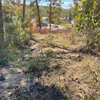
{{gwi:39560}}

See picture attached. Any other suggestions are most welcome. Thanks.

Comments (5)

  • 17 years ago

    Since I've used it in the past with great success - and before I perfected the fine art of trench edging - I don't discount using the plastic edging. Inexpensive from any of the big box garden centers. It's relatively easy to install, especially if there are two of you; one to dig the channel and the other to hold down the edging while you bank the soil back up around it. Would last indefinitely if properly installed.

    As for bricks - Lowes, Home Depot, etc. usually have Sunday supplement ads/sales for bricks and pavers at per piece prices.

    I'm not familiar with Bermuda grass. Deep rooted? If so, you'd also have to gauge how deep any barrier would have to be.

  • 17 years ago

    I used bricks around my bermuda only because the previous owners had left a ton of them strewn about the property. So it was cheap (i.e. free). I also like the more "organic" look of it - it's not natural, but it seems to blend in a bit more than the metal or plastic edging.

    However, I've found the bricks don't do a great job of keeping the bermuda out, esp. where I haven't been super diligent about edging (and with this drought, it's not like the grass is growing like mad). That said, where I have the metal edging in other places, the bermuda seems to make it's way over as well.

    So, I'd say you'd just have to be diligent with edging whatever you use :)

  • 17 years ago

    Give some thought to what you are trying to accomplish and why. Are these crapes a large cultivar or shrubby? Do you really have a "bed", or just the area in which each crape was planted--meaning, are you going to try to connect the series of crapes, or add anything else under it or just have it grow as a tree or shrub by itself?

    If these are to be large crapes in the landscape, eventually the root system will compete somewhat with the Bermuda and you can continue to mulch a bit over the root area and there won't be a lot of grass growing--that is what I have in my yard. For example, if you have a large cultivar crape, the root system will eventually be much larger diameter that that little mulch area in your photo. Meanwhile, I tend to just accept some grass up to and around the trunk unless you are primarily trying to create a lawn-mower protection zone. I also use (gasp) a bit of grass-killer combined with mulch. I don't think small peri-tree areas look very good with rings of plastic or brick edging, although I guess if you bury the plastic or steel edging really well the mulch might nearly hide it.

  • 17 years ago

    Question for Frankie - when you say "cultivar" vs. shrubby, are these a different type of crepe myrtle or just how you grow/manage/maintain them?

    Just curious. Most of the crepe myrtles I see in my area are shrubs/small trees with multiple trunks. At our house, we have a number of large (30ft or taller) crepe myrtles that are single trunks. The leaves/flowers look the same, the trunks just look really different. The yard when we bought the house was an overgrown jungle, neglected for years, but it was clearly loved once. Just wondering if the old owner did something "special" to make the trees grow this way.

    We do have another one, which we got as a spindly stalk free from our energy company on earth day. Other than water and occasional pruning, I haven't done much to care for it and it's growing amazingly well. It also hasn't spawned off multiple shrub-like stems/trunks like I see on many others and I wonder if it's a little different?

    for nitlsu - the area under my crepes was already weeds, no nice grass for the most part, so I mulched the whole area and made a continuous bed. Plan was to have wandering jews fill in the space under the trees, but my wandering jews are not really wandering.

  • 17 years ago

    There are many different crape myrtle sultivars, which have specific growth forms and size limits not based on how you prune them. Large, dwarf, miniature, bush, trailing, etc. For the tree forms (large and dwarf), the number of trunks is an issue of how grown & developed in the nursery--some may only produce one trunk as a baby crape myrtle and has to be cut back to produce multiples--that is the real way. Some nurseries put 3 saplings in one pot, hoping they will grow up together.