Software
Houzz Logo Print
hollyhockdoll

help selecting temporary screening plants

17 years ago

Hi, everyone. Hope you can help with some good ideas for my little 'problem area'. I've searched the forums but haven't really found the same parameters.

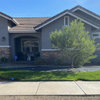
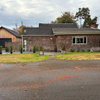
We recently bought the two empty lots next door to us, and we have plans to eventually expand our house and landscaping to make use of them. Right now, however, I would like to plant a row of temporary screening plants so that we can work (or play) in the lots without feeling like the neighbors across the street are watching our every move! I say 'temporary' because, according to the master plan, the front of these lots will eventually have a 3-car garage, a shop, and a vegetable garden/orchard. I don't want to plant something that will be difficult to tear out, or that will break my heart to tear out, because in 7-10 years, it WILL be torn out!

After going through all of my landscaping & plant books, the only options I've come up with are lilacs, butterfly bushes, & maybe some of the Viburnum varieties. I'm leaning towards the Lilac, but I'm looking for other ideas! I think I have a bit of a mental block because there's a lot of plants that I've not personally grown, so I keep going back to the ones I have experience with. If anyone has suggestions (based on personal experience or not), it would be much appreciated!

The parameters are as follows. . .

- Relatively fast growing.

- Adaptable as to soil conditions, as there is a range from one end to the other.

- Nothing with a large trunk(s) or huge roots. I want to be able to rip it out with a chain and a bobcat. And I do NOT want 20 stumps that I have to grind out!

- No invasive root systems; the city's sewer line runs under the street 20' from where these would be planted. Willow family is OUT!

- Suckering plants (like lilacs) are ok, but I don't want anything that suckers or runs to the point of colonization, if you know what I mean. Once it's gone, I need it to be GONE, without leaving little babies behind that I have to fight for the next 10 years.

- Since this is going to be a 120' long screen, I don't want anything that requires lots of pruning, shearing, etc. Also needs to be pretty carefree when it comes to pests and diseases.

- Nothing expensive or obscure, because I'll need, um, around 20-30 of them.

I'm in zone 5 (north-central Indiana). The area in question gets full sun, and although I picture large shrubs in my head (10'-12'), height & width is not really an issue - there's plenty of space.


Thanks ahead of time for the help!

Jill

Comments (4)

  • 17 years ago
    last modified: 11 years ago

    It would be helpful to know which areas need long term screening, and which are temporary. If you draw out your long term plan on paper, perhaps some of the trees/shrubs in the screen can remain. Maybe the vegetable garden area could use some protection from the road?

    Common Ninebark, Physocarpus opulifolius, is a fast growing shrub with beautiful flowers, berries and bark, and makes a good screen. There are many cultivars with red, lime green and gold leaves, but the common Ninebark is especially beautiful. You could remove it with a chain and a bobcat in 7-10 years. I would be more included to dig them up and transplant to another area on the property however.

  • 17 years ago
    last modified: 11 years ago

    If I were you,
    I would check around (they will be on sale big time now), and see if I could find some willow or bamboo fencing, they aren't expensive at all.
    They will last the amount of time you need them for.
    Worry free, don't cement them in, that's all.
    Then when you are ready to do your plans, you can remove as much as you need to remove and throw them out.
    The thought I have is why not use bamboo fencing that is inexpensive and totally renewable, vs. planting some pretty shrubs that DO require care and then ripping them out after 7 years and kicking them to the curb?
    CHeck online and ask around about cheap bamboo or willow fencing to do the maintenance free job you need.
    Good Luck!

  • 17 years ago
    last modified: 11 years ago

    Gcreek, I laughed when I read your post about creating a long-term plan, because, if you ask my husband, he will tell you that I am the QUEEN of design plans. I have been working off of the original master landscape plan that I created for our original lot for 10 years now. I even gave a speech once on the importance of having a master landscape plan for your property! There's no way you could have known all of that from my above post, so please don't take offense (I'm laughing at myself, no one else), but it did make me giggle. :)

    I do have a working master plan of the "new" property; the addition onto the house, the shop, the possible apartment above the shop, and the main landscaping features (including how the new and the old will combine to look like it was always one garden). So, when I say it will eventually be garage, shop, & vegetable garden, I mean it! I was at one point contemplating a formal sheared hedge to hide the veggie garden from the street, in which case I would simply plant it now. But I decided I would rather have a pretty privacy fence facing the street, with low landscaping in front of it. I don't want to put that in until the buildings are in; hence the need for something temporary.

    I like the Ninebark idea, though! See, this is what I mean by a mental block - I've never grown it (mostly because I never found a good place for it in my yard). The cultivars would probably be too expensive for the number I need, but the plain ol' Ninebark could be a good option. I will definitely be researching that, thanks!

    Butterfly4u, I thought about a temporary fence of some kind, but it's hard to put something 12' high up 'temporarily' - metal stakes won't hold it through our winters. I know, as a gardener, it seems like a waste to grow something knowing it will be torn up. That was actually something I struggled with, because I am normally one to plan for the long-term in my plant choices. But my philosopy is a bit different than yours, I'm afraid. I will try to explain myself without making anybody mad. . .

    The bamboo was grown naturally, but was made into a fence in a factory, was probably shipped from China (where most things made from bamboo originate), then had to travel from some American port to my little town in Indiana, where I purchase it. It does not increase in value as it ages. It does not contribute to it's site other than screening a certain view for a few years. Then it will be rolled up (or whatever) and put out at the curb. If it looks natural enough, and there is no wire used in the fence (some do, you know), then MAYBE the guys that pick up the yard waste will take it. Or, more than likely, they will not see it as suitable material for the city's compost program, and it will instead be picked up on trash day and end up in a land fill. I might find another use for it until it disintegrates, but if I don't, it will just be in the way without a use, and if it has wire in it, I will still be left with that to dispose of.

    OR, I could plant something. I can find most plants at growers within a 4 state area (one of my favorites for tree and shrub seedlings is 2 states away in PA), and yes, I mean GROWERS, not people that buy them already grown to re-sell. The plant increases in value the larger it grows. While it is in my yard acting as a screen, it will also feed and shelter wildlife (perhaps even attracting different species to my place), help clean the air with it's "breathing", produce shade, create a microclimate that will reduce the urban heat coming off the road and sidewalk, and provide something interesting for my neighbors and I to look at during all four seasons. And if I choose the type of plant correctly, it will do all of this with a minimum of work on my part (do keep in mind that I am requesting LOW-maintenance plants, because there is no such thing as a NO-maintenance plant). When their job is done, I have options for their disposal. They could find new homes in my landscape or someone else's (at very least, they could provide cuttings for new plants). If they are woody, they can be shredded and used as mulch. If they are leafy, they can be composted. There might be a wildlife organization that needs a brush pile for habitat reclamation (large shrubs are good for that, I hear). One thing I can absolutely promise you is that they WILL NOT end up in a landfill. And look at all the good they did while they were here!

    It's just a different way of looking at things. To me a throw-away plant is better than a throw-away product, because at least the plant contributed something while it was growing.

    I am very lucky that my little town has an excellent composting program. They pick up all of my yard waste, tree branches, whatever, and take it to a huge, steaming compost heap at the edge of town. They also chip tree branches, etc., and compost them for mulch. This material is then free for the town residents to use. Believe me, it is a happy day each spring when they open the compost pile up to the public for the season!

    Sorry for such a long reply post. I guess I felt a need to defend my decision. I am off the soapbox now and still looking for plant suggestions!

    Jill

  • 17 years ago
    last modified: 11 years ago

    If the town won't take the old bamboo fencing, you could always compost it yourself. ;-)