Software
Houzz Logo Print
laag_gw

Rain Garden

20 years ago

What is the definition of "rain garden"?

Comments (46)

  • 20 years ago
    last modified: 11 years ago

    A poorly constructed pond that will not hold water; given an intriguing name and planted.

    IronBelly

  • 20 years ago
    last modified: 11 years ago

    It is my understanding that a rain garden is one that seeks to retain rain rather than have it run off. The second part is to plant stuff that is sustainable in these fluctuating conditions. The voice from the belly has thoroughly documented his own rain garden so one must assume that the above is an acid reflex.

  • 20 years ago
    last modified: 11 years ago

    It has been a year or more since I did a search for 'rain gardens'. Really very little need to discuss them on this Forum as the search engines turn up tons of reliable University sites with definitive information. The State of CT. has mandated rain gardens for all new construction. Those with the space and friable soils might want to construct one to capture roof water for slow release. None of the sites mentioned the following but anyone building new might consider carving a large, slight depression in the lawn area before it is seeded or sodded and direct storm water to it...if the soil drains well. No need to plant anything in this depression except lawn. The depression, if large enough, is not noticeable and easy to mow. Just requires fast draining soil. And any of the water loving trees would love to be planted in such a lawn area.

  • 20 years ago
    last modified: 11 years ago

    Perhaps I was being a little facetious -- but not much. This is, in fact, one of the ways I use to describe the construction of a rain garden when I teach a seminar one building one. Of course, I include the details that Nandina did by also saying that the depression is shallow (usually 4 to 6 inches) and that the soil is amended to drain quickly. The reason that I describe it as a poorly constructed pond that will not hold water is to dispel the technical hurdles too often constructed by the scholarly "experts" from the universities.

    Actually Laag asks a very valid question: What is a rain garden? Is it an engineering project involving a lot of mathematical calculations as I have often seen? Is it a convenient project for native plant activists to promote their agenda? Is it another damn governmental regulation that we are forced to comply with? Or, is it a little project easily accomplished by an average homeowner with basically a shovel, rake and wheel barrow that just makes sense. I contend that it should be the latter.

    As a society, we have gotten very proficient at collecting rain water falling on impermeable surfaces such as parking lots, streets, roofs and lawns Yes, I said lawns. On average, only 20% of the rain that falls on lawn areas actually soaks in. However, once we have collected the rain, we treat this wonderful asset as merely a waste product to be gotten rid of as quickly as possible. Think about it  is rain a waste product or a valuable resource we are making poor use of?

    As I inferred above, this issue is a societal problem. Only fools choose to ignore the role society plays in implementation of the resolution. Yet, we have the "experts" too often ignoring the visual expectations that society subconsciously demands. Too often we are subjected to politically correct "weed patches" that actually function quite well. If anything, I hope that I have demonstrated that one doesnÂt need to accept ugly just to make something function well. And no I am not talking about all of those close-up photos that the "experts" like to bandy about of selected plants that are in bloom about one week of the year. While many folks might not like to have my rain garden in their own yard, they enjoy seeing it in mine. I encourage anyone thinking about incorporating a rain garden to include esthetic appeal in their considerations.

    IronBelly

  • 20 years ago
    last modified: 11 years ago

    See, when the belly settles, we get digestion. Dan, please see this as encouragement which is my intention in case you don't know me after so long.

  • 20 years ago
    last modified: 11 years ago

    I asked because it seems to be the latest buzz word (or words) and I am not sure that everyone using the phrase has the same idea of what it is. Much like "french drain", it seems people accept the first explanation that they heard for it as the exact definition without any regard to whether the source had any idea of what they were talking about.

    I can't help notice that the only people who responded are very seasoned people in the green industry.

    The term "rain garden" is showing up in local regulations.

    In my area it is an engineering project involving some mathematical calculations that native plant activists (among others) promote through governmental regulations that we are forced to comply with which is easily accomplished and makes sense. Very good explanation, Ironbelly.

    I agree that all of these things are societal problems. I think that another problem is that regulation also seems to cling to a limited set of values that is expressed by those speaking the loudest. I think it is great to add those values to the mix. I don't think it is good when a limited set of values completely displaces other values which seems to be more and more the case. When something is a good idea, then they try to make it the only good idea.

    Should every drainage system be handled as a rain garden? Is a rain garden not a rain garden when the plants in it are not native? Should we wonder if these should be done anywhere and everywhere when we hear news reports telling us to make sure there are no most areas on our properties because they are mosquito breeding grounds and we are all going to die from eastern equine encephilitis and west nile virus (south eastern Massachusetts)? Everything has some consequences. Will the rain gardens then be considered wetlands by conservation commissions and subject to their jurisdiction along with a 100' buffer around it?

    Lots of things to think about.

  • 20 years ago
    last modified: 11 years ago

    Quite frankly, one of the reasons that I got involved in this so early in the game (there might only be a dozen rain gardens in the state of Iowa) was so that I might be able to help mold the direction of things to come -- at least in my area.

    This native plant thing is, I believe, largely nonsense. Let me also hasten to add that I am a huge fan of native plants. On the other hand, lets be honest. The real reason that rain gardens infiltrate water so well has considerably more to do with the engineering aspects of the soil modifications (if required) than deep rooted native plants. Give me a really permeable sandy soil with sod and I will infiltrate considerably more water than a bunch of native plants in the compacted clay soils found on most residential or commercial sites. While it is certainly true that deep rooted native plants had a lot to do with the creation of deep, permeable soil on the prairies, the concept translates poorly when you take away several thousand years to get to that condition.

    I have sat through government sponsored rain garden presentations outlining all of the do's and donts. I remain silent until the end when they ask for questions. I always ask the "expert" how well their rain garden is working. Almost without exception: "Ummm, ah, well... I don't have one... But I am planning on doing it when I get the time." --- Yeah, right!

    As to them being legally considered wetlands in the future; it would not surprise me. I have been told by one of the few rain garden authorities that I truly respect that he worked with a church group in Des Moines, Iowa design and install a project. The site they had to work with was really too small so they improved the drainage by digging a couple of fence post holes in the rain garden and filled them with crushed glass from the local recycling center. He has been advised not to do this again because some attorneys are construing any hole deeper than 3 feet to be an injection well; which now exposes them to a lawsuit.

    I say use native plants if you are comfortable with or wish to experiment with them. Make the thing look nice; even if your definition of "nice" is mown grass.

    Remember that the first rule of government is:
    Whatever they do does not have to make any sense.

    IronBelly

  • 20 years ago
    last modified: 11 years ago

    ironbelly....since you seem to have the best experience with raingardens....is there a website you could suggest for information when and how to correctly install one?

  • 20 years ago
    last modified: 11 years ago

    Sorry, Ink. Rain garden design and installation is 70% common sense and 30% common sense. The principle is simple and as I said above, numerous web sites give excellent directions.

    Ouch, Laag, you are making my old war wounds ache caused by fighting stupid environmental laws passed with little understanding by politicians who want to make problems disappear. Now that I understand your questions, a few thoughts picked up on the rocky road.

    Town, city, county and state governing boards hate drainage issues. They are forever appointing drainage study groups, who submit detailed ideas and plans which get 'lost' somewhere as it is difficult to justify to taxpayers burying millions of dollars in the ground, unseen and forever. Communities impacted with exploding development suddenly find themselves faced with severe storm water problems. Much of the problem is the result of local reluctance to force developers into ...etc.

    Along comes the idea of requiring rain gardens on every property. The do-gooder environmentalists hop on the band wagon with little practical experience under their belts. Government breaths a sigh of relief, believing that rain gardens will solve storm water problems at no cost to the taxpayer, laws are enacted. The fun, as discussed above, begins. And the questions raised here are valid. As environmentalists and laws trip over each other's toes in certain states the whole situation should be interesting to watch; frustrating to civil engineers and LA's.

  • 20 years ago
    last modified: 11 years ago

    I'm glad laag asked the question, I had no idea what a rain garden was. Thankfully the government regulation has not yet filtered down to Arkansas. Being one of those 'backward states' gives us a heads up on what might be coming our way.

    And a big thanks for the comprehensive reply from ironbelly.

    If a rain garden requires a depression, it's unlikely there will ever be one on my property. But the goal and principles of a rain garden are very adaptable to my area.

    In my area ...

    Most soils are subject to compaction.

    Most areas are sloped.

    We get around 45 inches of rain a year.

    In the dry months most rain events are short heavy downfalls, leading to high run-off rates on the above type property.

    The cost of water is now over $2 / 1000 gal.

    Terracing and grading to almost flat, coupled with amending soil for permanent permeability can reduce run-off to near zero, negating the need for most supplemental watering.

    Compared to the instalation of a sprinkler system, maintenance, and water cost, the above techniques can average a $300 savings per year over a 10 year period for a common lot size.

    This summer I began establishing the lawn on what I call my grass patio. It consists of a highly permeable sand clay mix over a clay subsoil. It's taken 18 months to amend, settle, and fine grade the area to 0.5% slope with no depressions.

    On such a flat grade, a 1 inch downpour fills the grass with water, but there is very little lateral movement. In a span of 10 to 15 minutes the soil takes up the total of the rain that has been held in place by the grass. The high sand content prevents the ground from going soft, and as soon as the water is gone one can walk the area. Only when there is truely an excess of rain is there a run-off.

    For me it's simple economics. I want to spend my money on plants, not water.

  • 20 years ago
    last modified: 11 years ago

    And then we get into governmental regulation definitions...
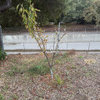
    Does the below rain garden (photo from a few years ago) with absolutely no native plants qualify? I can tell you unequivocally that it sucks up all of the water my neighbor's yard used to dump into the storm drain located just off the bottom of the photo.

    {{gwi:50612}}

    The above was an experiment on my part to address gaping holes in the information I was seeing and hearing. As Nandina so correctly noted, eventually we face "stupid environmental laws passed with little understanding by politicians who want to make problems disappear." It is quite easy for government to pass mandates on to others. Then they can just sit back, collect a fee and tell everyone what they are doing wrong not that anything is actually wrong but it just doesnt conform to their arbitrary interpretation of the rules.

    The driving force behind my experiment was a wonderful eighty year old neighbor with macular degeneration who is legally blind. Other than sight problems, she is still pretty spunky, very active and fiercely independent. She just had her new home built and she loves living there. Let us say that it becomes a requirement to have a rain garden. Does anyone in their right mind think that my neighbor, Elaine, is going to go out and construct one? Lets say that she had one built for her. Does anyone believe she is going to maintain one filled with native plants? With her I mind, I designed the no maintenance rain garden above. It is no accident that I decided to prominently display this rain garden in my front yard.

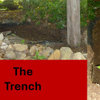
    This water retention problem is exacerbated in more densely populated areas than the Midwest. If society eventually mandates that we infiltrate this water, there simply is not enough undeveloped surface area open to accomplish this in a cost effective manner. Some of us believe the only available ground that could be modified and used are residential lots. (We are talking infiltration not holding areas.) Im not sure society is quite ready to take that step just yet especially if this is what government winds up mandating:

    {{gwi:50613}}

    ****************
    To our friend from Virginia: the link below provides the best information available on the web that I have seen. However, the included "designs" at the back of this little manual unfortunately feature examples of diversity rather than good design. The planting lists are fine but feel free to substitute with what is available in your area.

    IronBelly

  • 20 years ago
    last modified: 11 years ago

    Sorry... They changed the URL. :-(

    IronBelly

  • 20 years ago
    last modified: 11 years ago

    My biggest concern is that these will be claimed as wetlands by conservation commissions in my area. The people who try to do the right thing by having rain gardens might fingd that they have to give up one, two, or three times the square footage of lawn or non-native landscape if they want to have a room or deck expansion on their houses.

    I have actually seen a man made gold fish pond in the center circle of someones driveway change the entire nature of a small residential house fix up because the con-com claimed it was a wetland. We have a lot of elderly folks who retire on Cape Cod and often grow vwery old and can't keep up with maintenance or the expense of hiring somebody. Then the property converts very quickly back to woodland or at least brush. Throw in a wetland and a minor renovation and what is left of their lawn and garden has to be used to create habitat leaving them or their children with a very degraded use of their properties.

  • 20 years ago
    last modified: 11 years ago

    I attended a rain garden seminar put on by of all people URS (Big time Civil Engineering Firm). It was interesting and informative because one of the speakers was an environmentalist naturalist type person (he did have a rain garden at his own home) and the other was a PE. So we heard the tree hugger type stuff and the technical type stuff in regards to rain gardens.

    When Nandina said "townn, city, county and state governing boards hate drainage issues." She left out other groups that hate it even worse: Developers and landowners. I am working on updateing our subdivision regulations and hope to add more teeth to our extremely limited drainage regulations. No one cares what happens to run off as long as it runs off their property. Until we have flooding. Then government gets yelled at for not doing antyhing to prevent it. I am hoping to add Rain Gardens as an option for major subdivisions instead of the big drainage pit/pond. No way would it ever be an enforceable, just an option. We have no building permits. Llimited zoning (this is such a hated word) in 3 of our townships and a very strong property rights feeling amoung our constituants. Ohio is also a strong home rule state.

    I would like to get copies of the manual that Ironbelly linked to have as a hand out. (I well have it next to my stack of Mine Subsidance brochures)

    Again I refer to Nandina: "but anyone building new might consider carving a large, slight depression in the lawn area before it is seeded or sodded and direct storm water to it...if the soil drains well." I think this makes a lot of sense and would be easy to do except that in order to put it in regulations it would have to be backed up by the "experts", have something to hang my hat on so to speak. And that is not going to happen soon. Another drawback to all this touchy feely way of handling drainage is that all my regulations get reviewed by the county engineer who is a great person and I could not function withou him but..he is a highway engieer. 'Nuff said.

  • 20 years ago
    last modified: 11 years ago

    Tibs,

    The highway engineer thing may actually work in your favor. In my locale and throughout the state of Iowa, it is now becoming common practice to require copious amounts (I'm sure there is a spec on this.) of compost to the planted road aprons as part of the bid letting process. I know that they conducted a roadside erosion control study a few years back and found that compost controlled erosion far better than any other method. Now it is quite common to see truck loads of compost being hauled in for the finish grading of road widening projects.

    Of course, the "secret" is that compost acts as a sponge. That same "sponge" is what can dramatically increase the functionality of a rain garden -- the principle is exactly the same.

    IronBelly

  • 20 years ago
    last modified: 11 years ago

    A number of thoughts whirling around in the brain...

    To Laag: My sympathies to the potential problem facing your area re treating rain gardens as wetlands. Several years ago when in your town on a quick visit to meet with an author involved in a project of interest to me I was taken to a public reclamation area for my opinion on a project that had been the subject of intense involvement/dispute as to design and plant material. I quickly realized that the 'crazies' had won the battle totally ignoring the natural effect which could have enhanced 'the behind the dunes' ecology. It would appear that you have a battle on your hands. How a small depression in a yard can be called a wetland is crazy. Word spreads quickly, especially in New England. Property owners will be discouraged from installing rain gardens if wetlands rules control their property use. How sad. It sounds as though the 'crazies' still have the upper hand.

    To tibs: Back when CT. passed it's mandatory rain garden law several LA's there contacted me for my thoughts on rain gardens. Sadly, DH cleaned out our address book one day eliminating their e-mail addresses so I cannot put you in touch with them. Both had been retained by developers on large scale new construction. They had decided that with the land open the best way to handle rain gardens was to slightly slope the land behind a house, creating an entire lawn depressed area in the back yard. This method was working well although they found it necessary, due to the size of the subdivisions to continue shaping the land so that all eventually drained to a retention area(planted with water loving natives) to catch overflow which was designed to drain quickly into a storm sewer during flooding periods. This type of rain garden construction would probably be considered wetlands, but a homeowner was not prevented from building decks or gardens on his property. Tree planting in the rain garden area was encouraged. Also, there is the perennial problem of neighbors wishing to plant hedges/screening between properties for privacy. These would be perfect spots to build rain gardens, long depressions planted with shrubs. Of course, soils that drain well are a must.

  • 20 years ago
    last modified: 11 years ago

    I wasn't aware of the rain-garden trend. But, my new house had dry-wells installed for injecting roof run-off into the subsurface. What would be the advantage of a rain-garden over a dry-well?

    As Laag mentioned, I have seen constructed drainage areas being labelled as "wetlands" on the Cape and around Boston.

  • 20 years ago
    last modified: 11 years ago

    In Arkansas, we don't have state or local regulation of wetlands. Wetlands are controled by the Corp of Engineers. A long time ago I asked an inspector for the Corp if there was a minimum size for wetland consideration. His reply was "No, none. Wetland is wetland, regardless of size."

    Shortly after that I attended a seminar on GIS and remote sensing. It was obvious that by comparing the difference in several light wave returns from satalite imagery, that one could delineate wetlands.

    It occurred to me that it might be possible to develope a computer program to assess and catalog wetlands from satalite imagery. Later data could be compared to earlier data and the program could call attention to areas of wetland loss, maybe down to a 10 ft dia. spot.

    Since then, I have been very careful to not create a wetland where one did not exist unless I was certain that I wanted a wetland forever.

  • 20 years ago
    last modified: 11 years ago

    This is the kind of political activist nonsense that destroys the integrity of good things and important environmental work that really needs to be done. The leftist whackos are no better than the extreme right. Each activist is all too quick to point the finger, declaring loudly how irresponsible "the other guy" is while ignoring personal responsibility and integrity, wrapped in a self-pious cloak of their chosen cause.

    Rain gardens are a wonderfully simple, low-tech, low-cost, effective way for a common person of average ability to address an ever-growing environmental problem. Now, instead of a person being able to feel good about engaging in a project that benefits society, one is forced to look over their shoulder for a potential wetlands lawsuit. Thanks, tree-huggers. You are so helpful. You have one track minds that are often headed in the wrong direction, indifferent to the carnage created in your pursuit of an agenda. Is it any wonder that a majority of Americans (Perhaps not in your given area but a national majority none-the-less.) respond to your shenanigans by firmly believing that less government is better government?

    *****************

    To answer Rhodium's question: The main benefit of a rain garden over a dry well is that it can collect and infiltrate more water from a larger area. The concept was really developed for Joe & Jolene Average to be able to install one with only a shovel, rake and wheel barrow no heavy equipment required. Also, it is generally adaptable to a wider variety of situations.

    IronBelly

  • 20 years ago
    last modified: 11 years ago

    Another benefit is that if there are excess nutrients in the runoff, the plants will use them up rather than having them enter the groundwater and eventually into ponds where they may contribute to eutrophication (algae blooms, reducing light and oxygen,....).

  • 20 years ago
    last modified: 11 years ago

    I don't see how a rain garden can qualify as a wetland because it does not have year around water nor "seasonal standing water". If done properly it is my uinderstanding that the water drains out in as little as 3 hours (so there is no chance for mosquito larva to live). And the soils would not meet the definition of hydric (sp) soils. The list of native plants I have seen for a rain garden are not marginal water edge plants. Am I missing something?

    And the definition of water that the COE is allowed to regulate has just been redefined to the benefit of developers, or to more common sense, depending on what side of the equation you fall. It will be more difficult to say an area is a wetland. And of course I forget the details on this.

  • 20 years ago
    last modified: 11 years ago

    "if done properly"...Isn't that the sticking point? Average Joe usually does not understand the term "well-drained." (But I planted it on a hill!) The problem with mandating anything is that then a whole lot of people are forced to implement something they know very little about. If done properly, rain gardens work to avoid heavy runoff, filter out excess fertilizers and pollutants (oil, etc. and the mulch layer filters out the heavy metals.) If done properly, rain gardens look attractive, not a muddy hole filled with "native" weeds. If done properly...how many things have you seen "done properly?"(especially by government)

  • 20 years ago
    last modified: 11 years ago

    But things can be done and often are done properly...

    You are certainly correct about government involvement having an innate ability to muck things (anything) up. In fact, much of this entire storm water issue has been created and certainly exacerbated by government mandates. Mandatory curb and gutter in suburban residential areas is but one example. Sadly, the old joke about: "Hi... I'm from the government and I'm here to help." is no laughing matter.

    However, just making the government a convenient target for verbal barbs accomplishes little. I have chosen to get involved as far in advance of the regulatory crush as possible. While I can't brandish a civil engineering degree, at least I will be able to bring body of actual experience to the coming discussions. While the federal regulations are currently being phased in, provisions have been included for considerable home-rule decisions on how best to implement solutions.

    Happily, I see some real opportunity to provide cost-effective trade-offs with developers. As an example: instead of requiring developers to bear the expense of curb and gutters, have them instead modify the adjacent areas to accommodate water infiltration. One thing that developers understand is money. Give them a financial incentive that benefits everyone and it is amazing just how reasonable they can be. The key is public pressure on elected officials to endorse these changes.

    I'm sure that Nandina can offer considerable insight into these areas.

    IronBelly

  • 20 years ago
    last modified: 11 years ago

    Yes, but it really takes DESIGN for these to avoid looking like muddy holes. If the builders come on board and the developer comes on board (good luck) but the landscaper is clueless, you have a muddy hole full of dead bushes. I too am trying to get ahead of the curve on this, but am met with slack jaws and questions about mosquitos. Lets see some more good design examples so that people know what proper rain gardens can look like.
    NN

  • 20 years ago
    last modified: 11 years ago

    You are a perceptive person mirroring many of my thoughts.

    The missing element in so much of this is design -- something that I have been espousing for some time. As to the mosquito red herring: If mosquitoes are really their concern, agree that sources of standing water should be actively eliminated. In fact, standing water retained in gutters on the average home produce a lot of mosquitoes. My rain gardens produce none because there is no standing water. I then ask when was the last time they cleaned out the gutters on their house. Recommend they go home and inspect their own gutters because I don't like the mosquitoes THEY are producing.

    Even as a devoted native plant enthusiast, I fear that this push for their "mandatory" inclusion in the construction of a rain garden may well back fire. I agree with the potential for their use. However, we are currently saddled with the unfortunate circumstance that native plant enthusiasts typically know little about design. On the flip side, most landscape designers have little practical experience with native plants. The public is largely left in a Catch-22 situation.

    Lets be honest. The last photo that I offered above is an all too common example of urban native plantings. The sign (nice esthetic touch) did not appear until after a flood of complaints to city hall complaining about the "weeds". As a native plant enthusiast, I find these efforts not only embarrassing but also counterproductive. Interestingly, the photo with the sign uses almost exactly the same plants as I do. The difference is design. Very simply, if you desire the look of eggs benedict, you dont begin by scrambling (code name for diversity) the eggs!

    I can only hope that our discussions and examples in this thread will provide some positive guidance. So far, I feel that I have largely been on a one man campaign. As an example of that campaign, I am including a little essay I wrote. *** This essay was originally intended for my immediate region. When reading, substitute the term, "native plants" when I refer to "prairie plants".

    *********************** Native Plants: Opportunity or Squandered Potential?

    I see a problem with incorporating native prairie plants into the urban environment. Specifically, I would like to address the emerging practice of constructing rain gardens. Typically, the people advocating rain gardens are of tremendous intellect and have a wealth of knowledge about the requirements and nurture of prairie plants and/or the engineering aspects of hydrology. The science is good. However, the major problem that I see with advocates of native prairie plants in an urban setting is that they typically know little to nothing about aesthetic principles of design. The flip side of that equation is that experts in design typically know little to nothing about prairie plants. This is not to condemn these people because every one of us has our own strengths and weaknesses. It is understandable that there is a dearth of knowledgeable people qualified to design with native prairie plants in a residential setting. Yes, I know there are some willing to make such claims. However, when pressed for specifics, I hear more sizzle than steak that I can sink my teeth into.

    I like to draw an analogy of the current state of affairs to that of a business model. Typically you need an entrepreneur with a great idea of tremendous appeal much like Ben Cohen and Jerry Greenfield (Ben & Jerrys Ice Cream). While these guys had a fantastically profitable idea, they soon realized that that they were not the best qualified to stay in the trenches to run and grow this business to its full potential on a day-to-day basis. A number of intellectual prairie plant nerds have recognized for a long time that they were on to something of great potential. However, they lacked both marketing skills and design backgrounds. We currently have a few people trying to sell these plants but their main market is typically limited to large restorations, commercial or municipal projects with only a smattering of us plant geeks. Sometimes the native plant marketers claim to offer, "design packages". In reality, they should more accurately be called "collections". These collections of native plants offer more scientific zeal than they do aesthetic forethought. And this is essentially the crux of the stagnation of prairie designs in urban, residential settings. While the naturalists are sort of correct with their assessment that these plants are beautiful in their own right; they fail to address the nagging issue of public acceptance in a residential setting. Sure, most of us heartily embrace the concept of utilizing native plants but Ummm Ahh Please do it over in your yard; not in mine.

    Rain gardens are the newest venture for the naturalists to flaunt their zeal. Sadly, while they are solid in the technical aspects of this endeavor, they seem to remain oblivious to IronBellys Rule #1 and Rule #2:
    1) They make rain gardening too complicated.
    2) They make rain gardening too much work.
    To add to the problem, they continue as proponents of the shotgun planting approach and adhere to this nonsense that believes everything native and/or natural will automatically be beautiful. It aint working, guys. Your long-proffered advice to plant lots of different species and see what survives may be good advice for a large restoration project requiring diversity but it collapses in an urban residential setting. Once again, most of us heartily embrace the concept of diversity but Ummm Ahh Please do it over in your yard; not in mine.

    Design is the missing element in the urban prairie landscape concept. I suggest that design is the missing element because it has been my observation in typical urban gardens that mundane plants incorporated into a superior design will always outshine fantastic, new introductions planted willy-nilly. Prairie plants that lack the flashy pizzazz of new introductions often look weedy in a residential setting when also planted willy-nilly. Quite simply in an urban setting, design always gives more bang for the buck than any new introduction from a Wayside Garden catalog. Design allows one to artificially exaggerate subtle attributes of prairie plants into a state of heightened glory while still embracing their earthy essence. On the other hand, uncomplimentary combinations can be selectively avoided. The minimal cultural requirements of these plants allot significantly more time to pay attention to design aspects throughout the seasons.

    As with any business model, if you want things to reach their full potential, change becomes an eventual necessity. Astute marketing plays a major role in helping any business reach full potential if any, in fact, does exist. I think enormous opportunity does exist for the expansion of native plants into the urban setting. However, "prairie design", when attempted in an urban environment, needs to begin thinking about taking the next marketing step. It is a marketing reality that "Sizzle Sells the Steak". In this case, I feel the "sizzle" is aesthetic design. God bless the naturalists but it is time begin embracing potential advocates from more than just an intellectual point of view. A fair number of those folks can be recruited through the media of good design.
    Like it or not, at this point in time, the average urban residential setting generally demands a more refined look than that afforded by the open prairie. This does not mean that native plant material cannot or should not be used. Quite the contrary, the aesthetic and cultural qualities afforded by native plants are exactly what is missing from the typical Midwestern garden landscape. The missing catalyst that most potently displays native plants is design.
    I will never forget a lecture that I attended several years ago in Iowa City. The speaker was Lauren Springer, the noted author of the books, Passionate Gardening and The Undaunted Garden, named by the American Horticultural Society as one of the 75 best American gardening books of the century. She is a passionate advocate of utilizing locally indigenous plants. Taking a question from the audience after her lecture, a woman asked her why her yard, planted with all the "right prairie plants", just never looked good something was missing. After all, she did everything the "experts" told her to do.
    Ms. Springers response was insightful. She stated that one of the elements that make a prairie, a prairie, is its vastness. An urban yard is never going to capture the beauty of the prairie because it just isnt big enough. The "missing something" was introducing and accentuating exaggerated highlights of the prairie. In other words, her landscape was lacking in design. Randomly plopping native plants, willy-nilly about the yard just looks bad in the typical, urban residential setting.
    ***************

    IronBelly

  • 20 years ago
    last modified: 11 years ago

    Those who have a strong interest in water quality and the environment might want to check out the real time data on the streams in their area.

    Below are two graphs of one of the many data sets available. The first is from Iowa, the second from a small river in my home county.

    {{gwi:50614}}

    {{gwi:50615}}

    Note the clarity of the water in my local river. Me and the other rednecks watch this river like a hawk.

  • 20 years ago
    last modified: 11 years ago

    AMEN, ironbelly.

  • 20 years ago
    last modified: 11 years ago

    So a small (not vast) remnant of virgin prairie always looks bad....hmmmmm, subjective.

    The time is approaching where what most people think looks good, is not always what should be done.

  • 20 years ago
    last modified: 11 years ago

    I am always curious about people who utter their own words and then attempt to attribute their use to others.

    Up to this point, the only place you will find the phrase, "remnant of virgin prairie" on this thread is in the above posting by Schizac. Perhaps he has become overwhelmed by all of the current political ads as we near election day.

    Other than perhaps a guy from Illinois who posts under the name of Joepyeweed, I have no knowledge of anyone on these many forums who has continued to celebrate our native prairies and plants more than I since the inception of GardenWeb. If you have special design insight into either of these areas, Schizac, please feel free to share them. We are always eager to learn.

    Apparently I have failed to make it clear to all that a rain garden is NOT the same thing as a remnant of virgin prairie. One (the rain garden) takes about a day to construct and the other (virgin prairie) takes many thousands of years to create. And by the way... they look different.

    My politically incorrect apologies...
    IronBelly

  • 20 years ago
    last modified: 11 years ago

    "The time is approaching where what most people think looks good, is not always what should be done." What do you mean by that, precisely?

  • 20 years ago
    last modified: 11 years ago

    Ironbelly, When I used the phrase "remnant of virgin priaire" I was referring to the practice of using native prairie plants as they are seen in nature, not designed. I have visited many very small and very beatiful "prairies", virgin and otherwise. Vastness is indeed grand but is not a requirement for a pleasing landscape using native prairie plants, even if the natural "scrambled egg" look is the model. There are plenty of opportunities to excercise our design skills while using natives as you see them growing in a virgin prairie. You say that the missing element is often design, I agree but not all design paramaters are visual, sometimes not looking like it's been designed is just the thing.

    Ink, there is more to design than appearance. As we use more of the available space for our human endeavors, our landscapes need to multitask, not only meet our everyday needs, aesthetic and otherwise, but all the things they did before, sustain wildlife, keep the water clean, etc. Nothing does this better than a natural system, or as much of a natural system as we can replicate in our landscapes. For example, snags are vital to many animal species, but how many peole think the look good? A natural system is not designed to satisfy (only) our esthetics sensibilities. its "scrambled eggs" but it keeps this big blue ball humming.
    Best...
    schizac

  • 20 years ago
    last modified: 11 years ago

    Schizac,

    Thanks for your thoughtful reply. I have no doubt in your sincerity of passion for native plantings. In fact, you share this trait with me. However, where you and I part company is the method by which we choose to embrace and interpret those plantings in an urban setting.

    I really have no qualms with your position as you have stated it. I have heard this dogma repeated many times before. This speech is quite popular within the "inner circle" of native plant enthusiasts. I am a member of a couple of native plant societies and have contributed articles to their newsletters. I have a tremendous amount of respect for these people; whom I consider many to be friends. Having said that, I also feel that most native plant enthusiasts could better achieve their goals by removing the rose-colored glasses. Virtually all subconsciously translate "native" to automatically mean "beautiful". I must confess that I often find myself internally doing the same thing. However, I try to remain cognizant that I belong to a very small minority. Merely because a cause is just, one cannot expect assurance of success. While society at large may have an incorrect concept of beauty, it is imprudent to casually dismiss these beliefs simply because: "They are wrong."

    Of course, education is the answer. But how does one educate a majority of society in order to modify long-held beliefs? Undoubtedly, success of this magnitude will take time. It is my belief that leading by example is an effective tool. However, getting a bunch of neighbors POed in the process seems counter-productive. Let me give you an example.

    Iowa has been a national leader in converting the ditches of its roadways into native plantings. A seemingly innocuous effort. They started with the interstate highways and have progressed to the smaller state and county roads. Economically, this is a no-brainer for the transportation departments. Ecologically, it is a no-brainer as well. As the storyline goes, Iowa saves many thousands of tax dollars on (now) needless equipment, man-hours and fuel expenses. This practice allows travelers to experience and enjoy the plants and beauty that our forefathers saw when the state was settled. Additional side benefits are gained from erosion control, storm water retention, water infiltration and natural snow fences. What could possibly go wrong with this win/win/win scenario? Well lets crawl out of that little boxful of celebratory "native nerds" and gander at reality for a moment.

    The following are partial quotes lifted from an email I received last week.

    " You may or may not be aware that a concerted effort is being waged to eliminate or severely curtail the Iowa DOTs program to revegetate primary highways with prairie. A campaign has been aimed at applying pressure on the Iowa DOT and some Commissioners. Most of the complaints come from landowners adjacent to revegetation projects along two-lane highways. Possibly some pressure is also being applied through legislators. There seems to be less concern about revegetation projects along four-lane highways or prairie plantings associated with new construction.

    Those opposing the prairie plantings usually cite one or more of the following reasons:
    1) Why kill existing grasses
    2) Money could better be spent on other highway priorities
    3) Projects create weed problems that did not previously exist
    4) NIMBY
    5) Many want to use the roadsides for their own use or benefit (i.e. haying)
    6) Native plants are wild and unruly and potential invaders of adjacent fields
    7) Native plants are of no benefit to wildlife.
    ***********

    Certainly some of the above objections are in error but the threat to curtail this native plant effort is very real. Why? Quite simply because public opinion (aka: education) was ignored. It matters little if "They are wrong." after the program is cancelled by a legislature bending to the pressure of public opinion.

    Unfortunately when dealing with the realities of society, truth takes a back seat to the perception of truth. I have heard, almost verbatim, the same speech Schizac made above by a highly credentialed landscape architect from Chicago brought in to design a local installation. Hey it sounded good! All of us that helped were really enthused and feeling quite self-righteous. A few months time elapsed. After a flood of angry phone calls to city hall complaining about "the weed patch" the entire project was in peril. So I ask what was really accomplished? Yeah, the project survived and it certainly continued to perform all of those unseen benefits, albeit sporting a hastily painted sign featured in the photo above. The question remains: Did we "win" or did the native plant movement cultivate staunch opponents; only to surface later? Did we garner additional advocates?

    As I have often said, it does not matter as much what you do as it does how you do it. At this point in time, compromise seems the best tack. I am all for pushing the envelope but I draw the line at alienating potential advocates (society at-large) to the cause. Can I please everyone? No but I dont have to leave them POed by totally ignoring the conventions of socially acceptable design practices.

    I know that "natural gardening" (whatever that means) is currently all the rage. However, let us not forget that gardening is firmly rooted in a long history of controlling nature. Whether we choose to admit it or not, visually obvious control (often evidenced as intentional acts of care) is a mandate of society at-large.

    IronBelly

  • 20 years ago
    last modified: 11 years ago

    I have to wonder...in a typical suburban setting, such as your neighborhood IronBelly, are rain gardens are even needed? Sure there is the water from rooftops and there is bound to be a certain amount of paved surfaces, but there seems like there is still a lot of open ground that could be used to soak up rain water and prevent run off. I would rather see an approach where the entire landscape was used to control runoff. The literature that I have seen regarding rain gardens seems to suggest that a 15 sq ft garden is somehow supposed to right the situation.

    If builders did not remove the good topsoil and replace it with muck, that would be a good start. Lawns are not completely evil but all the people that haul clipping to the curb every week and then douse their lawn with chemical fertilizers, pesticides and herbicides sure give lawns a bad name. I know IB has commented before about how a well composted lawn does a lot to prevent run off.

    I am not one of those "organic soil wackos" (though maybe I am developing into one) but it sure seems like a common sense approach to soil management can go a long ways toward maintaining the health of your landscape and the surrounding environment.

    - Brent

  • 20 years ago
    last modified: 11 years ago

    Ironbelly, unfortunately everything you say is so very true, I'm not blind to it. However, I feel the status quo is unsustainable, and that is why I posted my thoughts in the first place. I know you are a highly respected native plant enthusiast here, but it sounded a little like you were giving in or giving up. You and I know very few people want this change, but we also know they will come to find they need it, for all the very resons you stated above. Nothing good is easy or happens overnight.

    Sounds like negative experiences and circumstances have beaten you down a little. Who knows, perhaps the same will happen to me, I have certainly had similar frustrations. Fortunately I have had some successful results along with the dissent. I find that starting small helps ensure success, lets continue increasing our small minority.

    Now, back to rain gardens, sorry for the detour.
    Best
    schizac

  • 20 years ago
    last modified: 11 years ago

    Why do so many native plant enthusiasts seem to believe that it is an all or nothing proposition?

    I think that the crusader attitude is what really puts people off. I run into it all of the time. We all understand that non-native invasives (not an imigration reference) are a very bad thing that displace native plants that feed and shelter native wildlife. We all know that if everyone is doing the Scotts Four Step program, that that excess nutrints eventually find there way to surface water and cause algae blooms not to mention possible contamination by pesticides (I know of the threat, but not of any specific cases from pesticide applications in my area). We all know that biodiversity and preservation of species are both culturally important and important for not completely changing habitat. The problem is that so many people who are inspired to recultivate to the precolumbian ecosystem of North America do so with what seems to be an total unacceptance of any other cultural value and in a manner which suggests that everything else needs to be abolished and ceased with right away and forever. Once everyone else is "educated" with the the only values that are acceptable, the world will survive because it won't otherwise.

    The reality is that most people celebrate diversity. I mean that most people get a great deal of enjoyment when they see a beautiful garden of exotic plants, and when they see a deep green well maintained soccer field with 20 groups of elementary school kids playing on it, and when they go to an old estate with formal gardens, and when they drive down the road and see a cottage garden here, a woodland there, and sometimes a perfect lawn there, acreages of big trees across town, and a pasture with horses and fences, and swampy wetlands. When someone suggests that everything that is not native is wrong it tells the majority of people that they are not ony wrong for liking them, but suggests that they are stupid at the least and just plain bad if stupidity is not the excuse.

    It does not get you many friends when it is implied that they are either uneducated, stupid, or bad. It does not help to tell them that you want to take away things that they enjoy. The movement loses further momentum when they do highly visible projects that are publicly funded that take away things that people either enjoyed or were used to and replace them with aesthetically scruffy jumbles of weedy looking plantings and thickets while getting lots of press time telling everyone what a great project that it is and how the dumb mean people of the world should be so progressive as themselves.

    Others who love native plants show their enthusiasm through their own cultivation of them and developing good uses of them through function and aesthetics. Their work gets noticed and appreciated. That builds interest because other people see something that is enjoyable and interesting - a cultural interest in its own right. How can you beat that?

    Most interest in plants, gardening, and landscaping comes from the plants or their composition being noticed and appreciated. Then the people who work with them are sought out by those interested. There is a loud vocal population of people interested in native plants who feel that they need to get attention in order to tell people that they need to be interested and appreciate native plants rather than actually doing interesting things with them that attract interest.

    I think that, the gentleman from Iowa (I already previewed my message, so I can't double check his name although I'm almost positive I know it) is trying to do the latter. Not everyone is going to like it and want to emulate it, but some love it and are inspired. That is a great thing - people getting into something not out of guilt or to feel like a leader in saving the world from bad stupid people, but because they like it.

    All of these values can coexist when people use their heads and weigh values. Sometimes you need to give up a little lawn or garden in order to be a good steward of the land, wildlife, and water. Other times you have to understand that when it is not directly causing harm, a nice lawn is not a sin. When Eartha Krunchy moves in next door and rips up her lawn to plant a rag tag group of perennials that she calls a cottage garden, it is just another set of values and some variety added to the community unless she lets noxious weeds grow because they have pretty flowers.

    None of us is doing "the right thing". What we all need to do is to understand when we are doing the wrong thing. When we plant things that take over the countryside we are making a mistake. When we are in circumstances that create excess nutrients going into the water we are doing wrong. When we take away things that are culturally and aesthetically valued that are not on their own harmful, we are doing wrong. Pay attention to other values. Understand them as much as you can. Then weigh them in your endeavors and apply them in a logical manner.

    Some of all of it is good. That is a fact.

  • 20 years ago
    last modified: 11 years ago

    In response to Brents query; " I have to wonder...in a typical suburban setting, such as your neighborhood IronBelly, are rain gardens are even needed?" I can give you a qualified, "Yes" but it is only a start, not a solution to the increasing problem of storm water.

    Nandina has a lot more experience than I when dealing with issues on a municipal scale. Personal residences alone will not cure the problems. (Im sure Nandina can back me up on that one.) The storm runoff from the streets, parking lots and commercial buildings dwarfs the amount from residences. However, every little bit that I divert does not have to be handled by my local municipality it all adds up. Particularly now with the implementation of "rain taxes", there is the possibility of financial savings with an abatement but dont count on it.

    Setting everything else aside, I personally feel it is the socially responsible, right thing to do. I did the calculations and on my very average-sized lot, hard surfaces created 2,500 gallons of stormwater for every one inch of rainfall. In my case, I was in the process of building a new house and I really had no excuse not to do it. It started out as an experiment. I had read about them and my interest was piqued. I considered what the experts were saying and decided to put them to the test. Most of it sounded quite feasible but I had reservations about some of the advice. If it came to a later debate, I knew that the voice of experience was much stronger than their, "All you gotta do" If there is one thing I have learned over the years, "All you gotta do" is NEVER all you gotta do.

    As an aside: I was leading a rain garden workshop at my home a year ago during our drought. It had not rained in over six weeks and the ground was parched with huge cracks displaying the extreme dryness. Prior to starting time while waiting for the students to arrive, I was giving a tour of my gardens to my co-instructor. Serendipitously, it started to rain. It rained a total of a measly one tenth of an inch. The desiccated ground just sucked it up. However, in spite of the dire need of rain water, we took special note that water was running from the roofs, down the driveways, into to the street gutters and down the storm drain. YIKES! Everybody was complaining about no rain. When it finally did come, here we were immediately disposing of it! Does that make any sense? Cant we, as a society, do better than that?

    IronBelly
    *** I'll respond to the others shortly.

  • 20 years ago
    last modified: 11 years ago

    No need to apologize for any detour, Schizac. In fact, these are all very real, closely-related issues that you have broached and opened for discussion. I think it is high time this entire can of worms is exposed to the light of day. Laags above rant is well-founded. "Why do so many native plant enthusiasts seem to believe that it is an all or nothing proposition?" I can only offer a favorite quote of mine that applies to many of the "Native-Nazis" (a term used somewhat tongue-in-cheek): "There is no zeal like that of a fresh convert."

    I do not wish to disparage any group in particular. I believe most groups, be they ecological or whatever, have wholesome, well-intentioned core values. However, problems can evolve when this enclave stops interacting with the population-at-large and assumes the role of an internal support group a closed society, as it were. When issues arise that prompts them into interactions with a public they have largely had no contact with, tremendous misunderstanding can arise. Too many times, stereotypes and personal slurs, steeped in impatient intolerance are used by both sides.

    I have not been beaten down by negative experiences, Shizac. Rather, I like to think that I am positioning myself to creditably tell both sides, "Your king is wearing no clothes." Lets stop shouting our chosen "position" ad nauseam and instead explore how we can best accomplish mutual goals that too often get lost in the rhetoric.

    Rain gardens work I can prove it and have. Native plants have the potential to provide great beauty and other additional benefits unequaled by most other plants. However, used improperly in urban settings, native plants can easily assume a weed patch image. There is nothing wrong with combining native plants with cultivated ornamental plants in rain gardens. In fact, there is nothing wrong with not planting anything in a rain garden I can prove it and have.

    Now if I could just get the rest of the world to agree with me and do things my way, everything would be fine! That is all you gotta do. ;-)

    IronBelly

  • 20 years ago
    last modified: 11 years ago

    ironbelly,
    Please enlightment me...what are rain taxes? I now live in redneck country which tends to dismiss most things governmental. I was stunned to learn last week that this county where we now live has no laws in place that allow the county building dept. to issue 'stop work orders' for faulty construction!

    Let me pick up on a few ideas discussed above. It seems as though all information on rain gardens concludes with the idea that only native plants should be planted in them. Hogwash!

    Within each growing zone there are marvelous native wild flowers. The problem is in using them in natural plantings. As Julia Toll says in an article on "Wildflower Meadows"..."it is important that it isn't just a patch gone to waste". But, please do not have the 'crusader attitude' that makes me feel guilty because I would rather plant some of the choice selections hybridized from the natives. They will grow equally as well in a rain garden.

    Municipal drainage is a complex, costly issue which simmers on the back burner until a 100 year storm comes along. Even when a community devotes due diligence and dollars to hiring the best civil engineers, planning and building for managed storm water there can still be problems. It is impossible to anticipate 'acts of God'. Each little homeowner rain garden is a tiny contribution to controlling water run off. As you kown, IB, I have followed your rain garden experiment, carved into the midwest suburban farmland with interest. Hopefully there are others reading this who feel a 'social responsibility' and will consider installing a rain garden.

  • 20 years ago
    last modified: 11 years ago

    When I worked in FL as an environmental scientist, I managed a project that compared "turf" yards and plots to "native landscapes" under the auspices of the University of Florida and the Florida Yards and Neighborhoods Program.

    Presumably, as the native plants were nursery grown (i.e. pre-fertilized), the specially design plots (sloped and hydrologically isolated to catch run-off and leachate) resulted in significantly higher nutrient leachate than did the turf which was managed by the University researchers using BMP (i.e. slow release fertilizer and minimal irrigation).

    As the landscapes evolved over a couple years, the native plots required less water (important in SW Florida), but from a mass balance perspective the natives would have been hard pressed to equal out the huge nutrient spike produced during establishment as compared to leachate resulting from the turf plots.

    The theory going in was that the native plots would perform better than turf. However, the bottom line was that properly managed turf was a good option for protecting water quality (eutrophication).

    see-Erickson, J. E., J. L. Cisar, J. L. Volin, and G. H. Snyder. 2001. Comparing nitrogen runoff and leaching between newly established St. Augustinegrass turf and an alternative residential landscape. Crop Sci. 41:1889-1895

    Cisar, J. C., and G. H. Snyder. 2002. Documenting the A Florida Yards and Neighborhoods Program @ for reducing nitrogen (N) leaching and runoff from urban landscapes. TPI Turf News 26(3):45-53

  • 20 years ago
    last modified: 11 years ago

    What a lovely "rant" laag, Eartha Krunchy!!! :) and great discussions all.

    We're experiencing a substantial (and timely for this discussion) flood event here in the PNW, probably too much for rain gardens to mitigate, but it makes you wonder.....

  • 20 years ago
    last modified: 11 years ago

    All that said, why can't we just call them retention swales and basins? When does a drainage swale become a rain garden? Outside of this forum, I never heard the term rain garden used until I started working closer to home. I have been designing them using the term "drainage basin" for a few years. I skipped over threads on rain gardens thinking they were a new age perennial garden or some other fad that did not interest me.

    Then two months ago in my first week on the job I was working on a redevelopment plan with about an 80% lot coverage of building and pavement. In the little unpaved bits and pieces around the parking lot I see the labels "rain garden". The towns in this area have picked up the term and want them everywhere and anywhere. The funny thing is that I don't see any reference to retention swales or retention basins in the earlier regs. I guess they just don't work until you call them "rain gardens". A rose by any other name might not really smell that sweet, I guess.

    The good news is that they are proactive with the retention swales/basins. The bad news is that they want to over do a good thing in some cases. There are times when circumstances make these problematic. Converting every parking island into a ditch is going to get some people hurt and damage a few cars. There are some places that you just know are going to become garbage recepticles as well. This is where discrestion and weighing values and options pays off for everyone.

    I like the idea and I am all for using them whether with native plants, ornamentals, a combination, or just plain grass. One thing that gets overlooked a lot about grass is that when nitrogen is around, it devours it (hence the reason why so many people keep dumping more and more fertilizer on it). It then should make sense that unfertilized grass is probably much better than plants with low demand for nitrogen. Thinking about it further, what offers a more complete homogenous root system for taking up these nutrients before the slip by into the ground water? My friend Eartha might just find that turf can be her friend just as easily as it is her enemy.

    I'm learning a lot from this and the other threads and it is great to learn from a very diverse group. I hope others have gained some ideas on the subject as well.

    These are beneficial and cost a lot less than a catch basin and leach pit. Lots more good stuff to come, I'm sure.

  • 20 years ago
    last modified: 11 years ago

    Laag,

    The term "rain garden" is simply put: A clever marketing tool proving the old sales cliché, You sell the sizzle, not the steak.

    Lets face it. How many homeowners are likely to stroll into a landscape designer/architects office and say, "I want one of them thar water drainage basins for my back yard. And while youre at it throw in one of those water-soaken-in ditches too!"

    The above conversation is not likely to happen. However, insert the term "rain garden" and suddenly the public envisions butterflies flitting about, puppy dogs, young children playing hop-scotch and Julie Andrews music playing softly in the background. I have to give the original wordsmith credit. It is an outstanding marketing tool addressing a problem that is not too far removed from sanitary water treatment another term developed to soften the impact of the word, sewage.

    As to your concerns about parking lots: I have seen some wonderful examples that pose no additional driving hazards. Locally, we have a small, private university leading the pack with some quite innovative solutions. The typical little islands scattered about so many of the new parking lots are excavated deeply and backfilled with large stones of indigenous limestone. This limestone theme is repeated throughout the nearby campus planting areas and it looks quite attractive. One does not even realize that the stone filling in the parking island is functional. It merely seems like part of the landscaping. When the new parking lot was built, the paving was sloped towards these islands where a curb cut had also been made to allow the storm water to enter. Certainly that problematic first flush of water (containing most of the oil and other pollutants) enters the islands. These detention areas can then begin a natural process of consuming the pollutants rather than discharging it into storm drains and streams.

    Harkening back to Shizacs comments about the current flooding in the Seattle area: The goal of rain gardens, as well as the above-mentioned parking lot is not to capture ALL of the storm water. In the event of extremely heavy rains, excess water will flow into the municipal storm drains but not nearly as much as before.

    The feasible goal of most of these installations is to handle only around eighty percent (not all) of the rain that falls. However, that figure deserves further explanation. It may vary according to your region but for my area, eighty percent (or more) of the rainfall events are of two inches or less. I want to say a five inch rain is projected to be a 100 year event and an eleven inch rain is projected as a 200 year event. Theoretically, if I get a three inch rain (depending upon the amount of time it takes to fall) two inches will be captured by my rain garden and the extra one inch will overflow into the storm drain. Of course, there are a tremendous amount of variables affecting performance. A slow, steady, all-day-long, four inch drizzle may entirely soak in.

    The point is, as homeowners, we can provide a first line buffer. In the case of 80% (or more) of the rains, we can actually capture almost all of the runoff that our hard surfaces generate. In heavy downpours, we discharge only a fraction of the normal runoff.

    IronBelly

  • 20 years ago
    last modified: 11 years ago

    Here are photos of a couple parking lot examples.

    This first one is taken at St. Ambrose University in Davenport, Iowa. Although it does not contain the larger limestone I refered to above, it cleverly makes use of stone ballast from a roof repair job that was currently being done to one of their buildings on campus. Rather than just disposing of the "waste stone" being removed during reroofing, they made use of it in their water retention efforts. In the process, they saved money on disposal fees and also the cost of bringing in additional materials.

    {{gwi:50616}}

    The second example is taken in a parking lot of a museum north of San Franscisco. The design is much simpler and I had to do a double-take to realize that this was actually a water infiltration element designed into the parking lot. I think the grasses are something like Stipa tenuissima but Prairie Dropseed (Sporobolus heterolepis) would give the same look and perhaps be hardier.

    {{gwi:50617}}

    ******************************

    To answer Nandina:

    "Rain Tax" is a term that makes local politicians cringe. Due to the new federal legislation that is being phased in, local municipalities are being (or soon will be) held responsible to reduce the storm water discharge into our waterways. Not willing to provide any monies for these efforts, the federal government is allowing local municipalities to figure out what to do, how to do it and how to pay for it. It is all pretty nonspecific but the bottom line is that the budget-constrained cities are going to be forced to spend aditional funds to meet compliance.

    One of the smarmy ways for them secure these funds is to "avoid raising taxes"; which often requires voter approval (not likely) and just call it something else. In this case, they call it a "user fee". Fees can be implimented soley by the approval of city councils -- a much easier task than convincing a bunch of voters. Additionally, with a "fee" you can charge EVERYBODY, including tax-exempt bodies like churches and schools. (Can you hear the howling?)

    This fee is usually calculated by figuring a hard surface area for the average home and standardizing a monthly fee -- often collected with your municipal sewer and water bill. Commercial property fees are usually calculated on an actual hard surface area basis. Although it is called a "fee" being forced onto property owners to pay for federally mandated improvements, Joe Average sees this as just another form of taxation.

    Although "fee" and "tax" are thought by many to be synonyms, they are legally quite different. The main difference being that the "fee" generates a lot more revenue for the cities. Some cities have quietly implimented these provisions and other cities have fought prolonged, angry battles. "Rain Tax" is the preferred term of those opposed to storm water retention fees.

    IronBelly

  • 20 years ago
    last modified: 11 years ago

    We have a watershed district that is trying to asess all properties in its 16 county area for storm drainage. Comes out to $12 a year for residence, and increments higher for commercial users. It has gotten really ugly. Death threats to the director and engineer, nasty public meetings, etc. The money would be used to match the local share of COE improvements to one of their dams (in the top ten of COE's must fix list),anything that would help prevent flooding and clean up the waters of the district. Unfortunately the district has a lot of past issues and baggage that causes locals to be distrustful, plus they see it as taxation without representation. Storm drainage wars are going to be nasty. I think the feds are going to have to put their money where there laws are and have another big program like the old EPA Construction Grants for Wastewater.

  • 20 years ago
    last modified: 11 years ago

    The whole concept of "Rain Gardens" or water retention appears to be coming full circle these days. In the past, this water collection would have been put to much higher use, typically being collected into a cistern for reuse as drinking water for household use. This is especially important in those parts of the country such as the American southwest, where rainfall is limited in quantity and seasonally, while drinkable water is needed year round.

    I would really like to see a concerted effort to mandate collection of runoff water for reuse, not just recharging the local water table and minimizing downstream runoff. At the very least, it could save the need for additional water storage capacity, when new dams are so controversial, as well as typically adversely impacting fisheries. It would seem a nobrainer that saving and storing rainwater from roofs and at least using it for landscape irrigation would be a very positive thing all around.

    In my own case and garden, I prefer to pipe my drainwater from the roof into dry sumps that diffuse the water into the water table. I have also designed roof drain lines to be solid the first 10 to 15 feet from the house, and then revert to porose pipe covered with filter fabric, to act as a sort of reverse french drain to filter water into the ground, rather than take it away off site. It has worked well for me, and does not require creating a nuisance depression that takes up valuable space in a small garden area, that can't be used for much else. I would suggest that this makes more sense in tight space gardens such as most of urban California, especially when retrofitted into an already developed urban fabric, which doesn't have the space for large retention basins and channels. All of this was formerly accomodated within tidal marshes and estuaries, which are almost completely eliminated in extent in modern American cities.

    I also think the southwest model of rain gardens as practiced in Arizona makes alot of sense. Simply contouring the slopes to allow rapid monsoon rains to have a chance to soak in, rather than immediately run off. This can be as simple as creating furrows across a sloping lot to slow down runoff, without immediately being perceived as utilitarian or disruptive. It is more akin to rain harvesting than a rain garden, and usually results in better growth of plants because it increases soil moisture.

  • 20 years ago
    last modified: 11 years ago

    Different areas have different concerns. In my area we get our drinking water from our groundwater, so when we recharge the groundwater we are in fact reusing it. We have one heck of a water lense under this sand bar. The big issue here is to keep nutrients out of coastal ponds, so retention ponds (or rain gardens) are very good for that.

    But, the real problem here is private septic systems. It is much easier as a politician to make a big fuss about inland lawns than proposing big budget sewer systems in the dense water front home neighborhoods. They do push for denitrification near wetlands and in "coastal pond overlay districts" where the ground water is migrating toward the nutrient infested coastal ponds when expansion is proposed.

    Every bit helps, but it always seems to be the easy little things that other people can do that the politicians want to make into big issues to take the heat off of the issues that cause confrontations with wealthy constituants and won't have visible benefit while they are in office.