Software
Houzz Logo Print
nandina_gw

Potpourri

19 years ago

It seems to me that every once in awhile we ought to take time out and have a thread of 'random thoughts' related to landscaping.

I awoke this morning thinking about a question asked of me yesterday, "Why doesn't someone write a book titled Landscaping Made Simple?" As I thought about the subject, outlining chapter titles in my mind, the concept went from 'simple' to 'complicated. Although, I did settle on the title of Chapter One...First Step, Buy An Attractive Property.

An alert that the Arnold Arboretum has just put all the past issues of its magazine, "Arnoldia", on line. I can't seem to link it in here today but Eric will probably be able to find and post it. This is a treasure trove of landscape, garden history and gardening articles which everyone should bookmark and read in idle moments.

I have just finished reading a new book, GARDENING BY THE SHORE written by Houghton Mifflin's garden editor, Frances Tenenbaum. Those of you dealing with the elements of seaside gardening around the country should find some helpful landscaping tips in this book.

So...any other random landscaping thoughts out there?

Comments (20)

  • 19 years ago

    "Why doesn't someone write a book titled Landscaping Made Simple?"

    They have, sort of.

    An online guide with the same theme.

    I see an index for Arnoldia online, but just a note on the arboretum website that actual articles will be available "soon".

  • 19 years ago

    Now here is a thread to compliment Burntplants' quest to find books on the thread "Really Good Design and Theory Books". It is this kind of thread where so many "camouflaged" tidbits begin to filter in and great books may receive mention.

    Of late, I have not been able to enjoy and/or devote time to a book. However, it just amazes me the power of the Internet that off-the-cuff, random remarks (that heretofore would have quickly vanished into the ether) can now be explored and expanded upon. This thread is but one example. Another recent example was the thread, "Hardscape: Static vs. Non-static," initiated solely from a chance remark by designer, Craig Bergman, at a somewhat obscure symposium. Hopefully, many who visit this forum are now relishing routine mental snacks from artist, Robert Genn, courtesy of a singular, random remark from "The Inkster".

    As I sit gazing out my office window at the western prairie wind choreographing my native grasses, I wonder how to open the eyes of those who only seek only lurid colors of botanical sex organs. Why Little Bluestem remains a horticultural oddity is beyond me! I cringe when I see threads on other forums such as: "What is your longest blooming plant?" Â as if that were the secret to design success. How can one really share the meat of design concepts? Taking the "Tom Cruise approach" by jumping up and down on OprahÂs couch probably wonÂt work. (She hasnÂt invited me yet, either.)

    IronBelly

  • 19 years ago

    Some where I recall reading an opinion on the "gardening made simple" trend and the author's take was that gardening should not be simple. This is a hobby and if you try to take all the challenge out if it then you also take out a lot of the fun. What fun would bowling be if you could roll a 300 in your first year (well...there is still the beer drinking part) or golf or knitting or wood working or skiing or whatever if there were no challenges.

    I have to say that I agree...at least to some extent. There is a lot of knowledge required just to plant and maintain a garden, let alone design an entire garden. But that is a large part of what I love about gardening. Every year I add to my gardening knowledge and every year I try out different things and every year I have this false hope that next year will be the one where my gardens will finally come together. I don't really want my garden to be "finished".

    - Brent

  • 19 years ago

    Heightened powers of observation of the world around me is the biggest gift gardening has given me. That and cleaner cooler air to breathe.

  • 19 years ago

    I don't buy landscaping or gardening books anymore because they seem to be the same old same old warmed over. What I found valuable in the thread IB started (static vs non-static) was the picture of the grass and statue half covered in snow. You must excuse British authors for not considering how a garden looks when covered in snow as this is rare in the UK. But if you live in a part of the world that has regular snow cover for a significant period in a year then it seems important to design around this rather than deny it. When you pick up a book that majors on flowers both in text and those sumptuous photographs and not one like IB's it can lead to peony envy. I would like to see a book devoted to what most see as the off season.

  • 19 years ago

    Eric,
    I still can't link the Arnoldia magazine site to this one. But the link has been posted on the current first page of the New England Forum under a thread titled "Arnoldia". As I said above, this is a useful site to bookmark.

  • 19 years ago

    Nandina,
    Just for you. kt

    Here is a link that might be useful: Past Issues of Arnoldia

  • 19 years ago

    Speaking as someone who's grown little bluestem in a garden setting, I can empathize with IronBelly's frustration with those who focus on "lurid colors of botanical sex organs". For a Quad City Iowan, this must be like craving one of those exquisitely cooked gourmet micro-dinners that are so hard to find locally, while the masses with uneducated palates head to those family-style restaurants in the Amana Colonies to load up on "comfort food". :)

    As for me, I'm in the earliest stages of stoking up my annual craving for flash and Vulgarity, subtropical style. And the catalogs are arriving (!)

  • 19 years ago

    Ink, I totally agree with you that a design book dedicated to the off-season appearance would be a refreshing thing. I personally feel a degree of relief when things are at their calmest in the garden, either covered with snow (as they were, unbelievably, here last week) or when the fall/spring clean-up is done and the spring growth hasn't started in earnest yet. Yes, I think I did get the clean-up all done that early one year.

    On another note, I also find the practical drudgery and functional aspects of landscaping of interest; I specialize anyway in looking for the ugly underbelly of the things most people consider "good" or "nice." I had an opportunity to consider one of those earlier this month.

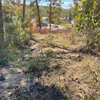
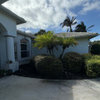
    Some of you may remember that I posted some photos of my patio when we were making it last year, and that many people didn't like it much, Ink commenting particularly that we'd used too many different materials. Well, here's why we did that. The area the patio was to cover included the sewer cleanout, something we have to access regularly as we have willow trees that find ways of getting their roots into the sewer line. We had a previously-built box around the clean-out, but our so-called Roman pavers didn't lend themselves to any logical way of covering the box (unless we'd kept the lid on the box, but we didn't feel like sinking the box further), so we used some bigger slabs that we had on hand. That left us with a little space that happened to perfectly fit some Holland pavers that we had lying around, and which serve the additional function of being easy to pry out and allowing us a space from which to pry up the big slabs. I don't have a photo of the three slabs in place, but you can conjure up the idea from the two photos I have, one of which I took last month when it was time for the annual ritual of routing out the sewer.

    Finding a way of solving this mundane functional problem was an integral part of designing our patio, however much aesthetics drove most of the design process.

    {{gwi:53902}}

    This photo shows just the leading edge of the first big slab and the Holland pavers that are easy to pry out to allow access to the box.

    {{gwi:41290}}

    Hey, you asked for random thoughts!

    KarinL

  • 19 years ago

    Returning to the Winter garden theme/design...

    After living through several bleak grey overcast, and down-right depressing New England winters I longed for a way to hasten the arrival of Spring and a return to a brighter outlook. As I was getting started into gardening and horticultural appreciation, the very first thing I planted were crocus. Seeing them bravely thwart winter's greyness with their yellows and purples made me feel happy. These little bulbs were the nucleus for my interest in gardening and eventually landscape design. I never frequented this forum until last year, but I am glad that I do, as I have learned much. I have read all of the typical big box store landscaping books that have a few dribs and drabs on design, but to read (most) of these posts is nearest experience that I will have with anyone that shares my interests.

    The most influential and moving GW post that I read was designing/planning four season/winter gardens.

    Here is a link that might be useful: Your aging and Winter Gardens

  • 19 years ago

    My random thought: The difference in front-yard and back-yard gardening.

    Front-yard gardening: usually seen by the public in a drive-by. Most gardeners don't like their backside exposed to the public. Most gardeners feel like a zoo animal if they try to relax in their front yard. Most front-yard gardens are "2-D." Rarely walked through, mostly seen like you would a picture, from the outside.

    Back yard: Few people see the back yard except friends. More of a refuge. A place where the gardening can piddle around on hands and knees without nervous looks over the shoulder. Experienced from the inside (3-D) not as a picture. A better place for wide strolling paths, benches, little plants meant to be viewed close up.

    When I moved to my current country home, I was in the city mindset for a long time. I kept trying to make a drive-by view, which was kind of difficult because we have a substantial visual barrier in the form of many, large windbreak trees and shrubs. Also, living on a low-traffic gravel road, about the only people who pass by the yard are the paper deliverers, the mailperson and the guy who fills the kerosene tank. Finally realized my entire yard is a "backyard."

  • 19 years ago

    Another fragrance to throw in the mix. I offered my services as a bicycle consultant recently but nobody took me up on it. Now see if you can't find a connection between this and frequently asked questions on this forum :-
    "Numerous consumer surveys have shown that one of the most important factors in the buying decision is . . . colour. That's right, not price, not technical sophistication, not warranty, but colour. While not wishing to downplay the importance of colour (our publisher still talks disparagingly about the yellow tandem I once proposed buying...), I would suggest that there are a number of other equally important factors to be considered when deciding upon a new bike.
    When I go shopping for anything, one of the ways I weed out the good sales people from the bad is whether or not they ask me "what do you intend to use the computer/running shoes/bike for?". You should be asking yourself this question before making any decisions about what to buy. Are you going to be using the bike primarily for commuting? For recreational rides in the park? Fitness training, with a goal towards possibly racing? This question should come even before price (I know, sacrilege). Think about it: would you prefer to get a great deal on a piece of equipment that is absolutely useless for your purposes, or spend a little more and get something that you will get considerable use out of?" Bike Review Canada.

  • 19 years ago

    You know, ink may be onto something there.

    I would add that any bicycle path through the garden needs to be wide enough to accomodate side-by-side bikers and even stray pedestrians. Pea gravel would be absolutely verboten.

    And I like the idea of a fragrant bicycle, especially for those long journeys.

  • 19 years ago

    There is no might or maybe about it eric, Timber Press have already been on the 'phone, they didn't call me but I am sure they called someone. When my son was six or seven we spent a long week-end with some friends in a house near Bournemouth, they had a huge sloping lawn with the traditional English border around the perimeter. My son took a little bike that he couldn't ride to the top of the slope and careened down the grassy slope. Either grass or Dahlia's broke his fall. He returned to the top of the slope and did it again, it was a bit like watching a bird building a nest. By the end of the week-end he had learned how to ride, he had also re-designed the flower borders. I should have started on the book at that point "Re-design your garden by bike" perhaps I should start now. It was a red bike BTW and the Dahlia were yellow mostly.

  • 19 years ago

    Color has the psychological impact to melt even the most cynical heart and bring cheer to people... critical design principles.

  • 19 years ago

    Winter Interest...I have learned that this is a regional thing. I grew up in Michigan where you might not see the ground between Thanksgiving and March. Here in Virginia the perennials die back over a two month period and my lawn will be brown and visible through most of the winter. Just as the winter strategies that work in California and Flordia do not work here, the strategies for zone 5 don't work either.

    Soil...Some where I acquired the knowledge that as a gardener I cannot actually grow plants. All I can do is create an environment where plants can grow. A lot of this starts with the soil. When I started focusing on my soil and stopped killing off all the beneficials with chemicals I saw a dramatic increase in the health of my plants. This also involves recognizing the properties of the soil that I have (mostly slow draining clay) and focusing on plants that enjoy (or at least tolerate) my soil.

    - Brent

  • 19 years ago

    Front yard/back yard design:

    I guess when I got really serious about gardening, I decided that I DO NOT CARE what the neighbors think. I get just as dirty in the front yard as the back yard. I adopt the gardeners' signature "bottoms up" posture without regard to casual drivers-by. (It helps that several of my neighbors are gardeners, too - no funny looks from others who regularly go throught the same humorous posture changes to weed/prune/mulch/etc., just as I do.)

    So, in a sense my whole yard is as relaxed and refuge-like as my back yard. I act that way, and as I have learned more I've consciously designed it that way.

    I could never survive in a neighborhood with a committee to arbitrate "good taste" and dictate certain design restrictions to the residents. I just would not choose to live there. By the same token, I'm too much of a control freak to want someone else to design and install any part of "MY GARDEN," unless I had some really knotty hardscape problem that called for professional know-how and equipment.

    But it doesn't necessarily follow that someone who seeks professional garden design and installation services is not a "serious" gardener. A knowledgeable gardener might need help with any number of factors outside their area of expertise or interest. They may need something done in a time frame unreasonable (or impossible) for a single person or couple to accomplish. They may want fresh ideas from another perspective, or they may be moving to a climate they are unfamiliar with. It must be a balancing act for landscape design professionals to juggle their own experience and ideas with those of a client-gardener with their own well-defined ideas and areas of interest. I'll bet designing for and with an avid gardener is much harder than designing for someone with little or no garden experience and the simple desire for an attractive, easily maintainable landscape.

    Laurel

  • 19 years ago

    laurel, check out the "journey more than the destination" thread......your comment is quite appropos :-) I'd not say that designing for an avid gardener is necessarily harder than it is for a non-gardening client. It does tend to be more complicated by virtue of the degree of collaboration involved and often the more detailed scope of the requirements, therefore often more time-consuming. But many non-gardeners can have a rather irrational collection of likes and dislikes and requirements that have little basis in reality. And IME, they more often have extremely unrealistic budgets to accomplish these requirements, not being familiar with the costs involved ("$250 for a tree - are you nuts?!?"). Both sets offer their own challenges to the designer :-)

  • 19 years ago

    Thanks, gardengal - I just read the "journey" thread, before I read your comment. I guess I'm more of a "journey" person than a "destination" person, at least when it comes to gardening.

    You're right about unrealistic expectations re: cost. I'm no pro, but I have taken on the landscaping responsibility for our church (which has a large facility and property, being an old school building which has been added on to twice now). The cost of even "simple" things can be quite surprising, both to me as a landscaping novice, and to others involved in the planning or the money aspects of the landscaping. Fortunately there are many people who work in other building trades who help with the church facilities management and have some expertise with contractors and budgets, and a serious appreciation of trying to do a project right the FIRST time. They're often more realistic about what good work costs than I am, since I'm learning on the fly.

    A couple years ago, the arts committee in our church was interested in designing a special meditation garden for our pastors. They put a lot of thought into the plan, and had some lovely ideas. But to implement the plan would have cost well upwards of $20,000, I'm sure, between the scale of the project, the hardscape involved, the accents, tables, benches, and a fountain, not to mention the plantings. They thought we could DIY it. So we don't have a meditation garden -- yet. It still makes a fine goal we might be able to reach in smaller increments.

    Laurel

  • 19 years ago

    Did this lead to anything Anne? Are you going to be writing this book, or what?