Software
Houzz Logo Print
lisa_h59

Question about using vermicompost on blueberries

13 years ago
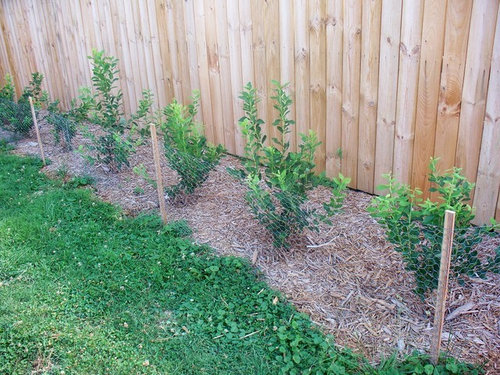
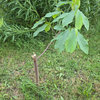
Hello. This is my first time posting to this forum. I have been raising composting worms and harvesting the castings for around 9 months now and am planning to use the finished VC as a side dressing on my 10 blueberry bushes in the spring (4 Duke, 4 Bluecrop, 2 Elliot). They were purchased from a blueberry farm last spring and are now around 2-3' tall. I was wondering if anyone here has expereince using VC on blueberries, and if so is this adequate for their feeding needs, or would you recommend using an additional fertilizer along with the VC? I used Miracid on them last year, but I'd like to stick to more natural fertilizers if possible. My soil is the proper acididty (or was last fall, anyway) and my growing medium is about 2/3 peat and 1/3 existing clay soil, mulched with pine needles in the fall. Does anyone use VC on blueberries who might have some advice? Thanks in advance for the help!

Comments (11)

  • 13 years ago

    Compost releases N that should work just fine- it's just a question of how much N is released. There is never an exact knowledge of how much N is beneficial and in the home orchard it is adequate to adjust to what you see going on visually. If the plants sustain the vigor you need they are getting adequate N.

    Standard soil tests do not reveal the level of release of organic N so if you really need to know what's going on you combine leaf and soil analysis to get a picture, which I don't think is necessary for most home growers.

    I suggest you let them grow with only the compost this spring and then decide if more is needed- whether it's additional compost or supplementary ammonium,urea, cottonseed meal or whatever (just nothing nitrate based).

  • 13 years ago

    Lisa,

    Your plants look very nice. I have just started doing the vermicomposting and plan on doing it in a big way. Of course I have over 100 blueberry plants so need a lot of castings.

    Harvestman is talking about compost and I know you asked about the castings. Honestly I don't know if the two are treated the same or not. My guess would be that the castings pack more of a punch due to the microbial activity and load but I am unsure. I have in my research noticed they are recommended for BB which is a bit odd as most of that stuff is alkaline. I guess with the castings the volume is so low compared to say compost that it makes little difference to the PH. If you find a good answer let me know:)

  • 13 years ago

    The composting method that I've used for about 30 years is to throw all of my kitchen waste in garbage cans with drainage holes and cover each fresh batch with woodchips or something similar. Red worms end up getting so thick it's like a pasta dish by the time I dump the cans for final composting months later. My compost must be similar to worm castings. I used this when I first started my blueberries years ago and it seemed to work find for them, but I wasn't comparing.

    I bought 20 yards of compost made from leaves and grass clippings recently that had a pH in the high 7's. Cornell's info about compost said that such readings are misleading as far as affecting pH conditions in general. Not sure of the science but it is apparently a temporary condition in the composting process sometimes but doesn't carry much pH affect when incorporated in the soil or used as top dressing.

  • 13 years ago

    Harvestman,

    If you allowed the worms in the can to use up all the organics until they were forced to leave all that remained was castings and you were vermicomposting. You are lucky that the redworms show up to help out as many of us have to buy them to get it started.

    If you have the study on the compost effect being temporary I would love to read it. Far as I know the process is the opposite of what you describe. As the compost heats up and the fungi and microbes get busy compost actually gets more acidic. As that process winds down as the compost finishes the PH of the finished product rises....well rises might be misleading as it actually just returns to the PH it started at.

    There is a lot to it and a lot depends on where you live. The native soil PH and more importantly if the plants have to be irrigated the bicarbonate level of the irrigation water if using compost would be safe. Of course the amount of compost added is a big factor.

    It also matters where the compost came from and what it was made from. Your example of a leaves and grass clippings compost.....would be much better for BB than say compost that was made from stable manures and bedding as that compost PH would be through the roof. A lot of compost I would guess has manure in it as it really speeds up the process.

    The thought of adding 6" of compost with a PH of 7-8++ to my blueberries yikes.....I would want to test it's PH. BUT adding a few handfuls of finished worm castings per plant? I would not worry about that at all.

    I have a surgeon that lives down the street that has horses so I have started recently picking up the manure and bedding (pine shavings) they remove. It isn't that much as the horses are in pasture days so it is just when the horses are locked up at night. It is I guess about 2 level pickup truck loads a week. That got me started on the vermicomposting route though it is still in the earliest stages but a fun project.

  • 13 years ago

    BR, actually when I got the high reading I called my cooperative extension and spoke to a friend who's a horticulturist there (before she took that job she worked on some of the same estates as me).

    The product wasn't hot so I figured the high pH was pretty much set but she checked Cornell guidelines and found that this high pH was not at all abnormal and told me what I posted here. I too expect compost to start out acidic and end a bit below neutral, which has been my experience when I've followed the pH.

    When I get a chance I'll see if she can give me the specific source of her info. I didn't ask for it because she's won a high level of respect from me over the years.

    My compost may not be pure worm castings but I figure it would be a decent test of what worm castings would do as an amendment. Certainly worm castings are a primary component.

  • 13 years ago

    Harvestman,

    People sure speak highly of the castings so I am curious to see how they do.

  • 13 years ago

    Thanks for the responses.

    Harvestman, I'm glad to hear that your compost full of worm casts has done so well on your blueberries. In your experience, do you typically need to add any additional fertilizer or just your compost to keep them fed and happy?

    Sun Junkie, yes, I worry about the spacing, but we don't have much room and that's about as far apart as I could put them. I plan to keep them pruned pretty heavily so they don't get too crowded. In addition to pruning while dormant in the winter, I've read about pruning back right after the berries are harvested to maintain a smaller size and also allow enough time for new growth and floral buds for the next year to develop. Mine were just planted last spring, so I haven't tried this yet, but was wondering if you have any experience with this. Does it work, or would you recommend a different pruning approach to keep the size manageable at this spacing if relocating them isn't an option?

    Bamboo Rabbit, thank you. I'm so excited to see how they produce this coming spring. We've already had one casualty this winter to some kind of animal I think - probably a rabbit as we have lots around here - that has gnawed one to within 6" of the ground. I hope it will recover once the damaged stuff is pruned off. I think I'll try some of the bushes with just the pure castings and then maybe try adding additional fertilizers to a few others just to compare. You said you have a lot of blueberries; would you care to share your fertilizers of choice and any other advice with a blueberry newby?

    Input from anyone else would be much appreciated also. Thanks!

  • 13 years ago

    Harvestman- How large of cans do you use? Do you keep the tops sealed/closed, or do you rely on the woodchip layer to keep the fruit flies down?

    I started composing this fall, I've filled two 7 cubic foot rotating drums, without finishing any. The first took 2 months to fill, but I didn't use enough browns, so it was a fruit fly fest and still isn't done composting now (it was added from late Sept to late Nov). With the 2nd composter, I added leaves, cardboards, and paper towels with each load of fruit scraps from the kitchen, so I think it has a better ratio. But that meant that it only took 1 month to fill. I'm interested in finding a way to add capacity without continuing to shell out $170 for each composter...

  • 13 years ago

    Lisa, now that they are established I only mulch and augment with my own urine (sorry for the mental picture but it is a highly affective N source in a form good for blueberries and an ecological sin to allow to go to waste and to flush into the water stream). I do this without actually knowing if it's needed because over time mulch actually supplies considerable N- even if it's not in the source material due to the activity of N fixing bacteria which arrives to harvest carbohydrate.

    Bob, I use cheap plastic 24 gallon garbage cans. I cover the tops but also cover with plant based organic matter. In winter I don't bother with covering until weather warms.

    We don't have norwegian rats so I even include bones and other meat scraps.

  • 13 years ago

    Lisa,

    In KY you are in zone 6? Sadly the after harvest pruning is not something you can get away with. In your zone you just don't have enough time post harvest for the plants to flush after the pruning and grow and ripen the next years fruit buds. Your pruning is a winter only thing.

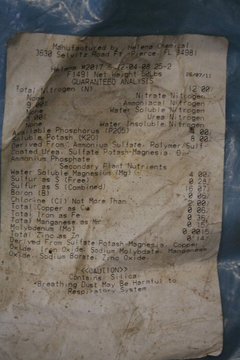
    I use three types of fertilizer. The first is 12-4-8 from Helena chemical and it is the perfect BB fertilizer as it has all the right minor elements and everything comes from a sulfer source. Second is ammonium sulfate (water soluble) which the bushes really like and makes for some fast growth. Last is good old acid miracle grow and I use it as a foliar feed only. It is a decent fertilizer just more expensive.

    Just avoid any fertilizer that has muriate of potash in it, bad news for BB.

    How far apart are the BB? Think they look tight but will be fine. The roots on the BB extend quite a ways further than the the drip line of the branches. You could mulch them out another couple feet and they will grow in to that.

    This is the label from the Helena fert just for comparisons sake.