Software
Houzz Logo Print
bvbrown_gw

Flavorella pollination

19 years ago

Many of us are fans of the Flavorella plumcot, and its sweet-tart flavor, which reminds me of an apricot version of the Santa Rosa plum. Not everyone shares our enthusiasm for this variety- fruitnut likes sweeter fruits, for instance- but I think that it is the epitome of why we grow fruit in our backyards: to get something both different and delicious.

It has been well-documented in past postings that this variety is difficult to fruit. This year, however, my friends Tony Milch and Joe Real both had good success. Both credit pollination using Goldkist apricot, which for them flowered completely synchronously with Flavorella. In my backyard my Goldkist flowered about halfway through the Flavorella bloom period, but Joe's Italian apricot (JIA; which I have written about extensively here) was completely overlapping with Flavorella.

Unfortunately, probably because my apricots are a fair distance from my Flavorella, I have only a few fruits developing. I am fixing this problem by planting another Goldkist right beside the Flavorella, and I'll graft JIA onto it as well.

Anyone with further information on Flavorella, please post it.

Brian

Comments (9)

  • 19 years ago

    Brian,

    You can use non-dormant scionwood of JIA to graft unto your Flavorella using bark graft technique if you can do the grafting the same day you get the branch from your JIA. I've done such techniques in the hottest week of the summer just to prove it can be done and I was successful doing apricot to apricot grafting. Cleft graft, whip and tongue graft, T-budding work equally well.

    There are some things to adjust when grafting in non-dormant times like this.
    1) The source wood must be really fresh, like walking from one tree to the next. Not via priority mail for sure unless you have refrigerated boxes with a cooler inside.
    2) It helps to spray alcohol or lysol on the destination branch to sterilize it. at this time, aphids may have spewed out their sugary excretion that encourages molds and bacteria. The use of alcohol srpay or lysol should sterilize the source and the destination. Wait for alcohol to dry before doing the last cut before inserting the scionwood.
    3) Cover the graft union as well as the scionwood with ziploc bag or saran wrap to prevent moisture loss.
    4) Lastly cover the whole thing with aluminum foil and secure it.

    After about 10 days, the union is healed, and remove partially the aluminum foil, then about 2 to three weeks later, remove the ziploc bag.

    I believe other apricots could pollinate Flavorella also. I used Goldkist on mine and was amazed at the perfect bloom time overlap. Though I only have a few one-foot long branches of grafted goldkist, it produced more than 100 fruitlets (1 and 1/2" or greater) of Flavorella. And take note that we are colder than where you are during the peak blooms.

    Joe

  • 19 years ago

    I'm Tony to whom Brian referred in his original post in this thread. I thought maybe you'd like to see pictures of what we're so exuberant about.

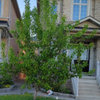
    This first picture is Goldkist apricot on the left and Flavorella pluot on the right. They bloomed exactly in sync -- to the day. They started the same day and peaked together for about four days  at least here in Burbank, California. For 2007, they started on February 26th and finished March 7th.

    [IMG]http://i173.photobucket.com/albums/w67/juniorpilot/FlavorellaGoldkistBloom33yroldLR.jpg[/IMG]

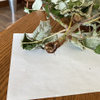
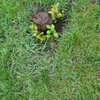
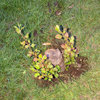
    These next three pictures are of the Flavorella fruit set. The fruitlets are about 3/4" as of 3/28/07 and look like they'll hang on until harvest in June.

    [IMG]http://i173.photobucket.com/albums/w67/juniorpilot/FlavorellaFruitlets3-3yrLR.jpg[/IMG]

    [IMG]http://i173.photobucket.com/albums/w67/juniorpilot/FlavorellaFruitlets2-3yrLR.jpg[/IMG]

    [IMG]http://i173.photobucket.com/albums/w67/juniorpilot/FlavorellaFruitlets1-3yrLR.jpg[/IMG]

    Both trees are 3 years in my ground. Year One: 2 Flavorella harvested. Year Two: 4 Flavorella harvested. Year Three (this year): more than 50 Flavorella fruitlets set as of 3/27/07.

    Many orchardists, both backyard and commercial don't have problems setting fruit on Flavorella. But for those of who do, (did) seeing this confirmation of Goldkist as a pollinizer (in No. Calif. and So. Calif.) is like discovering the Holy Grail.

    Tony

  • 19 years ago

    Ooops/ Made a wrong click in the first foloww-up so the pictures didn't display. This one should look better.

    I'm Tony to whom Brian referred in his original post in this thread. I thought maybe you'd like to see pictures of what we're so exuberant about.
    This first picture is Goldkist apricot on the left and Flavorella pluot on the right. They bloomed exactly in sync -- to the day. They started the same day and peaked together for about four days  at least here in Burbank, California. For 2007, they started on February 26th and finished March 7th.

    {{gwi:73207}}

    These next three pictures are of the Flavorella fruit set. The fruitlets are about 3/4" as of 3/28/07 and look like they'll hang on until harvest in June.

    {{gwi:73208}}

    {{gwi:73209}}

    {{gwi:73210}}

    Both trees are 3 years in my ground. Year One: 2 Flavorella harvested. Year Two: 4 Flavorella harvested. Year Three (this year): more than 50 Flavorella fruitlets set as of 3/27/07.

    Many orchardists, both backyard and commercial don't have problems setting fruit on Flavorella. But for those of who do, (did) seeing this confirmation of Goldkist as a pollinizer (in No. Calif. and So. Calif.) is like discovering the Holy Grail.

    Tony

  • 19 years ago

    I too suspect that apricots are the best pollinator for this fruit. But I think the main problem may be the fact that bees aren't very attracted to Flavorella. Were bees more active than normal this yr? Was there ideal pollination weather? Seems I have heard there was.

    Next yr Goldkist may not bloom exactly with Flavorella. Joe has so many cultivars it is hard to believe he is ever lacking a suitable pollen source. But in a different yr he might not have much bee activity. Just my thoughts. Glad you have fruit!!!

    The Fruitnut

  • 19 years ago

    Bees are mostly dead in California due to Colony Collapse Disorder (CDC). But there is a horned fly that has been buzzing around my plums, pluots, plumcots, apriums, apricots. They are known to be pollinators of plums.

    I also suspect that the arctic blast was a big factor this year. I have another flavorella that is so far away from any of my stone fruits but that one also set some fruits although very sparsely.

    I have another plumcot, Mirocais, which did not set any fruit this year although it has some bloom overlap with Flavorella. It has produced about a total of 7 fruits in the last five years. I might graft it to the Flavorella this fall and see what happens. Also this time, I had grafted Spring Satin plumcot unto Shiro plum which is next to Flavorella, and it would be exciting next year. My older Spring Satin which has produced wonderful tasting fruits for me was "accidentally" snipped off by my better half last fall.

    I now see some bees, perhaps local population, buzzing about my citruses. The citrus bloom is in full swing as well as my apples. Roses will come next week, and they are all disease free this year in this very dry year.

  • 19 years ago

    Fruitnut:

    I neglected to mention that for three consecutive years, The Goldkist and the Flavorella bloomed together in exact sync.

    I watched the bees very closely for about twenty minutes a day for the first six days of blooming. The first two days the bees were not that interested in Flavorella. I could see them, two or three bees per tree, approaching the flowers but then, apparently not sensing what they were after, they flew away. But starting the third day this all changed dramatically.

    They were vigorously climbing into both the Flavorella and the Goldkist flowers. Upside down, sideways -- it didn't matter. They were very active and working with gusto. One could see it. It was obvious. And they brought their friends and family. There were more than fifteen bees per tree for the next four days.

    I'm guessing that there is an internal development process in the flowers that results in nectar and pollen being produced to the bees liking. But it takes a couple days after first opening for this stage of development to occur.

    And yes, the weather was glorious at that time -- beautiful, warm spring days.

    Tony

  • 19 years ago

    Oh yes, I can see the nectar on the Flavorella trees glistening in the sun at that time. But it was the horned flies that were active on my trees. They kind of look like a hybrid between wasps, flies and bees. Their abdomen have striped lines but they hover like the flies.

  • 19 years ago

    Joe: Your flies are probably hover flies, family Syrphidae. They are common on flowers, and I've noticed them on plum flowers in my backyard.

    Bees were quite attracted to the Flavorella flowers in my yard as well, although I didn't observe them as minutely as Tony did! There are still lots of honey bees in our area.

    Brian

  • 19 years ago

    Brian, you're right. I forgot the common name, thanks for posting it. They are in the family Syrphidae, that's what I can recall now.

0
Sponsored
Custom Home Works
Average rating: 4.6 out of 5 stars10 Reviews
Franklin County's Award-Winning Design, Build and Remodeling Expert